
Move Out Cleaning cost is rarely one flat number that fits every property. A compact, lightly used apartment can require far less labor than a larger home with grease buildup, multiple bathrooms, interior appliances, cabinet shelves, blinds, and detailed floor work. The most useful quote is based on the actual size, condition, scope, and deadline—not only the bedroom count.
This guide explains what typically changes the price, what to confirm before booking, and how to compare estimates fairly. Published national ranges can provide context, but they are not a substitute for a written quote for an Orange County property.
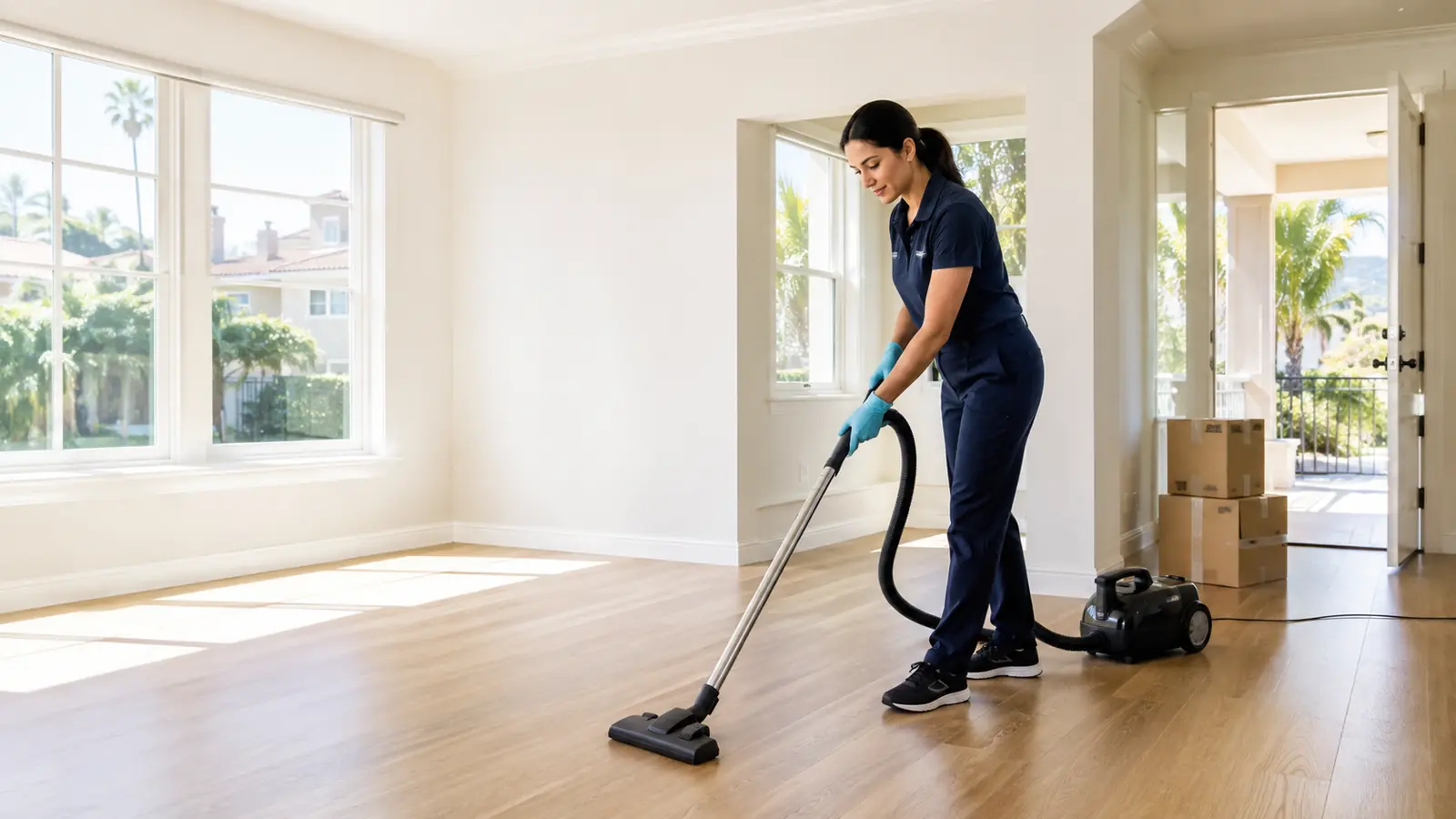
Move Out Cleaning cost: the quick answer
Current published estimates vary considerably. Angi’s guide, updated July 10, 2026, reports a national range of $120 to $420, depending on property size, condition, and cleaning level. Care.com’s March 19, 2026 guide gives a broader typical range of $200 to $500. Those figures come from different datasets and methods, which is why they should be treated as planning context rather than a guaranteed local price.
Orange County pricing may land above or below those ranges. A detailed empty-home service often takes longer than routine cleaning because it reaches cabinet interiors, appliance interiors, baseboards, doors, fixtures, edges, and other areas that become visible after belongings are removed. Access, parking, stairs, timing, and special requests can also affect labor.
| Pricing input | Why it matters | What to provide |
|---|---|---|
| Square footage | More surface area generally requires more labor | Approximate interior square footage |
| Current condition | Heavy residue, dust, or pet hair takes longer | Recent photos and honest notes |
| Requested scope | Interior appliances, cabinets, windows, and blinds add detail work | A written task list |
| Deadline and access | Tight windows or difficult access can affect scheduling | Key-return time, parking, gate, and stair details |
What affects Move Out Cleaning cost?
The strongest cost driver is usually the amount of work required. Two properties with the same floor plan can receive different estimates when one is empty and maintained while the other has cooking residue, soap buildup, pet hair, adhesive marks, or neglected detail areas.
- Property size: More rooms, bathrooms, storage areas, and floor space increase cleaning time.
- Condition: Built-up grease, hard-water residue, dust, and debris require additional passes and tools.
- Bathrooms and kitchens: These rooms tend to contain the most detailed surfaces, fixtures, and residue.
- Appliance and cabinet interiors: Emptying and cleaning shelves, racks, drawers, and interior surfaces adds labor.
- Windows, tracks, and blinds: These are often separate from a basic scope and should be confirmed in writing.
- Floor type: Carpet, tile, laminate, and natural materials may require different processes or separate specialists.
- Access: Stairs, elevators, parking distance, gated entry, and key coordination can change the time on site.
- Timing: A firm same-day key deadline leaves less flexibility than a normal appointment window.
Photos are especially helpful. Clear images of the kitchen, bathrooms, floors, appliance interiors, and any problem areas allow a cleaning company to estimate labor more accurately before arrival.
Common ways cleaning companies price the work
Cleaning companies may use a flat rate, an hourly rate, a square-foot formula, or a blended estimate. No method is automatically better; clarity matters more than the label.
Flat-rate estimates
A flat rate is convenient when the scope and condition are well documented. Ask what assumptions support the number and what could trigger a price change.
Hourly pricing
An hourly arrangement can suit an uncertain or custom scope, but the total depends on crew size and time. Confirm whether the quoted rate is per cleaner or for the entire team, whether there is a minimum, and whether the work stops at a time cap.
Square-foot or room-based pricing
Size-based pricing creates a useful baseline, but condition and scope still matter. Bedrooms do not always predict labor well; a small kitchen with heavy residue can take longer than a large empty bedroom.
What is usually included?
A complete scope should explain what happens in every room. It may include dust removal, vacuuming, mopping, baseboards, doors, switches, accessible fixtures, bathroom surfaces, kitchen surfaces, and empty storage areas. Interior ovens, refrigerators, cabinets, drawers, blinds, and window tracks may be included or priced separately.
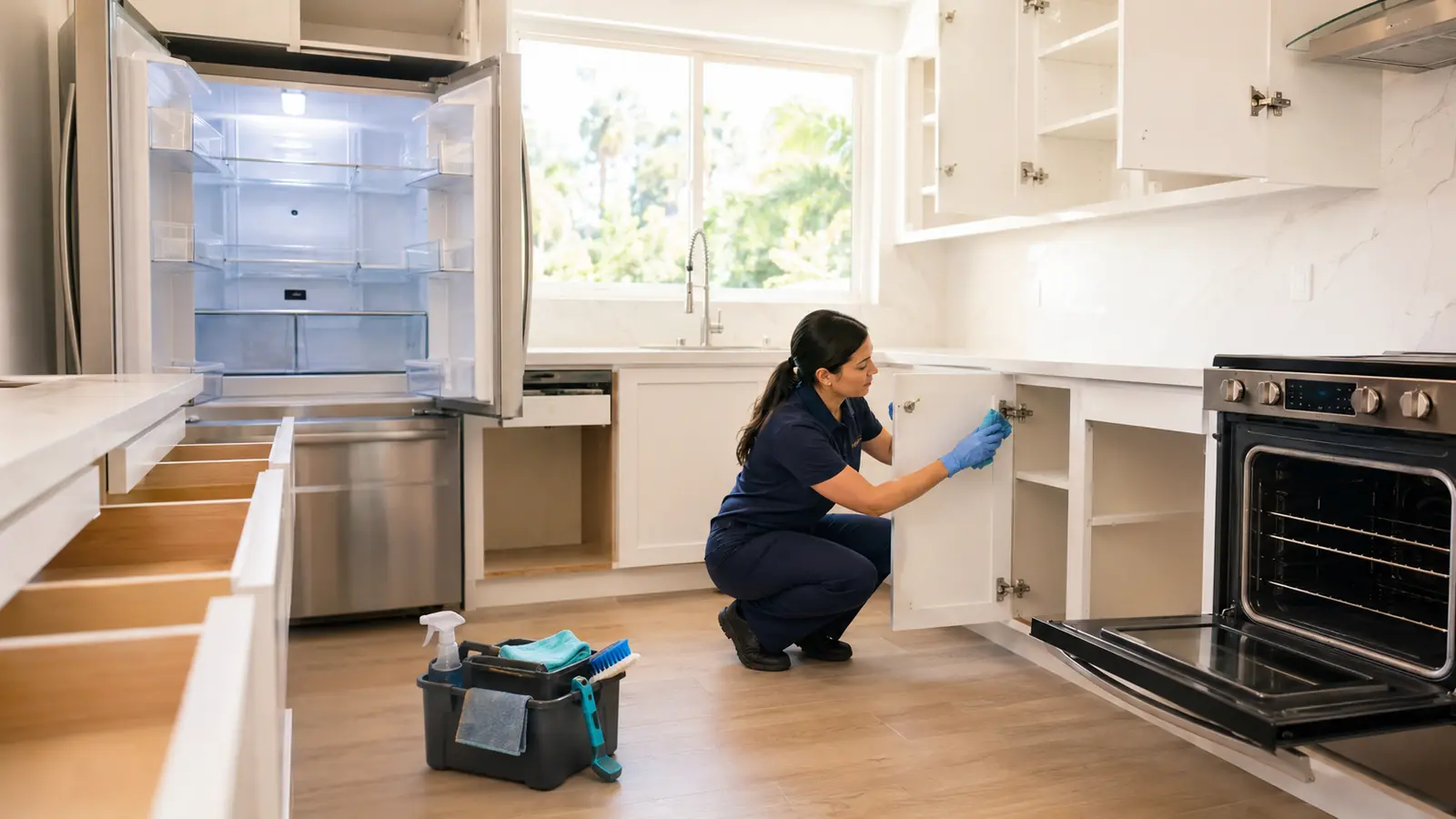
Do not assume that “deep cleaning” and Move Out Cleaning describe identical services. An occupied deep clean may focus on buildup around furniture and everyday living areas, while an empty-property service can include cabinet interiors, closet shelves, appliance interiors, and edges that were previously inaccessible. SRS explains the practical difference in its Move In Cleaning versus Move Out Cleaning guide.
Add-ons and exclusions that change the total
Some tasks require equipment, training, insurance, or time beyond general house cleaning. Common examples include carpet extraction, exterior windows, high glass, pressure washing, hauling, wall washing, mold remediation, pest waste, construction debris, and restoration work.
A cleaning quote should separate included tasks from optional work. That prevents a low starting price from becoming an unexpectedly high total after arrival. It also helps identify work that needs a different specialist. Ask about:
- Oven and refrigerator interiors
- Cabinet and drawer interiors
- Interior windows, tracks, screens, and blinds
- Garage, balcony, patio, or storage areas
- Carpet cleaning or stain treatment
- Adhesive, paint, wax, or heavy residue removal
- Trash, furniture, or unwanted-item removal
- Areas above normal reach
If a task is important to the final walkthrough, put it on the scope before confirming the appointment.
How to compare Move Out Cleaning quotes
The lowest number is not necessarily the least expensive choice if it excludes the work needed for the handoff. Compare the same scope, property information, and service standard.
- Send every company the same details. Include square footage, room count, condition, access instructions, deadline, and photos.
- Request an itemized scope. Confirm kitchens, bathrooms, floors, baseboards, cabinets, appliances, windows, blinds, and storage areas.
- Ask what is excluded. A clear exclusion list is as valuable as the included list.
- Confirm the pricing model. Understand minimums, time caps, team size, and conditions that permit a price adjustment.
- Check scheduling and correction policies. Know what happens if access is delayed or a missed area is found after service.
- Confirm insurance and communication. Reliable arrival updates and a defined contact make a tight moving schedule easier to manage.
A detailed estimate may initially look higher than an abbreviated quote while including more of the required work. Comparing line by line makes the difference visible.
When professional cleaning may be worth the cost
Professional help can be practical when the property is large, the condition requires detail work, the handoff window is short, or moving tasks have already filled the schedule. It may also help when consistent documentation and a final walkthrough matter.
A do-it-yourself clean may be reasonable for a small, lightly used property when there is enough time, equipment, and energy to complete the full checklist. The decision is not only about the cleaning invoice. It also involves time, supplies, equipment, transportation, and the risk of leaving demanding work until the last day. The SRS article Is Move Out Cleaning Worth It? explores that trade-off in more detail.
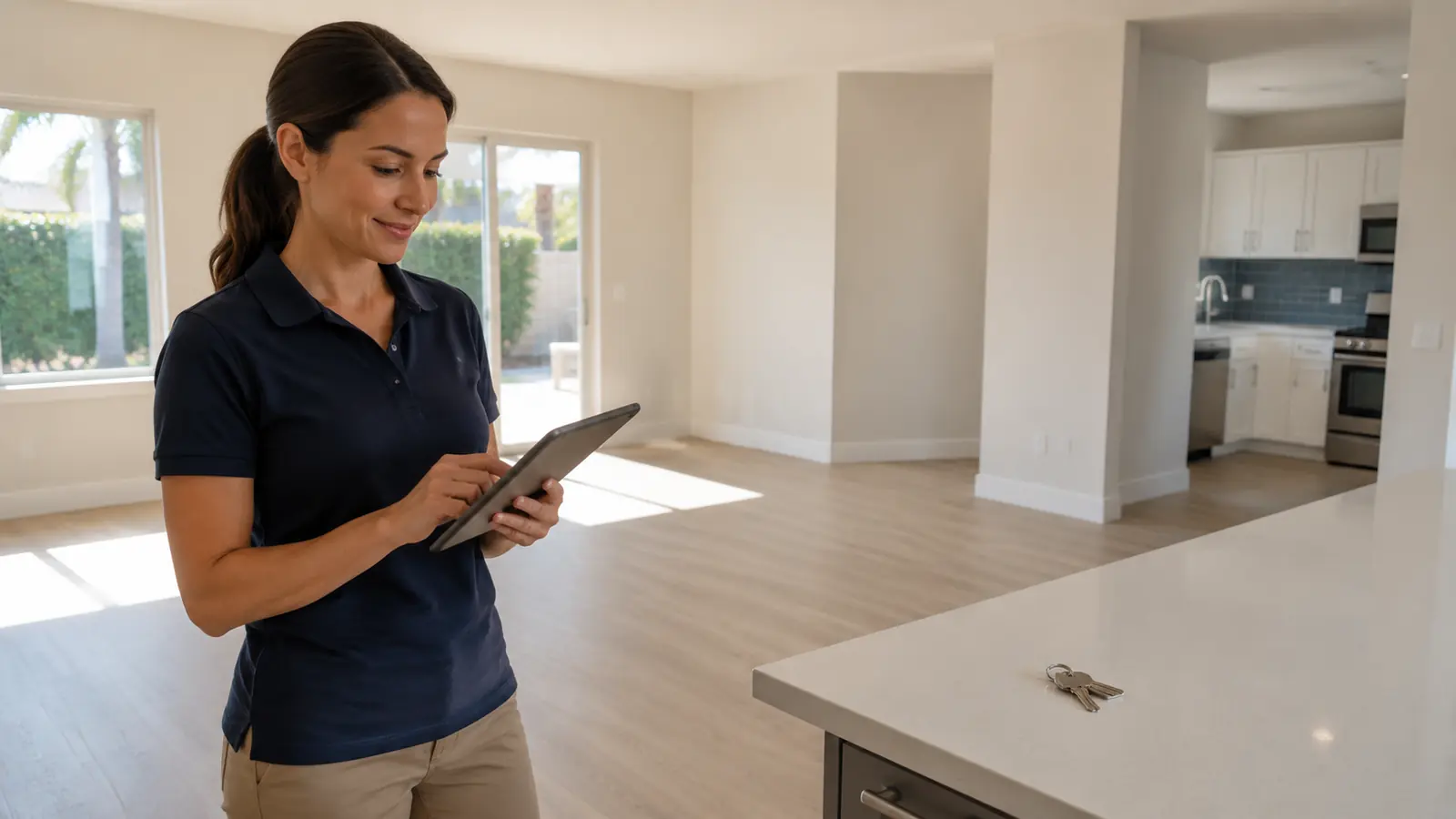
How to keep the final cost predictable
Start early enough to provide accurate information. Waiting until the key-return day makes it harder to compare options or handle an access problem.
- Remove belongings, food, and trash before the crew arrives.
- Share recent, well-lit photos rather than relying only on room count.
- List every required interior appliance, cabinet, window, blind, and storage area.
- Disclose heavy buildup, pet hair, stairs, parking limits, or access restrictions.
- Separate cleaning from hauling, repairs, carpet extraction, and restoration work.
- Confirm the final scope, price basis, appointment window, and payment terms in writing.
- Leave enough time for a walkthrough before the final handoff.
The SRS Move Out Cleaning guide can help organize the broader timeline before cleaning day.
Move Out Cleaning cost FAQ
Why do published cost estimates differ so much?
Sources use different markets, property sizes, scopes, and pricing methods. Some figures represent starting rates, while others describe completed-job totals. Compare definitions before comparing numbers.
Does an empty property cost less to clean?
Removing belongings improves access, but it also reveals cabinet interiors, wall edges, floor areas, and appliance spaces that may require detailed work. Condition and scope determine whether the total is lower.
Are supplies normally included?
Many professional companies bring standard supplies and equipment, but policies vary. Confirm whether specialty products, carpet equipment, ladders, or disposal fees are separate.
Can the price change after arrival?
It may change when the actual condition or requested scope differs materially from the information provided. A reputable company should explain the difference and obtain approval before performing additional paid work.
How far ahead should Move Out Cleaning be scheduled?
Reserve the appointment as soon as the moving and key-return dates are known, especially near weekends and month-end. Schedule the service after belongings are removed and before the final walkthrough whenever possible.
Request a clear Orange County quote
SRS Cleaning Services provides detailed house cleaning across Orange County, including Move Out Cleaning. Share the property size, current condition, requested scope, access information, and deadline so the estimate reflects the work that actually needs to be completed.