
A sink full of dishes, dusty shelves, and a crowded kitchen counter can make cleaning feel like a job with no clear starting point. The essential move in cleaning tasks is not choosing the strongest product or scrubbing harder. It is clearing the clutter first. When surfaces and floors are accessible, every other cleaning step becomes faster, more effective, and far less stressful.
For busy households, renters preparing to move, and office managers trying to keep shared spaces presentable, clutter is more than a visual distraction. It creates extra work. It hides dust, blocks proper disinfecting, and turns a simple cleaning routine into a long list of decisions. A quick reset before cleaning creates the calm, clear path needed to get meaningful results.
Why Decluttering Comes Before Cleaning
Cleaning and organizing are different tasks, but they support each other. Cleaning removes dirt, dust, residue, and germs. Decluttering removes the items that prevent you from reaching the areas that need attention. Trying to clean around piles of mail, laundry, toys, cords, and unused products often means the job takes twice as long and still feels unfinished.
Think about a bathroom vanity. If it is covered with bottles, makeup, hair tools, and random receipts, wiping it down means moving every item one by one. Some items may be set aside, then returned to a surface that is only partly cleaned. A brief decluttering pass lets you clean the entire counter, sink edges, mirror, and backsplash properly before putting back only what belongs there.
The same principle applies across the home or office. Clear desks make dusting simpler. Open floors allow vacuuming to be more thorough. An emptied refrigerator shelf can be wiped instead of merely cleaned around. The result is not just a neater appearance. It is a space that is easier to maintain between professional or routine cleanings.
The Essential Move in Cleaning Tasks: Make a Reset Pass
A reset pass is a short, focused sweep through a room to remove anything that does not belong in the space or does not need to remain out. It is not a demand to organize every closet or make major decisions about every possession. The goal is simply to give cleaning access to the room.
Start with a laundry basket, bin, or bag. As you move through the room, place items that belong elsewhere into the bin. Gather trash and recycling separately. Return obvious items to their homes if it takes only a few seconds. If an item requires a decision, such as a stack of paperwork or a box of miscellaneous belongings, set it in one contained area to address later.
This approach prevents a familiar problem: starting to clean the living room, finding something that belongs in the bedroom, then getting pulled into a completely different task. The reset pass keeps momentum intact. You are preparing the room to be cleaned, not trying to solve your entire household organization system in one afternoon.
Focus on the spaces that affect cleaning most
Not every item needs to be put away before you begin. Prioritize the places where clutter blocks access or collects dirt: floors, countertops, tables, sinks, desks, and frequently touched surfaces. In a bedroom, that may mean clearing the floor and nightstands. In a kitchen, it may mean putting away groceries, loading dishes, and moving mail off the counter.
For an office, focus on shared surfaces and walkways first. Loose papers, coffee cups, extra cables, and personal items can make a professional cleaning visit less efficient and can leave an otherwise clean workplace looking unfinished. A simple desk reset also helps employees return to a clearer, more productive environment.
Do not confuse a reset with deep organizing
There is a trade-off to keep in mind. Decluttering makes cleaning easier, but trying to declutter every drawer before cleaning can delay the work indefinitely. If your main need is a clean bathroom before guests arrive or a fresh kitchen after a busy week, keep the reset practical. Clear the surfaces, clean the room, and save detailed organizing for a separate block of time.
For move-out cleaning, estate cleanouts, or heavily packed homes, the balance may shift. More substantial item removal may be necessary before a cleaning team can fully access the property. In those situations, planning the decluttering phase in advance protects both the cleaning quality and the schedule.
A Room-by-Room Approach That Saves Time
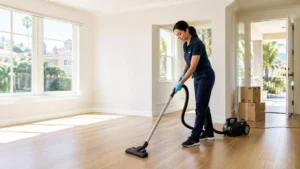
Once the reset is complete, clean from high to low and from dry tasks to wet tasks. Dusting before vacuuming makes sense because fallen dust can be picked up later. Cleaning counters before mopping helps prevent crumbs and debris from ending up on a freshly cleaned floor. This order is simple, but it reduces repeated work.
In the kitchen, clear countertops and the sink, then wipe cabinets, clean appliances, sanitize food-prep surfaces, and finish with the floor. In bathrooms, remove personal items, take out trash, dust vents and light fixtures, then clean the mirror, sink, toilet, shower, and floor. In living areas and bedrooms, pick up clutter, dust furniture and reachable surfaces, change linens if needed, and vacuum or mop last.
A home with children, pets, or a demanding work schedule may need a shorter version of this process. That is perfectly reasonable. A ten-minute reset of the kitchen and living room each evening can prevent clutter from becoming the reason weekend cleaning feels overwhelming. Consistency matters more than chasing perfection.
How Clutter Affects the Quality of Professional Cleaning
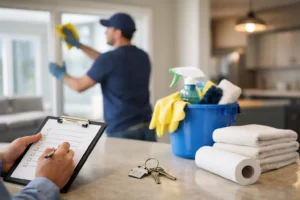
Professional cleaners can bring skill, supplies, and a detailed process, but access still matters. When floors are covered, counters are packed, or rooms contain loose personal items, cleaners must spend time moving around obstacles rather than focusing on dust, buildup, and high-touch surfaces.
A quick pre-clean reset helps your appointment deliver more value. Put away confidential papers, fragile items, valuables, and anything you would prefer not to have moved. Clear dishes when possible and make sure pets are comfortable and safely situated. These small steps allow the cleaner to focus on the work you hired them to do.
That said, a home does not need to be spotless before a cleaning visit. The point of professional service is to take work off your plate, not add another impossible standard. A reasonable reset is enough. If clutter is substantial or you are preparing for a move, be upfront about the condition of the space so the cleaning plan can match the real need.
For Orange County property managers and real estate professionals, this distinction is especially useful during turnovers and pre-sale preparation. Removing abandoned items and personal belongings before a deep clean gives the next tenant, buyer, or showing a more polished first impression. It also helps cleaners reach baseboards, cabinet interiors, appliances, and floors without avoidable delays.
Build a Routine That Keeps the Reset Easy
The easiest homes to clean are not necessarily the homes with the fewest belongings. They are the homes where everyday items have a consistent landing place. A basket near the entry for mail, a designated spot for chargers, and a simple hamper system can reduce the buildup that slows cleaning down.
Try attaching a small reset to an existing routine. Spend five minutes clearing the kitchen while coffee brews, reset the living room before bedtime, or tidy desks at the end of the workday. These moments are small, but they protect your future time and make scheduled cleaning feel more productive.
If a recurring cleaning service fits your household or workplace, the reset becomes even more manageable. You know when the deeper work is coming, and you can focus on keeping surfaces accessible rather than carrying the full cleaning load alone. SRS Cleaning helps clients create that dependable rhythm with clear communication, flexible scheduling, and care for the details that make a space feel truly refreshed.
A clear counter or open floor may seem like a small change, but it gives cleaning room to work. Start with a short reset, then let the clean space give something valuable back: more time to enjoy your home, welcome guests, or simply take a breath.