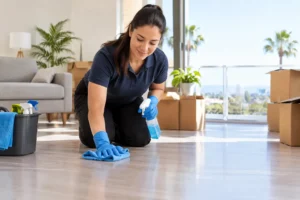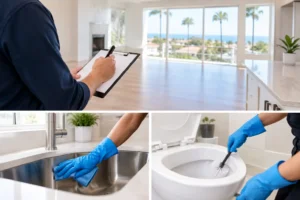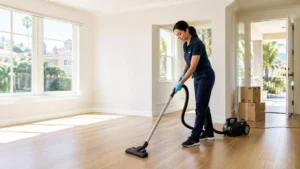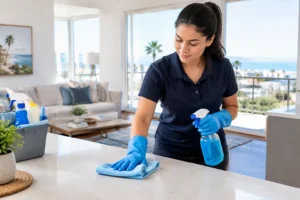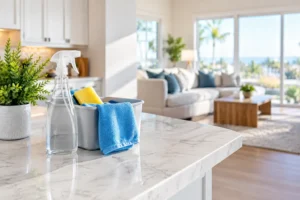
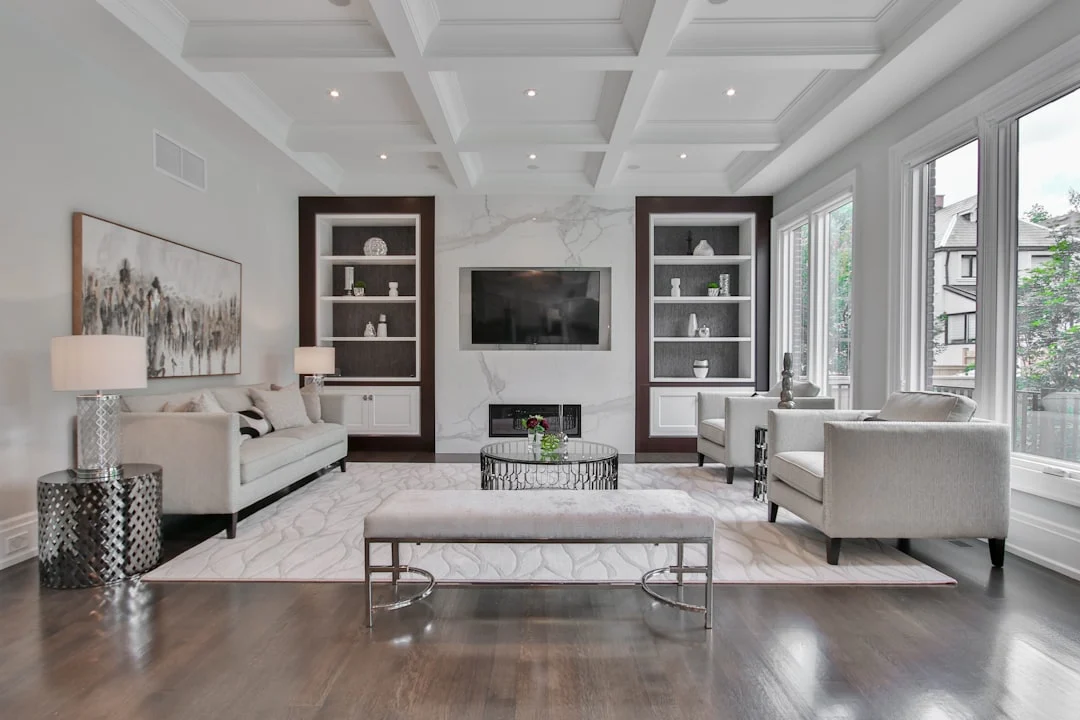
A good pre-listing cleaning checklist helps a space look brighter, calmer, and easier to evaluate before photos, showings, walkthroughs, or an open house. The goal is not to make a property look unrealistic. The goal is to remove the small distractions that pull attention away from the room itself: dusty baseboards, cloudy mirrors, greasy appliance fronts, fingerprints on doors, window-track buildup, dull sinks, and cluttered surfaces.
This guide keeps the work practical. It separates cleaning from staging, explains where disinfecting is useful, and gives a room-by-room checklist you can follow before a listing goes live. For Orange County properties that need a deeper reset before photos or appointments, SRS Cleaning Services can help with Deep Cleaning, Move Out Cleaning, and general House Cleaning Services.
Why pre-listing cleaning matters
Pre-listing cleaning matters because a clean room lets the eye focus on layout, light, storage, finishes, and condition. The National Association of Realtors describes staging as a process that can include cleaning, decluttering, repairing, depersonalizing, and updating a home so people can better picture the space for themselves (NAR staging overview). NAR also reports that many agents see staging influence how buyers visualize a property, while seller-side agents often connect staging with shorter market time or stronger presentation outcomes (2025 Profile of Home Staging).
Cleaning is the foundation underneath all of that. Fresh pillows and attractive furniture cannot hide dusty vents, fingerprints around switches, sticky cabinet pulls, or a cloudy shower door. A pre-listing clean should make the property feel cared for without making exaggerated claims about condition. It is especially useful before professional photos because cameras often catch streaks, floor debris, hard-water spots, and reflective-surface smudges that are easy to miss in person.
Cleaning vs. staging vs. disinfecting
Cleaning, staging, and disinfecting are related, but they are not the same job. The CDC defines cleaning as using water, soap, and scrubbing to remove germs, dirt, and impurities from surfaces; disinfecting uses chemical products to kill remaining germs on surfaces after cleaning (CDC cleaning and disinfecting definitions). For most pre-listing prep, routine cleaning is the main priority. Disinfecting is most useful for bathrooms, kitchen touch points, trash areas, and other high-touch surfaces when there is a reason to do so.
Always follow the product label. The CDC warns never to mix bleach or disinfectants with other cleaners because dangerous vapors can be released (CDC bleach safety guidance). The CDC also recommends cleaning surfaces with soap and water before disinfecting when disinfecting is needed (CDC home cleaning and disinfecting guidance). For product selection, the EPA Safer Choice program helps identify products whose ingredients have been reviewed for safer chemistry while still being designed to perform (EPA Safer Choice).
Pre-listing cleaning supplies
Use a simple kit instead of collecting too many products. A practical pre-listing kit may include microfiber cloths, a vacuum with attachments, a mop appropriate for the floor type, glass cleaner, mild all-purpose cleaner, bathroom cleaner, non-scratch pads, trash bags, gloves, and fresh towels for finishing. For any cleaner, check the label for intended surfaces, ventilation, dwell time if disinfecting, storage, and safety precautions.
Avoid applying harsh products to natural stone, unsealed wood, specialty tile, stainless steel, or delicate fixtures unless the label confirms compatibility. When in doubt, test a hidden area or use the manufacturer’s care instructions. The purpose is to improve presentation, not risk etching, discoloration, residue, or finish damage right before photos.
Whole-home first pass
Start with a fast whole-home reset before detailed cleaning. Remove trash, donation bags, extra packaging, old mail, loose cords, excess countertop items, and visible personal clutter. Put away laundry, shoes, toiletries, pet bowls, toys, and small appliances that are not needed for the showing. Open window coverings to see where dust, smudges, and floor debris show in natural light.
Then work top to bottom. Dust ceiling fans, high corners, vents, light fixtures, picture frames, window sills, doors, and trim before cleaning floors. Wipe switch plates, door frames, doorknobs, stair rails, cabinet pulls, and appliance handles. These touch points are small, but they quietly shape the impression of care.
Kitchen checklist

The kitchen usually needs the most detail because counters, sinks, appliances, and cabinet fronts are heavily used and highly visible. Clear counters first. Leave only a few intentional items, then wipe the full counter surface, backsplash, outlet covers, and edges. Polish the sink and faucet, remove water spots, wipe the disposal rim where accessible, and clean the window or ledge above the sink.
- Wipe cabinet and drawer fronts, especially near handles.
- Clean the stovetop, control panel, range hood exterior, and microwave exterior.
- Wipe refrigerator handles, dishwasher front, and oven door glass.
- Remove crumbs from drawers and visible cabinet shelves if they will be opened.
- Clean trash area, pantry floor, baseboards, and toe-kicks.
- Finish with swept and mopped floors, paying attention to corners.
If a property is vacant or needs a deeper presentation reset, appliance interiors, cabinet interiors, blinds, tracks, and baseboards can be folded into Move Out Cleaning or deep cleaning scope rather than rushed at the last minute.
Bathroom checklist
Bathrooms should look fresh, dry, and residue-free. Start by removing excess bottles, razors, cleaning products, bath mats, and personal items. Clean mirrors, counters, faucet bases, sinks, vanity fronts, towel bars, and switch plates. Scrub toilets, tubs, showers, glass doors, tile edges, and visible grout lines. Pay close attention to hard-water spotting on glass and chrome because it shows strongly under bathroom lighting.
Use ventilation when cleaning bathrooms, follow product labels, and avoid mixing products. If there is mold-like growth, water damage, sewage backup, or a biohazard concern, ordinary cleaning is not the right solution. Those situations should be evaluated by qualified professionals or handled according to appropriate public-health and remediation guidance.
Living areas, bedrooms, and hallways
Living areas, bedrooms, and hallways should feel calm and easy to walk through. Dust horizontal surfaces, shelves, lamps, fans, vent covers, baseboards, window ledges, closet tracks, and door panels. Vacuum upholstery if needed, straighten cushions, and remove stray cords or crowded decor. In bedrooms, simplify nightstands, clear floors, and clean closet floors if storage areas may be opened.
Hallways deserve more attention than they usually get. Fingerprints on walls, dusty baseboards, scuffed doors, and dirty return vents can make a clean property feel less maintained. Wipe what is visible at eye level and what is visible in photos: railings, light switches, trim, door handles, and the first few inches along baseboards where dust collects.
Floors, windows, and light
Floors and windows control much of the first impression. Vacuum carpets slowly, using edge tools along walls and thresholds. Mop hard floors with a product that matches the floor type and does not leave a sticky or cloudy residue. Avoid over-wetting wood or laminate. Clean interior glass, mirrors, and accessible window tracks, then check the room from several angles for streaks.
Light is part of cleanliness. Open blinds, dust slats, wipe window sills, and replace obviously burned-out bulbs. Clean light switch plates and visible fixture covers. A room with clean glass, clean floors, and simple surfaces often feels larger and more inviting without needing heavy staging.
Final showing-day reset

On showing day, do a short reset rather than a full cleaning session. Empty trash, wipe kitchen counters, dry sinks, close toilet lids, replace used towels, remove floor debris, straighten pillows, and check entry areas. Walk through with lights on and blinds open. Look at mirrors, appliance fronts, floors near doors, and the main photo angles. If something stands out immediately, handle that first.
A final reset should be quick because the deep work has already been done. If the property is still occupied, a small daily routine helps keep the space ready between appointments: dishes away, counters cleared, bathroom surfaces dry, floors touched up, and clutter returned to storage.
When to use professional cleaning
Professional cleaning is useful when the property needs more than a light reset, when timing is tight, or when photos and showings are already scheduled. It can also help when kitchens, bathrooms, baseboards, blinds, window tracks, and floors need consistent detail across the whole property. SRS Cleaning Services serves Orange County with cleaning services that can support pre-listing prep, move-related cleaning, recurring maintenance, and deeper room-by-room cleaning.
For related planning, compare this checklist with the SRS guide to cleaning a new house before move-in, the Move In Cleaning vs. Move Out Cleaning explainer, the deep cleaning checklist, and the deep cleaning service scope guide. Those articles cover different timing scenarios, while this page focuses specifically on the pre-listing presentation pass.
If you need help deciding the right scope, the simplest next step is to request a quote and describe the property condition, square footage, timing, and priority rooms. You can start through the Get a Quote page or review the SRS service area for Orange County coverage.
Pre-listing cleaning FAQ
How early should pre-listing cleaning be done?
For a property that is mostly ready, one to three days before photos is usually practical. If the property needs deep cleaning, repairs, decluttering, or hauling, start earlier so cleaning happens after the messy work is complete.
Should cleaning happen before or after staging?
Do the main cleaning before staging whenever possible. After furniture, decor, and photo prep are in place, do a final light reset for dust, floors, counters, mirrors, and touch points.
Does everything need to be disinfected?
No. Routine cleaning is the main job for most pre-listing preparation. Disinfecting may be useful for selected high-touch surfaces, bathrooms, and kitchen areas, but products should be used according to label directions and after cleaning when needed.
What areas are most often missed?
Common misses include baseboards, door frames, light switches, cabinet pulls, vent covers, window tracks, appliance handles, closet floors, trash areas, and the corners behind doors.
Preparing a property for listing is easier when the cleaning plan is specific. Start with clutter, work from top to bottom, focus on kitchens and bathrooms, finish floors and glass last, and leave time for a final showing-day reset. For deeper help across an Orange County property, SRS Cleaning Services can help you choose the right cleaning scope and schedule it before photos or showings.