
The keys are due, the boxes are everywhere, and the last thing you want is to spend your final night scrubbing behind the refrigerator. If you are wondering how to get move out cleaning, start by deciding what condition the home needs to be in, what you can realistically finish yourself, and which tasks are worth handing to a professional.
For most renters, the best approach is to remove all belongings first, review the lease or property manager’s move-out expectations, and schedule cleaning after the home is empty. That gives you a clear view of what needs attention and avoids cleaning around boxes, furniture, or last-minute packing piles.
Contents
- When to arrange move-out cleaning
- How to get move out cleaning with a clear scope
- What you can clean yourself
- Areas that often need professional attention
- How to prepare for the appointment
- A final walkthrough that helps you leave calmly
When to Arrange Move-Out Cleaning
Timing matters more than most people expect. A move-out clean works best after furniture, trash, and personal items are removed but before your key return or final walkthrough. Cleaning too early means dust, footprints, and packing debris can undo your work. Waiting until the final hour creates unnecessary pressure if you find buildup under appliances or marks that need extra care.
Try to leave yourself a buffer between moving day and your required handoff. Even a half day can make a meaningful difference. It gives you time to check cabinets, take photos of the home’s condition, and handle anything the cleaner identifies as outside the agreed scope.
If you are coordinating movers, elevator access, repairs, or a landlord inspection, confirm the order of events before requesting cleaning. The home should be accessible, have working water and power, and be empty enough for every room and surface to be reached.
How to Get Move Out Cleaning With a Clear Scope
Move-out cleaning is not one identical checklist for every home. A lightly used apartment with regularly cleaned bathrooms has different needs than a family home with a heavily used oven, pet hair in the baseboards, and months of dust behind furniture. The easiest way to get the right help is to describe the home honestly and ask for a scope that matches its current condition.
When you request a quote, be ready to share the number of bedrooms and bathrooms, approximate home size, whether the home will be vacant, and your preferred cleaning date. Mention areas that need special attention, such as the oven interior, refrigerator, blinds, interior cabinets, wall marks, pet hair, or hard-water buildup. Clear information up front helps avoid assumptions and makes it easier to confirm what will be addressed before the appointment.
It also helps to ask what is included and what may require separate approval. For example, routine cleaning of reachable surfaces is different from heavy residue, adhesive removal, exterior windows, or damage that needs repair rather than cleaning. A responsible cleaning plan sets that boundary clearly.
At SRS Cleaning Services, we confirm the scope before the appointment so you know what to expect. If your moving timeline is tight, a detailed request gives the team the best chance to recommend a practical plan without adding more to your plate.
What You Can Clean Yourself Before Moving
Doing some preparation yourself can reduce stress and make professional cleaning more focused. The key is not trying to do every task while you are also packing, changing addresses, and coordinating a move.
Start with removal, not scrubbing. Empty every cabinet, drawer, closet, and storage area. Take out trash, recycling, and leftover food. Check the garage, patio, balcony, laundry area, and medicine cabinet, where small belongings are easily missed.
Once the home is empty, you can handle simple tasks such as wiping a recently cleaned countertop, collecting loose debris, or dusting an accessible shelf. If you know a surface’s manufacturer instructions, follow them. Avoid using abrasive pads on stainless steel, glass cooktops, natural stone, painted cabinets, or delicate fixtures. Harsh products can leave scratches, dull finishes, or discoloration that creates a bigger problem than the original soil.
Do not mix cleaning products. In particular, bleach should never be combined with vinegar, ammonia, or other cleaners. Use products only as directed on their labels, keep the area ventilated, and test a small inconspicuous spot when you are unsure how a material will react.
Areas That Often Need Professional Attention
The places people overlook tend to be the ones hidden during daily life. Once furniture is gone, dust along baseboards, behind appliances, inside drawers, and around toilet bases becomes much more visible. Kitchens and bathrooms also take longer than expected because grease, soap film, and mineral deposits often need careful, surface-appropriate cleaning.
Kitchen details
A move-out kitchen usually needs more than a quick wipe of the counters. Check inside empty cabinets and drawers, the microwave, stovetop, range hood exterior, sink, and backsplash. The refrigerator and oven can require extra time, especially if there are spills, baked-on residue, or lingering food particles.
Before cleaning an oven, consult the appliance manual. Self-cleaning cycles, specialty coatings, and heating elements have different care requirements. Never use a cleaner or tool that the manufacturer advises against.
Bathrooms and fixtures
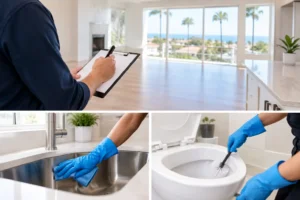
Bathrooms deserve a close look at shower doors, grout lines, faucet bases, toilet exteriors, mirrors, exhaust vent covers, and cabinet interiors. Orange County homes can show hard-water spotting on glass and fixtures, but the right treatment depends on the finish. Acidic cleaners may damage natural stone, unsealed grout, or certain metal finishes, so do not assume one product is safe everywhere.
Floors, walls, and overlooked edges
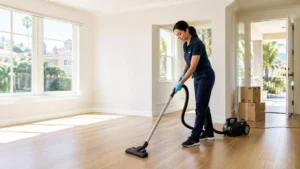
Vacuuming and mopping are often part of a move-out plan, but floor care should match the material. Saturating wood or laminate flooring can cause damage, while aggressive scrubbing may affect some vinyl finishes. For walls, start gently. A damp microfiber cloth may work for ordinary marks, but deep scuffs, nail holes, peeling paint, and damaged drywall may call for repair rather than cleaning.
How to Prepare for a Cleaning Appointment
A little preparation helps a move-out cleaning crew spend time on cleaning instead of clearing access. Make sure all personal belongings are removed, including items in drawers and closets. Leave water and electricity on, secure pets elsewhere, and provide any necessary entry instructions in advance.
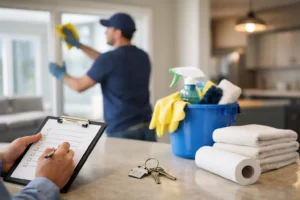
If the property manager gave you a written checklist, have it available. It is useful reference material, though it should not be treated as a promise that cleaning alone will resolve every item. Wear, damage, maintenance concerns, and repair questions are separate from normal cleaning work.
Before leaving, take dated photos or video of each room, including appliances, bathrooms, floors, and any existing damage. This is simply a practical record for your own files. Then do one slow final pass: open every cabinet, look behind every door, and check outdoor storage spaces.
A Final Walkthrough That Helps You Leave Calmly
The goal of move-out cleaning is not perfection under impossible time pressure. It is leaving a vacant home clean, presentable, and ready for the next step while protecting your time and energy during a demanding move.
Walk room by room rather than bouncing between tasks. Check ceilings and corners for cobwebs, windowsills for dust, closets for belongings, and appliances for forgotten food. Bring your move-out checklist if you have one, and distinguish between cleaning needs and conditions that may need to be discussed with the property manager.
If your to-do list is already longer than the time you have left, professional move-in/move-out cleaning can be the practical choice. Request a quote with your home details, timeline, and priority areas, and you can move on to the next address with one less demanding task to carry.