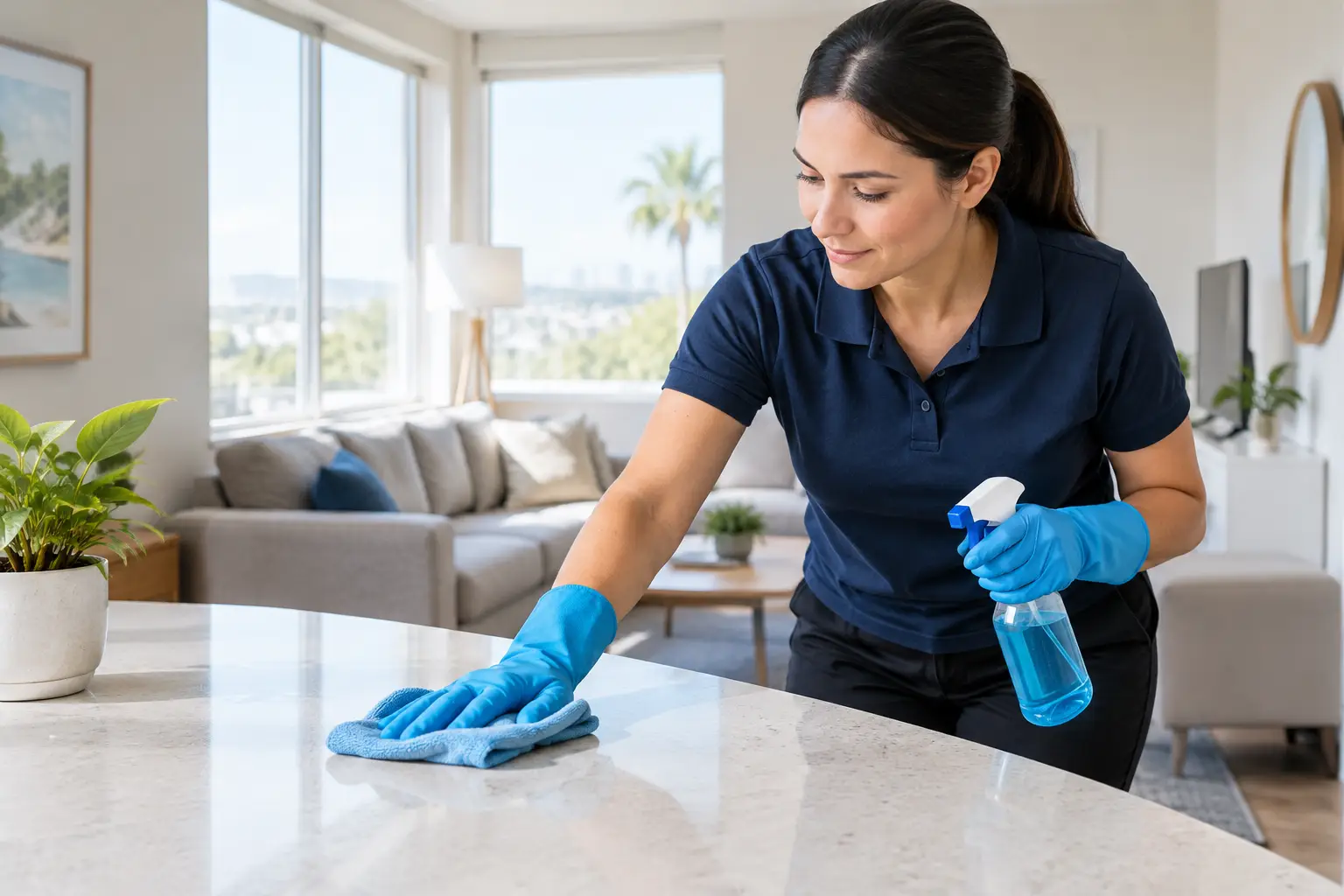
A vacant rental can look acceptable at first glance and still hold the details that lead to complaints, delayed move-ins, or a poor first impression. The best cleaning tasks for landlords focus on the areas a new tenant will touch, open, inspect, and notice right away: kitchens, bathrooms, floors, appliances, and overlooked buildup around fixtures and edges.
For a straightforward turnover, you may be able to handle light cleaning and a final walkthrough yourself. When the property needs deeper work, has limited time between tenants, or includes heavy grease, soap residue, pet hair, or carpet spots, bringing in a professional cleaning team can help you start the next lease on a cleaner footing.
What should landlords clean between tenants?
Between tenants, clean the entire home rather than limiting the work to visible surfaces. A good turnover clean removes the previous occupant’s everyday residue and gives you a clear view of the condition of the property. Cleaning also makes maintenance issues easier to spot, from a slow-draining sink to damage behind furniture.
Prioritize the rooms that carry the highest expectations: the kitchen and bathrooms. Then move through floors, walls, windows, closets, storage areas, and entry points. The goal is not to make an older home look brand new. It is to present the actual condition of the home clearly, clean it thoroughly, and avoid leaving the next tenant to discover someone else’s mess.
Best cleaning tasks for landlords during a turnover
Start with trash, belongings, and dry debris
Before using any product, remove abandoned items, empty trash, and collect loose debris from drawers, cabinets, closets, patios, and the garage if it is part of the rental. Vacuuming or sweeping first prevents hair, dust, and crumbs from becoming streaks once you begin wet cleaning.
Open every cabinet, drawer, and closet rather than assuming an empty room is an empty property. Check under sinks, behind doors, and on high closet shelves. These are common places for forgotten items and buildup.
Deep clean the kitchen from top to bottom
Kitchen cleanliness often shapes a tenant’s opinion of the whole home. Start with the highest surfaces, such as cabinet tops and the range hood exterior, then work downward so dust and crumbs do not land on areas you have already cleaned.
Wipe cabinet fronts, handles, drawers, counters, backsplashes, and sink fixtures using a product appropriate for the surface. Pay close attention to greasy film near the stove and fingerprints around handles. For stone, wood, laminate, stainless steel, or specialty finishes, follow the manufacturer’s care instructions and test an inconspicuous area first.
The refrigerator, oven, microwave, and dishwasher deserve their own inspection. Remove loose crumbs and residue, clean shelves and drawers, wipe door seals gently, and check handles and controls. Avoid abrasive pads on delicate finishes. If an appliance has baked-on grease, strong odors, or residue that will take substantial time to remove, professional help may be the more practical choice.
Reset bathrooms with extra attention to buildup
Bathrooms need more than a quick wipe-down. Clean the toilet inside and out, including the base, seat hinges, flush handle, and surrounding floor. Wash the tub or shower, walls, doors, tracks, fixtures, vanity, mirror, sink, cabinet interiors, and exhaust fan cover if it can be cleaned safely.
Soap scum and hard-water deposits are common in Orange County rentals, particularly around shower glass and faucets. Use a cleaner suitable for the material, allow it to work as directed on the label, and rinse thoroughly when required. Do not mix cleaning products. In particular, never combine bleach with vinegar, ammonia, or other cleaners.
If you find widespread staining, damaged caulk, persistent moisture, or suspected mold, pause the cleaning plan and arrange the appropriate inspection or repair. A standard cleaning service is not a substitute for remediation or repair work.
Clean floors according to the material
Floors show dirt quickly, especially near entrances, kitchens, pet areas, and high-traffic hallways. Vacuum carpet carefully, including edges and closets, then address visible spots with a method approved for that carpet. Avoid saturating carpet or using a product that could set a stain or leave a sticky residue.
For hard floors, vacuum or sweep first, then use the cleaning method recommended for the finish. Wood, luxury vinyl, laminate, tile, and natural stone have different needs. Too much water can damage some materials, while harsh chemicals may dull, etch, or discolor others.
Carpet cleaning is often worth scheduling when a tenant has lived in the property for an extended period, there are visible traffic lanes, or the carpet holds odors. A clean carpet can improve the first impression of a rental, but it cannot correct worn fibers, burns, or permanent stains. Set expectations based on the carpet’s actual condition.
Wipe high-touch and easy-to-miss surfaces
New tenants notice the small details because they use them immediately. Wipe door handles, light switches, outlet covers, thermostat controls, blinds, window sills, baseboards, ceiling fan blades, and interior doors. Dust vents and return grilles carefully without attempting HVAC or duct servicing.
Also clean closet shelving, laundry-area surfaces, utility-room floors, and the inside of the front door. If the property includes a patio, balcony, or entry landing, remove cobwebs and loose debris where safe to do so. These steps help the home feel cared for before a tenant brings in boxes and furniture.
A practical landlord turnover checklist
Use this checklist after repairs are complete and before the final walkthrough:
- Remove all trash, abandoned belongings, and loose debris.
- Clean kitchen cabinets, counters, appliances, sink, and fixtures.
- Clean and disinfect bathrooms according to product directions.
- Vacuum carpets and clean hard floors with surface-safe methods.
- Dust blinds, baseboards, fan blades, vents, and closet shelves.
- Wipe switches, handles, doors, and other high-touch surfaces.
- Clean windowsills, interior glass as needed, and entry areas.
- Walk through the home with lights on and check corners, edges, and odors.
The order matters. Complete repairs, painting, and maintenance before the final clean whenever possible. Otherwise, drywall dust, footprints, and paint splatter can undo much of the cleaning work.
What you can handle yourself and when to hire help
A landlord can usually handle a light turnover when the prior tenant left the unit generally tidy, the timeline is flexible, and the home only needs routine wiping, vacuuming, and floor care. This approach can work well for a small unit with minimal buildup.
Professional cleaning makes more sense when the property needs a true reset. Consider it when the kitchen has grease accumulation, bathrooms have heavy soap scum, multiple rooms need detailed work, carpet condition needs attention, or you are coordinating repairs and a new move-in at the same time. For property managers with several turnovers, a defined cleaning scope also makes final inspections more consistent.
Before scheduling, document the condition of the rental and make a room-by-room list of what needs attention. Let the cleaning team know about occupied storage areas, delicate finishes, parking access, appliance condition, and your deadline. Clear communication helps confirm the scope before the appointment and reduces last-minute surprises.
Final walkthrough: clean is only part of ready
After cleaning, walk the property slowly as though you were seeing it for the first time. Turn on lights, open cabinets, run your hand along ledges, look behind doors, and inspect floors from more than one angle. Check that no cleaning supplies or trash were left behind.
A clean turnover does not replace repairs, painting, pest treatment, or safety checks. It does, however, make those remaining needs easier to see and gives the next tenant a more comfortable start.
If your rental needs more than a quick reset, SRS Cleaning Services can help with move-in and move-out cleaning and rental turnover cleaning in Orange County. Request a quote with the property size, timing, and areas that need the most attention, and you can start with a clear cleaning plan.