A rental can look clean at first glance and still create a dispute at move-out. Grease inside the oven, mineral buildup on shower glass, dust in blinds, and residue in cabinets are easy to overlook until a new resident is ready to move in. This landlord cleaning responsibility guide explains where a landlord’s cleaning duties usually begin, what renters are generally expected to handle, and how to set a fair, practical standard for a cleaner turnover.
This is general cleaning guidance, not legal advice. Lease terms, documented condition, local requirements, and the difference between normal wear and tenant-caused damage all matter. When questions involve deductions or habitability, review your lease and consult the appropriate local professional.
Contents
- Start with a clear baseline
- What landlords are generally responsible for cleaning
- What renters are generally responsible for cleaning
- Normal wear versus cleaning neglect
- A practical turnover inspection process
- When professional move-out cleaning makes sense
- Set expectations before the next tenancy
Start With a Clear Baseline
The most useful standard is simple: the property should be clean, safe, functional, and ready for the next resident when a new tenancy begins. That does not mean every older surface must look brand-new. It does mean the home should not carry leftover dirt, odors, food residue, personal items, or sanitation concerns from the prior occupancy.
A move-in condition report and dated photos give everyone the same starting point. Document the floors, walls, appliances, bathrooms, windows, fixtures, cabinets, and outdoor areas included in the rental. If a carpet already has traffic patterns or a countertop has a small chip, record it before keys are handed over.
This baseline protects both sides. Renters can see what they are receiving, and property owners can distinguish pre-existing wear from cleaning that was skipped during the tenancy.
Landlord Cleaning Responsibility Guide: The Owner’s Side
Landlords are generally responsible for preparing a rental for a new resident. Even if a prior renter left the unit in good shape, the owner or property manager should inspect it and address any cleaning needed to make the space reasonably ready for occupancy.
That usually includes cleaning areas the incoming resident should not inherit from someone else: kitchen appliances and cabinets, sinks and counters, toilets, tubs and showers, floors, interior surfaces, and any provided storage areas. Remove trash and abandoned belongings, and check that provided appliances are free of old food, grease, and obvious residue.
The owner’s role also includes cleaning connected to maintenance work. For example, if a repair leaves drywall dust, debris, footprints, or packaging behind, the property should be cleaned before move-in. A resident should not have to finish a contractor’s cleanup to make the home usable.
Common areas are another owner responsibility in multifamily properties. Hallways, laundry rooms, entry areas, stairwells, and shared restrooms should be maintained on a regular cleaning plan. The exact scope depends on the property, but a neglected shared area can affect every resident’s experience of the building.
Landlords should also use care with existing finishes. Aggressive scrubbing can damage older grout, natural stone, painted cabinets, laminate flooring, or appliance coatings. Follow manufacturer instructions for the surface and cleaning product, and avoid using a harsh method simply because it is faster.
Cleaning is not the same as repairing
A dirty stovetop can be cleaned. A broken burner, leaking disposal, damaged seal, or malfunctioning exhaust fan is a maintenance issue. Keeping those categories separate helps avoid confusion during a turnover.
Similarly, repeated mildew-like staining, water damage, pest activity, or strong unexplained odors may need assessment beyond routine cleaning. Do not treat a potential underlying problem as a cosmetic issue. Address the cause before asking a cleaner to make the surface look better.
What Renters Are Generally Responsible For
During a tenancy, renters are typically expected to keep the home reasonably clean and prevent avoidable buildup. That includes routine tasks such as removing trash, wiping food spills, cleaning bathrooms, keeping floors reasonably maintained, and using the kitchen without allowing grease and residue to accumulate for months.
At move-out, many leases require residents to return the home in a similar level of cleanliness to when they moved in, allowing for normal wear. A renter may be responsible for cleaning food from the refrigerator, emptying cabinets, removing personal belongings, wiping appliances, cleaning bathrooms, and vacuuming or sweeping floors.
The lease should explain special items clearly. If the property provides a refrigerator, washer, dryer, patio, garage, blinds, or fireplace, state what condition is expected at move-out. Vague language such as “leave clean” can mean different things to different people. A room-by-room cleaning standard is easier to understand and inspect.
A renter should not be expected to correct age-related deterioration, permanent discoloration from ordinary use, or cleaning needs that existed at move-in. They also should not be charged for cleaning that is necessary simply because the owner did not establish a clean baseline at the start.
Normal Wear Versus Cleaning Neglect
This distinction is where many turnover disagreements begin. Normal wear is the gradual, expected effect of ordinary living. Cleaning neglect is a condition caused by a lack of routine care that requires extra work to correct.
For example, lightly worn carpet traffic patterns may be normal wear, especially in a longer tenancy. Heavy staining from spills, pet accidents, or ground-in soil is different. Small wall scuffs may be ordinary use, while crayon marks, adhesive residue, or unapproved paint require more than routine turnover cleaning.
In kitchens, a few signs of age on an older oven can be expected. Thick grease buildup, burned-on food throughout the appliance, and sticky cabinet fronts point to cleaning that was deferred. In bathrooms, ordinary aging of grout may be different from soap scum, hair accumulation, or mineral deposits that have built up without regular cleaning.
Orange County’s hard water can complicate this judgment. Mineral deposits may form on faucets, shower doors, and tile even with regular care. The right approach depends on the surface, its age, and the product instructions. Acidic cleaners can etch natural stone or damage certain finishes, so test a small inconspicuous area and use a surface-appropriate product.
A Practical Turnover Inspection Process
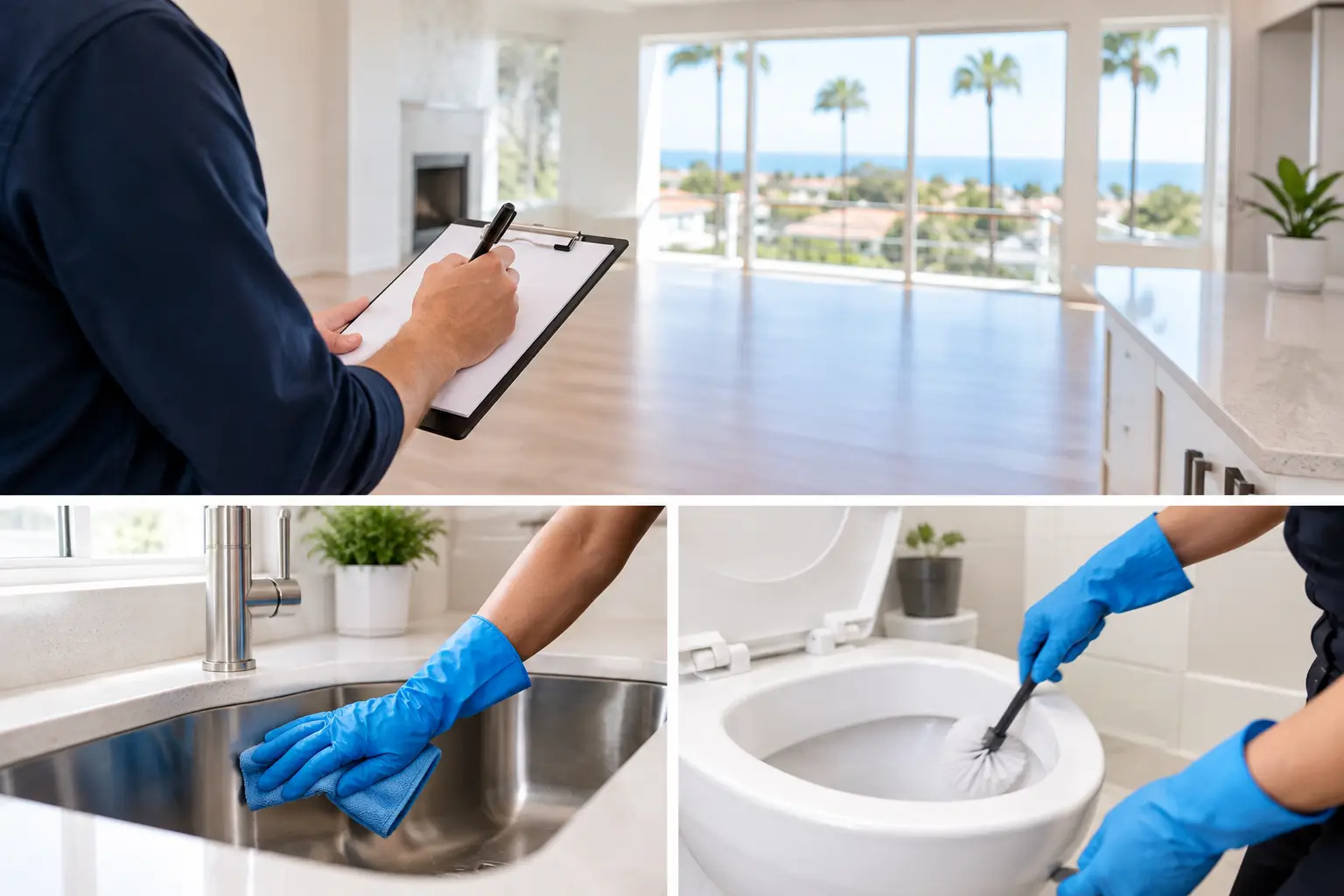
Inspect the home after the resident has fully vacated and before the next move-in. Bring the original move-in report, current lease requirements, and a simple room-by-room checklist. Take clear photos in consistent lighting and make notes that describe the actual condition rather than relying on broad terms like “dirty.”
In the kitchen, check inside the refrigerator, oven, microwave, dishwasher, cabinets, drawers, and pantry. Look at the range hood, backsplash, sink, and disposal area. In bathrooms, inspect toilets, tubs, showers, vanities, mirrors, exhaust covers, and the floor edges where dust and hair collect.
Then review living areas, bedrooms, closets, windowsills, blinds, baseboards, ceiling fans, doors, switches, and floors. Empty storage spaces and outdoor areas should also be checked if they are part of the rental. A consistent checklist makes your decision easier to explain and reduces the chance that a small but important area is missed.
If you plan to charge for cleaning, keep thorough records and apply the same standard consistently. The goal is not to find every minor imperfection. It is to document the work reasonably required to restore the property to the agreed condition.
When Professional Move-Out Cleaning Makes Sense
Some turnovers are manageable in-house, particularly when the property is lightly used and the next move-in date is flexible. Professional cleaning is often helpful when time is tight, the home has been vacant for a while, the kitchen and bathrooms need detailed attention, or several units need to be turned at once.
A professional team can also help create a more consistent presentation across a portfolio. This matters when a property is being photographed, shown to prospective renters, or prepared between short-term stays. A clean, reset space helps the next resident focus on the home itself rather than the previous occupancy.
Before scheduling service, confirm the scope. Let the cleaning team know the property size, condition, access details, areas of concern, and whether appliances, interior cabinets, blinds, or other detailed work are needed. If there are fragile surfaces, natural stone, specialty flooring, or existing damage, point those out before the appointment.
SRS Cleaning Services can help Orange County property managers and landlords with move-in and move-out cleaning when a turnover needs more time and detail than your team can reasonably handle. We confirm the scope before the appointment, so you have a clearer plan for preparing the property.
Set Expectations Before the Next Tenancy
The easiest turnover is the one prepared for months earlier. Provide a move-in checklist, explain routine care expectations, and give residents a practical move-out cleaning list well before their final week. Ask them to report leaks, appliance problems, and other issues promptly so buildup or damage does not worsen unnoticed.
Keep your standard realistic. A rental does not need to look untouched to be clean and ready, especially when finishes have normal age-related wear. But a clear, documented cleaning baseline makes fair decisions easier for everyone.
If an upcoming turnover is competing with inspections, repairs, showings, and a new move-in date, request a quote from SRS Cleaning Services. A well-scoped cleaning visit can help you hand over a space that feels cared for, without adding another long task to your week.