A rental can look clean at first glance and still leave behind the details that affect a tenant handoff, guest arrival, or property showing. The best way to inspect rental cleaning is to use the same room-by-room route every time, checking from high surfaces down to floors and testing the items a new occupant will touch first.
For property managers and short-term rental hosts, a consistent inspection protects your standards without turning every turnover into a long search for tiny flaws. For renters, it helps you catch unfinished work before a final walkthrough. Start with good light, keep your phone ready for notes or photos, and inspect the home after all cleaning supplies and personal items have been removed.
Contents
- Start with the right inspection conditions
- Check entryways and living areas
- Inspect the kitchen closely
- Review bathrooms for buildup and residue
- Check bedrooms, closets, and laundry areas
- Finish with floors, odors, and final details
- Document concerns and decide on next steps
Start With the Right Inspection Conditions
Do not inspect while cleaners are still working or while damp floors and counters are drying. Moisture can hide streaks, residue, and missed debris. Give surfaces time to dry, then turn on interior lights and open window coverings where appropriate. Daylight often reveals fingerprints on glass, dust on blinds, and marks near baseboards that overhead lighting can miss.
Walk the property in the same order each time. Many managers begin at the front door, move through common areas, then inspect the kitchen, bathrooms, bedrooms, and outdoor entry areas. This routine makes it less likely that you will overlook a closet, cabinet, or switch plate during a busy turnover.
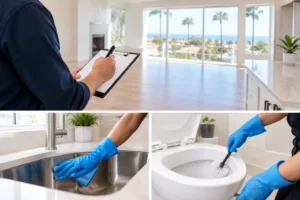
Bring a simple inspection kit: your phone for documentation, a small flashlight for corners and appliance interiors, and a clean microfiber cloth to test whether a surface still has dust. Avoid using the cloth on every surface if you are documenting cleaning quality. A quick visual check and light touch are usually enough.
Check Entryways and Living Areas
The entry sets the tone for the whole rental. Look at the front door, handle, threshold, and nearby walls. Smudges around handles and light switches are easy to miss, but they stand out to a new tenant or arriving guest. Check glass panels for streaks from more than one angle.
In living rooms and hallways, inspect ceiling corners for cobwebs, blinds or window sills for dust, and baseboards for buildup. Look behind doors and along the edges of furniture-free walls, where debris can collect. If the rental is furnished, check beneath cushions, behind side tables, and under seating rather than only cleaning around it.
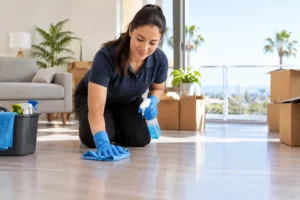
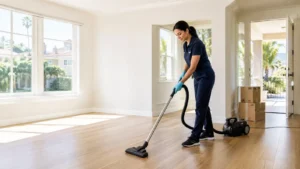
Pay attention to floors at transitions between rooms. Vacuum lines can look tidy while grit remains along the perimeter or under door swings. On hard floors, check for sticky spots, cleaner residue, and hair in corners. A floor should look clean without feeling tacky or overly wet.
Inspect the Kitchen Closely
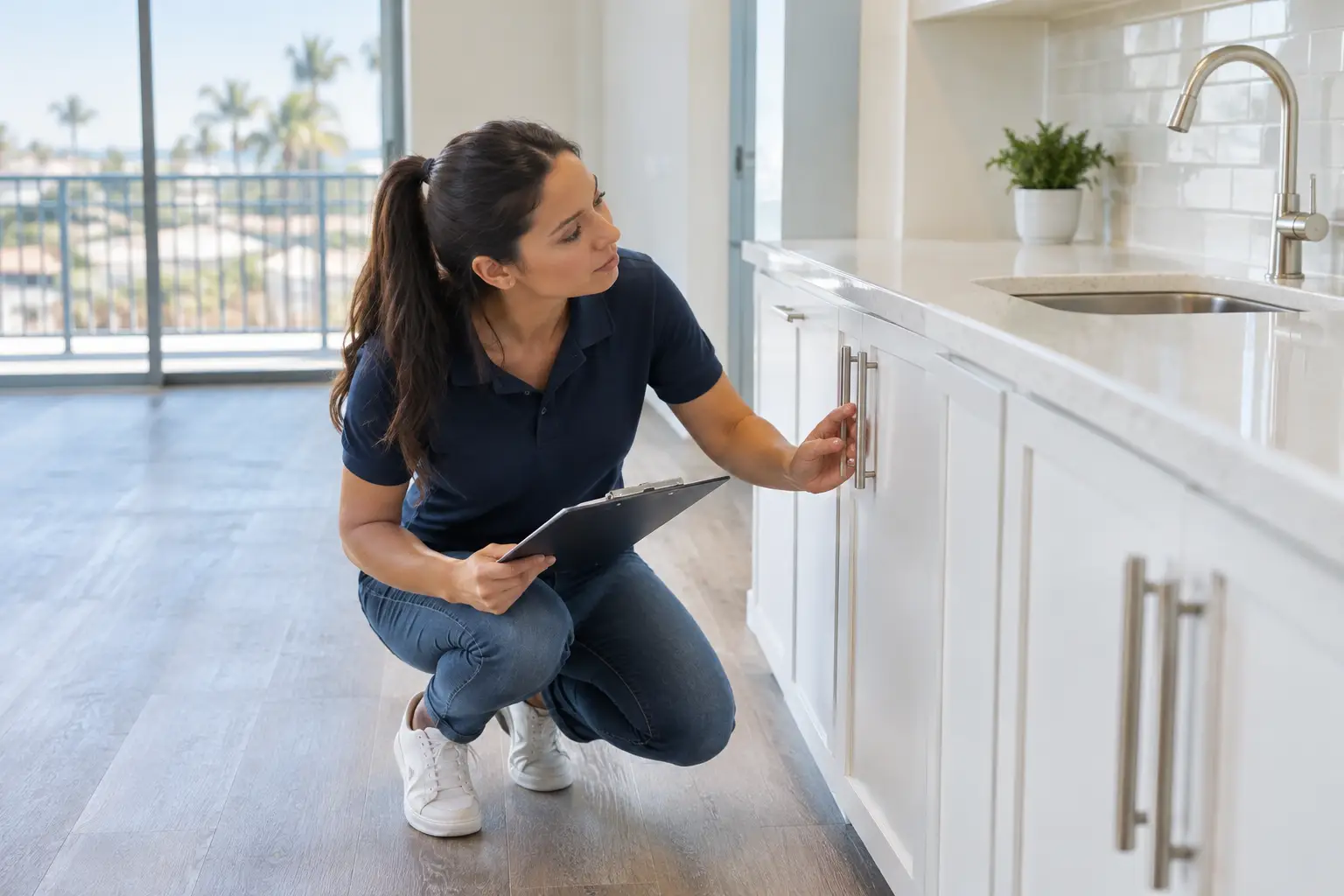
Kitchens deserve more time because they combine food residue, grease, appliances, and many touchpoints. Start at eye level with cabinet fronts, handles, backsplash tile, and light switches. Then open every cabinet and drawer. Interiors should be empty of crumbs, loose liners, and residue, especially in the utensil drawer and under the sink.
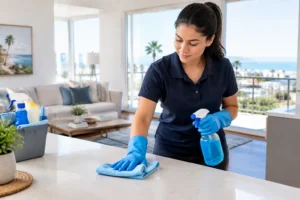
Check counters and sinks from different angles. A counter may appear clean but still have dried food spots near the backsplash or around small appliances. In the sink, inspect the drain area, faucet base, and the seam where the sink meets the counter. Do not assume a strong fragrance means the area is clean. The surface should be visibly clear and free of sticky residue.
Look Inside Appliances
Open the refrigerator, freezer, oven, microwave, and dishwasher if they are part of the rental. Check shelves, door seals, drawers, handles, and the areas underneath removable trays. Food crumbs in refrigerator tracks and splatter inside a microwave are common misses.
For ovens, inspect the door glass, racks, bottom surface, and control panel. Grease and burnt-on residue may require additional work, and the correct approach depends on the appliance manufacturer’s instructions. Avoid using harsh products or abrasive pads on finishes that can scratch or discolor.
Review Bathrooms for Buildup and Residue
A bathroom can be disinfected or freshly scented and still look unfinished if mineral buildup, hair, or streaking remains. Start with the mirror and vanity light. Look closely at the faucet base, sink overflow opening, cabinet handles, drawer interiors, and the wall near the toilet paper holder.
The shower or tub should be checked with the door or curtain fully open. Inspect corners, grout lines, ledges, soap holders, shower doors, and tracks. Hard-water spotting is especially noticeable on glass doors and chrome fixtures. In Orange County rentals, mineral residue can be a recurring issue, so a quick glance at the showerhead and faucet aerator is worthwhile.
Look around the toilet base, behind the seat hinges, and at the floor edges. Check that wastebaskets are empty and that no hair remains in the tub, sink, or corners. If you see discoloration, damaged caulk, a persistent odor, or signs of a leak, document it separately. Cleaning may improve the appearance, but it is not a substitute for maintenance or repair.
Check Bedrooms, Closets, and Laundry Areas
Bedrooms should feel ready to unpack in, not simply vacant. Open closets and check shelf tops, rods, corners, floor edges, and sliding-door tracks. Run your eyes along the wall behind doors and around outlet covers, where scuffs and dust often remain.
If the property includes ceiling fans, inspect blades from the side rather than only from below. Dust can sit on top even when the fan looks fine from the floor. Check window sills, blinds, and screens where accessible. Do not force damaged blinds or windows during an inspection.
In a laundry area, look behind and beside machines if it is safe and accessible. Check lint, detergent residue, shelf dust, and the floor around appliance feet. Do not move heavy appliances alone or attempt to clean electrical connections, venting, or any area with visible damage.
Finish With Floors, Odors, and Final Details
Your final pass should focus on what people notice immediately: floors, smell, glass, and touchpoints. Walk slowly through each room and look toward the light. This angle helps reveal streaks on mirrors, marks on painted walls, and uneven floor cleaning.
A neutral, fresh space is the goal. Heavy fragrance can cover an odor temporarily without solving its source. If you notice a persistent smoke, pet, sewage, or mildew-like odor, record where it is strongest and investigate through the appropriate maintenance process. Do not treat an unknown odor with stronger chemicals or combine cleaning products.
Before leaving, check these often-missed final details:
- Interior and exterior sides of the front door
- Thermostat, light switches, and door handles
- Trash bins, recycling containers, and liners
- Window tracks and sliding-door tracks
- Patio or balcony edges, if included in the cleaning scope
Document Concerns and Decide on Next Steps
When something is missed, take a clear photo, note the room and location, and describe the condition plainly. “Grease on range hood” or “hair in primary bathroom shower track” is more useful than “kitchen not clean.” This creates a clear record for your cleaning team, maintenance contact, or turnover file.
It also helps to separate cleaning concerns from damage and normal wear. A dusty shelf or streaked mirror may need a cleaning touch-up. Chipped tile, stained grout that will not lift, peeling finish, or a damaged appliance should be documented as a condition issue. Trying to scrub harder is not always the answer and can make some surfaces worse.
If the rental has a tight turnover window, multiple bathrooms, appliance buildup, or a home that needs to be ready for listing photos or new guests, professional help can save time and reduce last-minute pressure. SRS Cleaning Services can confirm the cleaning scope before the appointment so you know what will be addressed.
A careful inspection is not about finding fault. It is about making sure the next person walks into a clean, comfortable space with fewer surprises. When the work is more than your schedule can absorb, request a quote and let your turnover plan start with a clearer, calmer checklist.