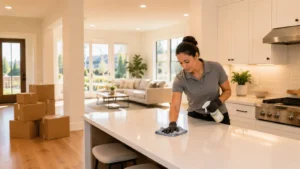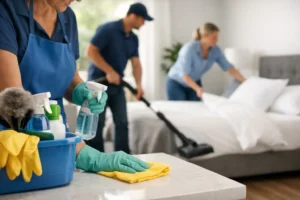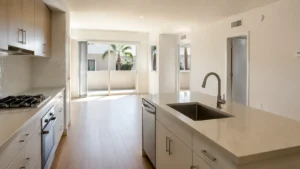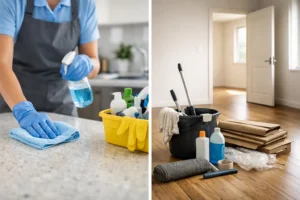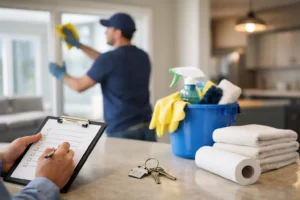
An apartment turnover cleaning checklist helps property managers move a vacant unit from move-out condition to ready-for-showing without losing track of details, access, or vendor handoffs. The best checklist does more than name surfaces to wipe. It puts inspection, repairs, cleaning, quality control, and documentation in the right order so work is not repeated.
This practical guide is designed for apartment communities and rental-property teams throughout Orange County. Use it as a master workflow, then adapt it to the unit, lease requirements, property standards, and work your maintenance team has already approved.
What apartment turnover cleaning should accomplish
Turnover cleaning prepares a vacant apartment for its next approved use: maintenance inspection, marketing photos, a prospective-resident tour, or move-in. It is different from routine occupied-apartment cleaning because cabinets are empty, appliances can be cleaned inside, and areas normally blocked by furniture are accessible.
Cleaning is only one part of the turn. Damage assessment, abandoned-property handling, pest treatment, painting, repairs, flooring work, and safety checks may require separate vendors or authorized staff. A clear scope prevents a cleaner from being asked to make repair decisions and keeps dust-producing work from undoing a completed clean.
For a broader overview of coordination and common turnover priorities, see SRS Cleaning’s rental turnover cleaning guide for property managers. The checklist below turns that strategy into a repeatable sequence.
Apartment turnover cleaning checklist: the correct order
1. Inspect and document the vacant unit
Begin only after possession and entry requirements have been handled according to your property’s procedures. Walk the unit before moving supplies inside. Record the starting condition with dated photos or your approved inspection system, and separate cleaning issues from damage or maintenance issues.
- Confirm the unit number, floor plan, keys, codes, and authorized access window.
- Photograph kitchens, bathrooms, floors, walls, windows, closets, and appliance interiors.
- Flag leaks, broken fixtures, damaged screens, loose hardware, pest evidence, or other concerns for the appropriate team.
- Identify belongings, trash, or bulky items that must be handled before cleaning.
- Note surfaces that need special care, including stone, stainless steel, wood, or delicate finishes.
This first walk-through creates a shared definition of the work. It also gives the cleaner a reliable way to report a pre-existing stain, chip, or worn finish without confusing it with a missed cleaning task.
2. Clear the unit and complete dust-producing work
Schedule removal, repairs, patching, sanding, painting, flooring replacement, and similar work before the final clean whenever possible. If a repair must happen afterward, identify the affected room and plan a focused touch-up visit rather than assuming the unit will stay move-in ready.
- Remove approved trash and remaining materials.
- Finish repairs and allow paint, grout, caulk, or other materials to cure as directed.
- Remove contractor packaging, labels, tape, and protective coverings that are ready to come off.
- Confirm electricity and water are available where needed for cleaning.
- Make sure maintenance tools and debris are out of the cleaner’s path.
3. Clean high areas before low areas
Work from dry tasks to wet tasks, from high surfaces to low surfaces, and from the farthest room toward the exit. That sequence keeps settled dust from falling onto finished counters or floors. A practical order is vents and ledges, cabinets and fixtures, counters and appliances, baseboards, and then flooring.
Room-by-room turnover cleaning tasks
Kitchen
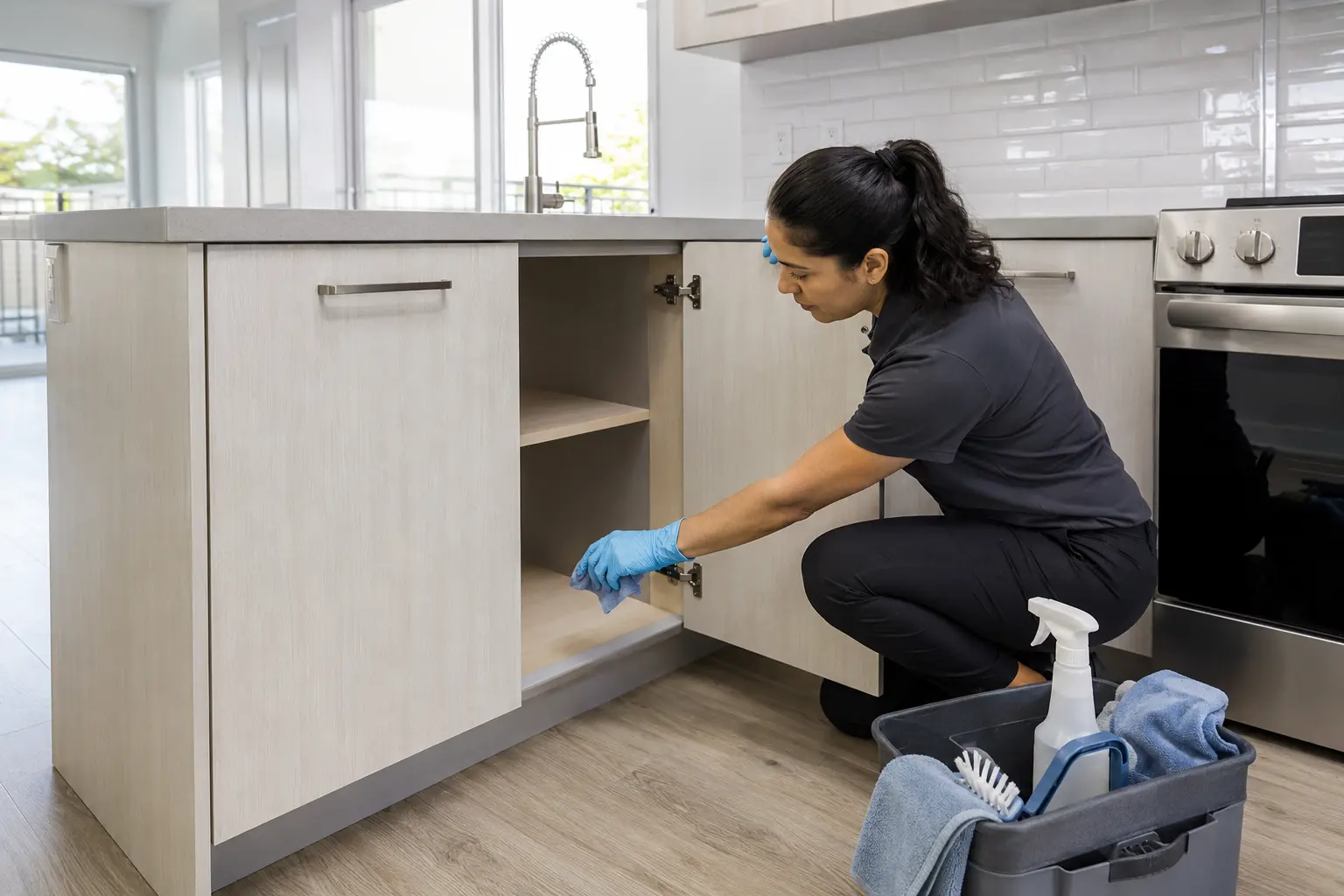
- Remove loose crumbs and debris from empty drawers, shelves, and cabinet corners.
- Wipe cabinet and drawer interiors, fronts, handles, and accessible edges using a surface-appropriate method.
- Clean countertops, backsplash, sink basin, faucet, drain area, and exposed plumbing cabinet surfaces.
- Clean the refrigerator interior, drawers, shelves, seals, exterior, and accessible top and sides when included in the scope.
- Clean the oven and cooktop according to the appliance finish; wipe knobs, control panels, hood exterior, and accessible filters.
- Wipe the dishwasher interior lip, exterior, controls, and surrounding cabinet faces.
- Check corners, toe kicks, baseboards, wall plates, and the floor beneath movable items.
Appliances vary, so the scope should say whether interior oven and refrigerator cleaning is included and whether appliances may be moved. Cleaners should not disconnect gas, water, or electrical connections unless they are specifically trained and authorized to do so.
Bathrooms
- Clean and disinfect appropriate high-touch surfaces such as handles, switches, and fixture controls.
- Remove soap residue and mineral buildup from tubs, showers, tile, surrounds, doors, and tracks using finish-safe products.
- Clean the toilet, including the seat, hinges, exterior, base, and nearby floor area.
- Clean the vanity, sink, faucet, mirror, empty storage, and accessible plumbing cabinet surfaces.
- Wipe exhaust covers, ledges, doors, trim, baseboards, and wall plates.
- Check the room from several angles for hair, dust, streaks, and residue.
Persistent discoloration, failed caulk, damaged grout, corrosion, or an active leak may need maintenance rather than additional scrubbing. Flagging that distinction early prevents wasted time and protects the finish.
Bedrooms, living areas, closets, and halls
- Dust accessible vents, fan exteriors, light fixtures, ledges, door tops, and closet shelving.
- Wipe doors, frames, handles, switches, wall plates, windowsills, tracks, and baseboards.
- Remove cobwebs and check corners, closet floors, and the space behind open doors.
- Spot-clean washable marks only when the method is appropriate for the paint and within scope.
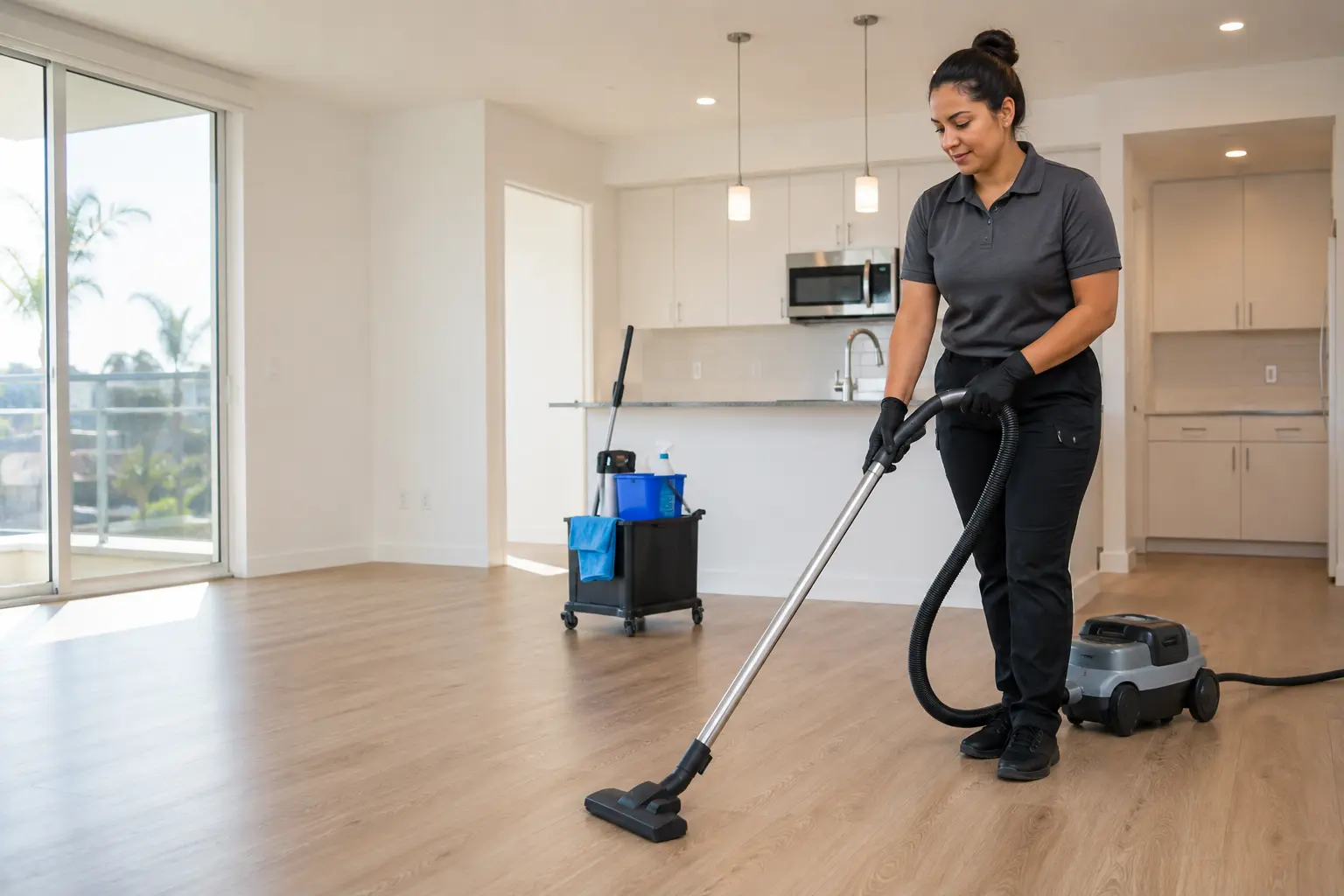
- Vacuum carpet edges and open areas or clean hard floors with a finish-appropriate process.
- Complete a final edge check where dust and hair tend to collect.
If the unit needs a more extensive vacant-home service, review SRS Cleaning’s move-in and move-out cleaning service and confirm the exact unit scope before work begins.
Build a pass-or-correct quality-control step
A checklist is only useful when every item has a clear completion standard. “Clean kitchen” is subjective. “Cabinet interiors are empty and free of visible crumbs, dust, and residue” is easier to inspect. Define whether each item passes, needs correction, is excluded, or requires maintenance.
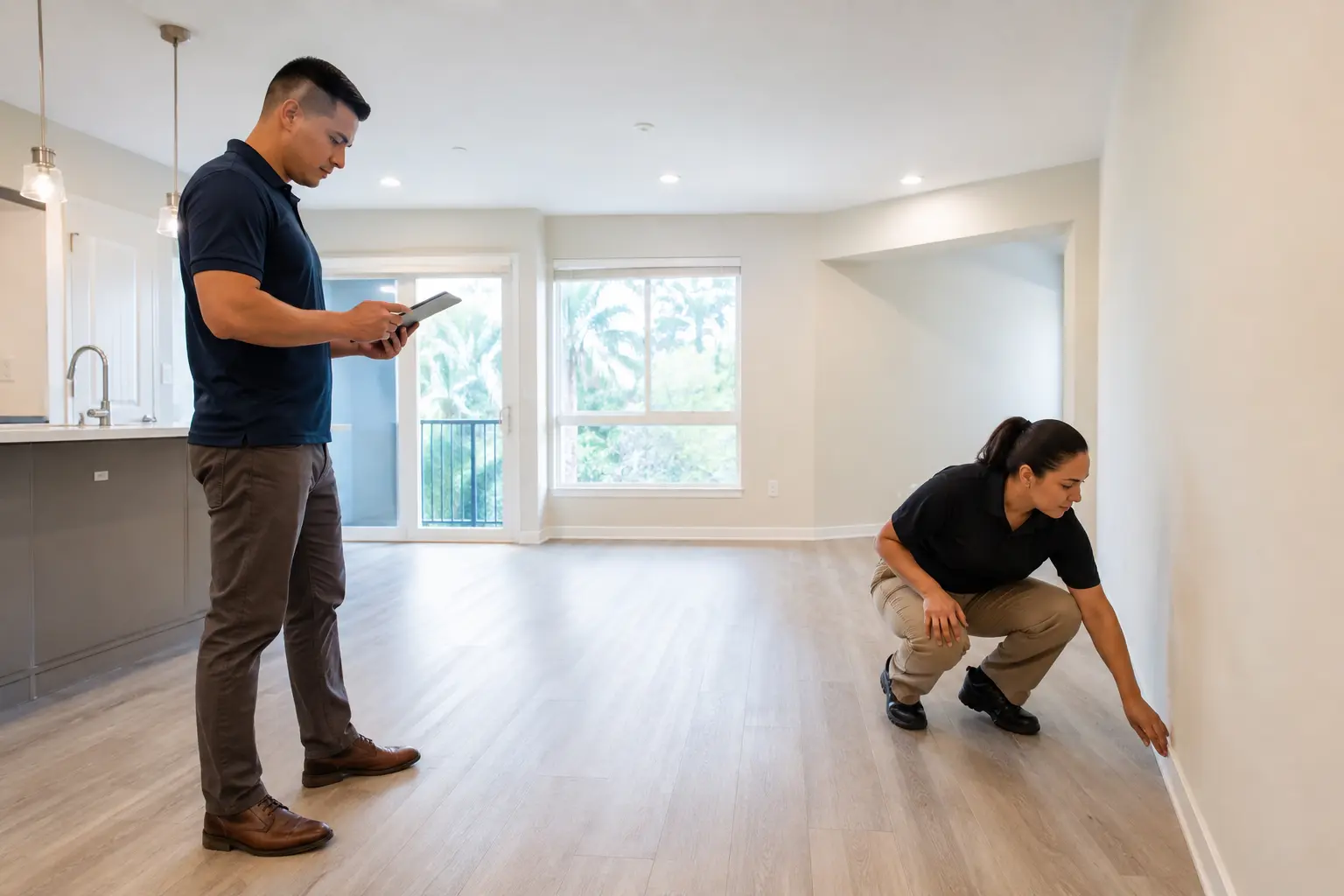
During the final walk-through:
- Enter with clean shoes or protective covers if the flooring requires them.
- Turn on available lights and inspect from the doorway before moving through the room.
- Open empty cabinets, drawers, closets, appliances, and shower doors included in the scope.
- Look across reflective surfaces for streaks and check floor edges at eye level.
- Record corrections with a room, item, and photo instead of a vague message.
- Confirm corrections and save final condition photos in the property’s approved system.
- Secure windows, turn off lights and water, remove supplies, and follow the approved key-return process.
A consistent inspection method is especially important across multiple units or team members. SRS Cleaning’s guide to apartment cleaning priorities that matter most can help managers decide which details deserve the most attention during the handoff.
How to shorten unit downtime without cutting cleaning quality
Faster readiness usually comes from removing uncertainty, not rushing the final clean. Give each vendor a defined start condition, scope, access method, and completion signal. A shared turn board or property-management workflow can show which step is ready and which is blocked.
- Use one accountable coordinator. A single contact can approve scope questions and prevent conflicting instructions.
- Group similar work. When appropriate, scheduling comparable unit types together can simplify supplies, access, and inspection.
- Share exclusions in advance. Identify repairs, permanent stains, worn finishes, and owner-responsibility items before the cleaning team arrives.
- Protect completed work. If vendors must re-enter, define pathways and require debris removal.
- Reserve time for correction. A realistic handoff window is more useful than declaring the unit ready before inspection.
Turn times depend on unit size, condition, scope, utilities, access, staffing, and the amount of repair work. Avoid promising a universal number of hours. Instead, provide complete unit details so the cleaning team can set a realistic plan.
What to send when requesting a turnover-cleaning quote
A complete request reduces back-and-forth and helps the cleaner price the actual work rather than a generic apartment. Include:
- Property city and unit type, including approximate size and bedroom/bath count.
- Current condition and whether belongings or construction debris remain.
- Requested rooms, appliance interiors, windows or tracks, cabinets, floors, and add-on priorities.
- Surface or appliance details that may affect cleaning methods.
- Access procedure, parking or loading instructions, and on-site contact.
- Earliest authorized start, target inspection window, and any vendor dependencies.
- Photo, documentation, invoicing, or purchase-order requirements.
SRS Cleaning serves communities across its Orange County service area. Confirm availability and scope for a specific property rather than linking work to an unpublished city page.
Apartment turnover cleaning checklist FAQ
What is apartment turnover cleaning?
It is a vacant-unit cleaning service performed between occupants. Depending on the agreed scope, it can include accessible surfaces, empty cabinets and drawers, appliance interiors, bathrooms, baseboards, and floors. Repairs, painting, hauling, and restoration are separate unless specifically included by the responsible provider.
Should maintenance or cleaning happen first?
Most dust-producing repairs, painting, and flooring work should be complete before the final clean. Inspection and urgent maintenance come first; final floor care generally comes near the end. If work must overlap, document the handoff and plan a touch-up.
How long does apartment turnover cleaning take?
There is no reliable one-size-fits-all duration. Unit size, condition, requested detail, appliance interiors, flooring, access, utilities, and the number of cleaners all affect timing. Photos and a complete scope help produce a more useful estimate.
How should managers document the final clean?
Use the property’s approved inspection system to record room-by-room pass, correction, exclusion, or maintenance status. Dated photos, a named reviewer, and a clear correction deadline make the handoff easier to verify.
Can one checklist work for every unit?
Use one master standard for consistency, but adapt it for floor plan, finishes, appliances, occupancy condition, and approved scope. The goal is a repeatable process without treating unlike units as identical.
Prepare the next Orange County unit with a clearer plan
A reliable apartment turnover cleaning checklist connects the people doing the work with the person approving the result. Start with documentation, finish repairs before the final clean, inspect against specific standards, and record the handoff. That process supports smoother scheduling and a more consistent resident-ready experience.
If your property team needs help cleaning a vacant apartment, request a cleaning quote from SRS Cleaning. Share the unit details, condition, scope, and target inspection window so the team can confirm an appropriate plan.