A turnover can look clean at first glance and still fall short where it matters: grease inside cabinets, dust along baseboards, water spots on shower glass, or debris left in a patio corner. Rental property cleaning standards give landlords, property managers, and tenants a practical way to define “ready” before the next resident walks through the door.
The right standard is not simply a fast surface wipe. It is a condition-based review of the home’s kitchens, bathrooms, floors, fixtures, storage areas, and final presentation. Your lease, property condition, and timeline all affect the scope, but a clear checklist reduces missed details and last-minute disagreements.
Contents
- What a turnover cleaning standard should cover
- Room-by-room rental cleaning expectations
- What tenants can handle themselves
- When professional turnover cleaning makes sense
- How to inspect the property before handoff
- Setting a repeatable standard for future turnovers
What a Turnover Cleaning Standard Should Cover
A useful cleaning standard describes the condition you expect, not just the task someone should perform. “Clean the bathroom” leaves room for interpretation. “Remove soap residue from the shower, clean the toilet inside and out, wipe the vanity and cabinet fronts, and leave mirrors streak-free” is easier to inspect.
For most rentals, the goal is a home that feels cared for, sanitary in appearance, and ready for ordinary use. It should be free of visible dust, loose debris, food residue, personal items, and strong lingering odors. Appliances, plumbing fixtures, cabinets, and floors should be cleaned according to their material and condition.
That does not mean every aged surface must look brand new. Normal wear, permanent discoloration, damaged caulk, chipped paint, worn carpet, and scratched flooring are maintenance or repair issues, not problems cleaning alone can solve. Separating cleaning needs from repairs helps you plan the turnover accurately and communicate fairly.
Room-by-Room Rental Property Cleaning Standards
Kitchen: Clean Beyond the Counters
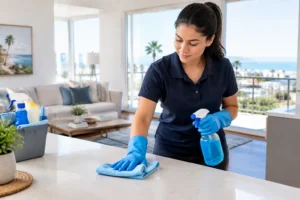
The kitchen is often the most time-consuming part of a turnover because residue builds up in places that are easy to skip. Counters, backsplash, sink, faucet, cabinet fronts, drawers, and shelves should be emptied of debris and wiped clean. Check handles, switch plates, and the edges around appliances, where fingerprints and grease collect.
The refrigerator should be empty, wiped inside and out, and checked for spills in drawers and door bins. The oven, cooktop, microwave, and range hood need attention based on their condition. Built-on grease may require more than a general wipe-down, and cleaners should always be suitable for the appliance finish. Avoid abrasive pads on delicate surfaces or labels that warn against them.
Do not treat appliances as an afterthought. A clean kitchen can still feel unfinished when the microwave has splatters or the oven door has visible buildup.
Bathrooms: Focus on Buildup and Detail Work
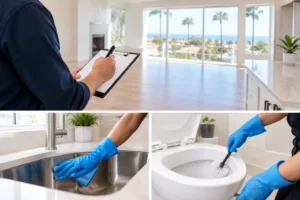
A bathroom standard should cover the toilet, tub or shower, vanity, sink, mirror, fixtures, floors, cabinet interiors, and reachable ledges. Soap scum, hard-water spotting, toothpaste residue, and hair are common turnover issues. In Orange County homes, mineral deposits can be especially noticeable on faucets and shower glass.
Use products according to their labels and test a small, less visible area when you are unsure about a finish. Natural stone, specialty tile, painted surfaces, and some fixture coatings can be damaged by the wrong product or harsh scrubbing. Never mix bleach with vinegar, ammonia, or other cleaners.
If staining, damaged grout, persistent odors, or possible moisture damage remains after normal cleaning, document it and determine whether repair or specialized assessment is needed. Cleaning should not be used to cover up a maintenance concern.
Bedrooms and Living Areas: Make the Space Easy to Inspect
In bedrooms, living rooms, hallways, and dining areas, the expected result is straightforward but detailed: dust-free reachable surfaces, clean floors, empty closets, wiped shelves, and no remaining trash or personal belongings. Pay attention to ceiling fans, blinds, window sills, baseboards, interior doors, and light switch plates. These are the areas a new resident notices when the main room is otherwise empty.
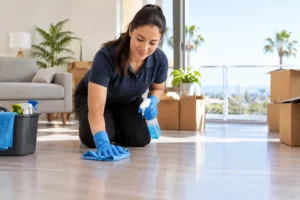
Vacuum carpet slowly enough to remove loose debris from traffic areas and closet edges. For hard flooring, begin by removing dry soil before mopping. Excess water can be a problem for some wood, laminate, and vinyl floors, so follow the flooring manufacturer’s care instructions instead of using a one-method-fits-all approach.
Entry, Laundry, and Outdoor Areas: Do Not Leave Them for Last
The entry creates the first impression, while laundry rooms and patios often reveal what was skipped during a rushed move-out. Wipe the inside of the front door, remove cobwebs from reachable corners, clean accessible light fixtures where appropriate, and clear exterior entry debris.
For laundry areas, check behind removable lint screens, wipe appliance exteriors, and clean reachable floor space. Patio, balcony, garage, or storage-area expectations should be stated separately because access, size, and buildup vary widely. A quick sweep may be enough for one property, while another may need a more thorough scope confirmed before the appointment.
What Tenants Can Handle Themselves
A tenant who starts early can often complete a solid move-out clean without outside help. Begin with packing and removal, then work from high surfaces down to floors. Cleaning an empty room is faster and makes condition issues easier to spot.
A practical self-cleaning approach is to tackle one room at a time, allow appropriate dwell time for labeled cleaners, and save vacuuming and floor cleaning until dust and debris have been removed from higher surfaces. Take dated photos after cleaning, especially of appliances, bathrooms, flooring, and any pre-existing wear.
Professional help may be worthwhile when time is short, the home has been heavily lived in, buildup is substantial, or the property needs to be ready for an incoming tenant quickly. It can also help when a renter wants a second set of eyes before keys are returned. Professional cleaning does not guarantee a security-deposit outcome, since deposits and property condition are governed by the lease and applicable requirements.
When Professional Turnover Cleaning Makes Sense
Property managers and owners often need more than a basic house cleaning. A turnover has a deadline, a defined inspection standard, and multiple moving parts. The cleaner may need to work around painters, maintenance visits, carpet service, appliance delivery, or listing photography.
This is where a confirmed scope matters. Before scheduling, identify the property size, number of bathrooms, flooring types, appliance condition, visible buildup, and any areas that need special attention. If the home is furnished, clarify which rooms and surfaces are included. If it is vacant, specify whether closets, cabinets, interior windows, patios, and garages are part of the requested work.
At SRS Cleaning Services, we help Orange County property managers and renters prepare homes with a cleaning scope confirmed before the appointment. That clarity helps prevent assumptions and gives you a more useful final walkthrough.
How to Inspect the Property Before Handoff
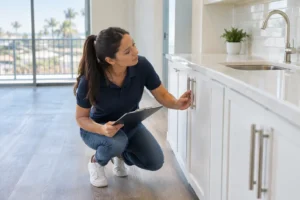
Inspect after the cleaning is complete and before the next resident arrives. Start at the entry and follow the same route through the home every time. Open cabinets and drawers, look at surfaces in natural light where possible, and view floors from more than one angle. A room can appear finished from the doorway while dust, residue, or debris remains in corners.
Use this final check:
- Kitchen surfaces, cabinet interiors, and appliances are empty and free of visible residue.
- Bathrooms have no hair, soap buildup, obvious water spots, or trash.
- Floors are free of loose debris, and corners, closets, and edges have been checked.
- Reachable ledges, blinds, baseboards, doors, and switches are presentable.
- Personal items, food, mail, and leftover supplies have been removed unless intentionally left for the next resident.
- Repairs or condition concerns are documented separately from cleaning items.
A short written punch list is useful if something still needs attention. Keep it specific: “clean residue from lower oven drawer” is easier to act on than “kitchen needs work.”
Set a Repeatable Standard for Future Turnovers
The most dependable rental property cleaning standards are the ones you can use every time. Keep a room-by-room checklist, note material-specific cautions for each property, and document any recurring trouble spots. Over time, this makes scheduling easier and helps you decide whether a standard turnover clean or a deeper cleaning scope is appropriate.
If you are preparing a rental in Orange County and want help defining the work before a move-in, move-out, or listing deadline, request a quote from SRS Cleaning Services. You will have a clearer plan for the cleaning, more time for the rest of the turnover, and a home that is easier to hand off with confidence.