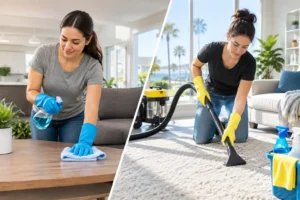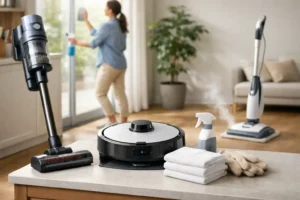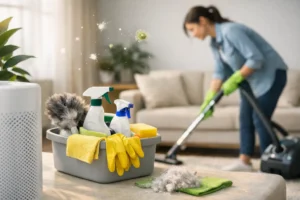
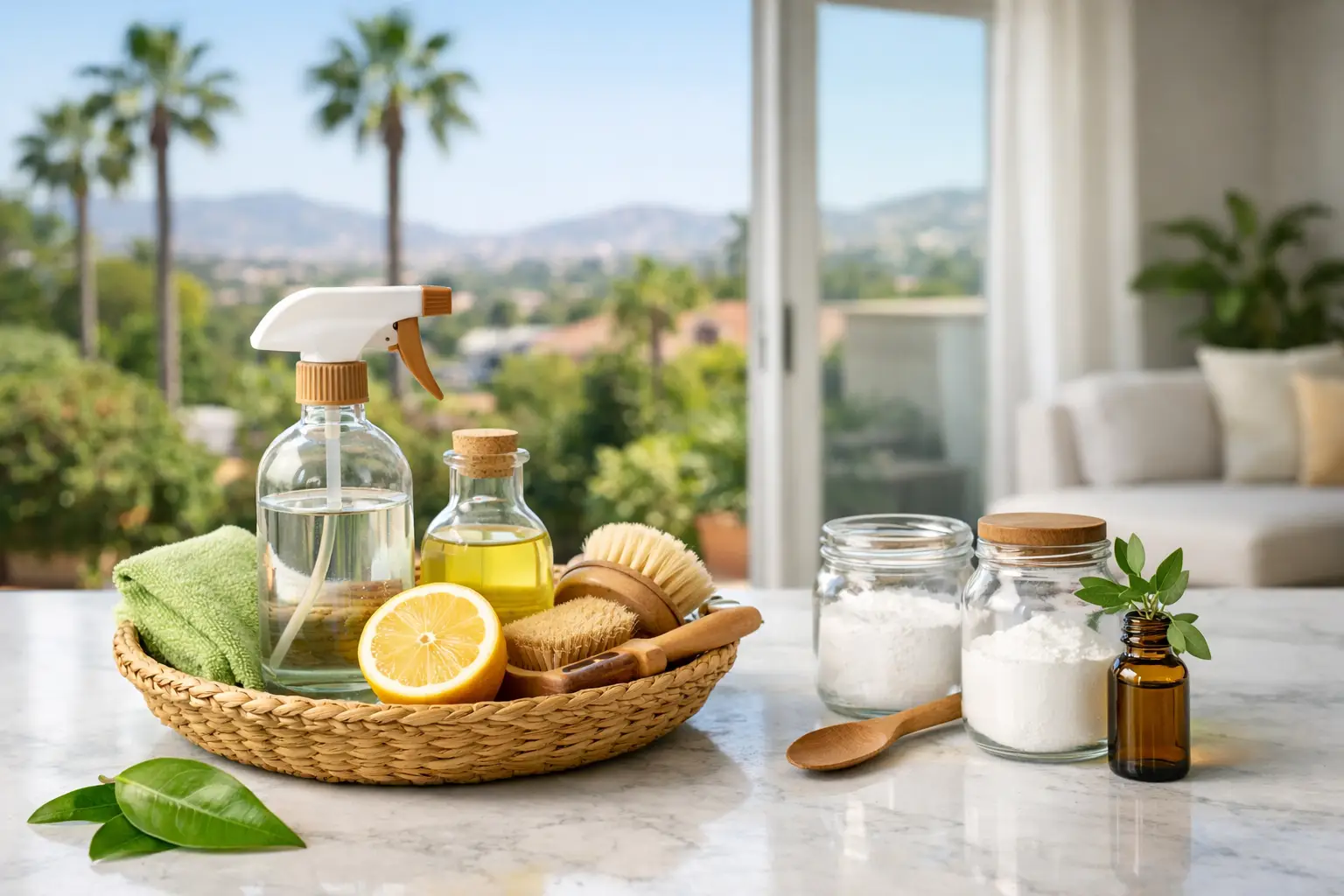
Green cleaning means choosing the least intensive method that safely does the job, using products exactly as labeled, protecting each surface, and reducing unnecessary waste. Start with routine cleaning, choose products with transparent directions, and disinfect only when the situation calls for it.
You do not need to replace everything under the sink or follow a complicated routine. A few repeatable habits can leave a space feeling fresher while making product choices easier to understand.
Table of Contents
- What does green cleaning mean?
- What supplies should you prepare?
- How do you build a simple green-cleaning routine?
- How should you choose cleaning products?
- How do you protect different surfaces?
- What common mistakes should you avoid?
- What should you do when cleaning leaves poor results?
- When does professional help make sense?
- Green cleaning FAQ
What does green cleaning mean?
Green cleaning is a practical approach to removing dust, soil, grease, and everyday messes while considering product ingredients, packaging, indoor air, water use, and surface life. It is not a promise that one product is harmless in every situation.
A useful routine begins with the task and surface—not the marketing language on the bottle. “Natural,” “plant-based,” and “eco-friendly” may describe part of a product, but the label directions still determine where and how it should be used. Test unfamiliar products in an inconspicuous area and follow the surface manufacturer’s care instructions.
The goal is a clean, comfortable result with fewer unnecessary products and less avoidable waste. That can mean using washable cloths, preventing buildup with regular care, selecting an appropriate cleaner, and applying only the amount directed on the label.
What supplies should you prepare?
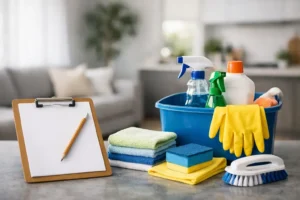
Keep the supply list short and match it to the rooms you plan to clean. A basic setup may include:
- Washable microfiber or other surface-safe cleaning cloths
- A vacuum with the appropriate attachment for floors and upholstery
- A mop or floor tool approved for the flooring material
- A mild cleaner labeled for the intended surface
- Gloves or eye protection when the product label requires them
- Separate cloths or tools for bathrooms and food-preparation areas
- A small container for collecting items that belong in another room
Before starting, clear loose clutter, check labels, open windows or use normal ventilation when directions recommend it, and keep products away from children and pets. Avoid transferring a cleaner into an unlabeled container.
How do you build a simple green-cleaning routine?
The easiest routine is one you can repeat before residue and clutter become difficult to manage. Use these steps as a flexible starting point:
- Remove clutter first. Put away loose items so surfaces can be cleaned without repeatedly moving around them.
- Work from higher areas to lower ones. Dust shelves and fixtures before cleaning counters and floors.
- Dry-clean before adding moisture. Vacuum or remove loose soil so it does not turn into streaks or residue.
- Use the correct product sparingly. Follow the label instead of assuming more product will clean better.
- Give attention to high-use areas. Kitchen counters, sinks, bathroom fixtures, entry floors, and frequently handled surfaces often create the biggest visible difference.
- Clean tools after use. Launder cloths according to their care instructions and allow reusable tools to dry before storage.
Short resets can prevent a larger weekend project. Wiping cooking residue after a meal, drying bathroom fixtures, and vacuuming high-traffic areas regularly can make a future deep cleaning easier to manage.
How should you choose cleaning products?
Look for a product that identifies its intended surfaces, provides clear directions, and fits the actual task. If you want an independently reviewed option, the EPA Safer Choice program evaluates every intentionally added ingredient and also considers performance, packaging, and other criteria. EPA maintains a searchable list of certified products, including fragrance-free options.
Cleaning, sanitizing, and disinfecting are not interchangeable. The CDC explains that routine cleaning with soap or detergent removes most dirt and germs; disinfecting is generally most relevant when someone is sick or recently visited while sick. When disinfection is appropriate, clean visible soil first and follow the product label for surface compatibility, protective equipment, application, and contact time.
Never mix cleaning products. In particular, CDC safety reporting warns that mixing bleach with ammonia or acids can generate dangerous gases. Do not invent a dilution or substitute an online recipe for the manufacturer’s directions.
How do you protect different surfaces?
A product can be suitable for one surface and damaging to another. Check the material before cleaning and follow its manufacturer’s care instructions.
- Wood and laminate: limit moisture, wipe spills promptly, and avoid assuming a floor product is safe for cabinets or furniture.
- Natural stone: use a stone-compatible product; acidic cleaners can affect some materials.
- Stainless steel: work with the visible grain and use a nonabrasive method. See the SRS guide to cleaning stainless steel without streaks.
- Painted walls and trim: start gently, test first, and avoid soaking the finish. The same cautious approach applies when cleaning baseboards.
- Electronics: follow the device manufacturer’s instructions and avoid spraying liquid directly onto screens, ports, or controls.
If the material is unknown, stop before using a strong chemical or abrasive tool. A small amount of soil is usually easier to correct than a dulled finish, etched stone, swollen laminate edge, or scratched appliance panel.
What common mistakes should you avoid?
- Using too much product: excess cleaner can leave a film that attracts soil or creates streaks.
- Skipping the label: a familiar brand may have different directions for different formulas.
- Calling every task “disinfection”: routine cleaning is often sufficient; use disinfectants for situations and surfaces covered by their labels.
- Using one cloth everywhere: separate tools for bathrooms and food-preparation areas to avoid moving soil between them.
- Ignoring dwell or contact time: wiping a disinfectant away immediately may not follow the label.
- Assuming green means risk-free: certified or plant-derived products still require correct storage and use.
- Forcing a DIY solution: stop when a method changes the color, sheen, texture, or finish of the surface.
What should you do when cleaning leaves poor results?
If a surface looks streaky, first check whether too much product was used. Use a clean cloth and the rinse or finishing method allowed by the manufacturer. Do not add a second chemical on top of the first.
If residue returns quickly, inspect the tool as well as the cleaner. A saturated cloth, dirty mop pad, or vacuum attachment can redistribute soil.
If an odor remains, remove the source instead of adding more fragrance. Empty waste containers, clean spills, launder washable fabrics as directed, and use normal ventilation when conditions allow.
If the finish changes, stop immediately. Blot away excess moisture if safe, keep the product container and instructions available, and contact the surface manufacturer or an appropriate specialist before trying another method.
When does professional help make sense?
Professional help can be useful when buildup covers several rooms, the available time is limited, the surface materials need different care, or a detailed reset would make regular upkeep easier. It can also help before or after a move when the scope is larger than routine cleaning.
Before requesting service, identify any sensitivities, preferred fragrance level, delicate surfaces, and products that must or must not be used. Clear information helps the cleaning team plan the work and protects expectations on both sides.
SRS Cleaning provides house cleaning services in Orange County. If a practical cleaning plan would give you back time, request a quote and share the rooms, priorities, and surface concerns you want the team to review.
Green cleaning FAQ
Does green cleaning mean using only homemade cleaners?
No. Green cleaning can include commercially prepared products with clear directions and third-party certifications. Homemade mixtures are not automatically safer or compatible with every surface.
Do I need to disinfect every surface?
Usually not. CDC guidance says routine cleaning is sufficient in many household situations. Disinfection may be appropriate when someone is sick or for another specific need; always follow the disinfectant label.
How can I reduce cleaning-product waste?
Use the labeled amount, choose refill or concentrate formats when practical, maintain washable tools, and prevent buildup with short regular cleaning sessions. Buy only products that match the surfaces you actually clean.
What is the safest first step on an unfamiliar surface?
Check the manufacturer’s care guidance, choose a product labeled for the material, and test it in a hidden area. Stop if the color, sheen, or texture changes.