A room can look freshly cleaned and still leave someone sneezing, congested, or uncomfortable. Dust can become airborne during vacuuming, strong fragrances can irritate sensitive noses, and damp cloths or mops can spread rather than remove particles when they are not changed often enough. Learning how to reduce cleaning allergens is less about using more products and more about using the right routine, in the right order, with a little more care.
For busy households, the goal is practical: a home that feels clean without turning cleaning day into a source of irritation. The same principles can help offices, rental turnovers, and move-in or move-out cleaning projects, where dust and odors have often had time to build up.
Start by Controlling Dust Before It Spreads
Dust is not just dirt. It can contain pollen, pet dander, fabric fibers, dust mite debris, and particles brought in from outside. In Orange County, open windows and frequent indoor-outdoor living can be enjoyable, but they can also bring pollen and fine debris into the home.
The order of your cleaning matters. Work from high to low so settled dust does not land on surfaces you have already cleaned. Start with ceiling fans, vents, shelves, blinds, and high furniture. Then clean counters, tables, and lower surfaces before finishing with floors.
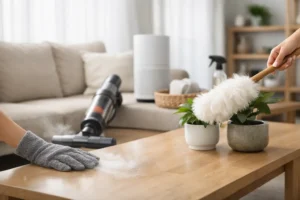
Use a slightly damp microfiber cloth rather than a dry duster whenever possible. Dry dusting can push particles into the air, while microfiber is designed to capture them. Rinse or replace the cloth when it becomes visibly dirty. A single dusty cloth moved from room to room can redistribute allergens instead of removing them.
Pay special attention to overlooked places: baseboards, window sills, lampshades, behind televisions, under beds, and the tops of cabinets. These areas do not need daily attention, but adding them to a regular deep-cleaning rotation prevents a larger buildup later.
Vacuum in a Way That Supports Better Air Quality
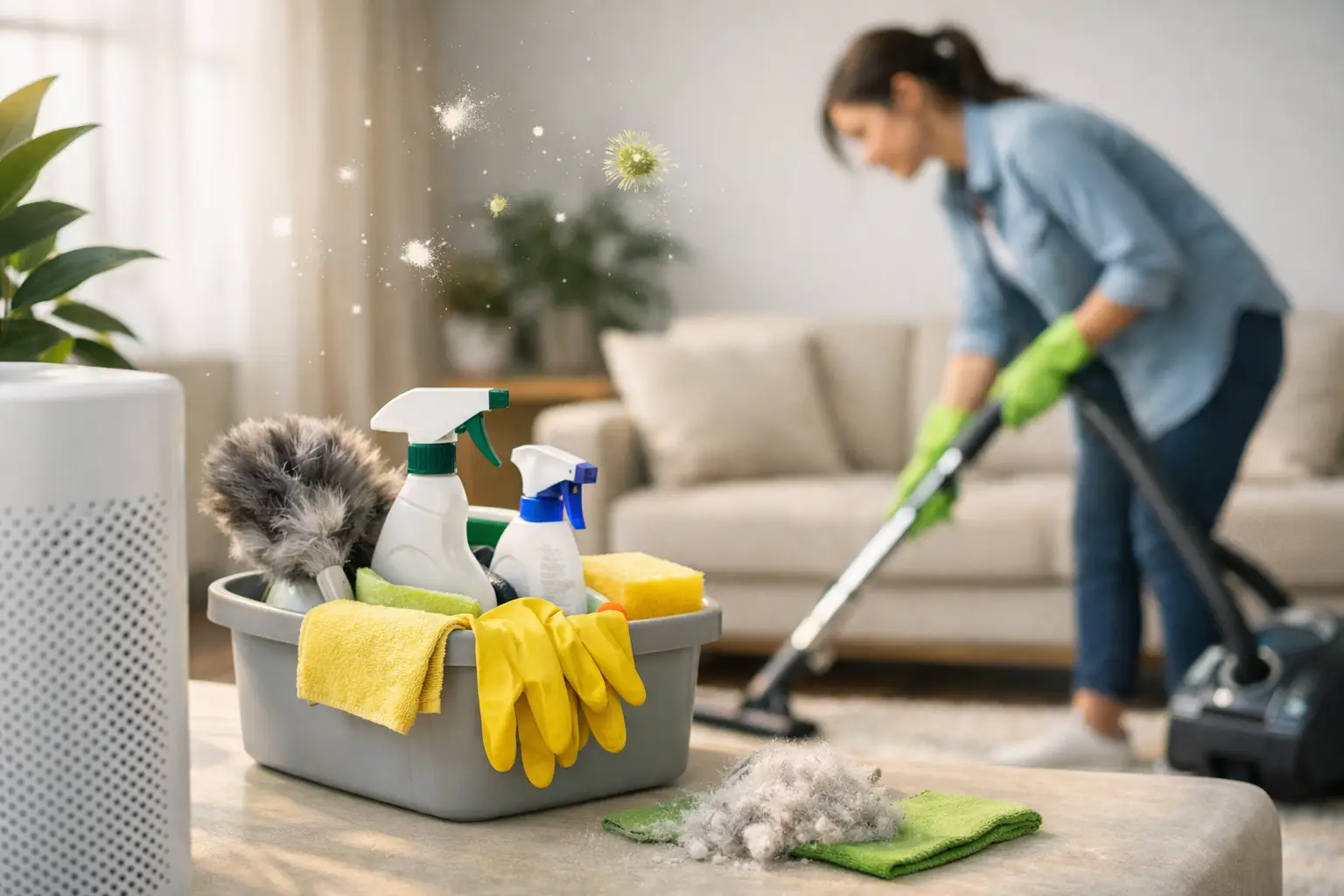
Vacuuming is one of the most useful ways to reduce allergen buildup in carpets, rugs, upholstery, and crevices. It can also temporarily stir up particles, especially if the vacuum has poor filtration or an overfilled bag or canister.
A vacuum with a sealed system and HEPA filtration is often a better choice for homes with allergy concerns. HEPA filters are designed to capture very small particles rather than sending them back into the room through the exhaust. The benefit depends on the vacuum being well maintained, so follow the manufacturer’s instructions for replacing filters and emptying the bin.
Move slowly enough for the vacuum to lift embedded dust from carpet fibers. High-traffic paths, entryways, bedrooms, and areas where pets rest deserve extra passes. If someone in the home is very sensitive to dust, it may help for them to spend time in another room or outside while vacuuming is underway, then allow airborne particles time to settle.
Hard floors need attention too. Sweeping with a dry broom can send fine dust into the air. A microfiber dust mop or vacuum setting made for hard surfaces is usually a calmer option before wet mopping.
Do not forget upholstery and soft surfaces
Sofas, chairs, curtains, and mattresses quietly collect dust and dander. Vacuum upholstered furniture with the appropriate attachment, including under cushions and along seams. Wash removable covers according to their care labels.
For bedding, wash sheets and pillowcases weekly. If tolerated by the material, washing bedding in hot water can help reduce dust mite allergens. Blankets, comforters, and mattress covers should be cleaned on a regular schedule as well. The exact frequency depends on pets, household allergies, and how often the room is used.
Choose Cleaning Products With Fewer Irritants
“Clean” scents can feel reassuring, but fragrance is not always a friend to people with allergies, asthma, migraines, or chemical sensitivities. Scented sprays, air fresheners, fragranced laundry products, and heavily perfumed cleaners can leave behind compounds that trigger irritation for some people.
When possible, choose fragrance-free or low-fragrance products and use only the amount needed for the job. More cleaner does not necessarily mean a cleaner surface. In fact, excess product can leave residue that attracts grime or creates stronger odors in a closed room.
Read labels carefully, especially for disinfectants. Disinfecting has a place after illness, around high-touch areas, or when a specific sanitation need exists. It is not required for every routine cleaning task. For everyday maintenance, a mild cleaner and proper physical removal of dirt may be enough. This approach can reduce unnecessary exposure to stronger chemicals while still keeping the home well maintained.
Always provide ventilation when using any cleaning product. Open a window if outdoor conditions allow, run an exhaust fan in bathrooms, or use your home’s ventilation system. Never mix products, particularly bleach with ammonia or acids, since dangerous fumes can result.
Keep Moisture From Becoming a Mold Problem
Allergen control is not only about dust. Moisture can create conditions where mold grows, particularly in bathrooms, kitchens, laundry areas, and around windows or plumbing leaks. Mold concerns should be addressed at the source, not covered with fragrance.
After showering, run the bathroom fan and leave the door open when practical to help humidity clear. Hang towels to dry fully instead of leaving them bunched up in a hamper. Wipe moisture from shower walls, sinks, and window tracks as part of your routine.
Check under sinks, behind toilets, around washing machines, and near the refrigerator water line for signs of leaks. A musty odor, recurring discoloration, peeling paint, or damp drywall may indicate a problem beyond normal cleaning. If you suspect significant mold or water damage, professional assessment and repair may be needed before routine cleaning can make a lasting difference.
Mops and sponges also need attention. Rinse them thoroughly, allow them to dry completely, and replace them when they smell musty or no longer clean effectively. Reusable microfiber mop pads should be laundered after use rather than left damp in a pile.
Build an Entryway Routine That Keeps Allergens Outside
A surprising amount of dust, pollen, and outdoor debris enters through shoes, pets, bags, and open doors. You do not need a perfect system to reduce what comes in. A sturdy doormat outside and a washable mat inside can make a meaningful difference.
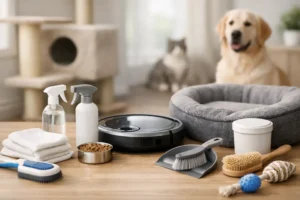
Adopting a shoes-off policy is helpful for many households, particularly homes with crawling children, carpets, or residents who are sensitive to allergens. If shoes stay on indoors, clean entry floors more often than the rest of the home. Wipe pets’ paws after walks during high-pollen periods, and wash pet bedding regularly.
During days when outdoor pollen or smoke levels are high, keep windows closed and use air conditioning or properly maintained filtration instead. On mild days with lower pollen, opening windows may still be worthwhile for ventilation. The right choice depends on local conditions and the sensitivities of the people in the space.
Create a Routine You Can Actually Maintain
The best allergen-reducing plan is one that fits real life. Trying to deep clean every room every week often leads to burnout. A better approach is to divide tasks by frequency: quick dust control and floor care each week, bedding and bathroom maintenance on a consistent schedule, and deeper attention to blinds, upholstery, vents, and under-furniture areas each month or seasonally.
If time is limited, focus first on bedrooms, living areas, and entryways. Those spaces typically have the greatest impact because people spend the most time there and because soft surfaces tend to hold onto dust. For a move-in, move-out, or post-renovation situation, a thorough deep clean can provide a useful reset before regular maintenance begins.
A professional cleaning team can also help maintain consistency, especially for families, working professionals, and property managers balancing full schedules. At SRS Cleaning, detail-oriented recurring and deep cleaning services are designed to take the mental load off your plate while supporting a calmer, more comfortable space.
Allergen reduction is not about creating a sterile home. It is about removing the buildup that makes a home feel heavy, dusty, or irritating, then keeping up with it in manageable steps. A cleaner routine gives you more than polished surfaces. It gives you room to relax and enjoy being home.