The places people touch without thinking about them are often the places that need the most attention. A refrigerator handle after school pickup, a bathroom faucet before dinner, an office door handle between meetings – these small contact points can quickly make a clean room feel less clean. Knowing how to sanitize high touch surfaces gives your home or workplace a practical layer of care without turning cleaning into an all-day project.
For busy households, rental turnovers, and shared offices, the goal is not to chase perfection. It is to create a simple routine that keeps the most-used areas cleaner, more comfortable, and ready for the next person.
What counts as a high-touch surface?
High-touch surfaces are the items and areas handled repeatedly throughout the day. Some are obvious, such as toilet handles and kitchen counters. Others are easy to overlook because they are small or blend into the room.
At home, pay close attention to door knobs, light switches, cabinet pulls, appliance handles, faucet handles, remote controls, stair railings, phones, keyboards, and bathroom fixtures. In offices and commercial spaces, shared desks, printer buttons, conference room tables, break room appliances, entry doors, and payment terminals deserve regular attention as well.
The right priority depends on how a space is used. A home with young children may need more frequent attention around bathroom fixtures, dining surfaces, and commonly shared electronics. An office with rotating visitors may put more focus on entry points, restrooms, and break rooms. During a move-in, move-out, or property turnover, high-touch details matter because they affect how fresh and cared-for the entire space feels.
Cleaning, sanitizing, and disinfecting are not the same
These terms are often used interchangeably, but they describe different jobs. Cleaning removes visible dirt, crumbs, grease, dust, and some germs from a surface. Sanitizing reduces germs to levels considered safer under public-health standards. Disinfecting uses a product designed to kill or inactivate more germs on hard, nonporous surfaces.
In most homes and routine office settings, cleaning first and sanitizing high-touch areas regularly is a sensible approach. Disinfecting may be more appropriate after someone has been sick, in a shared restroom, or where there is a specific concern about illness exposure. Product directions matter because not every cleaner is a sanitizer or disinfectant, and each product has its own required contact time.
A surface that looks clean is not necessarily sanitized. On the other hand, applying sanitizer to a greasy countertop or dusty desk is less effective. Soil and residue can keep the product from reaching the surface evenly. That is why a quick wipe to remove buildup comes before the sanitizing step.
How to sanitize high touch surfaces the right way
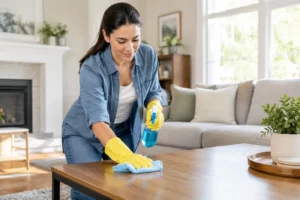
A reliable process is straightforward. First, remove clutter and wipe away dirt or food residue with the appropriate cleaner. Next, apply a sanitizer that is suitable for the material and follow its label directions exactly. The surface generally needs to remain visibly wet for a specified period, known as contact time, before it can air dry or be wiped as directed.
Rushing this step is one of the most common mistakes. A quick spray followed immediately by a dry paper towel may leave a surface looking polished, but it may not give the product enough time to work. If you are cleaning a kitchen counter or dining table, make sure the product is approved for food-contact surfaces and follow any rinsing instructions on the label.
Use clean cloths or disposable towels rather than moving the same dirty cloth from room to room. Microfiber cloths work well for many hard surfaces, but they need to be laundered after use. A clean tool helps prevent you from transferring grime from a bathroom fixture to a bedroom nightstand or kitchen handle.
Match the product to the surface
Not every high-touch surface can handle the same product. Glass screens, natural stone, unfinished wood, leather, and certain coated electronics may be damaged by harsh chemicals or excess moisture. Always check the manufacturer’s care guidance when possible, especially for expensive appliances, electronics, and specialty finishes.
For phones, keyboards, remotes, and touch screens, use a product or wipe appropriate for electronics. Avoid spraying liquid directly onto devices. Instead, lightly dampen a soft cloth if the product instructions allow it, then clean carefully around ports and openings.
For natural stone counters, a pH-neutral cleaner may be the safer choice for routine cleaning. If sanitation is needed, use only a product labeled as safe for that material. The trade-off is simple: stronger is not always better. Protecting the finish helps preserve the surface and prevents avoidable replacement costs.
A realistic schedule for homes and offices
Frequency should reflect traffic, not anxiety. A single-person household that is rarely home may need less frequent sanitizing than a busy family kitchen. Likewise, a private office with a few employees has different needs than a client-facing workspace with steady foot traffic.
For most homes, a quick daily pass over kitchen handles, bathroom fixtures, light switches, and frequently used remotes is enough to keep things under control. Sanitizing shared surfaces after guests visit, after food preparation, or when someone is ill adds another sensible layer of care.
In workplaces, entry handles, shared restrooms, break room handles, and common equipment may need attention once or more than once each business day, depending on use. Desk surfaces can be included in an end-of-day cleaning routine, particularly when workstations are shared.
A recurring professional cleaning service can help maintain the larger routine: floors, bathrooms, kitchens, dusting, and detailed surface cleaning. That consistency makes it easier for households and office teams to manage quick touch-ups between appointments rather than letting small tasks build into a stressful weekend project.
Do not overlook the small details
The most missed surfaces are often the ones that make people pause when they notice them. Think of the button on a coffee maker, the handle on a trash can, the pull chain on a ceiling fan, or the inside handle of a car door. In a rental property or home being prepared for sale, these details quietly signal whether the space has been cared for.
A useful habit is to walk through each room from the perspective of someone arriving for the first time. What will they touch to turn on a light, open a door, use the restroom, make coffee, or sit down? That short walkthrough identifies the places that deserve attention without requiring a complicated checklist.
For office managers, use the same approach at transition points: the front door, reception area, conference room, kitchen, and restroom. These are the spaces employees, clients, vendors, and visitors experience most often.
Safety habits that protect your space and your health
Good cleaning practices should never create a new problem. Keep products in their original containers, use them in a ventilated area, and wear gloves when the label recommends them. Never mix cleaning products, especially bleach with ammonia or acids. Dangerous fumes can result even from combinations that seem harmless.
Store products away from children and pets, and allow surfaces to dry fully when required. If you are using a stronger disinfectant, keep people and pets away from the area for the time stated on the label. For food-prep surfaces, follow instructions about rinsing before preparing meals.
It also helps to remember that hands are part of the routine. Washing hands after cleaning, before eating, and after using the restroom supports the work you put into cleaner surfaces. Sanitized handles and counters are most effective when paired with everyday habits that reduce what gets transferred to them.
Make cleaner spaces easier to maintain
The best sanitizing routine is one you can actually keep. Place appropriate wipes or a labeled cleaning cloth where they are useful: under the kitchen sink, in a bathroom cabinet, or near a shared office break room. Keep the routine focused on the surfaces used most, and save deeper work for a scheduled cleaning day or professional service.
At SRS Cleaning, we understand that a well-kept space is about more than appearances. It gives you one less thing to manage and more room to enjoy your home or focus on your work. A few intentional minutes spent on the surfaces everyone touches can make the entire room feel calmer, fresher, and more welcoming.