
Locally owned · Serving Orange County homes and businesses

Call (714) 439-8500

Tag: Recurring Cleaning

  • Green Cleaning for a Healthier Orange County Home

    Green Cleaning for a Healthier Orange County Home

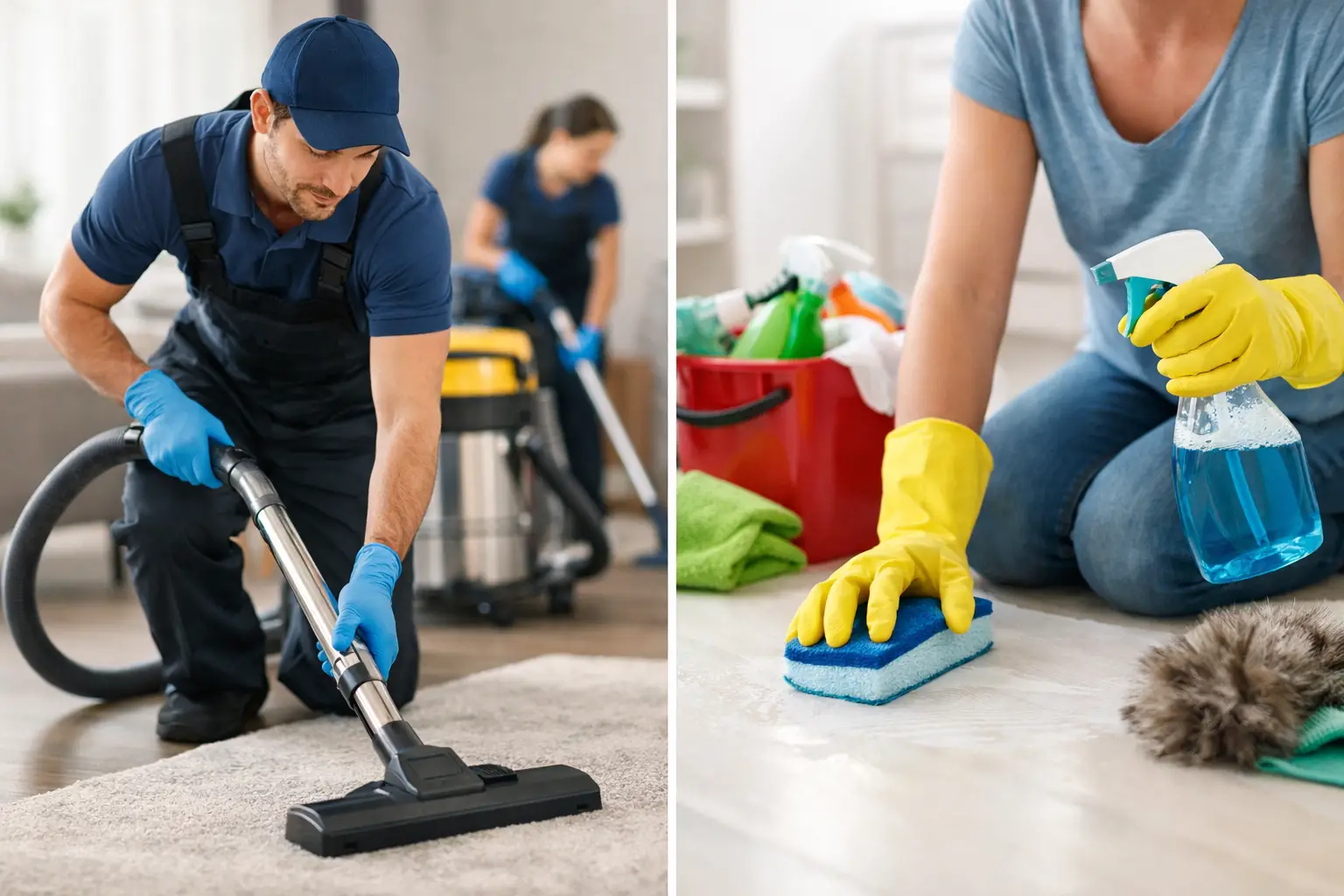
    Green cleaning means choosing the least intensive method that safely does the job, using products exactly as labeled, protecting each surface, and reducing unnecessary waste. Start with routine cleaning, choose products with transparent directions, and disinfect only when the situation calls for it.

    You do not need to replace everything under the sink or follow a complicated routine. A few repeatable habits can leave a space feeling fresher while making product choices easier to understand.

    What does green cleaning mean?

    Green cleaning is a practical approach to removing dust, soil, grease, and everyday messes while considering product ingredients, packaging, indoor air, water use, and surface life. It is not a promise that one product is harmless in every situation.

    A useful routine begins with the task and surface—not the marketing language on the bottle. “Natural,” “plant-based,” and “eco-friendly” may describe part of a product, but the label directions still determine where and how it should be used. Test unfamiliar products in an inconspicuous area and follow the surface manufacturer’s care instructions.

    The goal is a clean, comfortable result with fewer unnecessary products and less avoidable waste. That can mean using washable cloths, preventing buildup with regular care, selecting an appropriate cleaner, and applying only the amount directed on the label.

    What supplies should you prepare?

    Keep the supply list short and match it to the rooms you plan to clean. A basic setup may include:

    • Washable microfiber or other surface-safe cleaning cloths
    • A vacuum with the appropriate attachment for floors and upholstery
    • A mop or floor tool approved for the flooring material
    • A mild cleaner labeled for the intended surface
    • Gloves or eye protection when the product label requires them
    • Separate cloths or tools for bathrooms and food-preparation areas
    • A small container for collecting items that belong in another room

    Before starting, clear loose clutter, check labels, open windows or use normal ventilation when directions recommend it, and keep products away from children and pets. Avoid transferring a cleaner into an unlabeled container.

    How do you build a simple green-cleaning routine?

    The easiest routine is one you can repeat before residue and clutter become difficult to manage. Use these steps as a flexible starting point:

    1. Remove clutter first. Put away loose items so surfaces can be cleaned without repeatedly moving around them.
    2. Work from higher areas to lower ones. Dust shelves and fixtures before cleaning counters and floors.
    3. Dry-clean before adding moisture. Vacuum or remove loose soil so it does not turn into streaks or residue.
    4. Use the correct product sparingly. Follow the label instead of assuming more product will clean better.
    5. Give attention to high-use areas. Kitchen counters, sinks, bathroom fixtures, entry floors, and frequently handled surfaces often create the biggest visible difference.
    6. Clean tools after use. Launder cloths according to their care instructions and allow reusable tools to dry before storage.

    Short resets can prevent a larger weekend project. Wiping cooking residue after a meal, drying bathroom fixtures, and vacuuming high-traffic areas regularly can make a future deep cleaning easier to manage.

    How should you choose cleaning products?

    Look for a product that identifies its intended surfaces, provides clear directions, and fits the actual task. If you want an independently reviewed option, the EPA Safer Choice program evaluates every intentionally added ingredient and also considers performance, packaging, and other criteria. EPA maintains a searchable list of certified products, including fragrance-free options.

    Cleaning, sanitizing, and disinfecting are not interchangeable. The CDC explains that routine cleaning with soap or detergent removes most dirt and germs; disinfecting is generally most relevant when someone is sick or recently visited while sick. When disinfection is appropriate, clean visible soil first and follow the product label for surface compatibility, protective equipment, application, and contact time.

    Never mix cleaning products. In particular, CDC safety reporting warns that mixing bleach with ammonia or acids can generate dangerous gases. Do not invent a dilution or substitute an online recipe for the manufacturer’s directions.

    How do you protect different surfaces?

    A product can be suitable for one surface and damaging to another. Check the material before cleaning and follow its manufacturer’s care instructions.

    • Wood and laminate: limit moisture, wipe spills promptly, and avoid assuming a floor product is safe for cabinets or furniture.
    • Natural stone: use a stone-compatible product; acidic cleaners can affect some materials.
    • Stainless steel: work with the visible grain and use a nonabrasive method. See the SRS guide to cleaning stainless steel without streaks.
    • Painted walls and trim: start gently, test first, and avoid soaking the finish. The same cautious approach applies when cleaning baseboards.
    • Electronics: follow the device manufacturer’s instructions and avoid spraying liquid directly onto screens, ports, or controls.

    If the material is unknown, stop before using a strong chemical or abrasive tool. A small amount of soil is usually easier to correct than a dulled finish, etched stone, swollen laminate edge, or scratched appliance panel.

    What common mistakes should you avoid?

    • Using too much product: excess cleaner can leave a film that attracts soil or creates streaks.
    • Skipping the label: a familiar brand may have different directions for different formulas.
    • Calling every task “disinfection”: routine cleaning is often sufficient; use disinfectants for situations and surfaces covered by their labels.
    • Using one cloth everywhere: separate tools for bathrooms and food-preparation areas to avoid moving soil between them.
    • Ignoring dwell or contact time: wiping a disinfectant away immediately may not follow the label.
    • Assuming green means risk-free: certified or plant-derived products still require correct storage and use.
    • Forcing a DIY solution: stop when a method changes the color, sheen, texture, or finish of the surface.

    What should you do when cleaning leaves poor results?

    If a surface looks streaky, first check whether too much product was used. Use a clean cloth and the rinse or finishing method allowed by the manufacturer. Do not add a second chemical on top of the first.

    If residue returns quickly, inspect the tool as well as the cleaner. A saturated cloth, dirty mop pad, or vacuum attachment can redistribute soil.

    If an odor remains, remove the source instead of adding more fragrance. Empty waste containers, clean spills, launder washable fabrics as directed, and use normal ventilation when conditions allow.

    If the finish changes, stop immediately. Blot away excess moisture if safe, keep the product container and instructions available, and contact the surface manufacturer or an appropriate specialist before trying another method.

    When does professional help make sense?

    Professional help can be useful when buildup covers several rooms, the available time is limited, the surface materials need different care, or a detailed reset would make regular upkeep easier. It can also help before or after a move when the scope is larger than routine cleaning.

    Before requesting service, identify any sensitivities, preferred fragrance level, delicate surfaces, and products that must or must not be used. Clear information helps the cleaning team plan the work and protects expectations on both sides.

    SRS Cleaning provides house cleaning services in Orange County. If a practical cleaning plan would give you back time, request a quote and share the rooms, priorities, and surface concerns you want the team to review.

    Green cleaning FAQ

    Does green cleaning mean using only homemade cleaners?

    No. Green cleaning can include commercially prepared products with clear directions and third-party certifications. Homemade mixtures are not automatically safer or compatible with every surface.

    Do I need to disinfect every surface?

    Usually not. CDC guidance says routine cleaning is sufficient in many household situations. Disinfection may be appropriate when someone is sick or for another specific need; always follow the disinfectant label.

    How can I reduce cleaning-product waste?

    Use the labeled amount, choose refill or concentrate formats when practical, maintain washable tools, and prevent buildup with short regular cleaning sessions. Buy only products that match the surfaces you actually clean.

    What is the safest first step on an unfamiliar surface?

    Check the manufacturer’s care guidance, choose a product labeled for the material, and test it in a hidden area. Stop if the color, sheen, or texture changes.
  • One Time Cleaning Service: When It Makes Sense

    One Time Cleaning Service: When It Makes Sense

    A one-time cleaning service gives you professional help for one scheduled visit without committing to an ongoing plan. It can be the right choice when a space needs a reset, an important date is approaching, or routine cleaning has fallen behind.

    The most useful appointment is not defined by a generic checklist. It starts with a clear goal, an honest description of the current condition, and an agreed scope. This guide explains when a single visit makes sense, what to clarify before booking, and how it compares with deep and recurring cleaning.

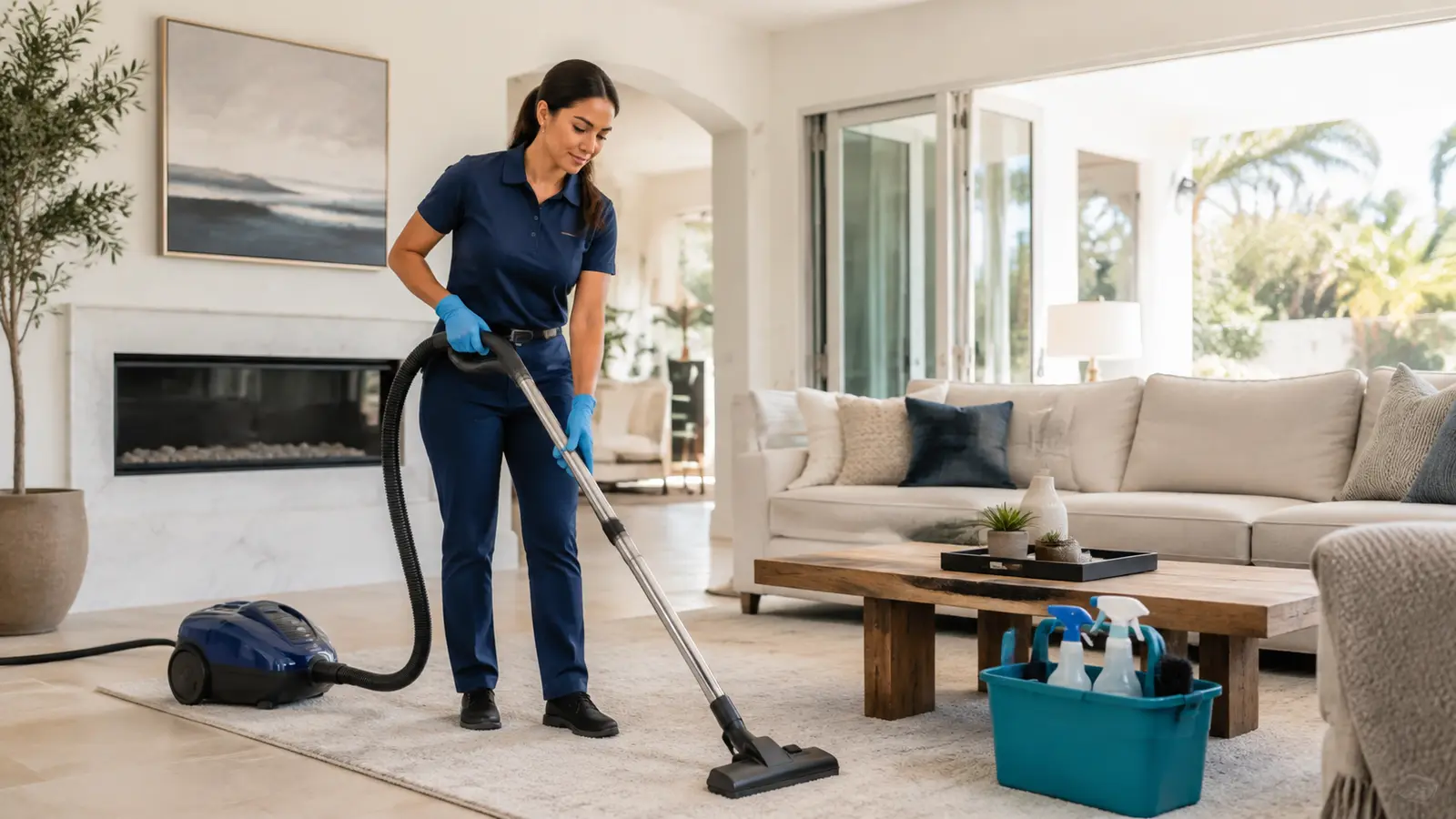
    Professional cleaner providing a one-time cleaning service in an Orange County living room
    A one-time visit can create a clear reset without starting an ongoing schedule.

    One-Time Cleaning Service: The Quick Answer

    A one-time cleaning is a single professional appointment built around the needs of the space on that day. There is no automatic weekly, biweekly, or monthly schedule afterward. Depending on the condition and priorities, the visit may resemble a standard clean, a more detailed reset, or a customized room-by-room service.

    That flexibility is the main advantage. It also makes scope especially important. “Clean the house” can mean very different things to different people. Before the appointment, confirm which rooms are included, which surfaces receive attention, whether inside appliances or cabinets are extra, and how the company handles areas that need more time than expected.

    For an overview of the available residential options, start with SRS house cleaning services in Orange County.

    When One-Time Cleaning Makes Sense

    A single appointment works best when the need has a clear beginning and end. You want meaningful help now, but you do not necessarily need a maintenance schedule afterward.

    • Before guests or an event: focus on kitchens, bathrooms, floors, entryways, and the rooms people will use most.
    • After a demanding stretch: catch up on dust, floors, bathroom buildup, and other work that has accumulated.
    • At the start of a new routine: create a clean baseline that is easier to maintain.
    • Before or after travel: return to a refreshed space or prepare it before leaving.
    • As a trial visit: experience the company’s communication, care, and results before considering recurring service.
    • For a priority-area reset: direct the available time toward a kitchen, bathrooms, floors, or other high-impact areas.

    Moving is a separate situation with a different scope. If the space is empty or needs to be prepared for a handoff, a dedicated Move Out Cleaning or move-in cleaning service is usually clearer than asking for a general one-time visit.

    What a One-Time Cleaning Can Include

    Industry service pages commonly describe one-time cleaning as customizable rather than identical everywhere. For example, The Cleaning Authority lists common tasks such as dusting, vacuuming, mopping, and surface cleaning while noting that services vary by location. Molly Maid similarly emphasizes a plan based on the rooms and priorities discussed before the visit.

    Typical whole-home priorities

    • Dusting reachable furniture, ledges, and visible surfaces
    • Vacuuming rugs and carpeted areas
    • Mopping appropriate hard floors
    • Cleaning sinks, counters, tubs, showers, and toilets
    • Wiping kitchen counters, sink areas, and appliance exteriors
    • Removing trash and completing a final visual check

    Details that may need extra time

    Inside ovens and refrigerators, interior cabinets, heavy mineral deposits, extensive pet hair, high surfaces, and significant buildup often require added time or a different service level. Do not assume these are automatically included. Share them when requesting the quote so the estimate and appointment length reflect the work.

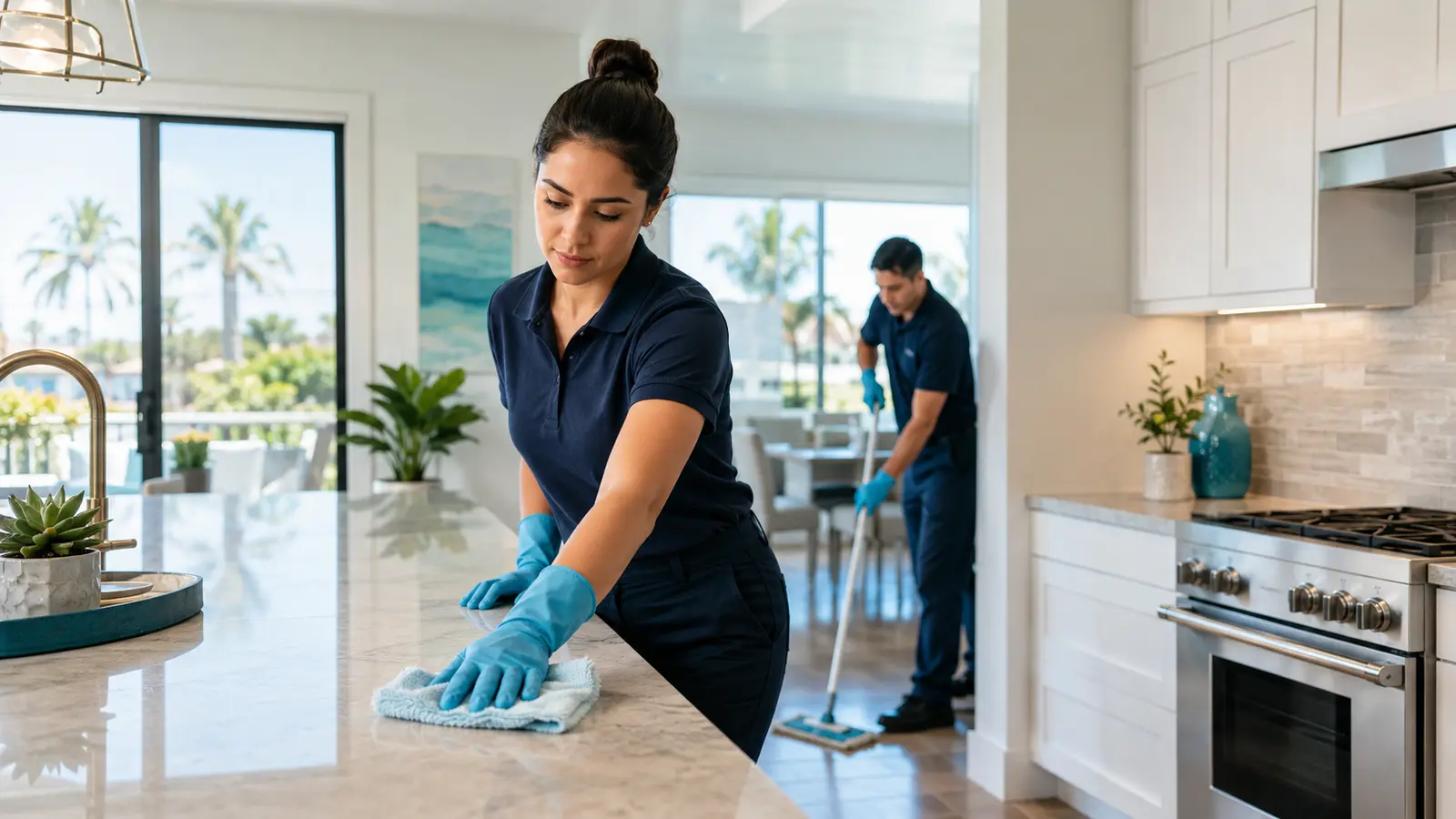
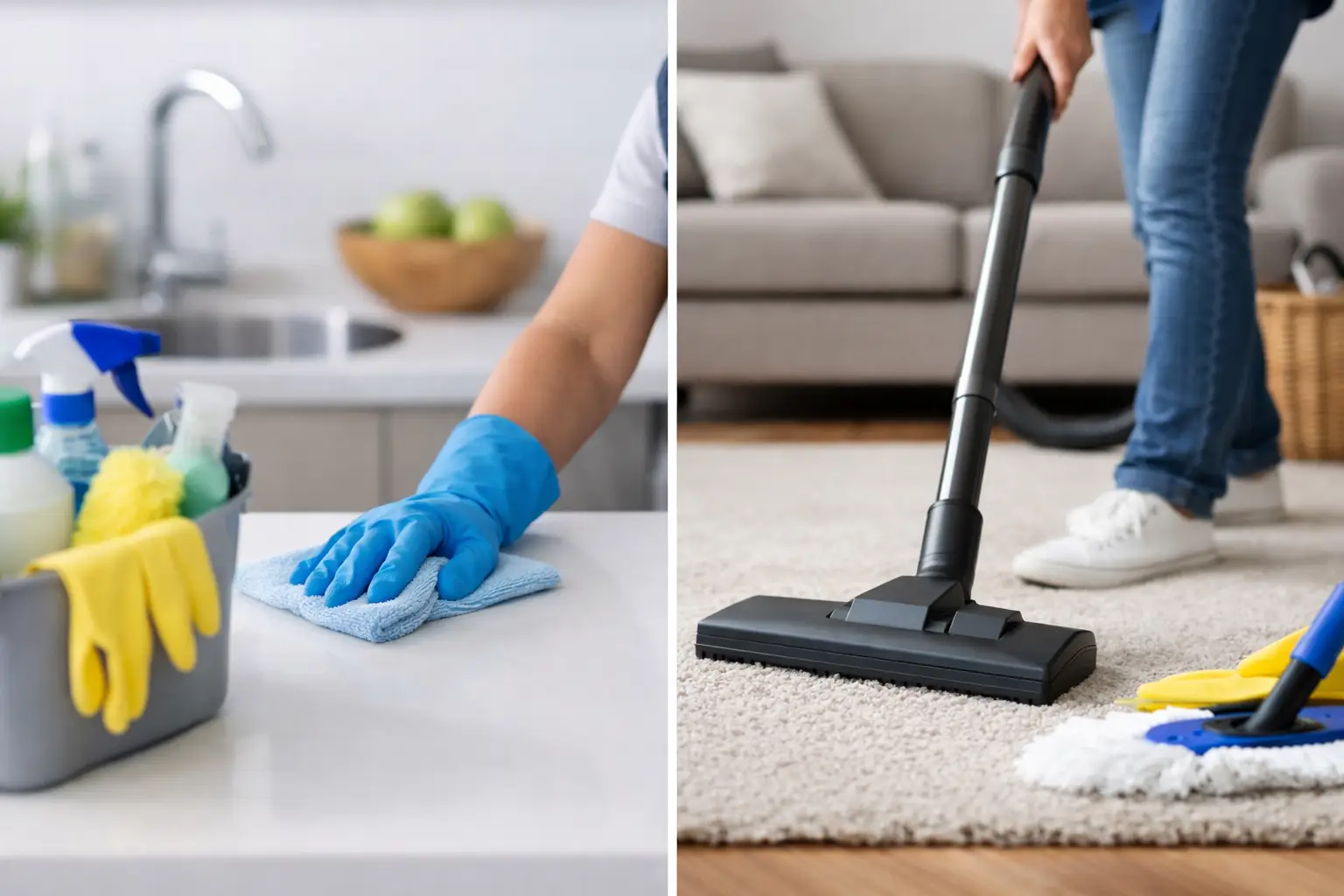
    Cleaning team wiping a kitchen counter and mopping the floor during a one-time cleaning
    Clarifying rooms, surfaces, and priority details helps the cleaning team plan the visit accurately.

    Cleaning and disinfecting are not interchangeable. The CDC explains that cleaning removes most germs, dirt, and impurities, while disinfecting uses chemicals to kill remaining germs and is not always needed in every setting. If disinfecting is requested, identify the surfaces and reason in advance. Products should be used only as directed on their labels, and cleaners should never be mixed. Poison Control warns that combining cleaning products can create poisonous gases.

    One-Time Cleaning vs. Deep Cleaning

    “One-time” describes the schedule. “Deep cleaning” describes the intensity and scope. A one-time visit can be a deep clean, but the two terms are not automatically the same.

    Service What it describes Best fit
    One-time cleaning One scheduled appointment A specific date, reset, trial, or catch-up visit
    Deep cleaning A more detailed level of work Built-up grime, overlooked details, or a stronger baseline
    Recurring cleaning An ongoing weekly, biweekly, or monthly rhythm Keeping routine dust, bathrooms, kitchens, and floors under control

    If residue and buildup have spread beyond routine surface work, review the SRS deep cleaning service. A clear quote should match the actual condition rather than forcing a detailed job into a standard appointment.

    One-Time vs. Recurring Cleaning

    A one-time visit solves a present need. Recurring cleaning protects the result through scheduled maintenance. Neither is universally better; the right choice depends on what you want the service to accomplish.

    Choose one time when the need is tied to an event, a temporary backlog, or a desire to test professional service. Consider recurring cleaning when the same tasks repeatedly compete with work, family time, rest, or other priorities. A regular rhythm can also prevent a manageable amount of dust and bathroom or kitchen residue from becoming a larger project.

    If maintenance is the goal, compare weekly, biweekly, and monthly options on the recurring cleaning service page. Starting with a one-time reset and then moving to maintenance can make sense, but it should be a choice—not an assumed commitment.

    How to Prepare for Your Appointment

    Preparation does not mean cleaning before the cleaners arrive. It means removing uncertainty so the scheduled time goes toward the work that matters most.

    Start with the areas that will change how the entire space feels. A clean entry, usable kitchen, refreshed bathrooms, and finished floors often create more value than spreading limited time across every possible detail. If a cabinet interior or appliance interior matters more than a low-priority room, say so before work begins.

    1. Name the result you want. “Guest-ready kitchen and bathrooms” is more useful than “make everything perfect.”
    2. List the priority rooms. If time becomes tight, the team knows what must be completed first.
    3. Point out difficult conditions. Mention heavy pet hair, delicate surfaces, mineral buildup, or rooms that have not been cleaned recently.
    4. Confirm access. Share parking, gate, alarm, key, elevator, and pet instructions before arrival.
    5. Secure personal items. Put away medications, documents, jewelry, cash, and fragile objects.
    6. Reduce loose clutter where practical. Clear counters and floors so the team can reach cleanable surfaces efficiently.

    For a more complete arrival checklist, see how to prepare for house cleaners without stress.

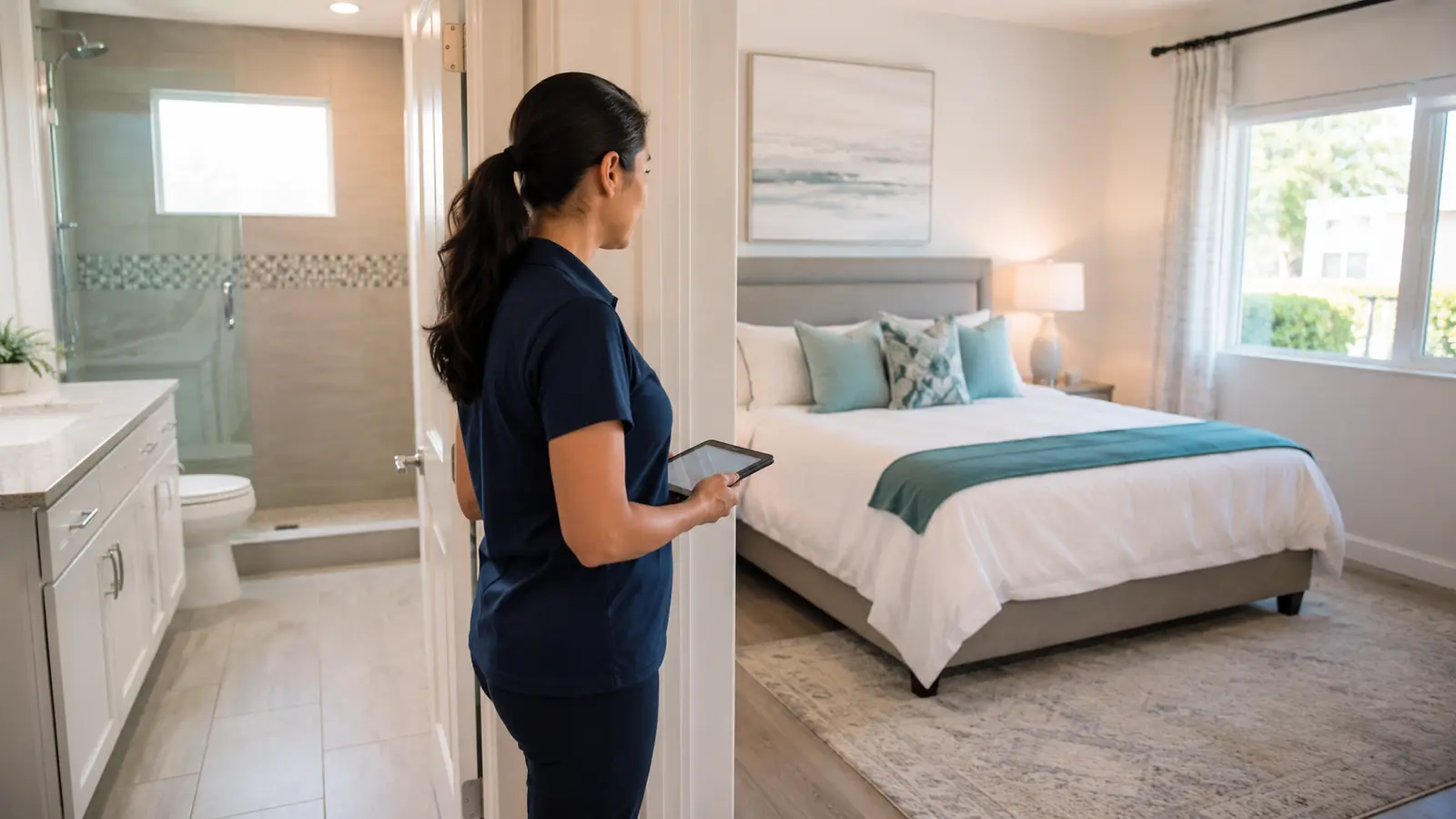
    Professional cleaner completing a final walkthrough after cleaning a bedroom and bathroom
    A final walkthrough is easier when the requested priorities were agreed before work began.

    Questions to Ask Before Booking

    A useful quote should reduce ambiguity. Ask these questions before choosing a time:

    • Is the quote based on the size, condition, requested rooms, and task list?
    • Which tasks are included, excluded, or priced as add-ons?
    • Will the company bring supplies and equipment?
    • How should delicate materials or product preferences be communicated?
    • What happens if the requested scope needs more time than scheduled?
    • Are the cleaners trained, background-checked, licensed, and insured?
    • Is there a process for reporting a missed item or service concern?
    • Does booking one visit create any future obligation?

    Be cautious with an estimate that sounds unusually simple when the job is not. A reliable company should be willing to explain the service level, priorities, and limits in plain language.

    Photos can help when a quote is prepared remotely, especially for buildup, oversized rooms, or unusual surfaces. They do not replace a clear conversation, but they can reduce surprises. Also mention recent construction, remodeling dust, pest contamination, biohazards, or unsafe access conditions; these may require specialized providers rather than routine residential cleaning.

    One-Time Cleaning Service FAQ

    Does one-time cleaning require a contract?

    A true one-time appointment should not automatically create a recurring schedule. Confirm the cancellation, payment, and future-booking terms before approving the quote.

    Is one-time cleaning more expensive than recurring cleaning?

    The cost per visit can differ because a first or isolated appointment may involve more buildup, more assessment, or a broader scope. Price should be based on the actual work rather than frequency alone.

    Can I request only certain rooms?

    Often, yes. A focused appointment may be useful when the kitchen, bathrooms, floors, or guest areas matter most. Confirm whether the company offers priority-area service and how time will be allocated.

    How long does a one-time cleaning take?

    Timing depends on size, current condition, number of cleaners, chosen service level, and requested details. An accurate estimate requires more information than a bedroom count alone.

    Book a One-Time Cleaning in Orange County

    A one-time cleaning service should leave you with a clearer space and a clear understanding of what was completed. SRS Cleaning Services provides professional house cleaning across Orange County with trained, vetted, and insured cleaners. Tell us what needs attention, which areas matter most, and when you would like the work completed.

  • Apartment Cleaning Cost: What Shapes the Price?

    Apartment Cleaning Cost: What Shapes the Price?

    Apartment cleaning cost is rarely a single flat number that applies to every space. A compact studio that receives regular upkeep is a different job from a multi-bedroom apartment that needs detailed kitchen, bathroom, appliance, and baseboard work. The most useful estimate is one that matches the size, current condition, cleaning type, frequency, and specific tasks involved.

    Published national cost guides can provide a starting point, but they are not a substitute for a local quote. Thumbtack’s apartment-cleaning guide, updated March 31, 2026, reports a national average range of about $151–$265. Angi’s guide, updated July 15, 2026, gives a different national range of $75–$175 per visit. The gap between those estimates is a useful reminder: providers, locations, service levels, and calculation methods vary. Neither range represents SRS Cleaning pricing or a guaranteed Orange County price.

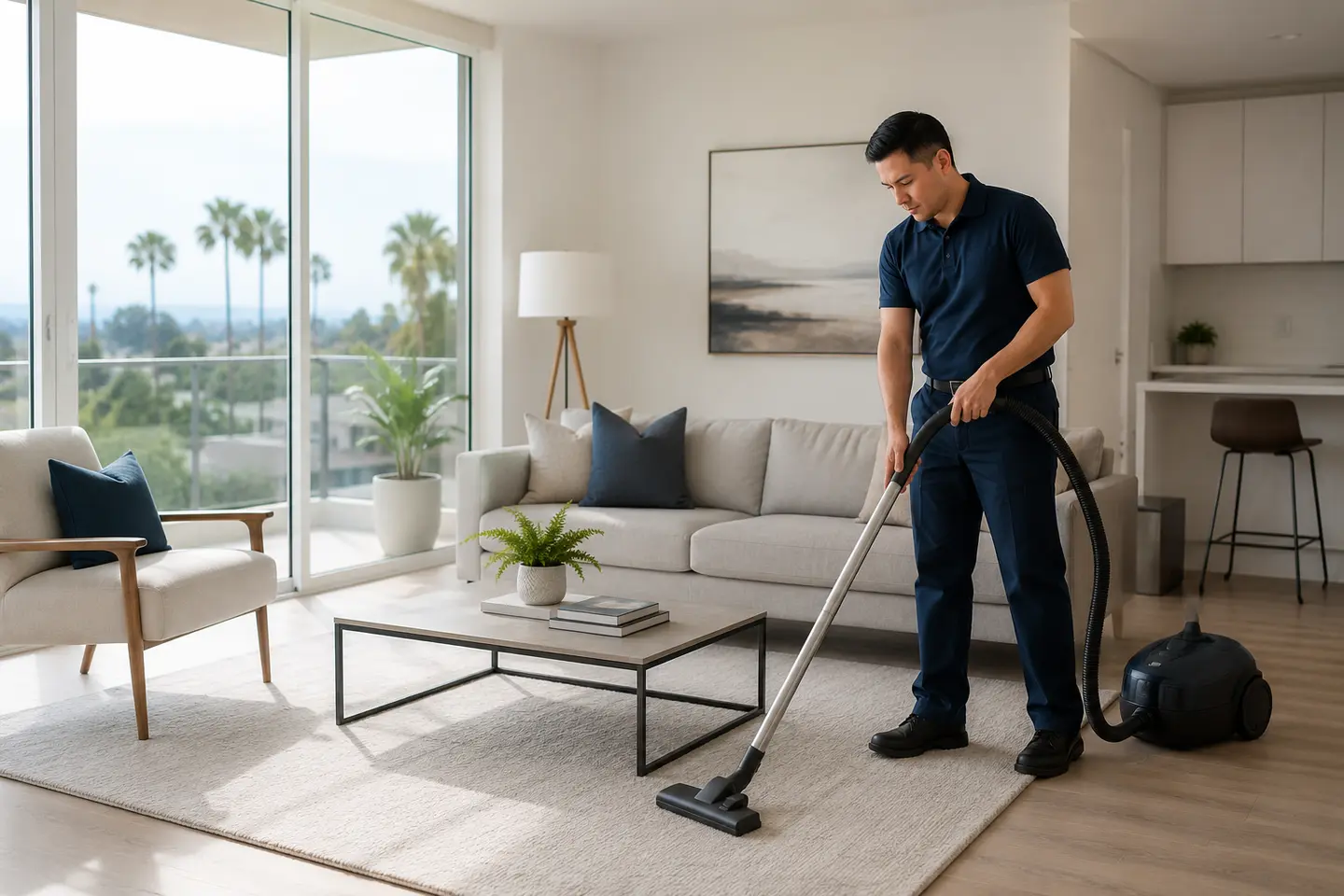
    Professional cleaner vacuuming a bright Orange County apartment living room
    Apartment size, condition, cleaning scope, and frequency can all affect the final quote.

    Apartment cleaning cost: the quick answer

    The short answer is that apartment cleaning cost depends more on the work than on the word “apartment.” Square footage matters, but so do bathrooms, kitchen condition, flooring, pet hair, buildup, requested detail work, and how often the service occurs. Two apartments with the same floor plan can require very different amounts of time.

    SRS Cleaning’s current service information states that Orange County pricing depends on the size of the space, cleaning type, frequency, and add-ons. That is why a tailored estimate is more reliable than copying a national average into a budget.

    Use published ranges as planning references only. Before booking, confirm exactly which rooms and tasks are included, whether the estimate is flat-rate or time-based, and what could change the final amount. A clear scope makes it easier to compare quotes fairly.

    Service type Typical purpose Quote details to confirm
    Standard or recurring cleaning Ongoing maintenance Rooms, checklist, frequency, and first-visit condition
    Deep cleaning A more detailed reset Buildup, detail areas, and included surfaces
    Move Out Cleaning Preparing an apartment for handoff Empty-space scope, appliances, cabinets, closets, and inspection priorities

    Why apartment cleaning estimates vary

    Consumer cost guides do not agree on one universal number because they collect data from different providers, locations, and job types. One guide may blend recurring and one-time visits; another may separate standard cleaning from deep cleaning. Some estimates include fees or common add-ons, while others show only a base visit.

    Company pricing methods also differ. Some services quote by the job after reviewing the details. Others use square footage, room count, estimated labor time, or a combination. Molly Maid, for example, explains that its own estimates consider home size, bathrooms, pets, and personal requests before providing a price range. That describes Molly Maid’s stated estimating approach; it is not a claim that every cleaning company prices the same way.

    Local conditions and the exact requested scope matter more than a broad internet average. A trustworthy estimate should make the assumptions visible rather than promising a price without enough information.

    Factors that shape the price

    1. Apartment size and layout

    More floor area usually means more surfaces, flooring, and rooms to address. Layout can matter too. An open studio may be faster to navigate than a smaller but highly divided space with several rooms, stairs, or tight access points.

    2. Number of bathrooms

    Bathrooms often involve several distinct surfaces: shower walls, tubs, fixtures, mirrors, counters, toilets, and floors. The number of bathrooms and their current condition can therefore change the time required.

    3. Kitchen condition

    A routine wipe-down is different from detailed attention to grease, backsplash residue, cabinet fronts, or appliance exteriors. Interior oven, refrigerator, or cabinet cleaning should be identified separately because it may not be part of a standard visit.

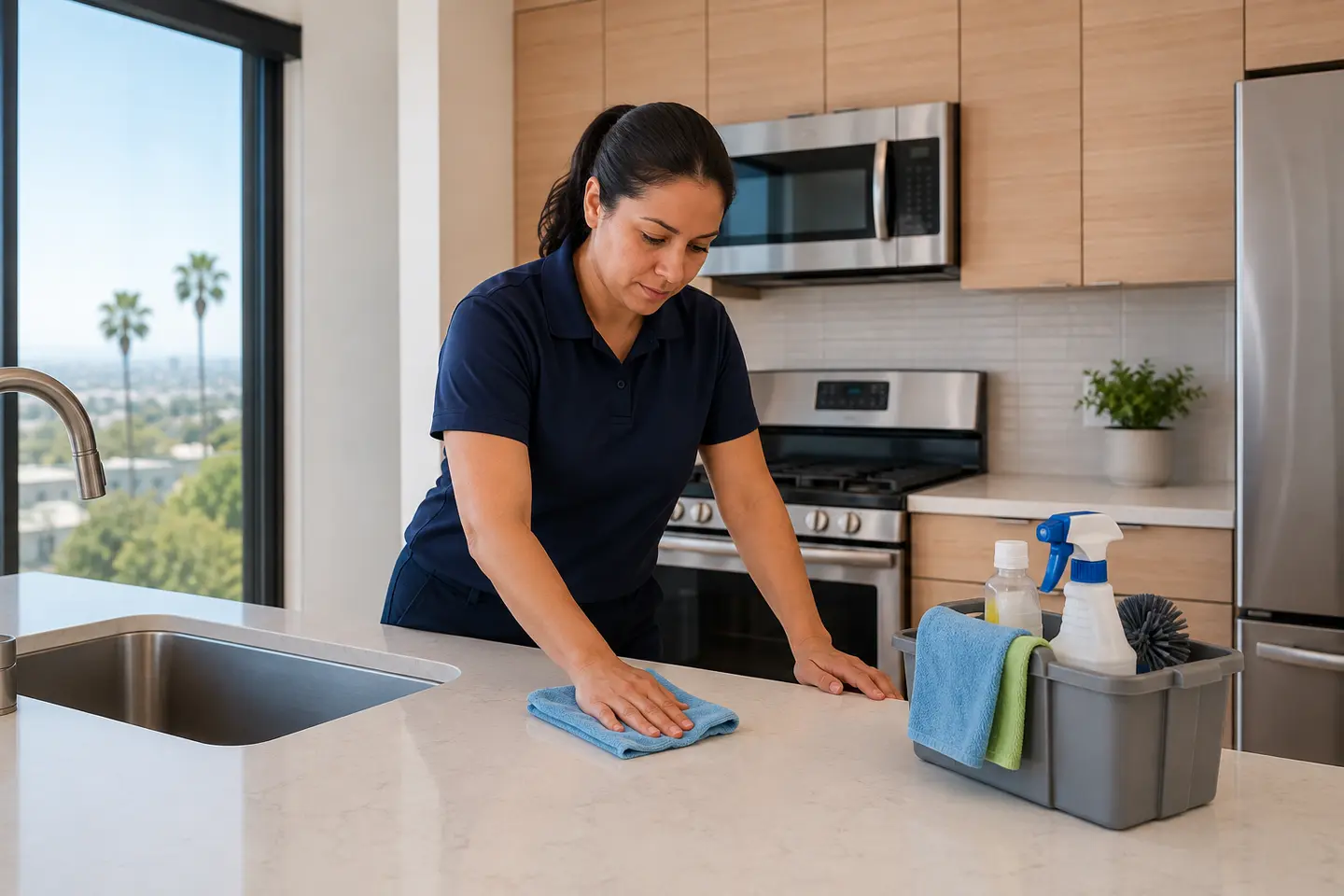
    Professional cleaner wiping a modern apartment kitchen countertop
    Kitchens and detailed surface work can influence the time and scope of an apartment cleaning.

    4. Current condition and buildup

    Regularly maintained surfaces generally require a different level of effort than soap scum, accumulated dust, heavy floor soil, or long-neglected detail areas. Honest condition notes help a company recommend the right service instead of underestimating the work.

    5. Pets, hair, and extra floor care

    Pet hair can require additional vacuuming and edge work, especially on upholstery, rugs, and baseboards. Mentioning pets before the visit also helps the cleaning team understand access and product considerations.

    6. Frequency

    A one-time reset and an ongoing maintenance visit serve different needs. Recurring appointments may have a more predictable scope because the same areas are maintained on a schedule. SRS offers recurring cleaning for regular upkeep, while the initial condition still affects the first estimate.

    7. Add-ons and priority requests

    Interior windows, blinds, inside appliances, inside cabinets, detailed baseboards, or other special requests can extend the scope. Ask whether a requested task is included, available as an add-on, or outside the company’s service.

    Standard, deep, or Move Out Cleaning?

    The cleaning type is one of the biggest pricing variables because it defines the expected level of detail.

    Standard or recurring cleaning

    Standard service typically focuses on maintaining commonly used rooms and surfaces. It is usually the appropriate comparison when an apartment is already in reasonable condition and the goal is ongoing upkeep. Exact inclusions vary, so the provider’s checklist should control.

    Deep cleaning

    Deep cleaning is intended for a more detailed reset. It can be suitable when routine cleaning has not kept up with buildup or when neglected areas need focused attention. The scope should be agreed on before the visit rather than assumed from the word “deep.”

    Move Out Cleaning

    Move Out Cleaning is a separate service context. Empty-space access may simplify some tasks, but cabinets, appliances, baseboards, closets, and the overall handoff condition can expand the checklist. Share any inspection requirements or priority areas when requesting the quote.

    Clean modern apartment bathroom showing shower, vanity, and tile surfaces
    Bathroom count, buildup, and requested detail work can affect an apartment cleaning estimate.

    What a clear quote should include

    A useful quote should make it easy to understand what is being purchased. Before agreeing to service, look for these details:

    • Cleaning type: standard, recurring, deep, move-in, or Move Out Cleaning.
    • Rooms and areas: bedrooms, bathrooms, kitchen, living areas, floors, and any spaces excluded from service.
    • Included tasks: a written checklist or clear description of the base scope.
    • Add-ons: separately identified optional work and its effect on the estimate.
    • Pricing method: whether the quote is flat-rate, hourly, or subject to an on-site condition review.
    • Access and parking: gate instructions, elevator timing, parking limitations, and building rules that could affect arrival or setup.
    • Scheduling terms: cancellation, rescheduling, arrival window, and recurring frequency.
    • Company details: contact information, service policies, and the process for reporting an issue.

    When comparing providers, compare the included scope—not just the total. A lower estimate can represent fewer tasks, less time, or different policies. A complete quote reduces ambiguity before the cleaning begins.

    How to keep costs predictable

    You do not need to pre-clean for a cleaning service, but a few practical steps can make the requested scope clearer.

    1. Describe the space accurately. Provide square footage when known, along with bedroom and bathroom count.
    2. Choose the right service type. Do not book routine maintenance when the apartment needs a detailed reset.
    3. List priority tasks. Identify the surfaces or rooms that matter most before the estimate is prepared.
    4. Separate add-ons from essentials. Decide which occasional tasks need to happen now and which can wait.
    5. Reduce access uncertainty. Share gate, elevator, parking, pet, or key instructions in advance.
    6. Review the recurring option. If consistent upkeep is the goal, compare a maintenance schedule with repeated one-time visits.

    These steps do not guarantee a lower price. They help the company quote the actual job and reduce the chance that important work was left out of the estimate.

    Choosing an apartment cleaning service

    Price matters, but it should sit beside clarity, reliability, and accountability. Ask who will perform the work, whether the company is insured, how the scope is documented, and what happens if an agreed task is missed.

    Also confirm that the service actually matches the apartment’s needs. A detailed checklist, clear communication, and a reachable company contact are more useful than vague promises. Review policies before booking, especially for access, pets, cancellations, and special surface instructions.

    For Orange County service, SRS Cleaning provides house cleaning options that include recurring, deep, and move-related cleaning. The quote process is the right place to confirm current availability and the exact apartment scope.

    Apartment cleaning cost FAQ

    Is apartment cleaning always cheaper than house cleaning?

    No. A smaller floor plan may reduce the amount of space, but condition, bathroom count, kitchen detail, add-ons, and service type can outweigh size alone. The requested work determines the quote.

    Does recurring cleaning cost less per visit?

    Some providers price recurring work differently because the scope becomes more predictable, but policies vary. Ask for both the first-visit estimate and the ongoing rate rather than assuming they are the same.

    Is deep cleaning included in a standard quote?

    Not necessarily. Standard and deep cleaning commonly have different checklists. Confirm which detail tasks are included before comparing prices.

    Should national cost ranges be used as a local quote?

    No. National ranges are planning references drawn from multiple markets and providers. A current Orange County quote should reflect the actual space and requested service.

    What information helps produce an accurate estimate?

    Share the apartment size, bedroom and bathroom count, current condition, flooring, pets, desired frequency, access details, and any add-ons or priority tasks.

    Get a clear apartment cleaning quote

    The best apartment cleaning cost estimate is specific enough to be useful. If you are comparing standard, recurring, deep, or Move Out Cleaning in Orange County, describe the space and desired scope so the quote reflects the work that matters.

    SRS Cleaning can review those details and provide a no-pressure estimate. Request an apartment cleaning quote or call (714) 439-8500 to discuss the service.

  • Professional Cleaning Versus DIY Cleaning

    Professional Cleaning Versus DIY Cleaning

    A Saturday can disappear quickly: a grocery run, kids’ activities, laundry, errands, and then the cleaning you meant to finish last weekend. That is where professional cleaning versus DIY cleaning becomes a practical decision, not simply a question of who can wipe a counter or run a vacuum. The right choice depends on your schedule, the condition of the space, your standards, and how much of your limited free time you want to spend cleaning.

    DIY cleaning has a real place in a well-kept home or office. Professional service has a real purpose, too. Knowing when each approach makes sense can help you keep your space clean without adding unnecessary stress.

    Professional Cleaning Versus DIY Cleaning: The Real Difference

    The biggest difference is not whether the work gets done. It is the level of time, planning, consistency, and detail required to get it done well.

    With DIY cleaning, you control the schedule, products, and priorities. You can clean the bathroom sink after getting ready, vacuum the living room before guests arrive, or tackle the refrigerator when you have an open afternoon. For many households, these small, routine tasks are manageable and help maintain order between deeper cleans.

    Professional cleaning brings a defined process and a dedicated appointment. Instead of fitting cleaning around everything else, the cleaning is already on the calendar. A trained team arrives with a plan, works through the agreed scope, and focuses on the areas that often get postponed when time is short: baseboards, shower buildup, kitchen grease, dust on overlooked surfaces, and floors throughout the home.

    Neither option is automatically better in every situation. A small apartment occupied by one person with a flexible schedule may be easy to maintain independently. A busy household in Irvine, a rental turnover in Huntington Beach, or an office that sees daily traffic may benefit far more from professional support.

    The True Cost Is More Than the Price Tag

    DIY cleaning often appears less expensive because you are not paying for labor. That can be true, especially for light upkeep. But the full cost includes supplies, equipment, replacement mop heads, vacuum maintenance, and the time you spend shopping, cleaning, and putting everything away.

    Time has value, particularly for working professionals, families, and property managers juggling multiple priorities. If a deep clean takes most of a weekend, the savings may not feel as meaningful as expected. It can also be frustrating to spend hours cleaning only to feel that the home still needs attention in a few days.

    Professional cleaning is an investment in both the space and your schedule. The price reflects trained labor, insured service, equipment, cleaning products, scheduling, and quality expectations. For recurring clients, it can also prevent buildup from becoming a larger, more time-consuming project later.

    The best comparison is not just, “Can I do this myself?” It is, “What does it take away from, and what result do I need?” If you enjoy cleaning and have time to do it thoroughly, DIY may be a strong fit. If cleaning regularly competes with rest, family time, work, or a move deadline, hiring help can be the more practical value.

    Results Depend on the Type of Cleaning Needed

    Daily and weekly maintenance is usually well suited to DIY cleaning. Wiping kitchen counters, loading the dishwasher, making beds, taking out trash, and quickly vacuuming high-traffic areas all make a noticeable difference. These habits help a professionally cleaned home stay fresh longer, too.

    Deep cleaning is different. It requires more time, more detailed work, and a systematic approach. Bathrooms need attention beyond the visible surfaces. Kitchens collect grease and crumbs in areas that are easy to miss. Dust settles on vents, trim, blinds, light fixtures, and the tops of cabinets. Floors may need more than a quick pass with a vacuum.

    This is where professional cleaning often delivers a clearer advantage. Cleaning teams are accustomed to working room by room and focusing on the details that create an overall sense of clean. They also arrive prepared to complete the job in a concentrated block of time rather than spreading it across several evenings.

    Move-in, move-out, and pre-sale cleaning are especially strong cases for professional service. When a lease inspection, showing, closing date, or tenant turnover is involved, cleaning is not just about comfort. It affects presentation, deadlines, and the next person’s first impression. A professionally managed cleaning appointment can remove one major task from an already crowded list.

    Consistency Matters More Than Perfection

    A home does not need to look untouched every hour of the day to be clean and comfortable. What most people want is a reliable baseline: bathrooms that feel fresh, kitchens that are ready to use, floors that are cared for, and living areas that do not create another item on the mental to-do list.

    DIY cleaning can create that baseline when everyone in the household participates and the routine is realistic. The challenge is that routines tend to slip during busy weeks, illness, travel, school events, or demanding work periods. A recurring cleaning service creates an external rhythm that helps prevent those gaps from turning into an overwhelming catch-up day.

    Trust, Safety, and Peace of Mind at Home

    Inviting anyone into your home or workplace requires trust. This is one reason some people prefer DIY cleaning: they know exactly who is in the space and which products are being used.

    A reputable professional cleaning company addresses that concern through clear communication, background-checked cleaners, licensed and insured operations, and a satisfaction-focused process. You should know what service you are booking, what areas are included, how to share priorities, and who to contact if something needs attention.

    For households with pets, children, allergies, or specific preferences, communication is essential. Professional service does not mean giving up control. It means setting expectations before the appointment so the team can work around your home’s needs. The same applies to offices, rental properties, and real estate listings where access instructions and timing need to be handled carefully.

    When DIY Cleaning Makes the Most Sense

    DIY cleaning is often the right choice when the space is already in good condition, the work needed is light, and you have enough time to keep up with it. It can also be useful between professional appointments. A quick reset after dinner, a load of laundry, and a few minutes spent tidying high-traffic rooms protect the clean feeling without requiring a major effort.

    It may also make sense when you want complete control over specialized products or have a very specific way of caring for delicate finishes. In those cases, consider reserving certain tasks for yourself while bringing in help for the rest of the home.

    The key is to be honest about the routine. If cleaning keeps moving to next week, the issue is not motivation. It may simply be that your schedule has outgrown the task.

    When Professional Cleaning Is Worth It

    Professional cleaning is often worth considering when cleaning creates ongoing stress, when the home needs a reset, or when an important transition is approaching. It is also a practical option for people who want a reliably polished environment without making cleaning their weekend project.

    Recurring service works well for busy families and professionals who want consistency. A one-time deep clean can be a helpful reset before starting a maintenance routine. Move-in and move-out cleaning supports renters and homeowners during a demanding transition. Office cleaning helps maintain a workplace that feels professional for employees, customers, and visitors.

    For Orange County property managers and real estate professionals, dependable scheduling can be just as valuable as the cleaning itself. Turnovers and listing preparation often involve several moving pieces. Having a cleaning team that communicates clearly and completes the agreed work helps keep the process calmer.

    A Balanced Approach Usually Works Best

    For many people, the most sustainable answer is not choosing one option forever. It is combining them. Use DIY cleaning for the everyday resets that keep your space functional, then schedule professional cleaning for recurring maintenance, seasonal deep cleaning, or moments when life becomes especially busy.

    That approach protects your time without asking you to ignore the small habits that make a home feel cared for. After a professional visit, a few simple routines can help extend the results: wipe spills promptly, keep clutter from building up, and give high-use areas a quick touch-up during the week.

    A cleaner home or office is not about chasing perfection. It is about creating a space that supports your life instead of adding to your stress. When cleaning starts taking more energy than it gives back, it may be time to let a trusted professional carry part of the load.

  • How to Get Dog Smell Out of House Without Masking It

    How to Get Dog Smell Out of House Without Masking It

    If you are wondering how to get dog smell out of house without simply covering it up, start with the places where odor actually settles. Dog smell can linger even after a room looks clean because odor often sits in soft fabrics, floor edges, pet bedding, entry mats, upholstery, and the places where oils, saliva, dander, and moisture collect. The best approach is not to cover the smell with fragrance. It is to find the source, clean the material holding the odor, improve airflow when conditions allow, and use cleaning products only according to their labels.

    This guide explains how to get dog smell out of the house with a practical room-by-room plan. It focuses on source removal, washable items, floors, upholstery, ventilation, and safe product use. When the odor is part of a larger cleaning reset, SRS Cleaning Services can help with House Cleaning, Deep Cleaning, and recurring cleaning routines across Orange County.

    Related SRS resources: For cleaning help beyond odor control, compare House Cleaning, Deep Cleaning, Recurring Cleaning, and the house cleaning maintenance schedule.

    Fresh clean living room with washable textiles and hard floors after dog odor cleaning.

    Why dog smell lingers

    Dog odor usually lasts because the source is still present somewhere in the space. Soft materials can hold oils, dander, dried saliva, and moisture. Floors and baseboards can collect dust, hair, and residue along edges. Entry areas can trap outdoor soil, damp paw prints, and odor from frequently used mats. A room may look neat while the odor source remains in textiles or porous surfaces.

    Air fresheners, candles, and heavy fragrances may make a room smell different for a short time, but they do not remove the material causing the odor. The EPA describes source control as an important part of improving indoor air quality, and ventilation can help remove or dilute indoor pollutants when outdoor conditions are appropriate (EPA indoor air quality guidance). For dog smell, that means cleaning the source first and using fresh air as support, not as the whole solution.

    Find the source before you clean

    Start with the areas that carry the most contact: dog beds, blankets, sofa throws, rugs, favorite resting spots, entry mats, baseboards near feeding areas, and carpet or upholstery where accidents may have happened. Work from soft surfaces to hard surfaces. If one room smells stronger than the others, check the textiles and floor edges there before cleaning the whole house.

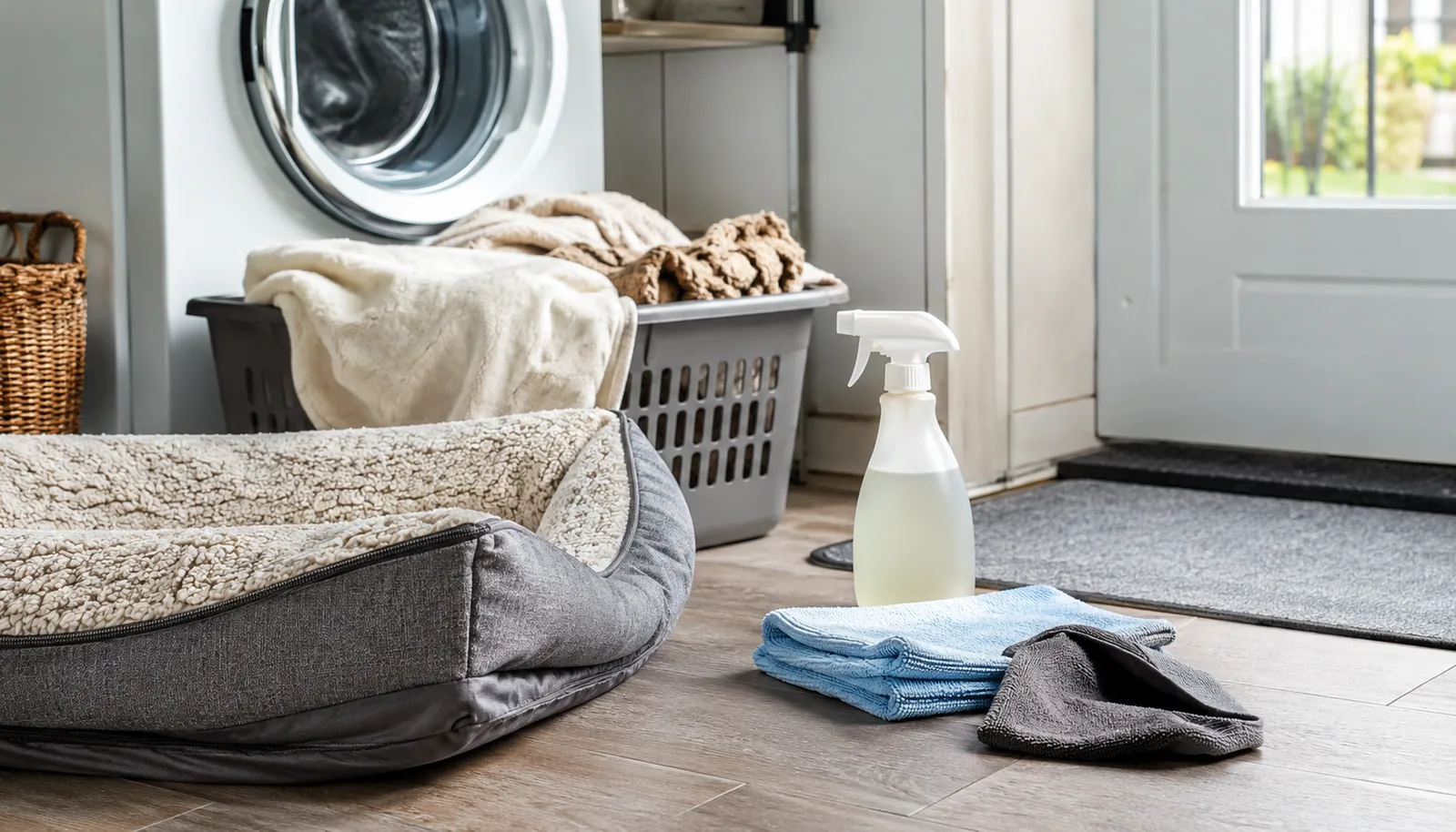
    A simple source check prevents wasted effort. Remove washable items from the room, open them up so they are not folded around odor, and smell the room again after ten or fifteen minutes. If the room improves quickly, laundry is probably the first priority. If the smell remains strongest near one rug, corner, crate area, or upholstered seat, treat that area separately.

    • Check pet bedding, removable covers, blankets, and washable throws.
    • Inspect rugs, carpet edges, sofa cushions, and furniture seams.
    • Look around baseboards, doors, feeding areas, and entry mats.
    • Clean dried spills or accident spots before general deodorizing.
    • Use a flashlight along floor edges where hair and dust collect.

    Wash fabrics that hold odor

    Washable fabrics are often the fastest win. Launder removable bed covers, blankets, washable throws, cushion covers that are safe to wash, and towels used near doors. Follow the fabric-care label, because heat, bleach, or the wrong cycle can damage some materials. For fabrics that cannot be machine washed, vacuum thoroughly and follow the manufacturer’s upholstery-care instructions before applying any cleaner.

    Regular grooming also reduces what settles into the home. The American Kennel Club notes that brushing removes dirt, debris, loose hair, and dandruff while helping distribute natural oils through the coat (AKC dog grooming guidance). This does not replace cleaning, but it can reduce the amount of hair and dander that reaches floors, bedding, and furniture.

    Dog odor cleaning setup with washable pet bed cover, microfiber cloths, and entry mat.

    Clean floors, baseboards, and entry areas

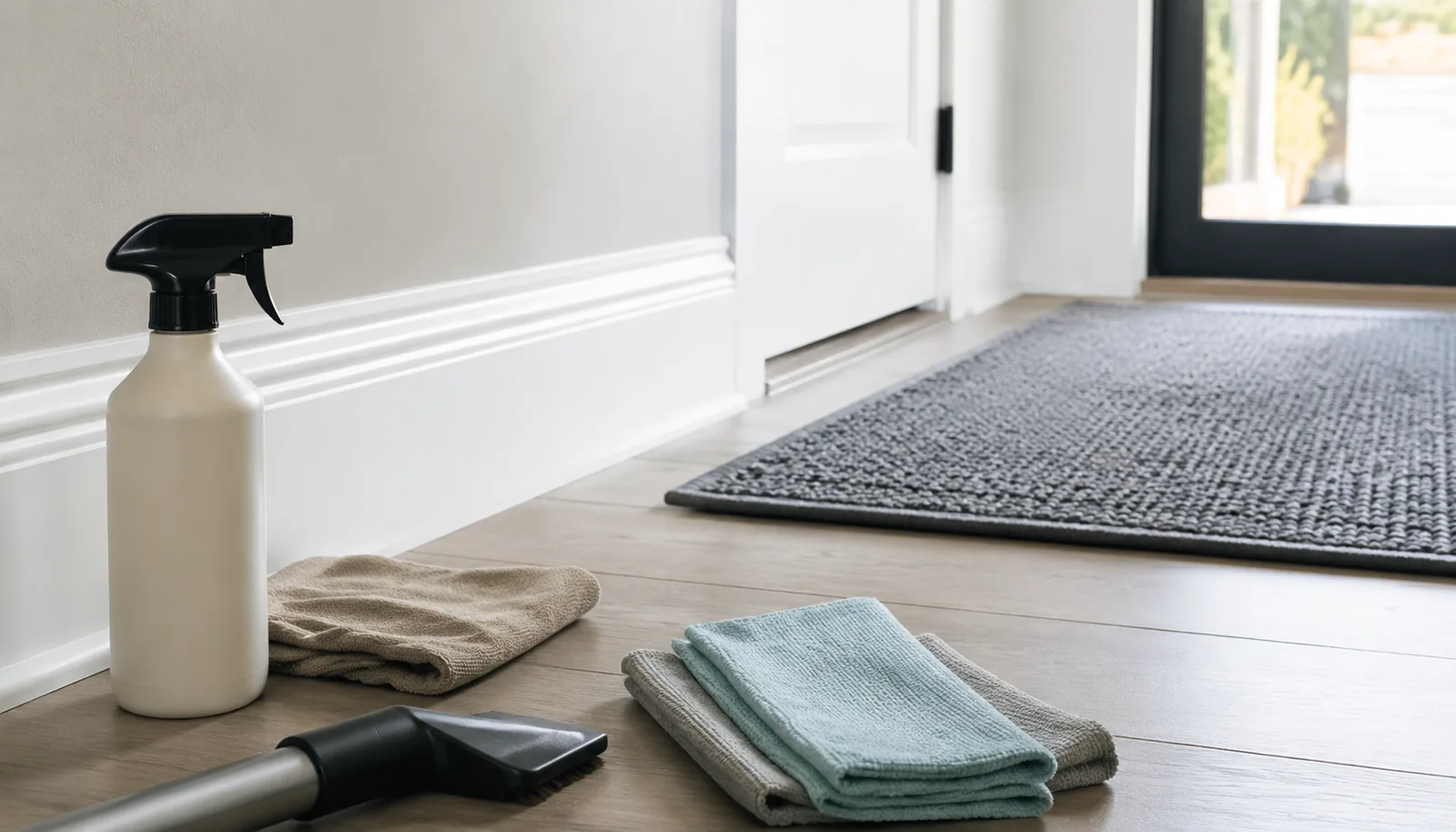
    Hard floors are easier to reset than carpet, but they still need detail. Vacuum or sweep first so hair and grit do not turn into a damp film when mopping. Then clean with a product appropriate for the floor type. Avoid soaking laminate, engineered wood, or hardwood. Use a slightly damp mop or cloth, work in small sections, and dry any areas where moisture sits too long.

    Baseboards matter because hair, dust, and odor residue collect along room edges. Wipe baseboards, corners, lower door frames, and the floor line near feeding areas. Entry mats should be vacuumed, shaken outside when appropriate, and washed or replaced when they hold odor. If outdoor moisture or sand comes in regularly, a washable indoor mat near the door can reduce what spreads across the room.

    For a broader maintenance rhythm, the SRS guide to a house cleaning maintenance schedule can help turn these tasks into a repeatable weekly plan.

    Treat carpet and upholstery carefully

    Carpet and upholstery need more patience because odor can move below the visible surface. For fresh accident spots, blot first instead of scrubbing. Bissell’s pet urine cleaning guidance recommends blotting, testing the cleaner in a hidden spot, and using an enzymatic cleaner according to directions for pet urine odor on carpet (Bissell pet urine carpet guidance). Scrubbing can spread residue deeper into fibers, so slow pressure with clean towels is usually safer than aggressive rubbing.

    Product labels matter. OxiClean’s pet stain and odor remover directions say to test a hidden carpet area for colorfastness and note that the product should not be used on wool, leather, or silk (OxiClean product directions). Rocco & Roxie’s stain and odor instructions also call for testing an inconspicuous area before use and giving the product time to sit before drying and vacuuming (Rocco & Roxie instructions). These examples are not endorsements; they show why the label should guide contact time, surface compatibility, and drying.

    If a rug, carpet pad, subfloor, or upholstery cushion has absorbed old urine or moisture, surface cleaning may not fully solve the odor. Repeated smell from the same location can mean the source is below the surface. In that case, professional carpet, upholstery, flooring, or restoration guidance may be needed before the room will smell clean again.

    Use airflow without hiding the problem

    Fresh air helps after odor sources are cleaned. The EPA explains that opening windows and doors, using fans that exhaust outdoors, and increasing outdoor ventilation can help remove or dilute indoor airborne pollutants when weather and outdoor air conditions allow (EPA ventilation guidance). Use ventilation during and after cleaning, especially when cleaning products are in use.

    Air cleaners may help with particles such as dust and dander, but they are not a substitute for cleaning the source. EPA guidance notes that the long-term performance of an air cleaner depends on maintaining it according to the manufacturer’s directions (EPA air cleaners and filtration guidance). Replace or clean filters on schedule, and do not expect a small air cleaner to fix odor trapped in bedding, rugs, or carpet padding.

    Choose products safely

    Use the mildest product that fits the surface and the mess, and always follow the label. CDC guidance for cleaning and disinfecting warns not to mix cleaning or disinfecting products, to use good ventilation indoors, and to keep chemicals out of reach of children and pets (CDC cleaning and disinfecting safety guidance). The same CDC guidance also says not to wipe or bathe pets with disinfection products.

    When using products that emit odors or vapors, the EPA advises increasing ventilation, following label precautions, using household products according to manufacturer directions, and never mixing household care products unless directed on the label (EPA VOC and product-use guidance). If a product is meant for carpet, do not assume it belongs on wood, leather, wool, stone, or delicate fabric.

    The EPA Safer Choice product search can help identify cleaning products that meet the Safer Choice Standard (EPA Safer Choice product search). That label does not mean a product can be used anywhere or in any amount. It still needs to be used as directed, on compatible surfaces, with proper storage and ventilation.

    Floor and baseboard cleaning supplies for removing dog smell from entry areas.

    Build a routine that keeps odor from returning

    Once the house smells fresh again, the maintenance plan should be simple enough to repeat. Focus on the places where odor starts: bedding, favorite resting spots, entry areas, floors, baseboards, trash, and washable textiles. A short routine is better than a complicated checklist that gets skipped.

    Area Helpful routine Why it helps
    Dog bedding and throws Wash removable covers and rotate clean extras Removes odor from the fabric source
    Floors and baseboards Vacuum first, then damp-clean with a surface-safe product Removes hair, dust, and residue along edges
    Entry mats Vacuum, shake outside when appropriate, and wash if compatible Stops outdoor soil and damp odors from spreading
    Carpet or upholstery spots Blot, test, apply the correct cleaner, and dry fully Prevents residue from settling deeper

    For a practical supply setup, the SRS article on cleaning supplies for pet-friendly spaces explains which everyday tools are useful for fur, floors, washable textiles, and quick resets.

    When a deeper cleaning reset helps

    A deeper cleaning reset helps when odor is spread across several rooms, when soft surfaces and floor edges have not been detailed in a while, or when regular upkeep is taking more time than expected. The most useful reset usually includes vacuuming edges, cleaning baseboards, wiping lower doors and trim, washing compatible textiles, cleaning entry areas, and giving floors a surface-appropriate clean.

    SRS Cleaning Services can help reset the home and then keep the routine easier with Deep Cleaning or Recurring Cleaning. If the odor is tied to carpet padding, subfloor damage, mold, biohazards, or a strong animal-waste issue beyond ordinary cleaning, the safer next step is a qualified specialist for that material or hazard before routine cleaning continues.

    Dog smell cleaning FAQ

    What removes dog smell from a house fastest?

    Remove the main odor sources first: washable bedding, blankets, entry mats, rugs, floor edges, and any accident spots. Then clean surfaces, dry them fully, and ventilate when outdoor conditions are appropriate. Fragrance alone may make the room smell different, but it will not remove the source.

    Should disinfectant be used for dog smell?

    Usually, dog smell is a cleaning and odor-source problem, not a reason to disinfect every surface. If disinfecting is needed for a specific situation, clean the surface first and follow the product label for contact time, ventilation, and compatible surfaces. Do not use disinfectants on pets.

    Do enzyme cleaners work on dog urine smell?

    Enzymatic cleaners are commonly used for pet urine odor on compatible carpet and upholstery, but the product directions control how they should be applied, how long they should sit, and which surfaces to avoid. Always test a hidden area first.

    Why does the smell come back after cleaning?

    The source may still be below the surface, especially in carpet padding, upholstery foam, rug backing, or floor edges. It can also return if items are cleaned but not dried fully. Track the strongest odor point before repeating the same general cleaning routine.

    Dog smell is easier to solve when the plan starts with source removal instead of cover-up. Wash what can be washed, clean floors and baseboards carefully, treat carpet and upholstery according to the label, use airflow as support, and keep the routine simple. For help with a deeper reset or recurring cleaning in Orange County, start with the SRS cleaning quote page.

  • Weekly Versus Biweekly Cleaning for Your Home

    Weekly Versus Biweekly Cleaning for Your Home

    A home can look fine on Sunday evening and feel noticeably overdue by Thursday. Crumbs gather under the counter stools, bathroom counters lose their shine, and pet hair seems to appear faster than anyone expects. Choosing weekly versus biweekly cleaning is less about picking the “right” schedule and more about choosing the level of support that makes daily life feel easier.

    For many Orange County households, the decision comes down to the pace of the home. A busy family in Irvine, a couple working from home in Costa Mesa, and a household with pets in Mission Viejo may all need a different rhythm. The best cleaning schedule is the one that keeps your space comfortable without adding another task to your already full calendar.

    Weekly Versus Biweekly Cleaning: The Main Difference

    Weekly cleaning means your home receives a professional visit every seven days. A biweekly schedule means every other week, or about twice per month. In both cases, recurring service typically focuses on the areas that affect everyday comfort most: kitchens, bathrooms, floors, dusting, and general tidying of accessible surfaces.

    The difference is what happens between appointments. With weekly service, mess and buildup have less time to settle in. With biweekly service, your home still gets dependable professional care, but you may handle a few touch-ups in between visits, especially in high-use rooms.

    Neither option is automatically better. Weekly service offers more consistency and less day-to-day upkeep. Biweekly cleaning usually provides a more budget-conscious way to maintain a clean home while still taking a major recurring responsibility off your plate.

    When Weekly Cleaning Makes Sense

    Weekly cleaning is often the best fit when the home gets busy quickly. If your kitchen is used constantly, bathrooms see regular traffic, or floors collect visible debris within a few days, a weekly visit can prevent that familiar feeling of always being behind.

    Families with young children often prefer weekly appointments because small messes are part of the routine. The same is true for pet owners. Fur, paw prints, litter tracking, and pet-related odors are easier to manage when floors and frequently touched areas are cleaned on a regular schedule.

    Working from home can also change what a home needs. When you spend every weekday at your kitchen table, home office, or living room, you notice dust, clutter, and smudged surfaces more than you might if you were away all day. A weekly cleaning schedule helps the space continue to feel pleasant and professional, especially if you host virtual meetings or welcome clients at home.

    Weekly service is also a practical choice for people who simply do not want cleaning to occupy their weekends. If Saturday is your only chance to rest, see family, get outside, or catch up on errands, having a reliable cleaner arrive each week can give you back valuable time. You relax. The cleaning gets handled.

    Signs Your Home May Need Weekly Visits

    Your household may benefit from weekly cleaning if bathrooms look used again within a few days, kitchen floors need frequent attention, or you regularly host family and friends. It can also be the right choice when allergies are a concern, since frequent dusting and floor care can help reduce the dust and debris that collect in active homes.

    There is a peace-of-mind benefit, too. Weekly service keeps cleaning from becoming a large, looming job. Instead of waiting for grime to build up and then spending hours catching up, your home receives steady, detail-oriented care on a predictable schedule.

    When Biweekly Cleaning Is the Better Fit

    Biweekly cleaning works well for households that stay reasonably tidy between visits. A smaller household, a couple without pets, or professionals who are away from home much of the week may find that every other week provides the right balance of cleanliness, convenience, and cost.

    This schedule is especially appealing if you do not mind light maintenance in between. You might wipe the kitchen counters after cooking, run a quick vacuum through a high-traffic area, or clean the bathroom sink as needed. The professional appointment then takes care of the more thorough work that is easy to postpone: floors, bathrooms, dusting, kitchen surfaces, and the overall reset that makes the home feel fresh again.

    Biweekly service can also be a smart starting point if you are trying recurring cleaning for the first time. It creates a dependable routine without committing to more visits than your household may need. After a month or two, you will have a clearer sense of whether the schedule is keeping up with your life.

    For renters and homeowners who maintain a generally low-mess space, biweekly cleaning often prevents the need for repeated deep cleaning. The home stays in good condition, and cleaning tasks do not pile up until they become a stressful weekend project.

    Biweekly Does Not Mean Less Care

    A biweekly schedule should still feel thorough and reliable. The key difference is the condition of the home when the team arrives. In a low-traffic home, two weeks may pass with minimal visible buildup. In a busy household, those same two weeks can leave more work in bathrooms, kitchens, and on floors.

    Be honest about how your household operates, not how you wish it operated. If the reality is that laundry, cooking, pets, children, and work calls leave little room for upkeep, weekly cleaning may be a better value because it reduces the stress of managing the gap between appointments.

    Consider Your Home’s Traffic, Not Just Its Size

    Square footage matters, but it is not the whole story. A compact apartment with two dogs and two people working remotely can require more frequent cleaning than a larger home occupied by one person who travels often.

    Think about the rooms that carry the most activity. Kitchens typically need the most attention when meals are cooked at home regularly. Bathrooms need more frequent care when several people share them. Entryways and living areas can collect outdoor dust, sand, and debris quickly, particularly in homes near the coast or with active children and pets.

    Your schedule matters just as much. If you have time and energy to maintain the home between visits, biweekly service may feel ideal. If you are already stretched thin, weekly service can be the calmer choice. A cleaning plan should remove pressure from your life, not create a list of chores you need to finish before the cleaner arrives.

    Budget, Value, and the Cost of Falling Behind

    Biweekly cleaning generally has a lower monthly cost because there are fewer appointments. For households with moderate cleaning needs, that can make it an excellent value. It provides routine professional support while leaving room in the budget for other priorities.

    Weekly cleaning costs more over the course of a month, but it may save effort in ways that are harder to put on a spreadsheet. More frequent visits can mean less emergency cleaning before guests arrive, fewer weekends spent scrubbing bathrooms, and less frustration when the home starts to feel out of control.

    It is also worth considering the condition of the home at the beginning. If it has been a while since your last thorough clean, starting with a deep cleaning can make recurring appointments more effective. Once the home is reset, a weekly or biweekly plan is designed to maintain that cleaner baseline.

    A Simple Way to Choose Your Schedule

    Start with the past two weeks. How often did you vacuum? Did the bathrooms need cleaning before you had time to address them? Were you comfortable inviting someone over without rushing through a cleanup first? Those answers tell you more than a general rule ever could.

    Choose weekly cleaning when you want a consistently polished home, have children or pets, work from home, entertain often, or do not want to spend your personal time on routine chores. Choose biweekly cleaning when your household is smaller or lower traffic, you can manage small tasks between visits, and you want reliable maintenance at a more moderate monthly cost.

    The good news is that recurring service does not need to be permanent or rigid. Your needs can change with a new baby, a new pet, a work schedule, a move, or a season of frequent guests. A dependable local cleaning company should make it easy to adjust.

    SRS Cleaning helps Orange County clients build cleaning routines around real homes and real schedules, with clear communication and trusted, insured professionals. Whether weekly visits give you the breathing room you need or biweekly service keeps your home comfortably on track, the right schedule should leave you with a cleaner space and more room to enjoy it.

  • Best Cleaning Plan for Busy Families That Works

    Best Cleaning Plan for Busy Families That Works

    The kitchen counter becomes the family command center by Tuesday: backpacks, mail, water bottles, snack wrappers, and the one permission slip nobody can find. The best cleaning plan for busy families is not a color-coded system that requires an extra hour every day. It is a realistic rhythm that keeps mess from becoming overwhelming while protecting the time your family needs to rest.

    For many households, the problem is not a lack of effort. It is that every task feels equally urgent when the house reaches a certain point. A good plan separates what needs daily attention from what can wait, gives everyone a reasonable role, and brings in help when the workload no longer fits your week.

    Start With a Cleaning Plan You Can Actually Maintain

    A home with kids, pets, work schedules, school activities, and guests will not look perfect every day. That is not the goal. The goal is a home that feels functional, comfortable, and easy to reset.

    Start by deciding what “clean enough” means for your family. For some, it means dishes are handled before bed and floors are clear enough to walk through safely. For others, it also means bathrooms are fresh for guests or kitchen surfaces are sanitized daily because of young children. Your standards can be high, but the routine has to fit real life.

    Think in three levels: a short daily reset, one or two focused weekly tasks, and occasional deeper cleaning. This approach prevents you from sacrificing a whole Saturday to catch up after a demanding week.

    The 15-Minute Daily Reset

    A short reset matters more than an ambitious plan that falls apart after three days. Pick a consistent time, such as right after dinner or before everyone starts winding down. Set a timer, involve the household, and stop when the timer ends. The goal is progress, not punishment.

    Focus on the areas that create the biggest visual and practical difference:

    • Load or empty the dishwasher and clear kitchen counters.
    • Put shoes, bags, toys, and loose items back in their usual places.
    • Wipe the dining table and high-touch kitchen surfaces.
    • Do a quick sweep of the kitchen or eating area when needed.

    If laundry is part of your daily stress, add one small load on selected weekdays rather than trying to wash, dry, fold, and put away everything at once. A family of five may need frequent laundry cycles. A couple with older children may do better with two designated laundry days. The best schedule is the one that prevents clean clothes from living in baskets.

    Assign Tasks by Frequency, Not by Guilt

    Cleaning often lands on one person because that person notices the mess first. Over time, that creates frustration and makes the home feel like another job. A more balanced plan assigns repeatable responsibilities instead of waiting for someone to ask for help.

    Children can participate in ways that match their age. Younger children can put toys in bins, carry laundry to a hamper, or wipe a low table with supervision. Older children can unload the dishwasher, take out trash, vacuum bedrooms, and keep their own bathroom basics in order. Adults should also have clear ownership of recurring tasks, especially those that are easy to overlook, such as changing bedding, cleaning the refrigerator, or managing pet areas.

    Avoid assigning chores as consequences whenever possible. When cleaning is presented only as a punishment, it becomes harder to build lasting habits. Treat it as part of caring for a shared home. A simple checklist on the refrigerator or a shared phone note can make expectations clear without repeated reminders.

    Choose One Weekly Focus Per Day

    You do not need to clean every room every week from top to bottom. Instead, match a single focused task to a day that normally has a little breathing room. For example, bathrooms might be handled on Monday, vacuuming on Wednesday, and changing sheets on Saturday morning.

    Keep weekly tasks limited to what affects comfort, hygiene, and how easily the home functions. Bathrooms need regular attention. Floors collect sand, pet hair, and crumbs. Bedding benefits from routine changes. Dusting and wiping surfaces can be rotated based on use rather than treated as a daily requirement.

    This is also where flexibility matters. If your child has a late practice, skip the planned task. If you have company coming, move the bathroom clean-up earlier. A plan should support your schedule, not make you feel behind when life changes.

    Set Up Your Home to Make Cleaning Faster

    Most busy families do not need more cleaning products. They need fewer steps between noticing a mess and taking care of it.

    Keep basic supplies where they are used. Store bathroom cleaner and microfiber cloths in each bathroom, if it is safe to do so. Keep a small set of kitchen cleaning supplies under the sink. Place a laundry basket where clothes tend to accumulate, and put donation bags in closets so outgrown clothing does not pile up in corners.

    Reduce friction in the most active spaces. A shoe tray near the entry can cut down on dirt tracked through the house. A basket for each child’s school items can prevent backpacks from taking over the kitchen. Washable throws and easy-to-wipe dining chairs can be more practical than delicate materials when life is especially full.

    Decluttering is part of cleaning, but it deserves its own pace. Trying to organize every cabinet while also deep-cleaning the home is a fast route to burnout. Choose one drawer, shelf, or closet section at a time. Keep, donate, recycle, or discard what no longer serves your household, then return to your regular routine.

    Know When Professional Cleaning Makes Sense

    There is a point when better planning cannot create more hours in the week. A recurring cleaning service can take the most time-consuming tasks off your plate, including bathrooms, floors, dusting, kitchen cleaning, and the detailed work that is easy to postpone.

    For busy Orange County families, professional cleaning can be especially helpful during demanding seasons: a new baby, a move, a heavier work period, illness, hosting relatives, or a packed school calendar. It is not about giving up control of your home. It is about choosing where your time has the most value.

    The right service should feel dependable and straightforward. Look for a company with vetted cleaners, clear communication, insurance, and a satisfaction commitment. You should know what is included, how to prepare for the appointment, and how to share any priorities before the team arrives.

    Many families find that a professional clean every two or four weeks works well alongside their daily reset. The service handles the deeper routine work, while the household maintains the spaces in between. If the home has fallen behind, starting with a deep cleaning can make a recurring plan easier to maintain.

    SRS Cleaning helps families throughout Orange County create a schedule that fits their home, whether they need ongoing support or a one-time reset before life gets busy again.

    Protect the Plan From Busy Weeks

    A cleaning plan succeeds when it has a backup version. During a normal week, you might follow the daily reset and complete two focused tasks. During a hectic week, your minimum may be dishes, trash, laundry essentials, and a quick bathroom wipe-down. That is still a successful week.

    Build in a short catch-up window rather than expecting perfection. Twenty minutes on Sunday can be enough to clear surfaces, review the coming week, and decide whether groceries, laundry, or cleaning needs the most attention. If you are exhausted, choose rest. The floor can wait one more day; your family’s well-being should not.

    The most useful plan will evolve as your children grow, work demands shift, or your household changes. Review it every few months and ask one simple question: what is creating the most stress right now? Adjust the routine around that answer.

    A cleaner home is not created by doing everything. It comes from doing the few things that matter consistently, sharing the responsibility, and giving yourself permission to ask for help when your schedule is already full. A calmer home leaves more room for the people and moments that brought you there in the first place.

  • Recurring Cleaning Service Review Checklist

    Recurring Cleaning Service Review Checklist

    A recurring cleaning service review should tell you more than whether someone liked the final result. It should help you answer the questions that matter when cleaners will be returning to your home: Will they show up as scheduled? Will the quality stay consistent? Will communication be easy when life changes?

    For busy households, regular cleaning is not simply a chore removed from the weekend. It is fewer unfinished tasks following you from room to room, a home that feels ready for company, and more time for family, work, or rest. But those benefits only hold up when the service is dependable. Here is how to read reviews and assess a recurring cleaning provider with clarity.

    Why recurring cleaning reviews deserve a closer look

    A one-time cleaning can look great in a five-star review and still tell you very little about what happens on the fourth or tenth visit. Recurring service is a relationship built on routine. Your provider needs to understand your priorities, respect your space, communicate clearly, and deliver a clean home without requiring you to re-explain every detail each time.

    That is why the strongest reviews are specific. “Great service” is encouraging, but it does not show what the company does when a cleaner is running late, a schedule needs to change, or a client has a concern. Look for patterns in feedback, especially from customers who have used the company for several months.

    A few occasional negative comments are not automatically a reason to move on. Every service business can have an off day. What matters more is whether the company responds professionally, takes concerns seriously, and makes things right.

    Recurring cleaning service review checklist

    When comparing providers, read beyond the overall rating and look for evidence of a smooth, well-managed experience.

    Consistency from visit to visit

    Recurring clients often mention whether the home stays at the same standard over time. Look for comments about cleaners remembering preferences, focusing on the areas that matter most, and leaving the home reliably refreshed each visit.

    Consistency does not mean every appointment is identical. A kitchen after a busy week may need more attention than a lightly used guest room. It means the team works from a clear routine while still noticing what your home needs that day.

    Professionalism and trust inside the home

    Letting a cleaning team into your home requires confidence. Reviews should give you a sense of whether the company treats clients and their belongings with care. Mentions of courteous cleaners, respectful service, careful handling of items, and comfortable interactions are meaningful signals.

    It is also reasonable to ask practical questions before booking. Are cleaners background-checked? Is the company licensed and insured? Does the provider have a process for addressing accidental damage or concerns? A professional company should answer directly, without making you work for basic information.

    Clear communication before and after service

    The best recurring service should reduce your mental load, not create another appointment to manage. Reviews that mention prompt replies, simple scheduling, arrival updates, and helpful customer support are especially valuable.

    Pay attention to what customers say about changes. You may need to skip a visit during travel, adjust an appointment around a school event, or request extra attention before guests arrive. No-cleaning-contract flexibility is helpful, but clear policies matter just as much. Find out how much notice is required and how the company handles rescheduling.

    A cleaning scope that matches your expectations

    A recurring service usually focuses on maintaining the areas that collect daily use: kitchens, bathrooms, floors, dusting, surfaces, and general tidying within the agreed scope. That is different from a deep clean, which may include more detailed buildup removal or less frequent areas.

    Reviews are useful when they explain what was actually completed. Look for comments about clean bathrooms, polished kitchen surfaces, fresh floors, and attention to details such as baseboards or ceiling fans when those items were requested. Vague promises can lead to mismatched expectations, so make sure the provider explains what is included at your preferred frequency.

    A fair response when something is missed

    Even conscientious cleaners can occasionally miss an area. The difference between a frustrating experience and a trustworthy one is what happens next. Look for reviews that describe a company listening, following up, and honoring a satisfaction guarantee when appropriate.

    You should not expect perfection without communication. If a particular room, surface, or household concern is important to you, mention it early. A good cleaning company welcomes clear direction because it helps the team deliver the result you want.

    Pricing that is understandable, not mysterious

    The lowest quote is not always the best value. A recurring plan may cost more than an informal arrangement because it includes trained staff, insurance, scheduling support, quality processes, and a business that can be reached when you need help.

    Ask whether pricing is based on home size, condition, frequency, number of bedrooms and bathrooms, pets, or requested add-ons. A clear quote helps prevent surprises. It also lets you compare services fairly instead of choosing based on a number that may not cover the same level of care.

    Choose a schedule that supports your real routine

    Weekly, biweekly, and monthly cleaning can all make sense. The right choice depends on household traffic, pets, children, allergies, entertaining, and how much upkeep you want to handle between visits.

    Weekly service is often a good fit for active homes where kitchens and bathrooms need frequent attention. Biweekly cleaning works well for many Orange County professionals and families who want a reliably clean home without a weekly appointment. Monthly cleaning can suit lighter-use homes, but it may require more day-to-day maintenance from you.

    If you are unsure, start with the schedule that addresses your biggest source of stress. You can adjust once you see how your household uses the space. The goal is not to book the most frequent service possible. It is to create a routine that feels useful and sustainable.

    Know when a deep clean should come first

    Recurring cleaning is designed to maintain a home, not always to reset one that has been neglected for months. If there is visible buildup in bathrooms, grease in the kitchen, heavy pet hair, or dust in overlooked areas, a deep clean before beginning regular service can set a better baseline.

    This is also worth considering after a move, renovation, long trip, illness, or a particularly busy season. Starting fresh allows each future visit to focus on upkeep rather than trying to catch up. A reputable provider should explain the difference honestly instead of pushing services you do not need.

    Give the first few visits a fair evaluation

    Your first appointment is important, but it is not the only measure of recurring quality. During the first two or three visits, notice whether communication remains prompt, your priorities are remembered, and the work feels consistent. This is the period when you and the provider can fine-tune the service.

    Offer specific feedback when needed. “Please spend a little more time on the downstairs shower” is much more helpful than “the bathroom was not right.” Clear feedback gives a capable team the opportunity to improve quickly.

    For homeowners and renters who want professionally managed support, SRS Cleaning brings that local, detail-oriented approach to recurring home cleaning across Orange County. The right provider should leave you feeling comfortable with the people in your home and relieved by what is no longer on your to-do list.

    A cleaner home should not require constant supervision or another complicated commitment. Choose a service whose reviews show steady work, respectful people, and responsive communication, then let a reliable routine give some of your time back.

  • Weekly House Cleaning Guide for a Calmer Home

    Weekly House Cleaning Guide for a Calmer Home

    By Thursday night, a few dishes in the sink can become a crowded counter, laundry can migrate from the bedroom to the chair, and the bathroom mirror can suddenly seem impossible to ignore. A weekly house cleaning guide gives those small messes a reliable place in your routine, so they do not take over your weekend or your peace of mind.

    The goal is not a picture-perfect home every day. It is a home that feels comfortable to walk into, easy to maintain, and ready for real life. For busy Orange County households, that often means focusing on the rooms that get the most use, choosing a realistic cleaning day, and knowing when it makes sense to bring in professional help.

    Why Weekly Cleaning Makes Home Life Easier

    Weekly cleaning prevents buildup before it becomes a bigger project. Grease on kitchen surfaces, soap residue in the shower, pet hair on floors, and dust on furniture are all easier to handle when they are addressed regularly. Waiting several weeks usually means more scrubbing, more products, and more time spent catching up.

    There is also a mental benefit. When the kitchen is reset, the bathroom is fresh, and the main living areas are picked up, daily routines tend to feel less chaotic. You can make breakfast without clearing a workspace first, welcome an unexpected guest without stress, or settle in at the end of the day without looking around at a growing list of chores.

    Consistency matters more than intensity. A manageable weekly routine will do more for your home than an ambitious plan that only happens once every few months.

    Build a Weekly House Cleaning Guide Around Your Home

    A useful weekly house cleaning guide should fit your household, not force your household into a rigid schedule. A family with young children, a shedding dog, or frequent visitors may need more attention on floors and bathrooms. A single professional who travels often may need a lighter weekly reset and occasional deeper cleaning.

    Start by choosing one regular cleaning block. Some people prefer a Friday afternoon reset before the weekend. Others divide tasks between two shorter sessions, such as one evening for bathrooms and another for floors and the kitchen. If cleaning is shared, assign areas rather than vague promises to help. One person can manage the kitchen while another handles bathrooms and vacuuming.

    Before you begin, gather the supplies you use most: microfiber cloths, an all-purpose cleaner appropriate for your surfaces, bathroom cleaner, a vacuum, mop, and fresh trash bags. Keeping these items together cuts down on the time spent searching for supplies and makes it easier to start.

    Reset the Kitchen First

    The kitchen affects the rest of the home because it is used throughout the day. Begin by clearing dishes, putting food away, and wiping counters. Clean the sink and faucet, then wipe appliance exteriors, cabinet pulls, and the table or island. Finish by taking out the trash and vacuuming or mopping the floor.

    Pay attention to the spots hands touch most often. Refrigerator handles, microwave buttons, light switches, and drawer pulls can collect fingerprints and food residue quickly. You do not need to clean inside every cabinet each week, but a quick exterior wipe keeps the space looking cared for.

    If your schedule is tight, prioritize dishes, counters, sink, and floor. Those four tasks make the greatest visual and practical difference.

    Keep Bathrooms Fresh, Not Overwhelming

    Bathrooms are easier to clean when they are maintained before soap scum and hard-water marks have time to build up. Apply cleaner to the shower, tub, toilet, and sink first, then let it sit briefly while you wipe the mirror, counter, and fixtures.

    Return to scrub the shower and toilet, rinse where needed, and wipe down the sink. Replace used hand towels, empty the trash, and clean the floor last. A fresh towel and a clean mirror can make even a small bathroom feel noticeably more inviting.

    For homes with multiple bathrooms, it helps to keep a small set of supplies nearby. This reduces the temptation to skip a quick touch-up when someone notices toothpaste splatter, an empty soap dispenser, or a messy counter.

    Refresh Living Areas Where Everyone Gathers

    Living rooms, family rooms, and entryways collect the evidence of everyday life: shoes, mail, cups, blankets, toys, and pet hair. Start by returning items to their proper places. Then dust accessible surfaces, wipe coffee tables and remotes, straighten cushions, and vacuum rugs or upholstered furniture as needed.

    Do not overlook the entryway. A quick sweep, organized shoes, and cleared console table make the home feel calmer from the moment you walk in. In coastal and high-traffic parts of Orange County, sand, dust, and tracked-in debris can gather quickly, so entry floors may need attention more than once a week.

    Give Bedrooms a Simple Weekly Reset

    Bedrooms do not need extensive cleaning every week, but they benefit from a brief reset. Make the bed with fresh linens, put away clothing, clear nightstands, dust surfaces, and vacuum or sweep. Clean bedding supports a more comfortable sleep environment, while a clear floor makes the room feel less crowded.

    If laundry is your biggest obstacle, create one practical rule: clean clothes are put away before the next load starts. It is a small habit that prevents the chair or floor from becoming permanent storage.

    Finish With Floors and Final Details

    Vacuum or sweep all main pathways, then mop hard floors where needed. Focus on kitchens, bathrooms, entryways, and areas around pet bowls. Finish with small details such as emptying trash, replacing liners, and checking that supplies like toilet paper and hand soap are stocked.

    These final steps are easy to overlook, but they are often what make a home feel ready for the week ahead.

    Separate Weekly Tasks From Deep Cleaning

    A weekly routine works best when it is not carrying the weight of every cleaning task in the house. Some jobs simply do not need weekly attention. Baseboards, inside ovens, interior windows, ceiling fans, blinds, and grout usually belong on a monthly, seasonal, or deep-cleaning schedule.

    This distinction protects your time. Trying to deep clean every room each week can turn a helpful routine into an exhausting obligation. Instead, keep a short running note of items that need extra care. When you have time, choose one item to address, or schedule a professional deep cleaning to reset the home all at once.

    The right frequency depends on your household. Homes with pets, young children, allergies, or frequent entertaining may benefit from recurring service every week or every other week. Lower-traffic homes may be comfortable with a lighter routine between monthly visits.

    Make the Routine Easier to Keep

    The best cleaning plans reduce decisions. Wipe kitchen counters after dinner, do a quick bathroom counter check midweek, and spend ten minutes putting items away before bed. These small habits keep weekly cleaning from becoming a major reset.

    It also helps to set a reasonable standard. A clean home can still have a basket of unfolded laundry or a few toys in the living room. Aim for sanitary, orderly, and comfortable rather than flawless. When your routine leaves room for real life, you are more likely to maintain it.

    If weekends are your only downtime, outsourcing can be a practical choice rather than a luxury. Recurring house cleaning gives you a dependable baseline while you handle the personal tasks only you can do. SRS Cleaning provides this kind of consistent support for households that want a cleaner home without giving up their limited free time.

    When to Call in Professional Support

    Professional cleaning is especially useful when your routine has fallen behind, you are preparing for guests, or life is changing quickly. Move-ins, move-outs, new babies, busy work seasons, home sales, and rental turnovers all create moments when a thorough cleaning can remove a major source of stress.

    A trusted cleaning team can also help establish the baseline that makes your own weekly upkeep easier. Once bathrooms, floors, kitchen surfaces, and overlooked areas have been thoroughly cleaned, maintaining them takes less effort. Look for a licensed and insured provider with clear communication, vetted cleaners, and a satisfaction-focused approach.

    A weekly routine should give you more than clean counters and freshly vacuumed floors. It should give you back the feeling that home is a place to rest, host, and breathe a little easier.

  • How Often Should House Cleaners Come to Your Home?

    How Often Should House Cleaners Come to Your Home?

    A clean kitchen on Monday can feel completely different by Friday. Between work, school, pets, cooking, guests, and everyday life, most homes do not get messy because anyone is doing something wrong. They get messy because they are lived in. If you are asking how often should house cleaners come, the right answer is not a one-size-fits-all schedule. It is the schedule that keeps your home comfortable without adding pressure to your calendar or budget.

    For many Orange County households, recurring cleaning is less about having a picture-perfect home and more about getting time back. A reliable routine means the bathrooms stay fresh, floors do not become a weekend project, and you can walk in the door feeling more settled.

    How Often Should House Cleaners Come?

    Most households choose weekly, every-other-week, or monthly cleaning. Each option can work well, but the best fit depends on how quickly your home gets used, how much cleaning you want to handle yourself, and what a calmer home looks like to you.

    Weekly service is usually best for busy families, homes with young children or pets, frequent entertainers, and anyone who prefers a consistently polished space. Kitchens, bathrooms, and floors receive attention before grime has time to build up. This schedule also keeps the cleaning appointment efficient because the home is maintained at a steady level rather than needing a larger reset each visit.

    Every-other-week cleaning is the most common choice for households that do basic tidying but want help with the work that tends to linger. Think showers, toilets, dusting, vacuuming, mopping, and kitchen surfaces. It offers a strong balance of convenience and cost, especially for working professionals, couples, and families who can manage light upkeep between appointments.

    Monthly cleaning can make sense for one- or two-person homes, people who travel often, or households that clean regularly but want professional support for a more thorough refresh. The trade-off is simple: more dirt, dust, and soap buildup can accumulate over four weeks. A monthly visit may take more effort to restore the home to the same standard, particularly in high-use rooms.

    A simple way to choose your starting schedule

    Consider what your home looks and feels like after seven days, then again after two weeks. If the bathrooms already bother you after a week, weekly cleaning may be worth it. If the house stays comfortable for about two weeks but starts feeling behind after that, biweekly service is likely a good match. If your home remains manageable for most of the month, monthly cleaning may provide the support you need.

    Your own energy matters, too. A schedule is not only about square footage or the number of people in the home. If cleaning consumes the only free hours you have on a weekend, more frequent service can be a practical investment in rest, family time, or simply having room to breathe.

    What Changes the Right Cleaning Frequency?

    The number of people in a home is a useful starting point, but daily habits tell the fuller story. A two-person household that cooks every night and works from home can create more cleaning needs than a family of four that is out most of the day.

    Pets are another major factor. Dogs and cats bring companionship, but they can also bring fur, paw prints, litter tracking, and more frequent floor cleaning. Weekly or every-other-week service helps keep allergens and pet hair from becoming an ongoing frustration, particularly on rugs, upholstery, and hard floors.

    Children often change the rhythm of a home as well. Crumbs, fingerprints, laundry, toys, and bathroom traffic add up quickly. A recurring cleaning plan does not replace daily parenting cleanup, but it does prevent the deeper tasks from piling onto an already full to-do list.

    Remote work is worth considering. When your home is also your workplace, you see every dusty shelf, smudged counter, and cluttered common area throughout the day. A clean environment can make the workday feel more focused and less mentally crowded.

    Finally, think about your standards and routines without judgment. Some people feel relaxed with a few dishes in the sink. Others cannot truly unwind until the bathroom and kitchen are freshly cleaned. The best schedule honors your preferences instead of asking you to lower them.

    Start With a Deep Cleaning, Then Maintain It

    If it has been a while since your home received detailed attention, beginning with a deep cleaning is often the most effective approach. Recurring appointments are designed to maintain a clean home. A deep clean addresses the buildup that regular surface cleaning may not reach, such as baseboards, inside appliances when included, detailed bathroom areas, and neglected corners.

    Starting clean gives a recurring schedule a fair chance to work. For example, a biweekly maintenance visit after a deep clean can keep bathrooms and kitchens feeling consistently fresh. Without that initial reset, the first few recurring visits may need to spend more time catching up.

    This approach is also helpful after a move, a renovation, a busy season, or a period when cleaning simply had to take a back seat. There is no need to feel embarrassed about the condition of your home. Professional cleaning exists for real life, including the parts of life that get busy.

    Match the Schedule to Your Budget Without Losing the Benefit

    Cleaning frequency should feel sustainable. Weekly appointments offer the most consistent results, but biweekly service often delivers excellent value for households that can handle quick wipe-downs and light tidying between visits. Monthly appointments can be a smart choice when you mainly need help with the deeper cleaning tasks.

    You can also adjust over time. Some clients begin with more frequent service during a demanding season, then move to biweekly visits once the household routine settles. Others increase frequency before hosting holidays, welcoming a new baby, or preparing a home for sale.

    If budget is a concern, focus your energy between visits on the areas that affect comfort most: dishes, food spills, laundry, and quick bathroom wipe-downs. Let your cleaning team handle the recurring tasks that are more time-consuming or easy to postpone, such as mopping, dusting, shower cleaning, and detailed floor care.

    Signs It Is Time to Increase Your Cleaning Visits

    A cleaning schedule should make life easier, not leave you counting down until the next appointment. You may benefit from more frequent service if you notice that you are doing a substantial clean before the cleaners arrive, avoiding certain rooms because they feel unfinished, or regularly spending your weekends catching up.

    Other signs include bathrooms that develop buildup quickly, floors that never seem clean for long, noticeable pet hair soon after a visit, or ongoing stress before guests come over. These are not failures of housekeeping. They are useful signals that your household may have outgrown its current routine.

    On the other hand, if your home is staying comfortable and you are barely doing anything between appointments, you may be able to stretch the schedule slightly. The goal is a plan that feels dependable, not excessive.

    Cleaning Frequency for Moves, Rentals, and Home Sales

    Recurring cleaning is ideal for everyday living, but transitional moments call for a different level of service. Move-in and move-out cleaning is typically a one-time detailed appointment designed to prepare an empty or mostly empty property. Rental turnovers may need cleaning after every tenant, while property managers may also need flexible scheduling to keep units ready for showings.

    For homes going on the market, a deep clean before photography and open houses can help rooms look brighter, more cared for, and ready for buyers to imagine themselves there. After that, a light recurring or pre-showing clean may be helpful if the property remains occupied.

    SRS Cleaning helps Orange County clients choose services based on the condition of the space and what is happening next, whether that is settling into a new home, keeping up with family life, or preparing a property for its next chapter.

    The right cleaning frequency is the one that gives you more than clean counters. It should give you a home that feels easier to live in and time you no longer have to spend catching up. Start with the schedule that fits your life now, then adjust when your life changes.