Get a Quote

Tag: Apartment Cleaning

  • How to Prepare a Rental Property Between Tenants

    How to Prepare a Rental Property Between Tenants

    A fast turnover can be tempting, especially when every vacant day affects rental income. But rushing the work needed to prepare a rental property often creates a different cost: missed repairs, unhappy new tenants, and a home that does not show its full value. A clear turnover plan gives you a clean, safe, well-presented space and fewer surprises after move-in.

    For Orange County landlords and property managers, expectations are high. Tenants notice the details – the shower corners, the condition of the blinds, the smell when they open the front door, and whether appliances look ready to use. Preparing the property well protects your investment while helping the next resident feel confident they chose the right home.

    Start With a Complete Post-Move-Out Walkthrough

    Before scheduling cleaners or ordering supplies, walk through the empty property slowly. Bring the previous move-in condition report, your lease documentation, and a camera or phone. Compare the current condition with your records, noting normal wear separately from damage that may require repair or a security-deposit decision.

    Open cabinets, test lights, run faucets, flush toilets, and check windows and doors. Look beneath sinks for signs of leaks and inspect walls, baseboards, flooring, screens, and closet interiors. Small issues are easier and less expensive to address before the next tenant brings in furniture.

    Photograph every room after the unit is vacant and again after the turnover is complete. Clear, dated photos support your records and give maintenance vendors a useful reference. They also help you establish an accurate baseline for the new tenant’s move-in inspection.

    Separate Repairs From Cosmetic Refreshes

    Not every mark on a wall requires a full repaint, and not every worn item should be left for the next tenant. The right decision depends on the property’s condition, your lease terms, and how the repair will affect durability and presentation.

    Prioritize work that affects safety, function, or the tenant’s first impression. Repair dripping faucets, loose handles, damaged outlets, broken blinds, sticking doors, and worn caulking. Address stains and odors at their source rather than covering them with air freshener. A strong fragrance can make a home feel less clean, not more.

    Cosmetic updates can be strategic. Fresh touch-up paint, replaced cabinet pulls, new switch plates, or a clean grout line may make a familiar unit feel noticeably better without turning each turnover into a renovation. If flooring, paint, or appliances have reached the end of their useful life, replacement may be the more economical choice over repeated patchwork.

    Prepare a Rental Property With Cleaning in the Right Order

    Cleaning goes further when the home is empty and repairs are already finished. Dust from wall repairs, paint touch-ups, or maintenance work can settle on floors and surfaces, so schedule deep cleaning after contractors have completed their work whenever possible.

    Begin from the top of each room and work down. Ceiling fans, vents, ledges, blinds, and light fixtures collect dust that can quickly undo freshly cleaned floors. Then clean walls where needed, wipe doors and trim, and finish with floors. This order helps avoid repeating the same work.

    Kitchens and bathrooms deserve the most time because tenants use them immediately and inspect them closely. In the kitchen, clean inside and behind appliances, degrease the range and hood, sanitize counters, wipe cabinet interiors and drawers, and remove crumbs or residue from every shelf. Do not overlook the dishwasher filter, refrigerator drawers, microwave, sink drain, and the narrow spaces beside appliances.

    In bathrooms, focus on soap buildup, grout, toilet bases, fixtures, mirrors, exhaust fan covers, and the area behind the toilet. Replace visibly worn caulk where appropriate. A bathroom can be technically clean but still feel neglected if there is mineral buildup around faucets or grime in corners.

    A professional move-out cleaning service can be especially useful for larger homes, tight turnover schedules, or units that need more than a standard wipe-down. SRS Cleaning helps Orange County property owners and managers bring consistency to this part of the process, with detail-oriented cleaning that supports a polished handoff.

    Do Not Forget the Often-Missed Areas

    The areas tenants notice later are often the ones skipped during a quick turnover. These include closet shelves and tracks, window sills, baseboards, air vents, garage surfaces, patio areas, laundry connections, and the interiors of medicine cabinets.

    Pay attention to odor as well. Pet smells, cooking residue, smoke, mildew, and trash odors can remain after visible dirt is gone. Ventilate the property, empty all bins, clean drains, and identify the source before using any deodorizing product. If an odor persists, it may point to a deeper issue such as moisture damage, old carpet padding, or an appliance problem.

    Check Safety and Essential Systems Before Move-In

    A clean home is only one part of a successful turnover. Before keys change hands, test the systems the tenant will rely on from day one. Confirm that smoke and carbon monoxide alarms are installed where required, functional, and fitted with fresh batteries if applicable. Test locks, deadbolts, window latches, garage remotes, exterior lighting, and doorbell systems.

    Check heating and air conditioning, including filters, thermostats, and visible vents. In Southern California, a functioning cooling system matters even when a move happens outside the hottest months. Run water in all sinks and showers long enough to check drainage and water temperature. Verify that toilets flush properly and that appliances turn on as expected.

    If the property has a pool, spa, fireplace, gate, or other specialized feature, confirm that it is safe and that the incoming tenant receives clear operating information. This is also a good time to update emergency contacts, utility instructions, and any community rules you provide at move-in.

    Make the Home Ready to Show, Not Just Ready to Occupy

    A property can pass an inspection and still fail to make a strong impression. Once repairs and cleaning are complete, walk through it as a prospective tenant would. Stand at the entry. Does the home smell fresh and neutral? Is the path to the front door clear? Are lights working in rooms that may be shown in the evening?

    Remove leftover supplies, contractor debris, old mail, and unused hardware. Sweep the entry, tidy the patio or balcony, and make sure the exterior looks cared for. In a competitive rental market, a clean front door, clear windows, and well-kept common areas can influence a tenant’s opinion before they see the kitchen.

    Take current marketing photos only after the final cleaning and staging touches are complete. Bright, uncluttered photos set accurate expectations and help reduce the gap between the listing and the in-person showing. If the property has distinctive features such as natural light, storage, a private outdoor area, or updated finishes, photograph them clearly.

    Create a Better Move-In Handoff

    The final step is more than giving the tenant keys. Provide a move-in condition form and encourage the tenant to document concerns promptly. Make sure they know how to reach you or the property manager for urgent maintenance issues, where to find utility information, and how trash, parking, and building access work.

    Leave the property truly empty unless you have agreed to provide specific items. A few spare paint cans or cleaning products may seem helpful, but unapproved items can create confusion about ownership or disposal. If you leave manuals, remotes, mailbox keys, or gate fobs, list each item clearly.

    A well-prepared rental sets a respectful tone. It tells new tenants that the property is cared for and that maintenance concerns will be handled thoughtfully. That first impression can lead to better communication, more careful occupancy, and a calmer turnover process when it is time to do it again.

    Give yourself enough time to do the work in the right sequence. A clean, repaired, and carefully checked home is not simply ready for a new lease – it is ready to make the next resident feel at home from the moment they walk through the door.
  • Apartment Cleaning Cost: What Shapes the Price?

    Apartment Cleaning Cost: What Shapes the Price?

    Apartment cleaning cost is rarely a single flat number that applies to every space. A compact studio that receives regular upkeep is a different job from a multi-bedroom apartment that needs detailed kitchen, bathroom, appliance, and baseboard work. The most useful estimate is one that matches the size, current condition, cleaning type, frequency, and specific tasks involved.

    Published national cost guides can provide a starting point, but they are not a substitute for a local quote. Thumbtack’s apartment-cleaning guide, updated March 31, 2026, reports a national average range of about $151–$265. Angi’s guide, updated July 15, 2026, gives a different national range of $75–$175 per visit. The gap between those estimates is a useful reminder: providers, locations, service levels, and calculation methods vary. Neither range represents SRS Cleaning pricing or a guaranteed Orange County price.

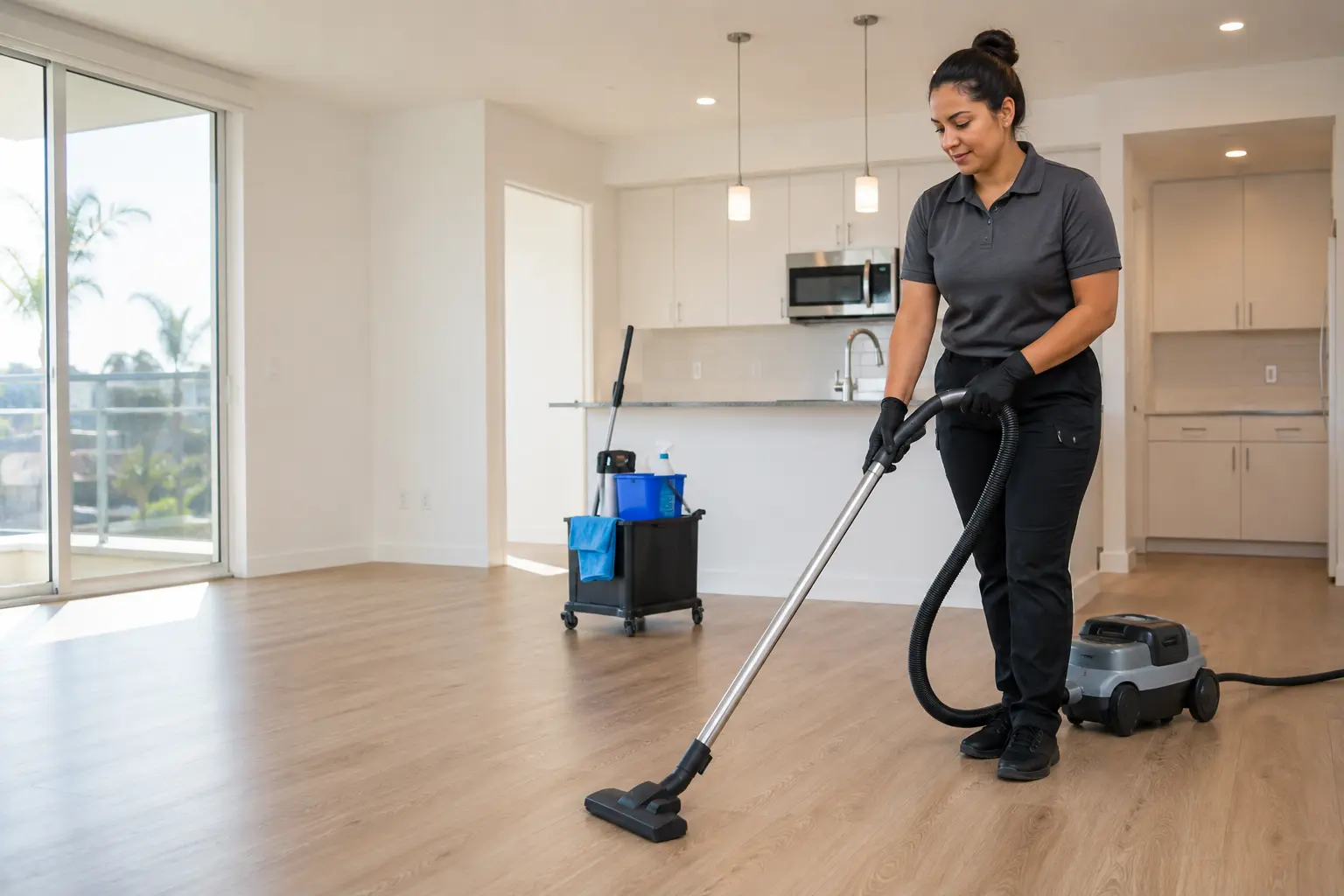
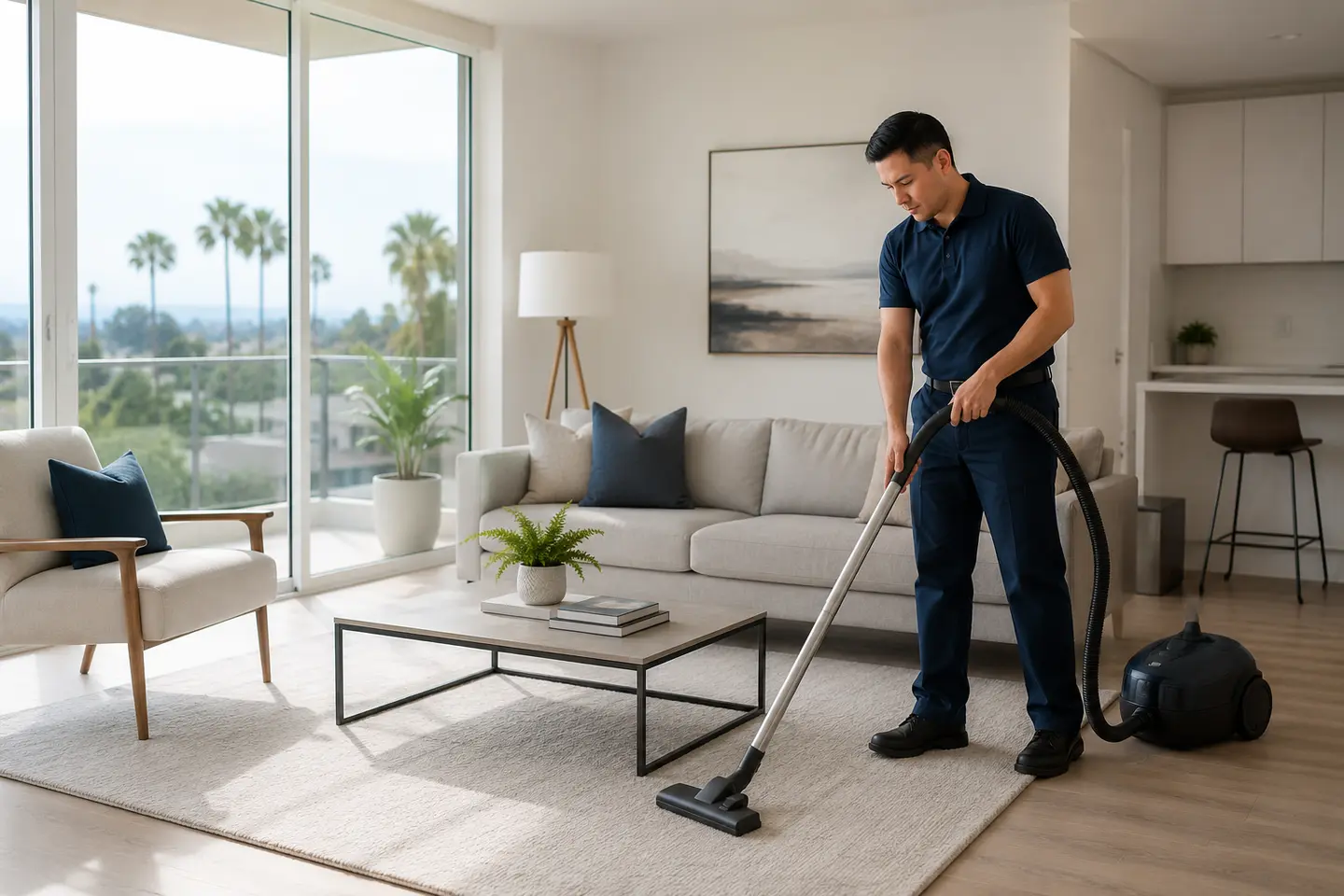
    Professional cleaner vacuuming a bright Orange County apartment living room
    Apartment size, condition, cleaning scope, and frequency can all affect the final quote.

    Apartment cleaning cost: the quick answer

    The short answer is that apartment cleaning cost depends more on the work than on the word “apartment.” Square footage matters, but so do bathrooms, kitchen condition, flooring, pet hair, buildup, requested detail work, and how often the service occurs. Two apartments with the same floor plan can require very different amounts of time.

    SRS Cleaning’s current service information states that Orange County pricing depends on the size of the space, cleaning type, frequency, and add-ons. That is why a tailored estimate is more reliable than copying a national average into a budget.

    Use published ranges as planning references only. Before booking, confirm exactly which rooms and tasks are included, whether the estimate is flat-rate or time-based, and what could change the final amount. A clear scope makes it easier to compare quotes fairly.

    Service type Typical purpose Quote details to confirm
    Standard or recurring cleaning Ongoing maintenance Rooms, checklist, frequency, and first-visit condition
    Deep cleaning A more detailed reset Buildup, detail areas, and included surfaces
    Move Out Cleaning Preparing an apartment for handoff Empty-space scope, appliances, cabinets, closets, and inspection priorities

    Why apartment cleaning estimates vary

    Consumer cost guides do not agree on one universal number because they collect data from different providers, locations, and job types. One guide may blend recurring and one-time visits; another may separate standard cleaning from deep cleaning. Some estimates include fees or common add-ons, while others show only a base visit.

    Company pricing methods also differ. Some services quote by the job after reviewing the details. Others use square footage, room count, estimated labor time, or a combination. Molly Maid, for example, explains that its own estimates consider home size, bathrooms, pets, and personal requests before providing a price range. That describes Molly Maid’s stated estimating approach; it is not a claim that every cleaning company prices the same way.

    Local conditions and the exact requested scope matter more than a broad internet average. A trustworthy estimate should make the assumptions visible rather than promising a price without enough information.

    Factors that shape the price

    1. Apartment size and layout

    More floor area usually means more surfaces, flooring, and rooms to address. Layout can matter too. An open studio may be faster to navigate than a smaller but highly divided space with several rooms, stairs, or tight access points.

    2. Number of bathrooms

    Bathrooms often involve several distinct surfaces: shower walls, tubs, fixtures, mirrors, counters, toilets, and floors. The number of bathrooms and their current condition can therefore change the time required.

    3. Kitchen condition

    A routine wipe-down is different from detailed attention to grease, backsplash residue, cabinet fronts, or appliance exteriors. Interior oven, refrigerator, or cabinet cleaning should be identified separately because it may not be part of a standard visit.

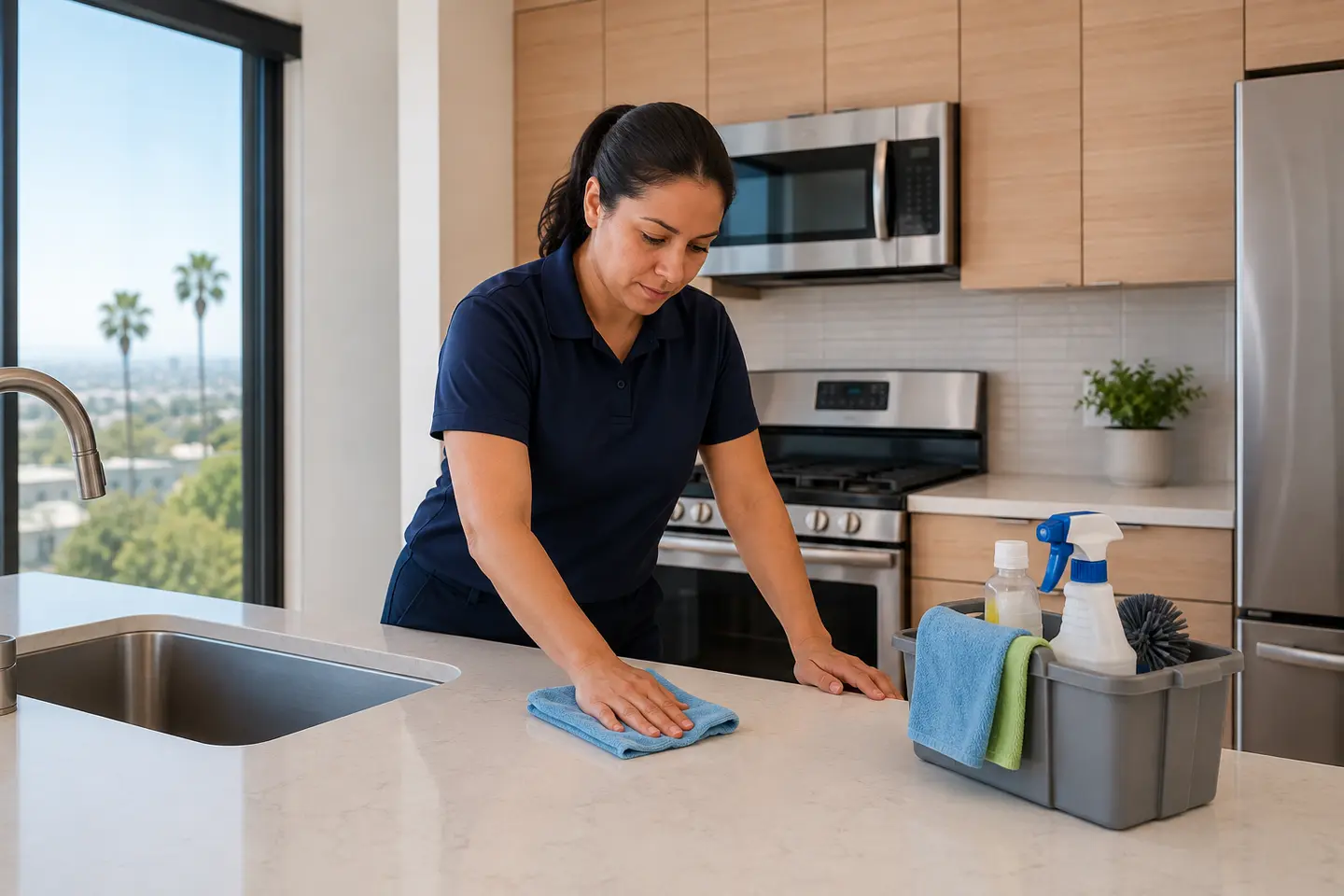
    Professional cleaner wiping a modern apartment kitchen countertop
    Kitchens and detailed surface work can influence the time and scope of an apartment cleaning.

    4. Current condition and buildup

    Regularly maintained surfaces generally require a different level of effort than soap scum, accumulated dust, heavy floor soil, or long-neglected detail areas. Honest condition notes help a company recommend the right service instead of underestimating the work.

    5. Pets, hair, and extra floor care

    Pet hair can require additional vacuuming and edge work, especially on upholstery, rugs, and baseboards. Mentioning pets before the visit also helps the cleaning team understand access and product considerations.

    6. Frequency

    A one-time reset and an ongoing maintenance visit serve different needs. Recurring appointments may have a more predictable scope because the same areas are maintained on a schedule. SRS offers recurring cleaning for regular upkeep, while the initial condition still affects the first estimate.

    7. Add-ons and priority requests

    Interior windows, blinds, inside appliances, inside cabinets, detailed baseboards, or other special requests can extend the scope. Ask whether a requested task is included, available as an add-on, or outside the company’s service.

    Standard, deep, or Move Out Cleaning?

    The cleaning type is one of the biggest pricing variables because it defines the expected level of detail.

    Standard or recurring cleaning

    Standard service typically focuses on maintaining commonly used rooms and surfaces. It is usually the appropriate comparison when an apartment is already in reasonable condition and the goal is ongoing upkeep. Exact inclusions vary, so the provider’s checklist should control.

    Deep cleaning

    Deep cleaning is intended for a more detailed reset. It can be suitable when routine cleaning has not kept up with buildup or when neglected areas need focused attention. The scope should be agreed on before the visit rather than assumed from the word “deep.”

    Move Out Cleaning

    Move Out Cleaning is a separate service context. Empty-space access may simplify some tasks, but cabinets, appliances, baseboards, closets, and the overall handoff condition can expand the checklist. Share any inspection requirements or priority areas when requesting the quote.

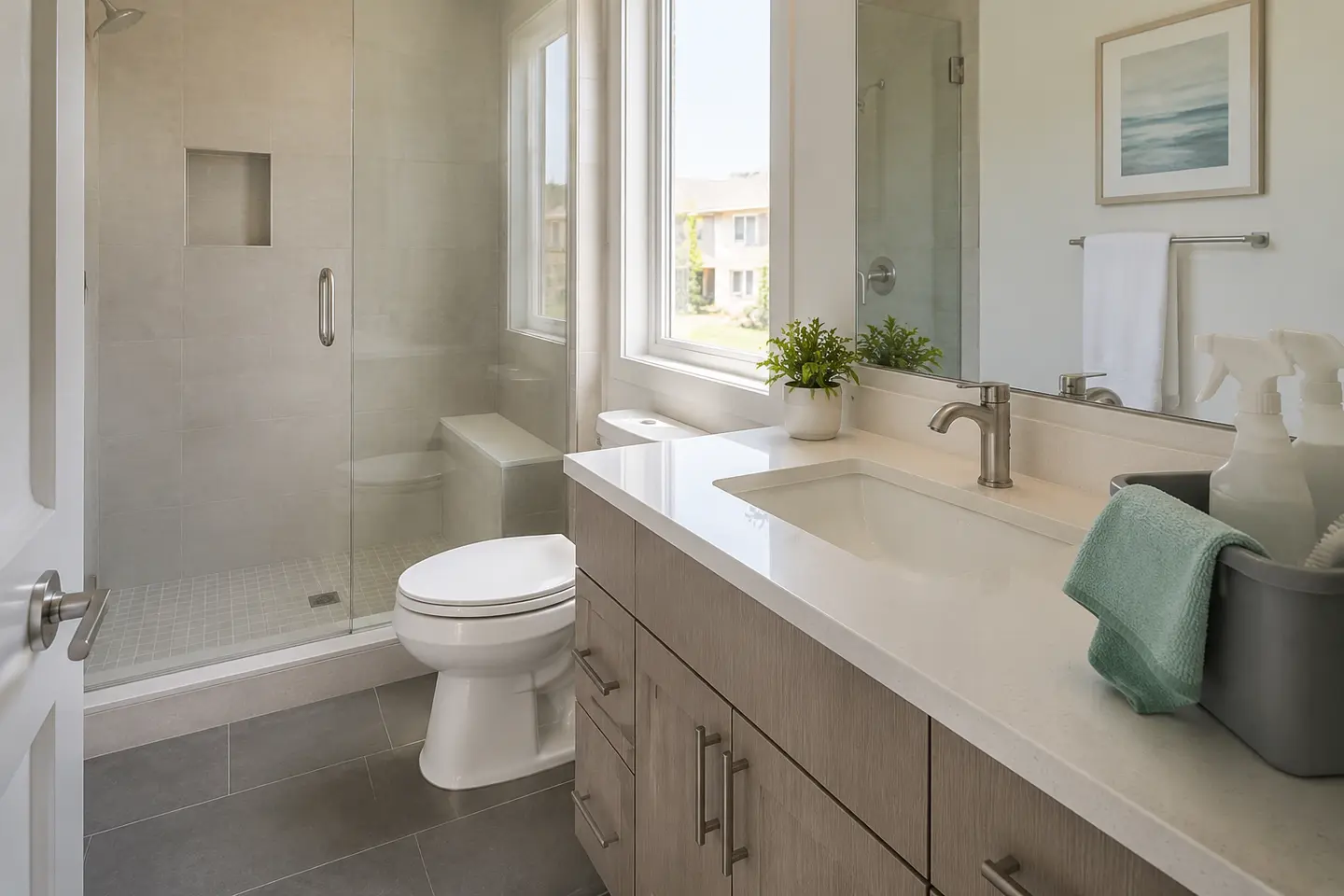
    Clean modern apartment bathroom showing shower, vanity, and tile surfaces
    Bathroom count, buildup, and requested detail work can affect an apartment cleaning estimate.

    What a clear quote should include

    A useful quote should make it easy to understand what is being purchased. Before agreeing to service, look for these details:

    • Cleaning type: standard, recurring, deep, move-in, or Move Out Cleaning.
    • Rooms and areas: bedrooms, bathrooms, kitchen, living areas, floors, and any spaces excluded from service.
    • Included tasks: a written checklist or clear description of the base scope.
    • Add-ons: separately identified optional work and its effect on the estimate.
    • Pricing method: whether the quote is flat-rate, hourly, or subject to an on-site condition review.
    • Access and parking: gate instructions, elevator timing, parking limitations, and building rules that could affect arrival or setup.
    • Scheduling terms: cancellation, rescheduling, arrival window, and recurring frequency.
    • Company details: contact information, service policies, and the process for reporting an issue.

    When comparing providers, compare the included scope—not just the total. A lower estimate can represent fewer tasks, less time, or different policies. A complete quote reduces ambiguity before the cleaning begins.

    How to keep costs predictable

    You do not need to pre-clean for a cleaning service, but a few practical steps can make the requested scope clearer.

    1. Describe the space accurately. Provide square footage when known, along with bedroom and bathroom count.
    2. Choose the right service type. Do not book routine maintenance when the apartment needs a detailed reset.
    3. List priority tasks. Identify the surfaces or rooms that matter most before the estimate is prepared.
    4. Separate add-ons from essentials. Decide which occasional tasks need to happen now and which can wait.
    5. Reduce access uncertainty. Share gate, elevator, parking, pet, or key instructions in advance.
    6. Review the recurring option. If consistent upkeep is the goal, compare a maintenance schedule with repeated one-time visits.

    These steps do not guarantee a lower price. They help the company quote the actual job and reduce the chance that important work was left out of the estimate.

    Choosing an apartment cleaning service

    Price matters, but it should sit beside clarity, reliability, and accountability. Ask who will perform the work, whether the company is insured, how the scope is documented, and what happens if an agreed task is missed.

    Also confirm that the service actually matches the apartment’s needs. A detailed checklist, clear communication, and a reachable company contact are more useful than vague promises. Review policies before booking, especially for access, pets, cancellations, and special surface instructions.

    For Orange County service, SRS Cleaning provides house cleaning options that include recurring, deep, and move-related cleaning. The quote process is the right place to confirm current availability and the exact apartment scope.

    Apartment cleaning cost FAQ

    Is apartment cleaning always cheaper than house cleaning?

    No. A smaller floor plan may reduce the amount of space, but condition, bathroom count, kitchen detail, add-ons, and service type can outweigh size alone. The requested work determines the quote.

    Does recurring cleaning cost less per visit?

    Some providers price recurring work differently because the scope becomes more predictable, but policies vary. Ask for both the first-visit estimate and the ongoing rate rather than assuming they are the same.

    Is deep cleaning included in a standard quote?

    Not necessarily. Standard and deep cleaning commonly have different checklists. Confirm which detail tasks are included before comparing prices.

    Should national cost ranges be used as a local quote?

    No. National ranges are planning references drawn from multiple markets and providers. A current Orange County quote should reflect the actual space and requested service.

    What information helps produce an accurate estimate?

    Share the apartment size, bedroom and bathroom count, current condition, flooring, pets, desired frequency, access details, and any add-ons or priority tasks.

    Get a clear apartment cleaning quote

    The best apartment cleaning cost estimate is specific enough to be useful. If you are comparing standard, recurring, deep, or Move Out Cleaning in Orange County, describe the space and desired scope so the quote reflects the work that matters.

    SRS Cleaning can review those details and provide a no-pressure estimate. Request an apartment cleaning quote or call (714) 439-8500 to discuss the service.

  • Apartment Common Area Cleaning Checklist for Cleaner Shared Spaces

    Apartment Common Area Cleaning Checklist for Cleaner Shared Spaces

    An apartment common area cleaning checklist turns a large, easily interrupted job into a clear routine. Instead of relying on memory, it organizes what needs attention in entrances, lobbies, hallways, stairs, elevators, laundry rooms, restrooms, and amenity spaces—and separates frequent tasks from periodic detail work.

    The best schedule is not identical for every building. Foot traffic, weather, floor materials, pets, deliveries, and the number of shared facilities all affect how quickly an area needs attention. Use this guide as a practical starting point, then adjust the frequency when a walkthrough shows that a space becomes dirty sooner.

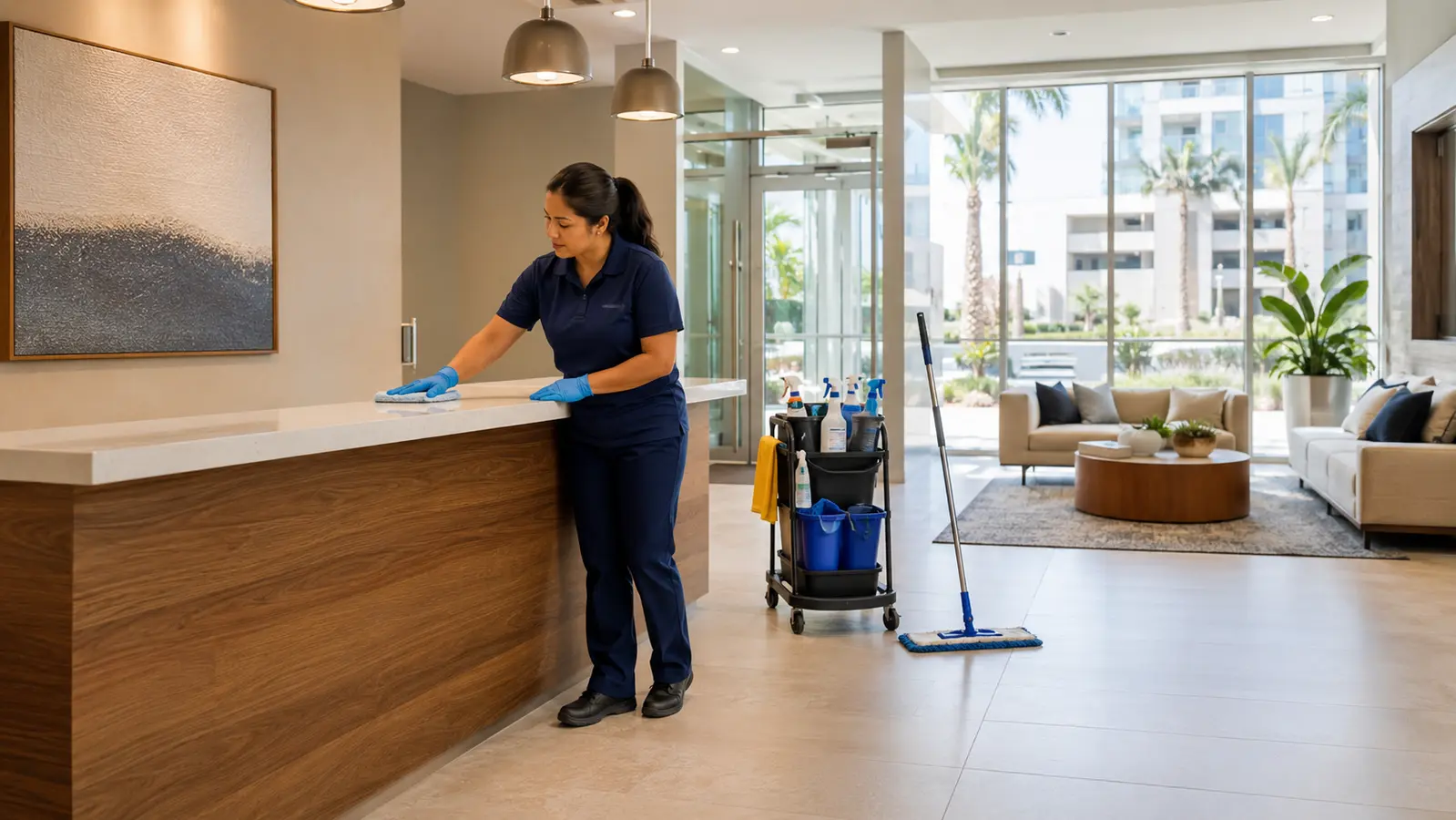
    Professional cleaner wiping the counter in a bright apartment common area lobby
    Daily entry and lobby checks keep visible soil from spreading into the building.

    How to Use This Checklist

    Start by dividing the property into zones. A useful zone map might include the entrance and lobby, interior corridors, stairs, elevator, mail area, laundry room, shared restrooms, fitness room, lounge, outdoor entry, and waste collection points. Give each zone a short task list and a realistic service frequency.

    Then identify the surfaces and equipment in each area. Flooring may require different methods for carpet, tile, resilient flooring, or sealed concrete. Glass, stainless steel, painted walls, electronic panels, upholstery, and natural stone also need compatible products and tools. Product labels and manufacturer care instructions should guide every surface decision.

    Use three simple frequency levels:

    • Daily or as needed: visible soil, litter, spills, trash, entry glass, floors, and frequently touched points.
    • Weekly: edges, ledges, low-touch surfaces, interior glass, spot cleaning, and detailed floor care.
    • Monthly or seasonal: high dusting, vents, wall washing, upholstery care, deep floor work, and weather-related adjustments.

    A checklist should also state who completed each task, when it was completed, and what needs follow-up. That final note matters: a cleaner can report a leaking dispenser, damaged floor transition, loose handrail, or burned-out light, even when repair falls outside ordinary cleaning.

    Daily Cleaning Tasks

    Daily work should focus first on safety, visible cleanliness, and high-traffic areas. Inspect the property before beginning so spills, broken glass, blocked walkways, and other urgent issues can be handled or reported promptly.

    Entrances, lobbies, and mail areas

    • Pick up litter and remove leaves, tracked-in soil, and loose debris.
    • Vacuum walk-off mats and straighten them so edges lie flat.
    • Dust-mop, vacuum, or damp-mop floors with a surface-compatible method.
    • Spot-clean entry glass, door glass, and fingerprints on frames.
    • Wipe door handles, push plates, railings, call buttons, and package-area counters.
    • Empty waste and recycling containers before they overflow; replace liners when needed.
    • Remove cobwebs or visible dust at eye level.

    Hallways, stairs, and elevators

    • Vacuum carpet or remove loose soil from hard floors.
    • Spot-clean spills and marks using the correct product for the surface.
    • Wipe stair handrails, elevator buttons, and door handles.
    • Polish elevator stainless steel only with a product approved for that finish.
    • Clean elevator tracks carefully without forcing liquid into mechanical components.
    • Check corners, baseboards, and stair landings for litter or accumulated grit.

    In wet weather, entrances may need repeated checks rather than one scheduled pass. Moisture and grit can spread beyond the mat quickly, so the checklist should include an “as needed” inspection window during rain.

    Weekly Cleaning Tasks

    Weekly work catches the details that are easy to miss during a fast daily route. It also prevents gradual buildup from becoming a larger restorative cleaning project.

    • Dust ledges, door frames, picture frames, directory signs, and accessible light fixtures.
    • Wipe baseboards and remove scuffs from washable walls where the finish permits.
    • Clean interior glass partitions and mirrors from edge to edge.
    • Vacuum carpet edges, under movable furniture, and around entry matting.
    • Damp-mop hard floors thoroughly, paying attention to corners and transitions.
    • Clean laundry-machine exteriors, folding counters, sinks, and reachable shelving.
    • Wipe amenity-room tables, chair backs, cabinet fronts, and appliance exteriors.
    • Inspect waste areas for residue, odors, and liner leaks.

    Move lightweight items only when it can be done safely, and return them to their original positions. Heavy furniture, mounted equipment, electrical panels, elevator machinery, and specialty fixtures should be left to qualified personnel unless the cleaning scope specifically covers them.

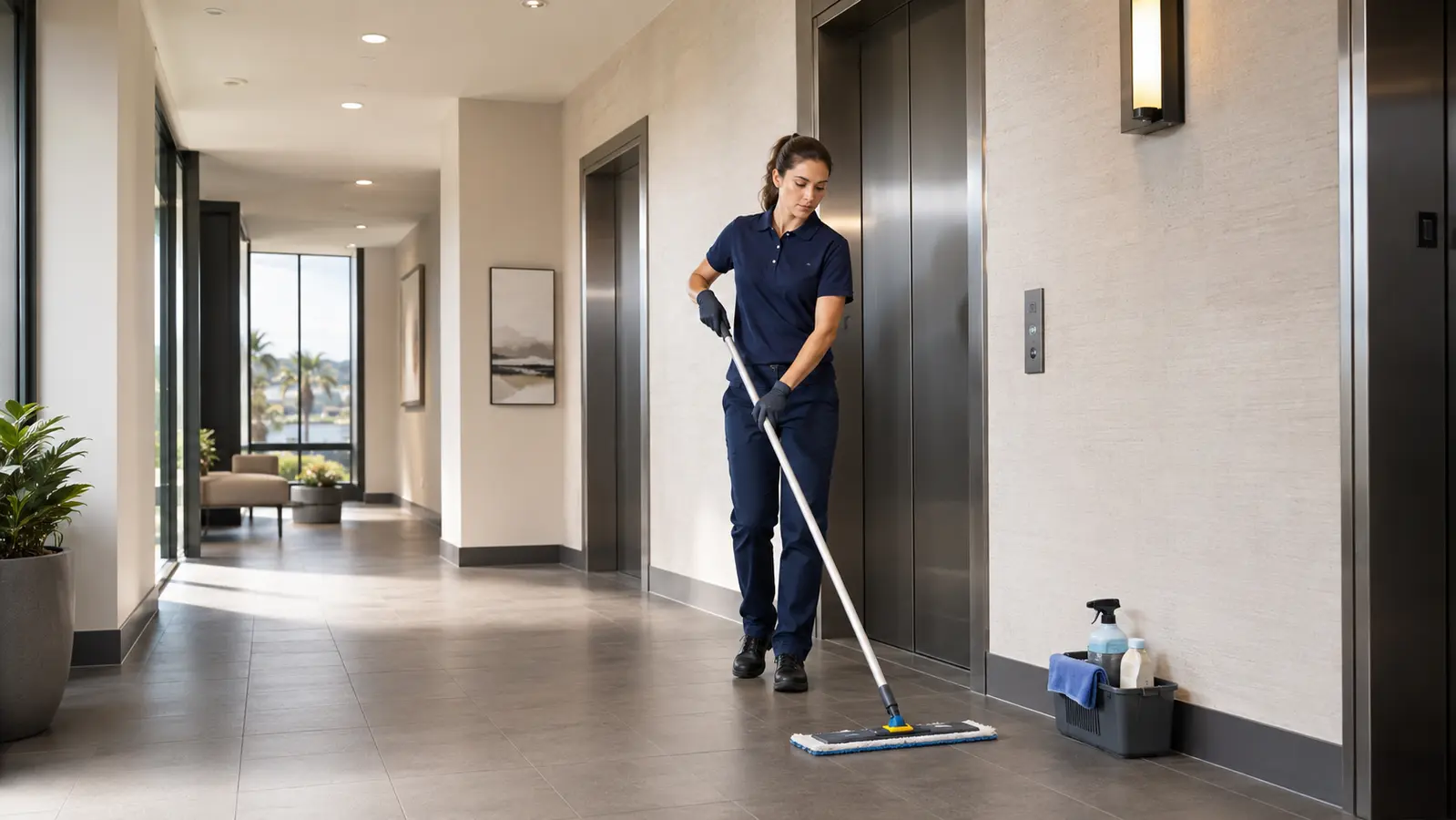
    Professional cleaner mopping an apartment hallway beside the elevators
    Hallways and elevator landings benefit from a daily floor check and weekly detail work.

    Monthly and Seasonal Tasks

    Periodic work should be scheduled before surfaces look neglected. A monthly rotation can spread detail tasks across the calendar instead of trying to complete all of them in one visit.

    • Dust high vents, grille covers, ceiling corners, and other reachable elevated surfaces with suitable equipment.
    • Clean doors, frames, kick plates, and wall areas that collect hand marks.
    • Detail baseboards, corners, and floor edges throughout the route.
    • Vacuum upholstered furniture using the manufacturer-approved attachment and method.
    • Deep-clean carpet or hard floors at a frequency appropriate to traffic and manufacturer guidance.
    • Wash waste and recycling containers when residue remains after liner changes.
    • Review supply storage, remove empty containers, and confirm labels remain readable.
    • Inspect cleaning tools and replace worn mop heads, cloths, pads, or filters.

    Seasonal planning should account for local conditions. Dry periods can increase dust at entrances, while rainy days increase moisture and tracked-in soil. Outdoor pollen, landscaping debris, and holiday deliveries can also change the workload. The practical response is to adjust inspections and floor care—not to assume one fixed schedule will work all year.

    Room-by-Room Common Area Checklist

    This condensed table can be copied into a site-specific worksheet. Frequencies are planning suggestions, not universal rules.

    Area Core tasks Starting frequency
    Entrance and lobby Litter, mats, glass, floors, doors, counters, waste Daily and as needed
    Hallways Floors, spots, ledges, baseboards, wall marks Daily floors; weekly details
    Stairs Treads, landings, corners, rails, door handles Daily or based on traffic
    Elevator Floor, buttons, doors, mirrors, tracks, stainless steel Daily; detail weekly
    Mail and package area Counter, floor, touchpoints, litter, waste Daily
    Laundry room Machine exteriors, counters, sink, floor, lint, waste Daily check; weekly detail
    Shared restroom Fixtures, dispensers, mirrors, partitions, floor, waste Daily or more often by use
    Fitness or lounge area Floors, furniture, touchpoints, mirrors, waste Daily; equipment per maker guidance
    Waste area Loose debris, spills, residue, containers, odors Daily check

    For a broader commercial routine, compare this list with the SRS commercial cleaning checklist. The overlap makes it easier to maintain one consistent standard while adding property-specific details.

    Safe Product and Disinfecting Practices

    Cleaning, sanitizing, and disinfecting are different processes. The CDC advises cleaning surfaces before sanitizing or disinfecting, because dirt can reduce how effectively those later steps work. Routine cleaning may be sufficient in many situations; disinfecting can be added when the risk, setting, or product protocol calls for it.

    When a disinfectant is used, follow the product label exactly. The EPA explains that a disinfectant’s contact time is the period the surface must remain visibly wet for the product to work as directed. Do not guess a contact time, substitute an unapproved surface, or create a homemade dilution.

    Never mix cleaning products. Poison Control warns that mixing cleaners can produce dangerous fumes and recommends following label directions and ventilating the work area. Keep products in their original labeled containers, close them after use, and store them away from food, heat, and unauthorized access.

    For workplace chemical handling, the Safety Data Sheet identifies hazards, protective measures, handling, and storage precautions. Gloves, eye protection, ventilation, or other controls should follow the label and SDS rather than a generic rule. The EPA Safer Choice product search can also help identify cleaners that meet the program’s ingredient and performance criteria; the mark does not replace reading the product directions.

    Use separate, clearly identified cloths or tools where cross-contamination is a concern, especially between restrooms, food-contact areas, and general surfaces. Launder or replace reusable materials according to their instructions, and do not return a soiled cloth to a clean-solution container.

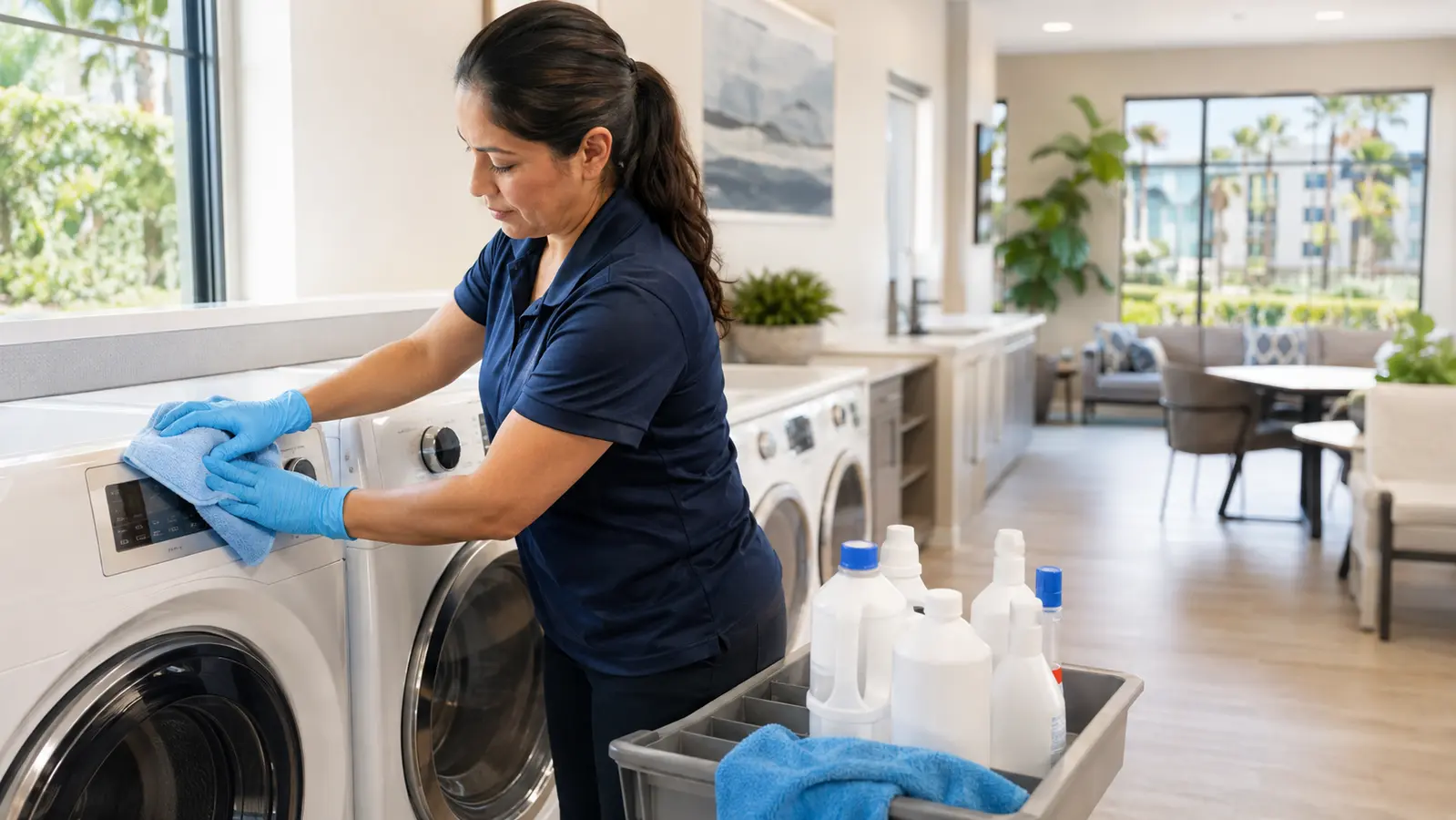
    Gloved professional cleaner wiping a washing machine in a shared apartment laundry room
    Product labels and surface instructions should guide cleaning in shared laundry areas.

    Quality Control and Documentation

    A completed checkbox confirms that a task was attempted; a short inspection confirms the result. End each route with a consistent walkthrough from the main entrance through every zone. View glass from more than one angle, check corners and edges, and look behind doors where debris tends to collect.

    A simple quality-control record can include:

    • Date, time, and name or initials of the person completing the route.
    • Tasks completed and areas that were inaccessible.
    • Spills, damage, supply shortages, or maintenance concerns reported.
    • Follow-up owner and target completion date.
    • Periodic supervisor or second-person inspection.

    Look for patterns over time. If the same hallway needs repeated spot cleaning by midday, increase its check frequency. If a monthly task rarely shows buildup, it may remain monthly while attention shifts to a busier zone. A checklist is most useful when it evolves from actual conditions.

    For additional planning ideas, the SRS guide to office hygiene practices explains how shared touchpoints and consistent routines fit into a wider cleaning plan.

    Common Area Cleaning FAQ

    How often should apartment common areas be cleaned?

    High-traffic floors, entrances, waste points, and frequently touched surfaces usually need daily checks, while detail work can follow weekly or monthly rotations. The right schedule depends on traffic, weather, materials, and how quickly visible soil returns.

    Should every high-touch surface be disinfected every day?

    Not automatically. Clean first, then use a suitable disinfectant when the setting or situation calls for it. Follow the label’s approved surfaces, application method, contact time, ventilation, and safety directions.

    What commonly gets missed?

    Elevator tracks, stair corners, the underside of handrails, door-frame tops, baseboard edges, package counters, laundry-machine controls, and the space around waste containers are frequent omissions. Adding them by name makes them easier to verify.

    Can one checklist cover every building?

    No single checklist captures every material, amenity, and traffic pattern. Start with the core zones, then add manufacturer instructions, access notes, site-specific priorities, and realistic frequencies.

    Keep Shared Spaces Ready

    A dependable apartment common area cleaning checklist combines daily visibility tasks, weekly detail work, periodic floor and surface care, safe product practices, and a final walkthrough. The result is a routine that is easier to perform, inspect, and improve.

    If maintaining those shared spaces requires a consistent professional schedule, review SRS Cleaning’s commercial and office cleaning services and confirmed Orange County service areas. A tailored scope can match the building’s traffic, surfaces, and priorities. When the fit is right, request an office cleaning quote to discuss the details.

  • Apartment Turnover Cleaning Checklist for Faster Unit Readiness

    Apartment Turnover Cleaning Checklist for Faster Unit Readiness

    An apartment turnover cleaning checklist helps property managers move a vacant unit from move-out condition to ready-for-showing without losing track of details, access, or vendor handoffs. The best checklist does more than name surfaces to wipe. It puts inspection, repairs, cleaning, quality control, and documentation in the right order so work is not repeated.

    This practical guide is designed for apartment communities and rental-property teams throughout Orange County. Use it as a master workflow, then adapt it to the unit, lease requirements, property standards, and work your maintenance team has already approved.

    What apartment turnover cleaning should accomplish

    Turnover cleaning prepares a vacant apartment for its next approved use: maintenance inspection, marketing photos, a prospective-resident tour, or move-in. It is different from routine occupied-apartment cleaning because cabinets are empty, appliances can be cleaned inside, and areas normally blocked by furniture are accessible.

    Cleaning is only one part of the turn. Damage assessment, abandoned-property handling, pest treatment, painting, repairs, flooring work, and safety checks may require separate vendors or authorized staff. A clear scope prevents a cleaner from being asked to make repair decisions and keeps dust-producing work from undoing a completed clean.

    For a broader overview of coordination and common turnover priorities, see SRS Cleaning’s rental turnover cleaning guide for property managers. The checklist below turns that strategy into a repeatable sequence.

    Apartment turnover cleaning checklist: the correct order

    1. Inspect and document the vacant unit

    Begin only after possession and entry requirements have been handled according to your property’s procedures. Walk the unit before moving supplies inside. Record the starting condition with dated photos or your approved inspection system, and separate cleaning issues from damage or maintenance issues.

    • Confirm the unit number, floor plan, keys, codes, and authorized access window.
    • Photograph kitchens, bathrooms, floors, walls, windows, closets, and appliance interiors.
    • Flag leaks, broken fixtures, damaged screens, loose hardware, pest evidence, or other concerns for the appropriate team.
    • Identify belongings, trash, or bulky items that must be handled before cleaning.
    • Note surfaces that need special care, including stone, stainless steel, wood, or delicate finishes.

    This first walk-through creates a shared definition of the work. It also gives the cleaner a reliable way to report a pre-existing stain, chip, or worn finish without confusing it with a missed cleaning task.

    2. Clear the unit and complete dust-producing work

    Schedule removal, repairs, patching, sanding, painting, flooring replacement, and similar work before the final clean whenever possible. If a repair must happen afterward, identify the affected room and plan a focused touch-up visit rather than assuming the unit will stay move-in ready.

    • Remove approved trash and remaining materials.
    • Finish repairs and allow paint, grout, caulk, or other materials to cure as directed.
    • Remove contractor packaging, labels, tape, and protective coverings that are ready to come off.
    • Confirm electricity and water are available where needed for cleaning.
    • Make sure maintenance tools and debris are out of the cleaner’s path.

    3. Clean high areas before low areas

    Work from dry tasks to wet tasks, from high surfaces to low surfaces, and from the farthest room toward the exit. That sequence keeps settled dust from falling onto finished counters or floors. A practical order is vents and ledges, cabinets and fixtures, counters and appliances, baseboards, and then flooring.

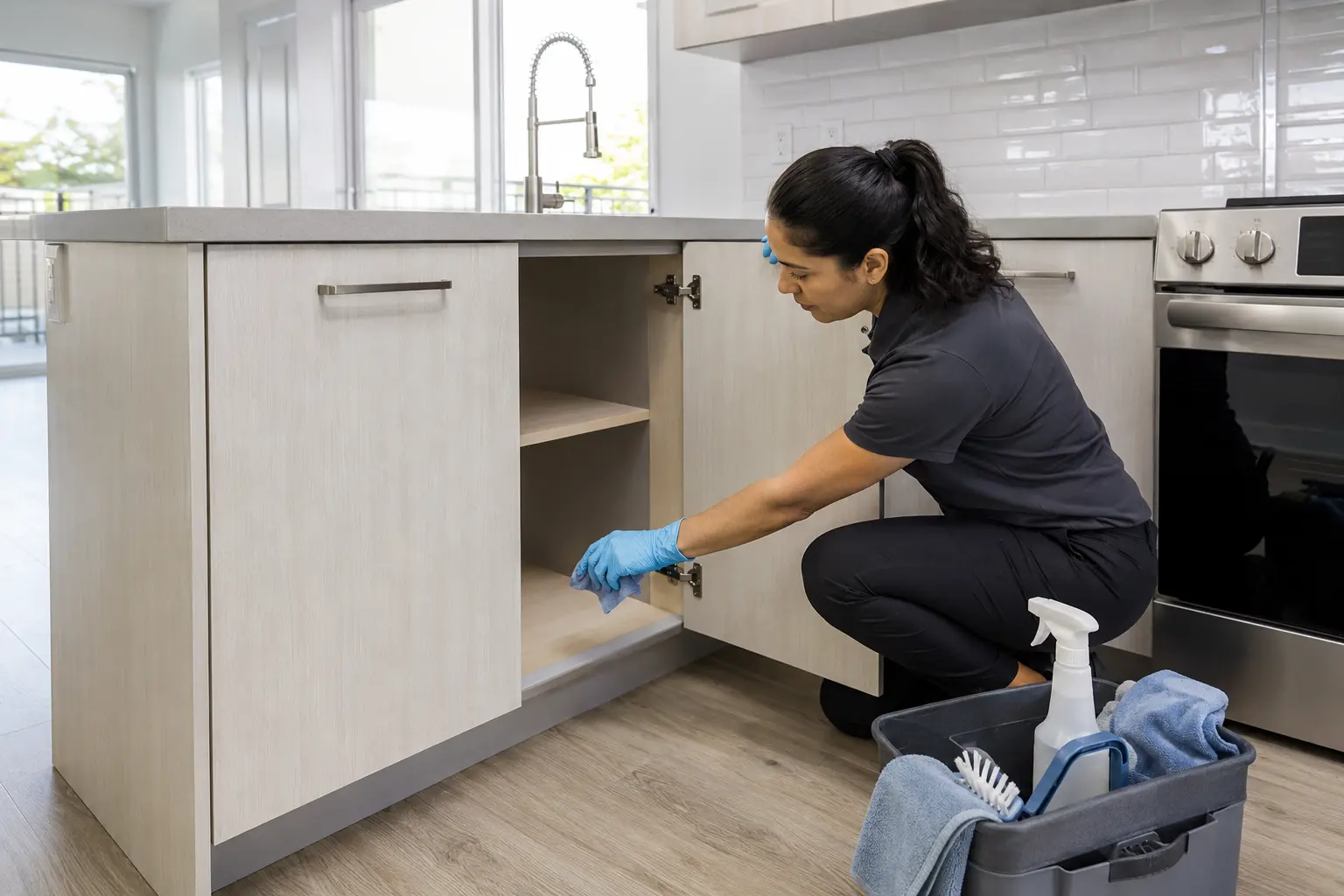
    Professional cleaner wiping the inside of an empty kitchen cabinet during apartment turnover cleaning
    Empty cabinets make it possible to clean shelves, corners, and hardware before the next resident moves in.

    Room-by-room turnover cleaning tasks

    Kitchen

    • Remove loose crumbs and debris from empty drawers, shelves, and cabinet corners.
    • Wipe cabinet and drawer interiors, fronts, handles, and accessible edges using a surface-appropriate method.
    • Clean countertops, backsplash, sink basin, faucet, drain area, and exposed plumbing cabinet surfaces.
    • Clean the refrigerator interior, drawers, shelves, seals, exterior, and accessible top and sides when included in the scope.
    • Clean the oven and cooktop according to the appliance finish; wipe knobs, control panels, hood exterior, and accessible filters.
    • Wipe the dishwasher interior lip, exterior, controls, and surrounding cabinet faces.
    • Check corners, toe kicks, baseboards, wall plates, and the floor beneath movable items.

    Appliances vary, so the scope should say whether interior oven and refrigerator cleaning is included and whether appliances may be moved. Cleaners should not disconnect gas, water, or electrical connections unless they are specifically trained and authorized to do so.

    Bathrooms

    • Clean and disinfect appropriate high-touch surfaces such as handles, switches, and fixture controls.
    • Remove soap residue and mineral buildup from tubs, showers, tile, surrounds, doors, and tracks using finish-safe products.
    • Clean the toilet, including the seat, hinges, exterior, base, and nearby floor area.
    • Clean the vanity, sink, faucet, mirror, empty storage, and accessible plumbing cabinet surfaces.
    • Wipe exhaust covers, ledges, doors, trim, baseboards, and wall plates.
    • Check the room from several angles for hair, dust, streaks, and residue.

    Persistent discoloration, failed caulk, damaged grout, corrosion, or an active leak may need maintenance rather than additional scrubbing. Flagging that distinction early prevents wasted time and protects the finish.

    Bedrooms, living areas, closets, and halls

    • Dust accessible vents, fan exteriors, light fixtures, ledges, door tops, and closet shelving.
    • Wipe doors, frames, handles, switches, wall plates, windowsills, tracks, and baseboards.
    • Remove cobwebs and check corners, closet floors, and the space behind open doors.
    • Spot-clean washable marks only when the method is appropriate for the paint and within scope.
    • Vacuum carpet edges and open areas or clean hard floors with a finish-appropriate process.
    • Complete a final edge check where dust and hair tend to collect.

    If the unit needs a more extensive vacant-home service, review SRS Cleaning’s move-in and move-out cleaning service and confirm the exact unit scope before work begins.

    Build a pass-or-correct quality-control step

    A checklist is only useful when every item has a clear completion standard. “Clean kitchen” is subjective. “Cabinet interiors are empty and free of visible crumbs, dust, and residue” is easier to inspect. Define whether each item passes, needs correction, is excluded, or requires maintenance.

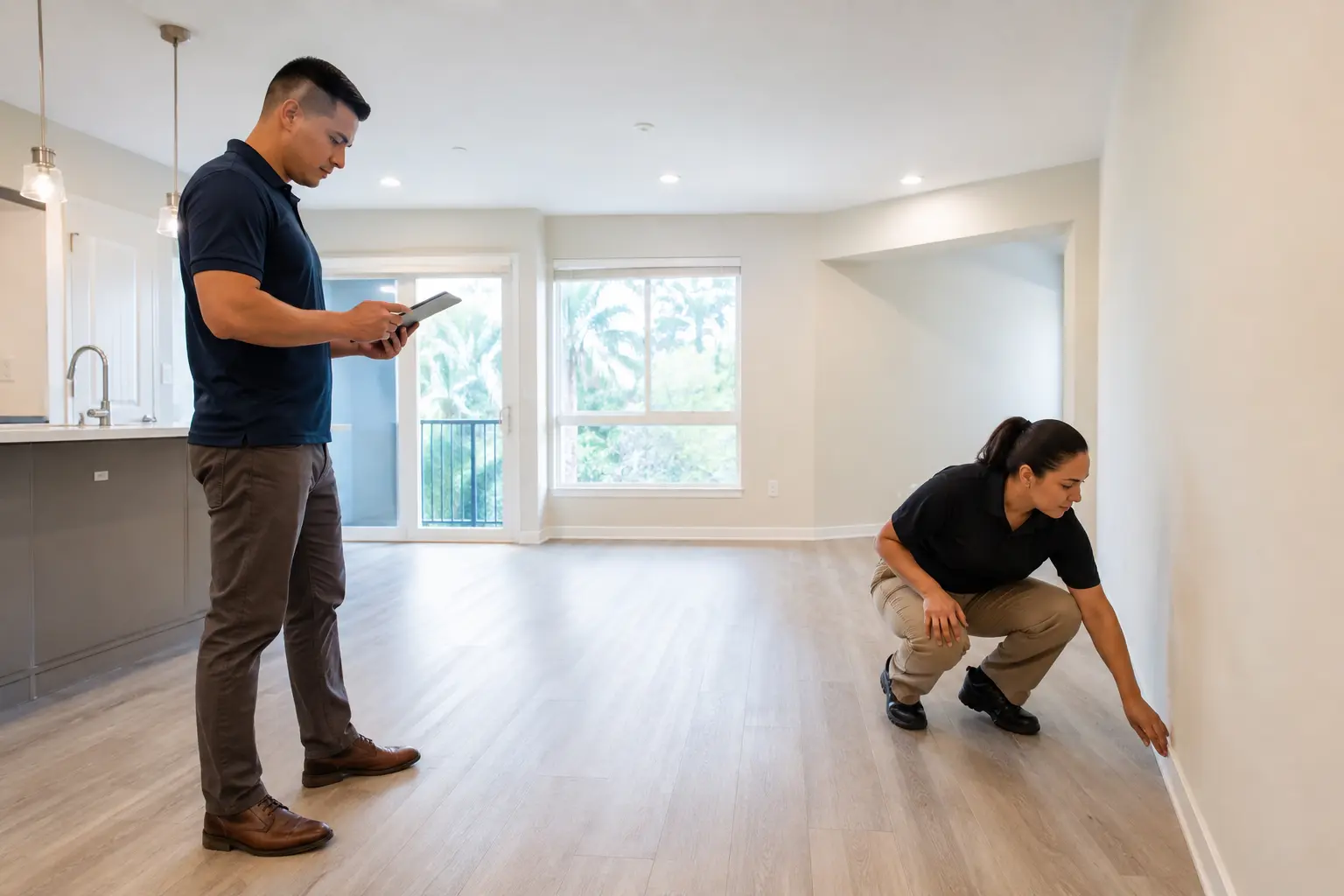
    Property manager and cleaning lead completing a final walkthrough in a clean vacant apartment
    A documented final walkthrough helps the property team separate completed cleaning from maintenance follow-up.

    During the final walk-through:

    1. Enter with clean shoes or protective covers if the flooring requires them.
    2. Turn on available lights and inspect from the doorway before moving through the room.
    3. Open empty cabinets, drawers, closets, appliances, and shower doors included in the scope.
    4. Look across reflective surfaces for streaks and check floor edges at eye level.
    5. Record corrections with a room, item, and photo instead of a vague message.
    6. Confirm corrections and save final condition photos in the property’s approved system.
    7. Secure windows, turn off lights and water, remove supplies, and follow the approved key-return process.

    A consistent inspection method is especially important across multiple units or team members. SRS Cleaning’s guide to apartment cleaning priorities that matter most can help managers decide which details deserve the most attention during the handoff.

    How to shorten unit downtime without cutting cleaning quality

    Faster readiness usually comes from removing uncertainty, not rushing the final clean. Give each vendor a defined start condition, scope, access method, and completion signal. A shared turn board or property-management workflow can show which step is ready and which is blocked.

    • Use one accountable coordinator. A single contact can approve scope questions and prevent conflicting instructions.
    • Group similar work. When appropriate, scheduling comparable unit types together can simplify supplies, access, and inspection.
    • Share exclusions in advance. Identify repairs, permanent stains, worn finishes, and owner-responsibility items before the cleaning team arrives.
    • Protect completed work. If vendors must re-enter, define pathways and require debris removal.
    • Reserve time for correction. A realistic handoff window is more useful than declaring the unit ready before inspection.

    Turn times depend on unit size, condition, scope, utilities, access, staffing, and the amount of repair work. Avoid promising a universal number of hours. Instead, provide complete unit details so the cleaning team can set a realistic plan.

    What to send when requesting a turnover-cleaning quote

    A complete request reduces back-and-forth and helps the cleaner price the actual work rather than a generic apartment. Include:

    • Property city and unit type, including approximate size and bedroom/bath count.
    • Current condition and whether belongings or construction debris remain.
    • Requested rooms, appliance interiors, windows or tracks, cabinets, floors, and add-on priorities.
    • Surface or appliance details that may affect cleaning methods.
    • Access procedure, parking or loading instructions, and on-site contact.
    • Earliest authorized start, target inspection window, and any vendor dependencies.
    • Photo, documentation, invoicing, or purchase-order requirements.

    SRS Cleaning serves communities across its Orange County service area. Confirm availability and scope for a specific property rather than linking work to an unpublished city page.

    Apartment turnover cleaning checklist FAQ

    What is apartment turnover cleaning?

    It is a vacant-unit cleaning service performed between occupants. Depending on the agreed scope, it can include accessible surfaces, empty cabinets and drawers, appliance interiors, bathrooms, baseboards, and floors. Repairs, painting, hauling, and restoration are separate unless specifically included by the responsible provider.

    Should maintenance or cleaning happen first?

    Most dust-producing repairs, painting, and flooring work should be complete before the final clean. Inspection and urgent maintenance come first; final floor care generally comes near the end. If work must overlap, document the handoff and plan a touch-up.

    How long does apartment turnover cleaning take?

    There is no reliable one-size-fits-all duration. Unit size, condition, requested detail, appliance interiors, flooring, access, utilities, and the number of cleaners all affect timing. Photos and a complete scope help produce a more useful estimate.

    How should managers document the final clean?

    Use the property’s approved inspection system to record room-by-room pass, correction, exclusion, or maintenance status. Dated photos, a named reviewer, and a clear correction deadline make the handoff easier to verify.

    Can one checklist work for every unit?

    Use one master standard for consistency, but adapt it for floor plan, finishes, appliances, occupancy condition, and approved scope. The goal is a repeatable process without treating unlike units as identical.

    Prepare the next Orange County unit with a clearer plan

    A reliable apartment turnover cleaning checklist connects the people doing the work with the person approving the result. Start with documentation, finish repairs before the final clean, inspect against specific standards, and record the handoff. That process supports smoother scheduling and a more consistent resident-ready experience.

    If your property team needs help cleaning a vacant apartment, request a cleaning quote from SRS Cleaning. Share the unit details, condition, scope, and target inspection window so the team can confirm an appropriate plan.

  • Apartment Move-Out Cleaning Checklist for Renters

    Apartment Move-Out Cleaning Checklist for Renters

    Moving is demanding enough without discovering a greasy oven, dusty baseboards, or a forgotten cabinet an hour before key return. This apartment move out cleaning checklist gives Orange County renters a practical order of work, room-by-room priorities, and a final inspection routine so the last clean feels organized instead of overwhelming.

    The goal is not to make an older apartment look brand-new. It is to remove your belongings, trash, dust, residue, and avoidable buildup; follow your lease or property manager’s written instructions; and document the condition you leave behind. Cleaning cannot guarantee a full security-deposit return, but a careful plan can help you avoid missed tasks and make the handoff easier.

    Clean empty Orange County apartment for an apartment move out cleaning checklist
    A clean, empty apartment is easier to inspect before you return the keys.

    Apartment Move Out Cleaning Checklist: Quick Answer

    Empty the unit first, compare the lease and move-out instructions, then clean from high surfaces to low and from dry tasks to wet tasks. Work through the kitchen, bathrooms, living areas, bedrooms, closets, entry, and any included patio or laundry area. Finish with floors, a slow final walkthrough, dated photos, and key or access-item return.

    For more planning help, use the move-out cleaning guide to organize the handoff and compare move-in cleaning versus move-out cleaning if you are coordinating both homes.

    • Before cleaning: remove belongings, food, trash, and adhesive items you are permitted to remove.
    • Highest-effort areas: kitchen appliances, grease, bathroom buildup, cabinets, baseboards, and floor edges.
    • Final proof: photograph every room after cleaning and save your communications and receipts.
    Area Ready for final review when
    Kitchen Food and trash are gone; required appliances, cabinets, counters, sink, and floor are clean.
    Bathrooms Fixtures, shower or tub, toilet, vanity, mirrors, storage, and floor are free of avoidable residue.
    Living areas and bedrooms Closets are empty; dust, debris, floor edges, baseboards, and touchpoints have been addressed.
    Handoff The unit is empty, dry, photographed, and checked against the lease and written instructions.

    Start With the Lease and an Empty Apartment

    Your lease, move-in condition report, and property manager’s written checklist should guide the job. Look for requirements involving appliance interiors, cabinet interiors, windows, carpet care, patios, storage spaces, or professionally completed services. Ask questions early when an instruction is unclear; do not assume that every apartment community uses the same standard.

    Next, remove everything that is leaving with you. Check upper shelves, drawers, medicine cabinets, the refrigerator, balcony storage, and the space behind doors. A professional move-out cleaning can also work more efficiently in an empty property, and you can see dust and marks that furniture or boxes previously covered. Arrange donation, disposal, and bulky-item pickup separately rather than leaving unwanted possessions for the cleaning appointment.

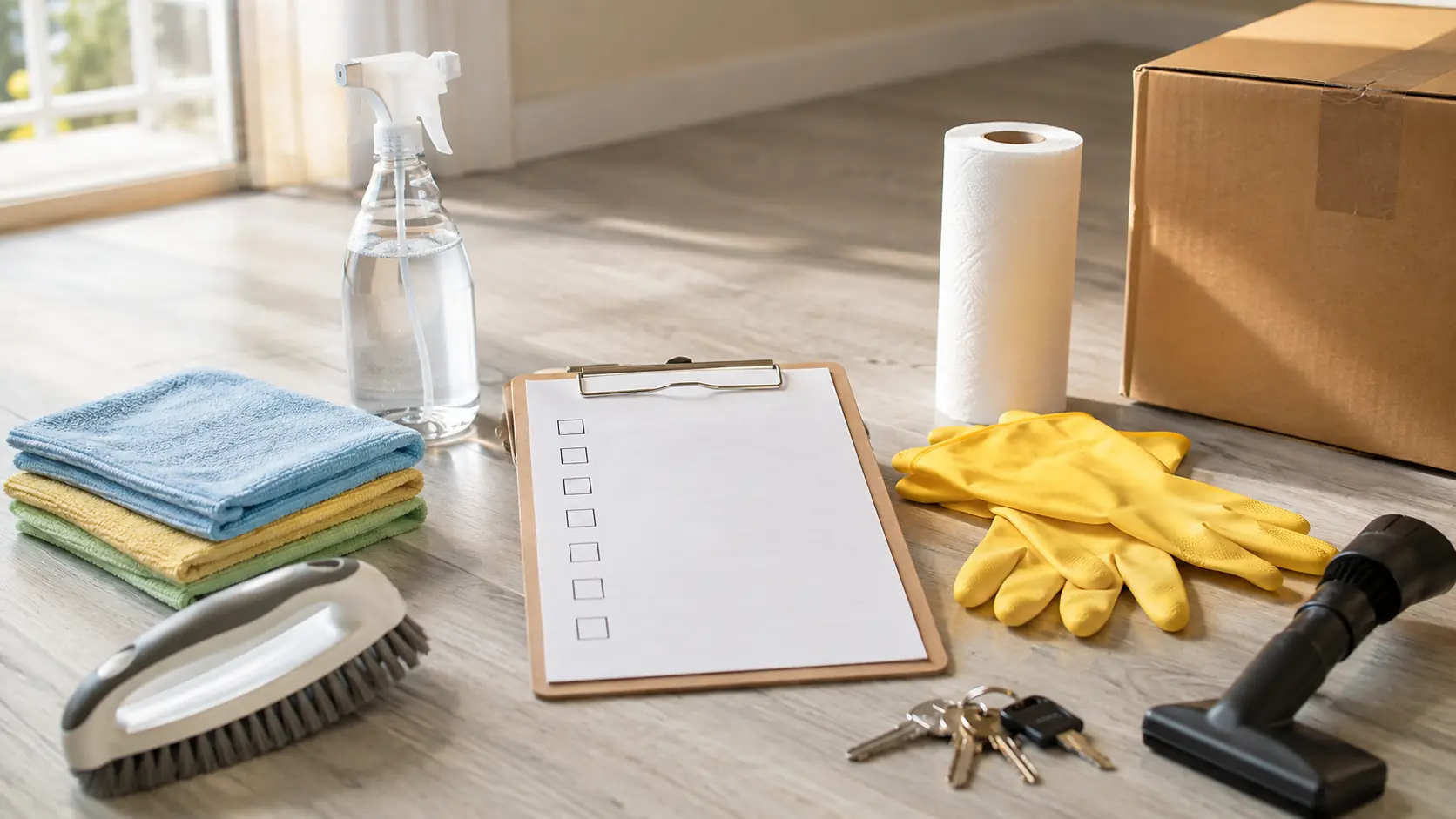
    Set aside only a small last-out kit: microfiber cloths, a vacuum, mop, appropriate surface cleaners, gloves, trash bags, paper towels, and a step stool if it can be used safely. Follow every product label, ventilate the apartment, test unfamiliar products in a discreet area, and never mix cleaning chemicals. If you want professional help, request a house-cleaning quote before the last-day rush.

    Apartment move-out cleaning supplies beside a blank checklist and apartment keys
    Keep the final cleaning supplies accessible after the rest of the apartment is packed.

    Use the Right Cleaning Order

    A good sequence prevents you from cleaning the same surface twice. Begin with dry work such as cobweb removal, dusting, vacuuming, and collecting debris. Start at ceiling height, move down walls and fixtures, then finish at baseboards and floors. Clean rooms farthest from the exit first so you do not walk across a freshly mopped area.

    1. Remove remaining belongings, food, labels, and trash.
    2. Dust ceiling fans, vents, light fixtures, ledges, and upper cabinets.
    3. Clean appliance interiors and cabinet or drawer interiors included in your scope.
    4. Wash counters, sinks, bathroom fixtures, doors, trim, and touchpoints.
    5. Vacuum carpet and floor edges, then mop appropriate hard floors.
    6. Inspect in daylight, correct misses, photograph the finished unit, and lock up.

    If time is tight, do not spread effort evenly. Prioritize items specifically named in the lease, visible residue, food-contact areas, bathrooms, appliance interiors, cabinets, and floors. Cosmetic repair, hauling, painting, pest treatment, and carpet repair are different jobs; arrange the right provider rather than trying to solve them with a cleaning product.

    Room-by-Room Apartment Move Out Cleaning Checklist

    Kitchen

    The kitchen usually needs the most time because grease, crumbs, and food residue collect in many small areas. Empty the refrigerator and freezer, discard food, and clean accessible shelves, drawers, seals, and exterior surfaces if those tasks are required. Clean the microwave inside and out. For the oven, range hood, dishwasher, or refrigerator interior, confirm what your agreement requires and what any professional service includes.

    • Wipe counters, backsplash, cabinet fronts, handles, and empty shelves or drawers.
    • Remove crumbs and residue from the stovetop, burner area, and appliance edges.
    • Clean and rinse the sink; polish the faucet with a product safe for its finish.
    • Wipe switches, outlet covers, doors, frames, baseboards, and reachable ledges.
    • Vacuum along cabinets and appliance gaps, then mop the floor without over-wetting it.
    • Remove all food, liners, trash, and recycling.

    Do not scrape a delicate cooktop or use an abrasive product on a finish unless the manufacturer allows it. Heavy grease or mineral buildup may need dwell time, repeated gentle cleaning, or a task-specific product—not greater force.

    Bathrooms

    Work from the mirror and upper surfaces down to the floor. Clean the vanity, sink, faucet, shower or tub, toilet, cabinet exterior, and accessible empty storage. Address soap residue and hard-water spots with products approved for the tile, stone, glass, grout, or metal in your apartment.

    • Clean the toilet bowl, seat, lid, tank exterior, base, and surrounding floor.
    • Wipe mirrors, counters, fixtures, towel bars, switches, and door handles.
    • Remove hair and residue from the shower, tub, drain cover, and corners.
    • Check behind the door, along baseboards, and around the vanity toe-kick.
    • Remove personal products, empty trash, vacuum, and mop last.

    Bedrooms, Living Areas, Closets, and Entry

    Dust ceiling fans, fixtures, vents, blinds, sills, shelves, door tops, and baseboards where accessible. Wipe smudges from switches, handles, closet shelving, and other high-touch surfaces using a finish-safe method. Vacuum carpet slowly in overlapping passes and use an edge tool around walls and closets. Sweep or vacuum hard floors before mopping with the correct amount of moisture.

    Check balcony doors, tracks, entry corners, and the area where a sofa or bed stood. Remove only wall hooks or adhesive products that the lease says you may remove. Patch, paint, or repair only with permission and a proper color or method; an improvised repair can create more work than the original mark.

    Professional cleaner wiping apartment baseboards during a move-out clean
    Empty rooms reveal baseboards, floor edges, and corners that furniture can hide.

    Laundry, Patio, Garage, or Storage Areas

    If these spaces are part of your rental, empty them completely and follow the property’s instructions. Remove lint from accessible laundry surfaces, wipe shelving, sweep storage floors, and pick up debris from the patio or garage. Do not pressure-wash, move installed appliances, or use water near electrical equipment unless the property has approved the method.

    Protect the Handoff With Inspection and Photos

    Plan time for a final walkthrough after surfaces have dried and the apartment is empty. Open every cabinet and closet, look behind doors, inspect appliance interiors included in your checklist, and view floors from several angles. Use your phone flashlight for dark corners. Confirm that trash, food, cleaning supplies, remotes, parking permits, mailbox keys, and access devices are handled according to the property’s directions.

    California Courts explains that a landlord may deduct for cleaning only to return a rental to the level of cleanliness it had when the tenant moved in, and that tenants can ask for a pre-move-out inspection. Review the current California security-deposit guidance and your own lease; this article is practical cleaning information, not legal advice.

    Take clear, dated photos or video of each room, inside included appliances, cabinets, floors, fixtures, and any existing wear. Save the move-in condition report, inspection notes, service receipt, and written messages. Documentation does not replace cleaning, but it creates a useful record of what you returned.

    DIY or Professional Move-Out Cleaning?

    A do-it-yourself clean may fit a small, regularly maintained apartment when you have enough time, the right supplies, and no significant buildup. Professional help can make sense when the unit is larger, your move overlaps with work or travel, you have a short handoff window, or detailed kitchens and bathrooms would consume the time needed for packing and logistics.

    If you hire help, share the apartment size, condition, access details, parking rules, key deadline, and the property’s checklist before the appointment. Ask which appliance interiors, cabinets, windows, blinds, walls, patios, or other tasks are included. SRS Cleaning’s move-in and move-out service is designed for transitions, and its Locations page is the safest place to confirm current Orange County coverage.

    A Simple 48-Hour Move-Out Plan

    Two Days Before Key Return

    Finish packing, remove donations and bulky items, confirm elevator or parking access, and place the cleaning kit where movers will not take it. Photograph any pre-existing condition you want documented. Clean appliance and cabinet interiors that will not be used again.

    One Day Before Key Return

    Complete the kitchen, bathrooms, closets, dusting, trim, and touchpoints. Vacuum throughout, then mop hard floors from the farthest room toward the exit. Let surfaces dry and ventilate the unit safely.

    On Handoff Day

    Do one slow inspection, correct small misses, remove the last trash bag and supplies, and take final photos. Follow the written process for keys, remotes, permits, and forwarding information. Keep copies of the handoff confirmation and any cleaning receipt.

    Frequently Asked Questions

    How clean should an apartment be when moving out?

    Follow the lease and written move-out instructions, with the move-in condition as an important reference point. Remove personal property and trash, address residue and buildup, and clean the rooms and items identified by the property. Normal wear and cleaning needs are not the same as damage.

    Should I clean before or after the movers leave?

    Complete most detailed cleaning after furniture and boxes are gone. You can clean unused cabinets and appliances earlier, but empty rooms allow better access to floor edges, baseboards, closets, and hidden dust.

    Does professional cleaning guarantee my security deposit?

    No. A deposit can involve rent, damage, cleaning, documentation, lease terms, and applicable law. Professional cleaning can reduce missed cleaning tasks, but no responsible cleaning company should promise a particular deposit outcome.

    When should I book apartment move-out cleaning?

    Book as early as your moving dates allow, especially near month-end or a weekend. Schedule after the unit is empty and before the walkthrough or key-return deadline, leaving enough time to review the completed work.

    Leave the Apartment Ready for Its Next Chapter

    A strong apartment move out cleaning checklist turns a vague final chore into a clear sequence: confirm expectations, empty the space, clean top to bottom, inspect carefully, and document the handoff. If your Orange County move is already consuming every available hour, request a fast house-cleaning quote from SRS Cleaning and share your apartment details, deadline, and property checklist.

  • Top Apartment Cleaning Priorities That Matter Most

    Top Apartment Cleaning Priorities That Matter Most

    A small apartment can get messy faster than a large home. One night of cooking, a busy workweek, and a few items left by the door can make the whole space feel crowded. The right top apartment cleaning priorities help you focus on what changes the feeling of your home most, rather than spending a Saturday trying to clean every corner at once.

    For busy renters, professionals, and families, the goal is not perfection. It is a home that feels comfortable to return to, supports your health, and is ready for everyday life or an unexpected visitor. Start with the areas that collect the most dirt, create the strongest impressions, and affect how calm your space feels.

    Start With the Rooms You Use the Most

    In most apartments, the kitchen, bathroom, entryway, and main living area deserve attention before less-used spaces. These rooms see the most traffic, moisture, food residue, and daily clutter. When they are clean, the entire apartment tends to feel more put together.

    This approach also makes cleaning more manageable. A spotless closet will not make much difference if the kitchen counters are sticky or the bathroom sink has visible buildup. Prioritizing high-use rooms gives you a noticeable result in less time.

    Keep the Kitchen Safe and Easy to Use

    The kitchen is one of the highest-value places to clean because it affects food preparation, odors, and the overall appearance of your apartment. Wipe counters after cooking, clean up spills promptly, and avoid letting dishes sit long enough to create odors or attract pests.

    Each week, clean the sink, stovetop, microwave interior, and cabinet handles. These surfaces collect grease, fingerprints, and food splatter quickly. Emptying the trash regularly is equally important, especially in a smaller apartment where odors can travel through the entire space.

    A deeper kitchen clean can happen less often. The refrigerator shelves, oven, backsplash, and fronts of appliances may not need daily attention, but they should not be ignored for months. If you cook frequently, they will need more frequent care than they would in a home where meals are mostly prepared elsewhere.

    Give the Bathroom Consistent Attention

    Bathrooms are small, but they require regular cleaning because moisture creates ideal conditions for soap scum, mildew, and unpleasant odors. Focus first on the toilet, sink, faucet, shower or tub, and bathroom floor. A quick weekly reset keeps buildup from becoming a time-consuming deep-cleaning project.

    Use a bathroom fan during and after showers when possible. In Orange County apartments, ventilation can vary widely from building to building, and a closed-up bathroom may hold moisture longer than you expect. Drying wet surfaces, hanging towels properly, and replacing damp bath mats can make a meaningful difference.

    Do not overlook touchpoints. Light switches, door handles, toilet flush handles, and cabinet pulls are used constantly but are easy to miss. Wiping them down is a small task that supports a cleaner, fresher bathroom.

    The Top Apartment Cleaning Priorities for Every Week

    A weekly routine works best when it protects the areas that affect comfort and cleanliness every day. The exact schedule depends on your household, pets, cooking habits, and how often you are home. Still, most apartments benefit from regular attention to these core tasks:

    • Vacuum or sweep floors, especially near entry doors, the kitchen, and pet areas.
    • Wipe kitchen and bathroom surfaces, including frequently touched handles and switches.
    • Clean the toilet, sink, and shower or tub to prevent buildup.
    • Take out trash and recycling before odors settle in.
    • Change bed linens and replace used towels.
    • Clear visible clutter from counters, tables, and the floor.

    These are not glamorous tasks, but they prevent the slow buildup that makes an apartment feel harder to manage. If your time is limited, complete the first four before moving on to lower-priority jobs.

    Floors and Entryways Carry More Than You Think

    Apartment floors can collect dust, hair, crumbs, pollen, and debris quickly, particularly near the front door. If you have pets, children, or a roommate household, floors may need spot cleaning more than once a week. In a coastal or high-traffic Orange County community, open windows and frequent trips outdoors can also bring in extra sand and dust.

    Start at the entryway. Shake out or wash the mat, put shoes in their designated place, and sweep around the door. This small routine prevents dirt from spreading into the living room and bedrooms.

    Vacuuming is usually a better choice for carpet and rugs, while sweeping or using a microfiber mop is effective for hard floors. Be careful not to use too much water on laminate, vinyl, or wood-style flooring. A clean floor should not leave behind streaks, residue, or moisture that can damage the surface.

    Clear Clutter Before You Clean Around It

    Clutter is not the same as dirt, but it can make a clean apartment look unfinished. It also makes routine cleaning take longer because every surface requires moving items before it can be wiped down.

    Create simple homes for the things that routinely collect in common areas: mail, chargers, keys, shoes, bags, and laundry. A basket near the door, a tray on a table, or a designated shelf can reduce visual clutter without requiring a major organizing project.

    Be realistic about what belongs out in the open. If you use an item daily, keeping it accessible may make sense. If it has been sitting on the counter for weeks without use, storing it elsewhere can make your apartment easier to clean and easier to enjoy.

    Do Not Skip High-Touch Surfaces

    High-touch surfaces are easy to overlook because they do not always look dirty. Yet they are used throughout the day and can collect oils, smudges, and germs. Regularly wipe door handles, light switches, remotes, drawer pulls, refrigerator handles, faucets, and appliance buttons.

    This task is especially useful during cold and flu season, after guests visit, or when someone in the household has been sick. It takes only a few minutes and helps maintain a cleaner environment between deeper cleaning appointments.

    Use products that are appropriate for the surface and follow label directions. More product is not always better. For many surfaces, a clean microfiber cloth and the right cleaner will leave a better result than a heavily scented spray that leaves residue behind.

    Save Deep Cleaning for the Places That Hide Buildup

    Some apartment cleaning tasks do not need to happen weekly, but they should be scheduled before they become overwhelming. These include cleaning inside the refrigerator, wiping baseboards, dusting ceiling fans, washing blinds, cleaning behind small appliances, and removing buildup from shower grout.

    A good rule is to choose one or two deep-cleaning tasks each month. This spreads the work out and keeps neglected areas from turning into an all-day project. If you are preparing for a move, hosting family, or getting ready for a property inspection, it may make sense to handle several of these tasks at once.

    Move-out cleaning has a different standard than everyday apartment maintenance. Landlords and property managers often look closely at appliances, cabinets, walls, fixtures, floors, and bathrooms. Renters who are short on time or want extra peace of mind may prefer professional help for that detailed final clean. For a room-by-room plan before key return, follow this apartment move out cleaning checklist.

    Build a Routine You Can Actually Maintain

    The best apartment cleaning routine is one you can keep. A detailed plan is not useful if it only works during a quiet week. For many people, a 10-minute evening reset plus a weekly cleaning block is more realistic than waiting for a full free day.

    Try clearing the kitchen after dinner, putting away items before bed, and doing one quick bathroom check during the week. Then reserve a regular time for floors, surfaces, linens, and trash. Consistency keeps the work lighter and prevents your home from becoming another source of stress.

    When work, family responsibilities, or a move leave no room for a full reset, a reliable cleaning service can help restore order without adding more to your list. SRS Cleaning helps Orange County residents keep their apartments clean, comfortable, and ready for the life happening inside them.

    A cleaner apartment does not need to come from doing everything at once. Put your attention where it makes the biggest difference, keep the routine simple, and let your home be a place where you can truly relax.

  • Rental Turnover Cleaning Guide for Property Managers

    Rental Turnover Cleaning Guide for Property Managers

    A vacant rental can look simple from the doorway, then reveal a full day of work once the lights are on. Grease inside cabinets, dust along baseboards, soap buildup in showers, and forgotten items in drawers can quickly delay the next showing. This rental turnover cleaning guide helps property managers and landlords create a repeatable process that protects the property, supports faster leasing, and gives incoming residents a clean start.

    The goal is not just to make a home look presentable for photos. A thorough turnover clean helps reveal maintenance issues, reduces complaints at move-in, and signals that the property is professionally cared for. For busy Orange County property managers, that consistency can make a demanding turnover schedule much easier to manage.

    Start With a Walk-Through Before Cleaning

    Cleaning goes faster when no one is guessing what needs attention. Before bringing in supplies or a cleaning crew, walk the property room by room and document its condition. Compare the home against the move-out inspection and note anything outside the scope of normal cleaning, such as wall damage, broken blinds, excessive debris, pest concerns, or appliances that need repair.

    Take photos before work begins. They provide a clear record for owner communication, security deposit decisions, and vendor coordination. They also help separate cleaning from repairs. A cleaner can remove dust from a ceiling fan, for example, but a loose or damaged fan should be handled by a qualified maintenance professional.

    At this stage, remove any personal items or abandoned belongings according to your company policy and applicable California requirements. Cleaning around leftover boxes, furniture, or trash wastes time and makes it harder to judge the property’s true condition.

    Use a Rental Turnover Cleaning Guide by Room

    A dedicated apartment turnover cleaning checklist can coordinate vendor sequencing, room-by-room quality control, and final unit-readiness sign-off. For deeper cleaning detail, a room-by-room checklist keeps quality consistent, especially when multiple people are involved. It also prevents common misses that new tenants notice immediately, such as crumbs in drawers or hair around the base of a toilet.

    Kitchen: Focus on Food Surfaces and Appliances

    Kitchens usually take the most time because grease and food residue collect in places that are easy to overlook. Empty cabinets and drawers, then wipe their interiors, fronts, handles, and edges. Clean countertops, backsplashes, sinks, faucets, and light switches. Pay close attention to the area behind and beneath small appliances if they remain in the unit.

    Appliances need more than a quick wipe-down. Clean the microwave inside and out, including the turntable. Remove crumbs and residue from the oven, stovetop, range hood, and drip pans where applicable. The refrigerator should be emptied, wiped inside, and checked for spills in drawers and door seals. If an appliance has heavy grease, burned-on residue, or a persistent odor, plan for extra time rather than rushing the result.

    A clean kitchen is a strong first impression. It also helps incoming tenants feel comfortable using the space from day one.

    Bathrooms: Reset the Most Scrutinized Room

    Bathrooms can make a clean property feel neglected if soap scum, mineral buildup, mildew, or stray hair remains behind. Clean and disinfect the toilet, shower, tub, vanity, sink, mirror, fixtures, and surrounding floors. Wipe cabinet interiors and drawers, not just visible surfaces.

    Check grout, caulking, and shower doors as you work. Some discoloration may respond to cleaning, while cracked caulk, recurring mildew, or damaged grout may require maintenance. Treating these as separate issues avoids promising a cleaning result that the condition of the material cannot support.

    Vent covers and exhaust fans deserve attention too. Dust buildup affects appearance and may point to a ventilation issue worth investigating before a new resident moves in.

    Bedrooms and Living Areas: Clean Beyond the Open Floor

    Vacant rooms can hide a surprising amount of dust. Begin high and work down: ceiling fans, light fixtures, vents, window ledges, blinds, baseboards, doors, and floors. Wipe closet shelves, rods, and drawer interiors where provided. Open every closet and cabinet, even if it appears empty.

    For hard flooring, sweep or vacuum thoroughly before mopping. For carpet, vacuum slowly along edges and in closets. Professional carpet cleaning may be appropriate after a long tenancy, visible stains, pet odors, or heavy soil. It depends on the lease terms, the carpet’s age, and the actual condition. Shampooing every carpet between every resident is not always necessary, but skipping it when odors remain can lead to a difficult move-in conversation.

    Windows, Entryways, and Outdoor Touchpoints

    The front door and entryway set expectations before a prospect sees the rest of the property. Wipe the door, handle, lock area, mailbox, and visible light fixtures. Remove cobwebs near the entry and clear loose debris from the immediate approach.

    Inside, clean reachable window glass, tracks, sills, and blinds. Window tracks are a frequent missed detail, particularly in coastal areas where dust and moisture can collect. Full exterior window cleaning may need its own vendor and schedule, but interior glass should look clear enough for showings and move-in.

    Clean in the Right Order to Avoid Rework

    The best turnover workflow follows the natural path of dust and traffic. Start with dry work and high surfaces, then move to detailed wiping, bathrooms and kitchens, and finally the floors. If floors are cleaned too early, workers will track dust and debris back through the home.

    Save final touches for the end: polishing fixtures, replacing burned-out bulbs if that is part of your process, checking for fingerprints, and making sure bins are empty. A final walk-through should happen after all vendors have finished. There is little value in a spotless floor if a maintenance visit leaves behind drywall dust or boot marks an hour later.

    For quick turns, divide the work by zone rather than having everyone clean the same room at once. One person can focus on kitchens and baths while another handles dusting, windows, and floors. Clear responsibilities reduce duplicate work and make it easier to spot gaps before the property is released for showings.

    Know What Cleaning Cannot Fix

    A reliable turnover process protects everyone from confusion about what is clean versus what is worn, damaged, or in need of replacement. Etched glass, permanent countertop stains, chipped tile, smoke odor, water damage, and worn flooring may not be resolved by standard cleaning.

    Be clear with owners and incoming residents when a repair or replacement is needed. Trying to disguise a condition issue with fragrance or surface-level cleaning can create more complaints later. A well-maintained rental does not have to look brand new, but it should be hygienic, functional, and honestly presented.

    Build Time Into the Turnover Schedule

    A rushed schedule is where details get missed. Whenever possible, schedule cleaning after move-out, trash removal, and major repairs, but before final photography, listing appointments, and tenant move-in. If painting, flooring work, or appliance installation is planned, cleaning may need to happen in stages. A post-construction dust removal visit followed by a final detail clean is often more effective than asking one cleaning appointment to solve everything.

    Keep a record of each property’s usual turnover needs. A unit with stainless appliances, glass shower doors, blinds throughout, or pets may require more time than a similarly sized home with simpler finishes. Over time, this information helps you schedule more accurately and quote owners with fewer surprises.

    When Professional Turnover Cleaning Makes Sense

    Some turnovers are manageable in-house, particularly when a unit was lightly used and the schedule is flexible. Professional cleaning is often the better fit when a property needs to be market-ready quickly, the previous tenant left heavy buildup, or your team is already coordinating repairs, inspections, and leasing activity.

    Look for a provider that communicates clearly about scope, arrival times, and any issues found during service. For occupied or recently vacated homes, trust matters just as much as cleaning skill. Background-checked, insured professionals can give property managers confidence that the work is handled carefully and consistently.

    SRS Cleaning supports rental turnovers across Orange County with detail-focused move-in and move-out cleaning designed to reduce the pressure on landlords and property teams. A clear scope and a dependable schedule help turn an empty unit into a home that is ready for its next resident.

    A clean turnover is one of the few parts of the leasing process that residents can see and feel immediately. Give it the time, inspection, and care it deserves, and the next move-in can begin with fewer loose ends and more peace of mind.