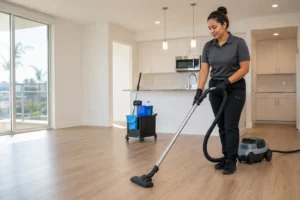

A vacant rental can look simple from the doorway, then reveal a full day of work once the lights are on. Grease inside cabinets, dust along baseboards, soap buildup in showers, and forgotten items in drawers can quickly delay the next showing. This rental turnover cleaning guide helps property managers and landlords create a repeatable process that protects the property, supports faster leasing, and gives incoming residents a clean start.
The goal is not just to make a home look presentable for photos. A thorough turnover clean helps reveal maintenance issues, reduces complaints at move-in, and signals that the property is professionally cared for. For busy Orange County property managers, that consistency can make a demanding turnover schedule much easier to manage.
Start With a Walk-Through Before Cleaning
Cleaning goes faster when no one is guessing what needs attention. Before bringing in supplies or a cleaning crew, walk the property room by room and document its condition. Compare the home against the move-out inspection and note anything outside the scope of normal cleaning, such as wall damage, broken blinds, excessive debris, pest concerns, or appliances that need repair.
Take photos before work begins. They provide a clear record for owner communication, security deposit decisions, and vendor coordination. They also help separate cleaning from repairs. A cleaner can remove dust from a ceiling fan, for example, but a loose or damaged fan should be handled by a qualified maintenance professional.
At this stage, remove any personal items or abandoned belongings according to your company policy and applicable California requirements. Cleaning around leftover boxes, furniture, or trash wastes time and makes it harder to judge the property’s true condition.
Use a Rental Turnover Cleaning Guide by Room
A dedicated apartment turnover cleaning checklist can coordinate vendor sequencing, room-by-room quality control, and final unit-readiness sign-off. For deeper cleaning detail, a room-by-room checklist keeps quality consistent, especially when multiple people are involved. It also prevents common misses that new tenants notice immediately, such as crumbs in drawers or hair around the base of a toilet.
Kitchen: Focus on Food Surfaces and Appliances
Kitchens usually take the most time because grease and food residue collect in places that are easy to overlook. Empty cabinets and drawers, then wipe their interiors, fronts, handles, and edges. Clean countertops, backsplashes, sinks, faucets, and light switches. Pay close attention to the area behind and beneath small appliances if they remain in the unit.
Appliances need more than a quick wipe-down. Clean the microwave inside and out, including the turntable. Remove crumbs and residue from the oven, stovetop, range hood, and drip pans where applicable. The refrigerator should be emptied, wiped inside, and checked for spills in drawers and door seals. If an appliance has heavy grease, burned-on residue, or a persistent odor, plan for extra time rather than rushing the result.
A clean kitchen is a strong first impression. It also helps incoming tenants feel comfortable using the space from day one.
Bathrooms: Reset the Most Scrutinized Room
Bathrooms can make a clean property feel neglected if soap scum, mineral buildup, mildew, or stray hair remains behind. Clean and disinfect the toilet, shower, tub, vanity, sink, mirror, fixtures, and surrounding floors. Wipe cabinet interiors and drawers, not just visible surfaces.
Check grout, caulking, and shower doors as you work. Some discoloration may respond to cleaning, while cracked caulk, recurring mildew, or damaged grout may require maintenance. Treating these as separate issues avoids promising a cleaning result that the condition of the material cannot support.
Vent covers and exhaust fans deserve attention too. Dust buildup affects appearance and may point to a ventilation issue worth investigating before a new resident moves in.
Bedrooms and Living Areas: Clean Beyond the Open Floor
Vacant rooms can hide a surprising amount of dust. Begin high and work down: ceiling fans, light fixtures, vents, window ledges, blinds, baseboards, doors, and floors. Wipe closet shelves, rods, and drawer interiors where provided. Open every closet and cabinet, even if it appears empty.
For hard flooring, sweep or vacuum thoroughly before mopping. For carpet, vacuum slowly along edges and in closets. Professional carpet cleaning may be appropriate after a long tenancy, visible stains, pet odors, or heavy soil. It depends on the lease terms, the carpet’s age, and the actual condition. Shampooing every carpet between every resident is not always necessary, but skipping it when odors remain can lead to a difficult move-in conversation.
Windows, Entryways, and Outdoor Touchpoints
The front door and entryway set expectations before a prospect sees the rest of the property. Wipe the door, handle, lock area, mailbox, and visible light fixtures. Remove cobwebs near the entry and clear loose debris from the immediate approach.
Inside, clean reachable window glass, tracks, sills, and blinds. Window tracks are a frequent missed detail, particularly in coastal areas where dust and moisture can collect. Full exterior window cleaning may need its own vendor and schedule, but interior glass should look clear enough for showings and move-in.
Clean in the Right Order to Avoid Rework
The best turnover workflow follows the natural path of dust and traffic. Start with dry work and high surfaces, then move to detailed wiping, bathrooms and kitchens, and finally the floors. If floors are cleaned too early, workers will track dust and debris back through the home.
Save final touches for the end: polishing fixtures, replacing burned-out bulbs if that is part of your process, checking for fingerprints, and making sure bins are empty. A final walk-through should happen after all vendors have finished. There is little value in a spotless floor if a maintenance visit leaves behind drywall dust or boot marks an hour later.
For quick turns, divide the work by zone rather than having everyone clean the same room at once. One person can focus on kitchens and baths while another handles dusting, windows, and floors. Clear responsibilities reduce duplicate work and make it easier to spot gaps before the property is released for showings.
Know What Cleaning Cannot Fix
A reliable turnover process protects everyone from confusion about what is clean versus what is worn, damaged, or in need of replacement. Etched glass, permanent countertop stains, chipped tile, smoke odor, water damage, and worn flooring may not be resolved by standard cleaning.
Be clear with owners and incoming residents when a repair or replacement is needed. Trying to disguise a condition issue with fragrance or surface-level cleaning can create more complaints later. A well-maintained rental does not have to look brand new, but it should be hygienic, functional, and honestly presented.
Build Time Into the Turnover Schedule
A rushed schedule is where details get missed. Whenever possible, schedule cleaning after move-out, trash removal, and major repairs, but before final photography, listing appointments, and tenant move-in. If painting, flooring work, or appliance installation is planned, cleaning may need to happen in stages. A post-construction dust removal visit followed by a final detail clean is often more effective than asking one cleaning appointment to solve everything.
Keep a record of each property’s usual turnover needs. A unit with stainless appliances, glass shower doors, blinds throughout, or pets may require more time than a similarly sized home with simpler finishes. Over time, this information helps you schedule more accurately and quote owners with fewer surprises.
When Professional Turnover Cleaning Makes Sense
Some turnovers are manageable in-house, particularly when a unit was lightly used and the schedule is flexible. Professional cleaning is often the better fit when a property needs to be market-ready quickly, the previous tenant left heavy buildup, or your team is already coordinating repairs, inspections, and leasing activity.
Look for a provider that communicates clearly about scope, arrival times, and any issues found during service. For occupied or recently vacated homes, trust matters just as much as cleaning skill. Background-checked, insured professionals can give property managers confidence that the work is handled carefully and consistently.
SRS Cleaning supports rental turnovers across Orange County with detail-focused move-in and move-out cleaning designed to reduce the pressure on landlords and property teams. A clear scope and a dependable schedule help turn an empty unit into a home that is ready for its next resident.
A clean turnover is one of the few parts of the leasing process that residents can see and feel immediately. Give it the time, inspection, and care it deserves, and the next move-in can begin with fewer loose ends and more peace of mind.