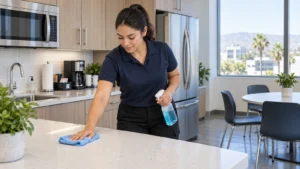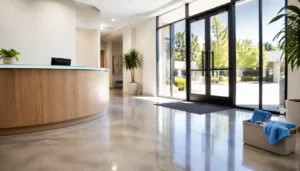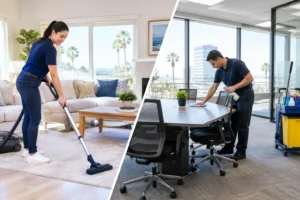
An apartment common area cleaning checklist turns a large, easily interrupted job into a clear routine. Instead of relying on memory, it organizes what needs attention in entrances, lobbies, hallways, stairs, elevators, laundry rooms, restrooms, and amenity spaces—and separates frequent tasks from periodic detail work.
The best schedule is not identical for every building. Foot traffic, weather, floor materials, pets, deliveries, and the number of shared facilities all affect how quickly an area needs attention. Use this guide as a practical starting point, then adjust the frequency when a walkthrough shows that a space becomes dirty sooner.
How to Use This Checklist
Start by dividing the property into zones. A useful zone map might include the entrance and lobby, interior corridors, stairs, elevator, mail area, laundry room, shared restrooms, fitness room, lounge, outdoor entry, and waste collection points. Give each zone a short task list and a realistic service frequency.
Then identify the surfaces and equipment in each area. Flooring may require different methods for carpet, tile, resilient flooring, or sealed concrete. Glass, stainless steel, painted walls, electronic panels, upholstery, and natural stone also need compatible products and tools. Product labels and manufacturer care instructions should guide every surface decision.
Use three simple frequency levels:
- Daily or as needed: visible soil, litter, spills, trash, entry glass, floors, and frequently touched points.
- Weekly: edges, ledges, low-touch surfaces, interior glass, spot cleaning, and detailed floor care.
- Monthly or seasonal: high dusting, vents, wall washing, upholstery care, deep floor work, and weather-related adjustments.
A checklist should also state who completed each task, when it was completed, and what needs follow-up. That final note matters: a cleaner can report a leaking dispenser, damaged floor transition, loose handrail, or burned-out light, even when repair falls outside ordinary cleaning.
Daily Cleaning Tasks
Daily work should focus first on safety, visible cleanliness, and high-traffic areas. Inspect the property before beginning so spills, broken glass, blocked walkways, and other urgent issues can be handled or reported promptly.
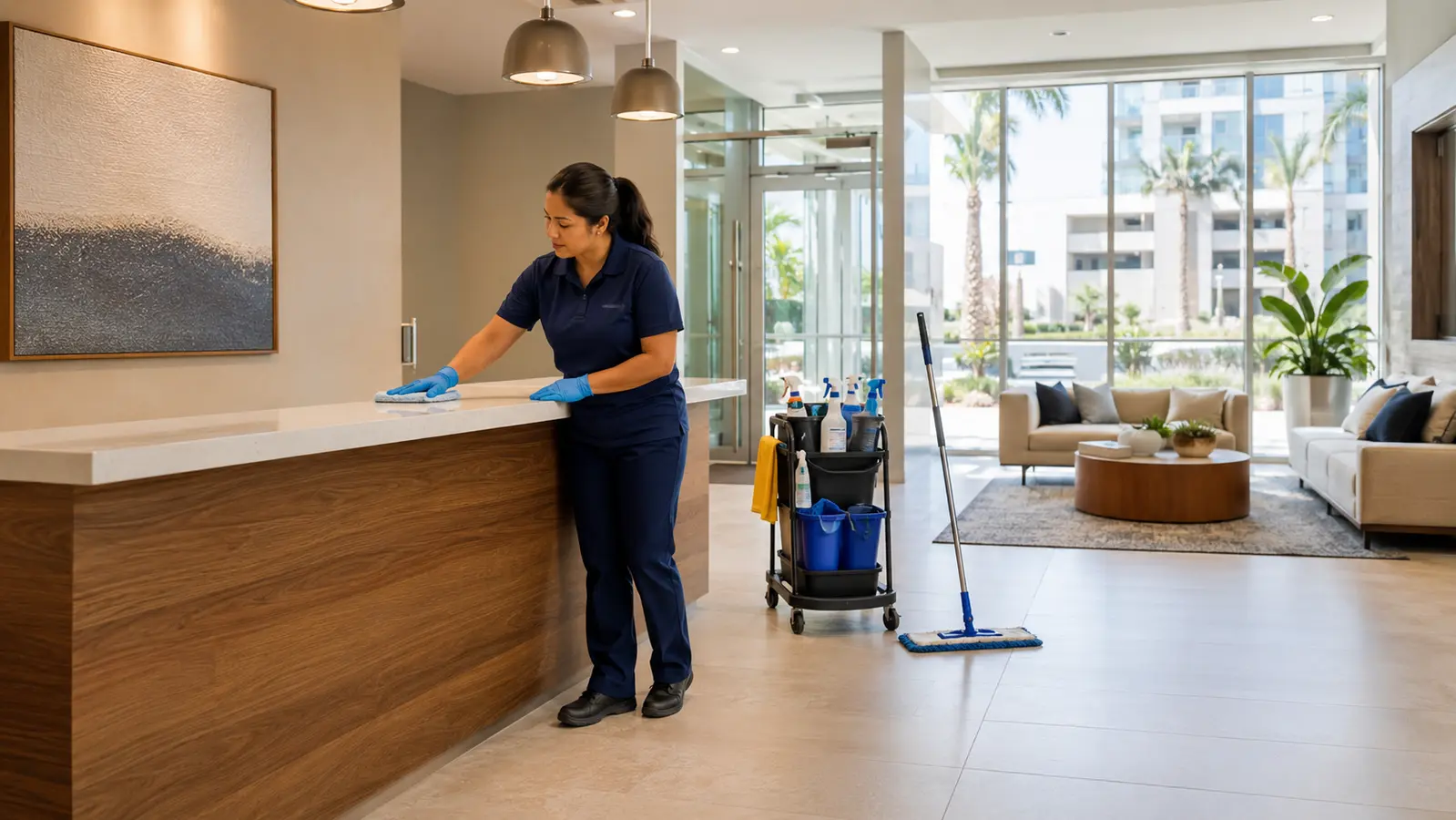
Entrances, lobbies, and mail areas
- Pick up litter and remove leaves, tracked-in soil, and loose debris.
- Vacuum walk-off mats and straighten them so edges lie flat.
- Dust-mop, vacuum, or damp-mop floors with a surface-compatible method.
- Spot-clean entry glass, door glass, and fingerprints on frames.
- Wipe door handles, push plates, railings, call buttons, and package-area counters.
- Empty waste and recycling containers before they overflow; replace liners when needed.
- Remove cobwebs or visible dust at eye level.
Hallways, stairs, and elevators
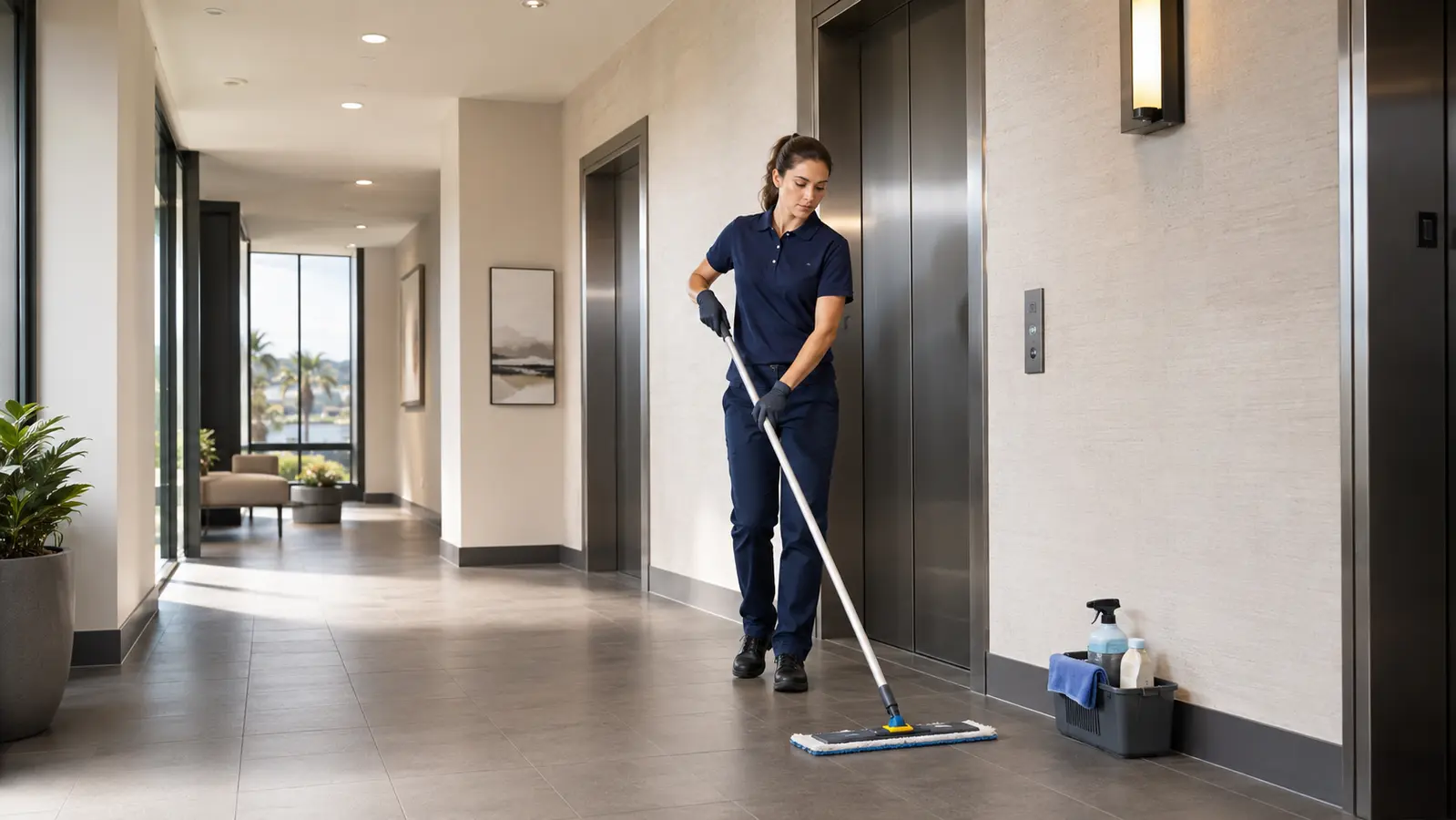
- Vacuum carpet or remove loose soil from hard floors.
- Spot-clean spills and marks using the correct product for the surface.
- Wipe stair handrails, elevator buttons, and door handles.
- Polish elevator stainless steel only with a product approved for that finish.
- Clean elevator tracks carefully without forcing liquid into mechanical components.
- Check corners, baseboards, and stair landings for litter or accumulated grit.
In wet weather, entrances may need repeated checks rather than one scheduled pass. Moisture and grit can spread beyond the mat quickly, so the checklist should include an “as needed” inspection window during rain.
Weekly Cleaning Tasks
Weekly work catches the details that are easy to miss during a fast daily route. It also prevents gradual buildup from becoming a larger restorative cleaning project.
- Dust ledges, door frames, picture frames, directory signs, and accessible light fixtures.
- Wipe baseboards and remove scuffs from washable walls where the finish permits.
- Clean interior glass partitions and mirrors from edge to edge.
- Vacuum carpet edges, under movable furniture, and around entry matting.
- Damp-mop hard floors thoroughly, paying attention to corners and transitions.
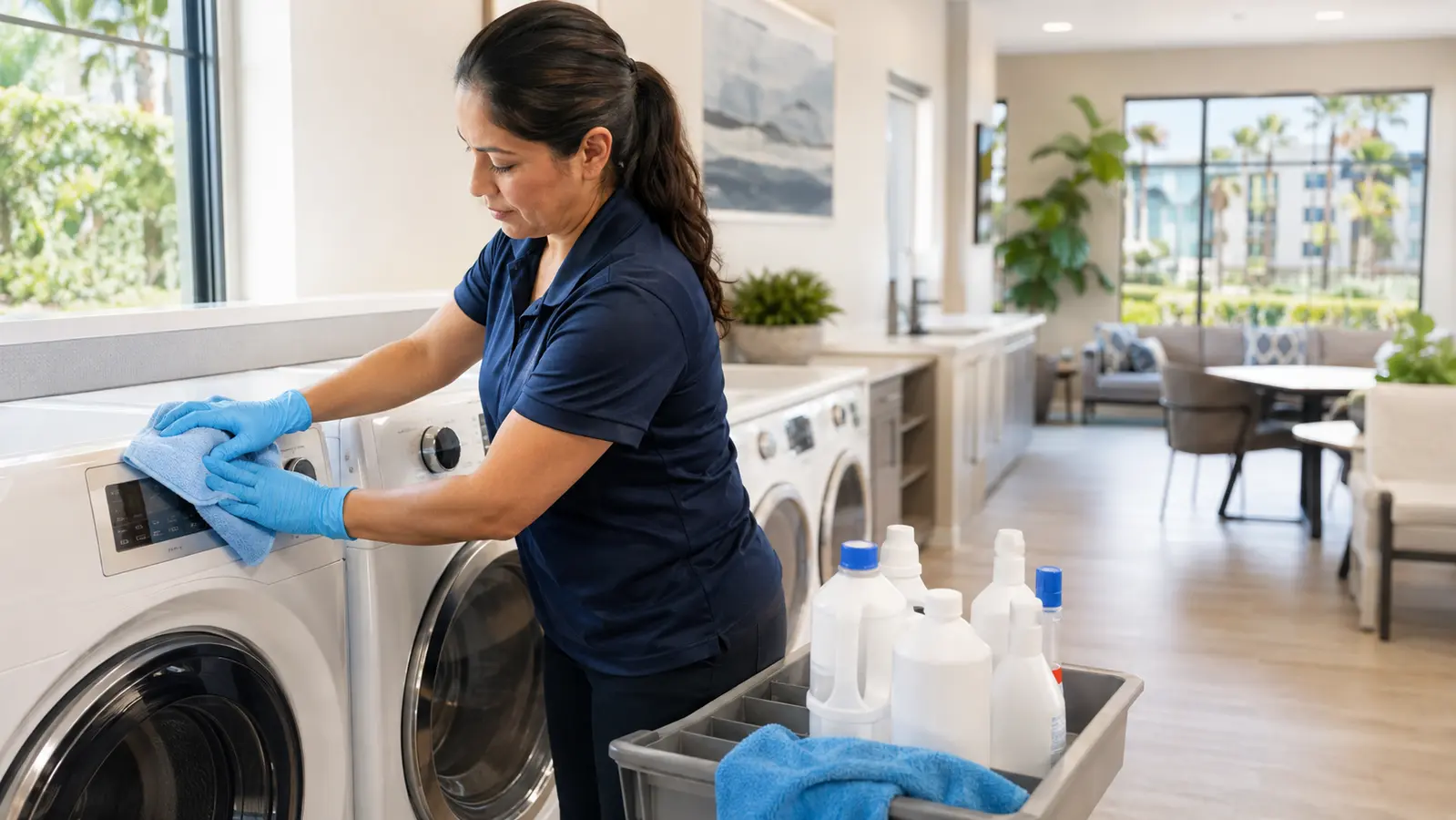
- Clean laundry-machine exteriors, folding counters, sinks, and reachable shelving.
- Wipe amenity-room tables, chair backs, cabinet fronts, and appliance exteriors.
- Inspect waste areas for residue, odors, and liner leaks.
Move lightweight items only when it can be done safely, and return them to their original positions. Heavy furniture, mounted equipment, electrical panels, elevator machinery, and specialty fixtures should be left to qualified personnel unless the cleaning scope specifically covers them.
Monthly and Seasonal Tasks
Periodic work should be scheduled before surfaces look neglected. A monthly rotation can spread detail tasks across the calendar instead of trying to complete all of them in one visit.
- Dust high vents, grille covers, ceiling corners, and other reachable elevated surfaces with suitable equipment.
- Clean doors, frames, kick plates, and wall areas that collect hand marks.
- Detail baseboards, corners, and floor edges throughout the route.
- Vacuum upholstered furniture using the manufacturer-approved attachment and method.
- Deep-clean carpet or hard floors at a frequency appropriate to traffic and manufacturer guidance.
- Wash waste and recycling containers when residue remains after liner changes.
- Review supply storage, remove empty containers, and confirm labels remain readable.
- Inspect cleaning tools and replace worn mop heads, cloths, pads, or filters.
Seasonal planning should account for local conditions. Dry periods can increase dust at entrances, while rainy days increase moisture and tracked-in soil. Outdoor pollen, landscaping debris, and holiday deliveries can also change the workload. The practical response is to adjust inspections and floor care—not to assume one fixed schedule will work all year.
Room-by-Room Common Area Checklist
This condensed table can be copied into a site-specific worksheet. Frequencies are planning suggestions, not universal rules.
| Area | Core tasks | Starting frequency |
|---|---|---|
| Entrance and lobby | Litter, mats, glass, floors, doors, counters, waste | Daily and as needed |
| Hallways | Floors, spots, ledges, baseboards, wall marks | Daily floors; weekly details |
| Stairs | Treads, landings, corners, rails, door handles | Daily or based on traffic |
| Elevator | Floor, buttons, doors, mirrors, tracks, stainless steel | Daily; detail weekly |
| Mail and package area | Counter, floor, touchpoints, litter, waste | Daily |
| Laundry room | Machine exteriors, counters, sink, floor, lint, waste | Daily check; weekly detail |
| Shared restroom | Fixtures, dispensers, mirrors, partitions, floor, waste | Daily or more often by use |
| Fitness or lounge area | Floors, furniture, touchpoints, mirrors, waste | Daily; equipment per maker guidance |
| Waste area | Loose debris, spills, residue, containers, odors | Daily check |
For a broader commercial routine, compare this list with the SRS commercial cleaning checklist. The overlap makes it easier to maintain one consistent standard while adding property-specific details.
Safe Product and Disinfecting Practices
Cleaning, sanitizing, and disinfecting are different processes. The CDC advises cleaning surfaces before sanitizing or disinfecting, because dirt can reduce how effectively those later steps work. Routine cleaning may be sufficient in many situations; disinfecting can be added when the risk, setting, or product protocol calls for it.
When a disinfectant is used, follow the product label exactly. The EPA explains that a disinfectant’s contact time is the period the surface must remain visibly wet for the product to work as directed. Do not guess a contact time, substitute an unapproved surface, or create a homemade dilution.
Never mix cleaning products. Poison Control warns that mixing cleaners can produce dangerous fumes and recommends following label directions and ventilating the work area. Keep products in their original labeled containers, close them after use, and store them away from food, heat, and unauthorized access.
For workplace chemical handling, the Safety Data Sheet identifies hazards, protective measures, handling, and storage precautions. Gloves, eye protection, ventilation, or other controls should follow the label and SDS rather than a generic rule. The EPA Safer Choice product search can also help identify cleaners that meet the program’s ingredient and performance criteria; the mark does not replace reading the product directions.
Use separate, clearly identified cloths or tools where cross-contamination is a concern, especially between restrooms, food-contact areas, and general surfaces. Launder or replace reusable materials according to their instructions, and do not return a soiled cloth to a clean-solution container.
Quality Control and Documentation
A completed checkbox confirms that a task was attempted; a short inspection confirms the result. End each route with a consistent walkthrough from the main entrance through every zone. View glass from more than one angle, check corners and edges, and look behind doors where debris tends to collect.
A simple quality-control record can include:
- Date, time, and name or initials of the person completing the route.
- Tasks completed and areas that were inaccessible.
- Spills, damage, supply shortages, or maintenance concerns reported.
- Follow-up owner and target completion date.
- Periodic supervisor or second-person inspection.
Look for patterns over time. If the same hallway needs repeated spot cleaning by midday, increase its check frequency. If a monthly task rarely shows buildup, it may remain monthly while attention shifts to a busier zone. A checklist is most useful when it evolves from actual conditions.
For additional planning ideas, the SRS guide to office hygiene practices explains how shared touchpoints and consistent routines fit into a wider cleaning plan.
Common Area Cleaning FAQ
How often should apartment common areas be cleaned?
High-traffic floors, entrances, waste points, and frequently touched surfaces usually need daily checks, while detail work can follow weekly or monthly rotations. The right schedule depends on traffic, weather, materials, and how quickly visible soil returns.
Should every high-touch surface be disinfected every day?
Not automatically. Clean first, then use a suitable disinfectant when the setting or situation calls for it. Follow the label’s approved surfaces, application method, contact time, ventilation, and safety directions.
What commonly gets missed?
Elevator tracks, stair corners, the underside of handrails, door-frame tops, baseboard edges, package counters, laundry-machine controls, and the space around waste containers are frequent omissions. Adding them by name makes them easier to verify.
Can one checklist cover every building?
No single checklist captures every material, amenity, and traffic pattern. Start with the core zones, then add manufacturer instructions, access notes, site-specific priorities, and realistic frequencies.
Keep Shared Spaces Ready
A dependable apartment common area cleaning checklist combines daily visibility tasks, weekly detail work, periodic floor and surface care, safe product practices, and a final walkthrough. The result is a routine that is easier to perform, inspect, and improve.
If maintaining those shared spaces requires a consistent professional schedule, review SRS Cleaning’s commercial and office cleaning services and confirmed Orange County service areas. A tailored scope can match the building’s traffic, surfaces, and priorities. When the fit is right, request an office cleaning quote to discuss the details.