An effective office kitchen cleaning checklist separates quick daily resets from weekly detail work and monthly maintenance. Clean visible soil first, give the sink, counters, appliance handles, tables, and floor consistent attention, and assign responsibility so small messes do not become shared frustrations.
A shared kitchen can look fine at the start of the day and feel neglected by lunchtime. Coffee drips collect under the machine, crumbs settle around the toaster, fingerprints build up on appliance handles, and someone leaves a mystery container in the refrigerator. The problem is rarely one dramatic mess. It is usually a series of small tasks that no one clearly owns.
This guide turns those tasks into a practical daily, weekly, and monthly routine. Use it to clarify what staff can reset after use, what belongs in a regular office cleaning service, and what requires appliance-specific instructions or facilities support.
Office kitchen cleaning checklist contents
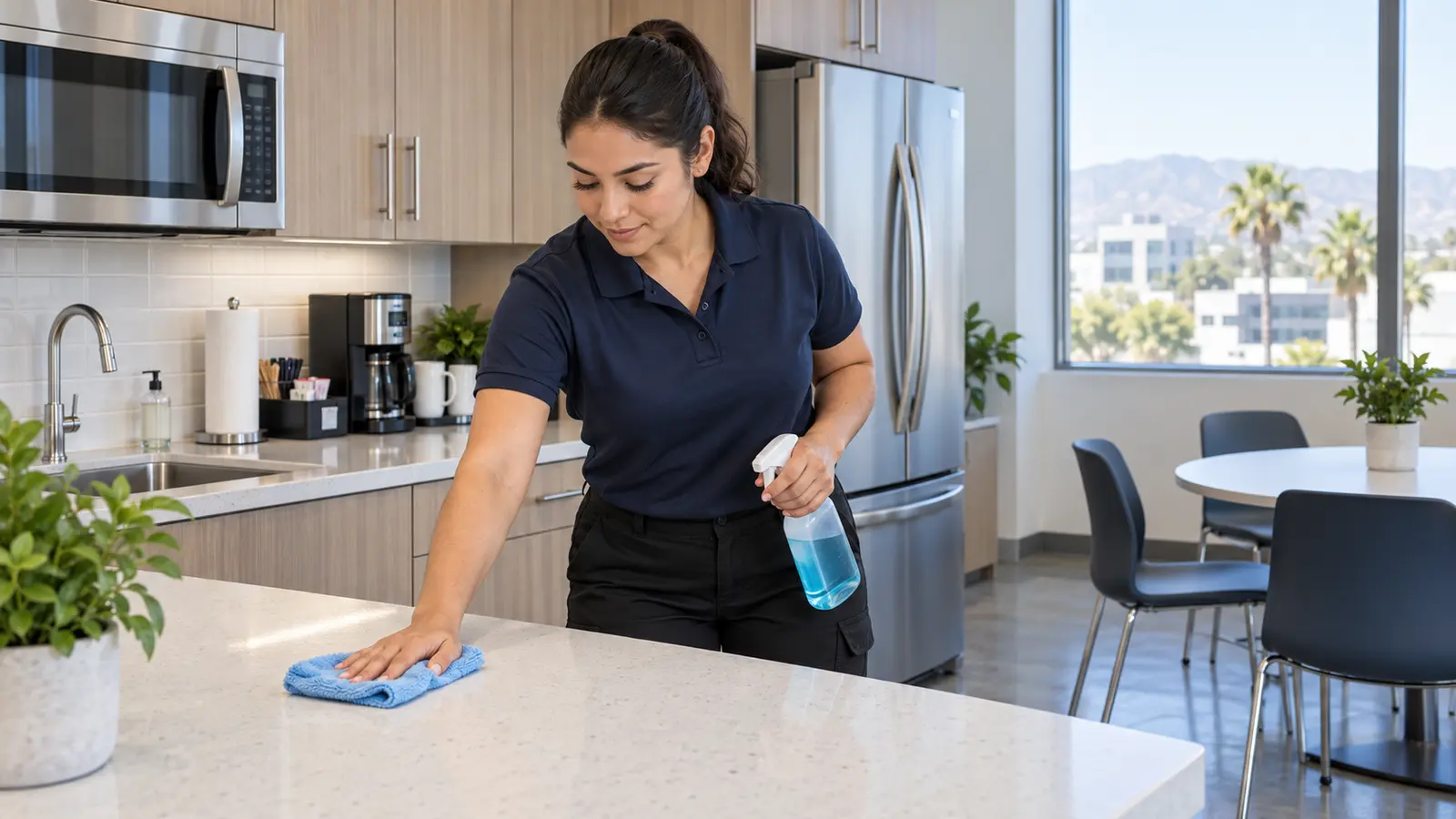
What supplies belong in an office kitchen cleaning kit?
Keep the routine simple enough that the right tool is easy to find. A basic shared-kitchen kit may include:
- Clean microfiber cloths separated by task or area
- Paper towels for food spills when laundering is not practical
- A nonabrasive sponge approved for the surface
- Mild dish detergent
- Surface cleaners approved by the counter and appliance manufacturers
- Trash and recycling liners
- A broom, dustpan, and damp-mopping supplies
- Gloves or other protective equipment required by product labels
- A refrigerator thermometer
- A clearly labeled container for supplies, stored away from food
Do not transfer chemicals into food or drink containers. Keep every product in its original labeled container, follow its directions, and never mix cleaning products. If a disinfectant is used, the EPA recommends reading the label, checking that the product is appropriate for the surface, observing the listed contact time, and using the required protective equipment.
How should the shared kitchen be prepared?
- Post a short notice when the room needs to close temporarily. This prevents people from walking through a wet floor or placing food on a counter that is being cleaned.
- Remove dishes, food, and loose items. Return personal items according to the workplace policy rather than guessing whether something should be discarded.
- Check appliance instructions. Turn off or unplug small appliances when the manufacturer requires it, and allow hot surfaces to cool.
- Start with dry debris. Pick up crumbs and loose soil before introducing moisture.
- Work from cleaner areas toward dirtier areas. Use separate cloths for the sink, food-preparation surfaces, appliance exteriors, and floor-level tasks.
- Place a wet-floor sign when needed. Keep walkways clear until the floor is dry.
What should be cleaned every workday?
The daily reset should focus on visible mess, food residue, shared touchpoints, and anything that could create odors or attract pests. The CDC distinguishes cleaning from disinfecting: cleaning removes dirt and most germs, while disinfecting is a separate step used when appropriate. Clean a surface before disinfecting it, and use only products suitable for that material.
- Clear crumbs and spills from counters and tables.
- Wash or load shared dishes according to office policy.
- Wipe the sink basin, faucet, and surrounding splash area.
- Clean the refrigerator, microwave, dishwasher, and cabinet handles.
- Wipe the coffee station, including drips under the machine and around dispensers.
- Remove food residue from the microwave interior as soon as practical.
- Empty trash, recycling, and compost before odors or overflow develop.
- Replace liners and wipe visibly soiled bin lids or touchpoints.
- Sweep crumbs from corners, under table edges, and around appliances.
- Damp-mop visible spills and leave the floor dry and safe.
- Restock soap, paper products, and shared supplies.
- Report leaks, pests, broken seals, or appliance problems instead of cleaning around them indefinitely.
What belongs on the weekly checklist?
Weekly work catches buildup that a fast daily reset may miss. Adjust the frequency to actual use: a kitchen serving a large team or several shifts may need these tasks more often.
- Clean the microwave interior, turntable, vents, handle, and exterior.
- Wipe refrigerator shelves, drawer fronts, handles, and door gaskets where the manufacturer permits.
- Clean cabinet and drawer fronts, especially around pulls.
- Move countertop appliances where safe and clean beneath them.
- Wipe backsplash areas behind the sink and coffee station.
- Clean chairs, table bases, and the undersides of table edges.
- Wash waste-bin interiors if residue or odor is present.
- Detail floor edges, baseboards, and the area beneath movable furniture.
- Inspect supply dates and remove empty containers from the cleaning kit.
- Check the refrigerator thermometer and report an unsafe reading.
What should be checked monthly?
Monthly attention is less about making the room look shiny and more about preventing hidden buildup and neglected maintenance.
- Schedule a policy-based refrigerator clear-out with advance notice.
- Clean removable refrigerator shelves and drawers according to the appliance manual.
- Inspect under and behind movable appliances for crumbs, leaks, or pest activity.
- Dust accessible vent covers and the tops of cabinets and appliances.
- Clean wall spots, doors, and switch plates with material-appropriate methods.
- Review whether daily and weekly frequencies match current occupancy.
- Confirm that cleaning chemicals remain labeled, closed, and stored away from food.
- Document repairs that need facilities or appliance service.
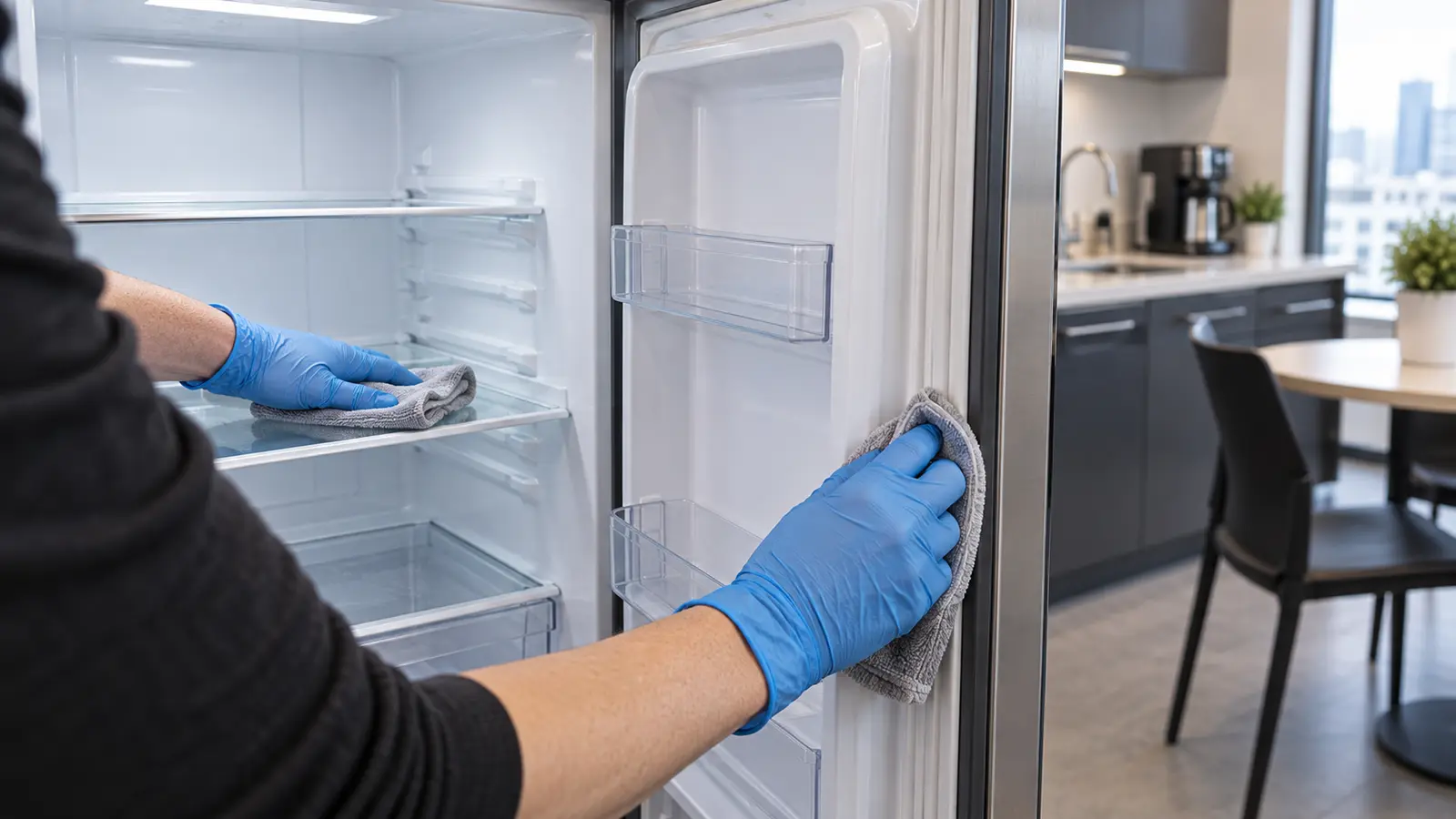
How should a shared refrigerator be cleaned?
A shared refrigerator needs both a cleaning procedure and a clear food policy. Cleaning staff should not have to decide who owns an unlabeled lunch or whether it can be discarded.
- Announce the cleanout date and labeling rules in advance.
- Move food to safe cold storage if the refrigerator must be emptied for more than a brief wipe-down.
- Follow the owner’s manual before removing shelves, drawers, or power.
- Let cold glass components warm gradually before washing to reduce the chance of thermal shock.
- Clean interior walls, shelves, drawers, and gaskets using the appliance maker’s approved method.
- Dry components fully before reassembly.
- Return only items allowed by the workplace policy.
- Confirm the refrigerator returns to a safe temperature.
The FDA advises keeping refrigerators at or below 40°F, wiping spills promptly, keeping food covered, and storing cleaning products away from food. If food has been held at an unsafe temperature or its safety is uncertain, use the workplace’s food-safety policy rather than relying only on appearance or smell.
For appliance materials, defer to the exact model manual. For example, Whirlpool’s refrigerator-care guidance recommends checking the manual, washing removable components with appropriate mild methods, drying them completely, and avoiding products that can harm interior materials.
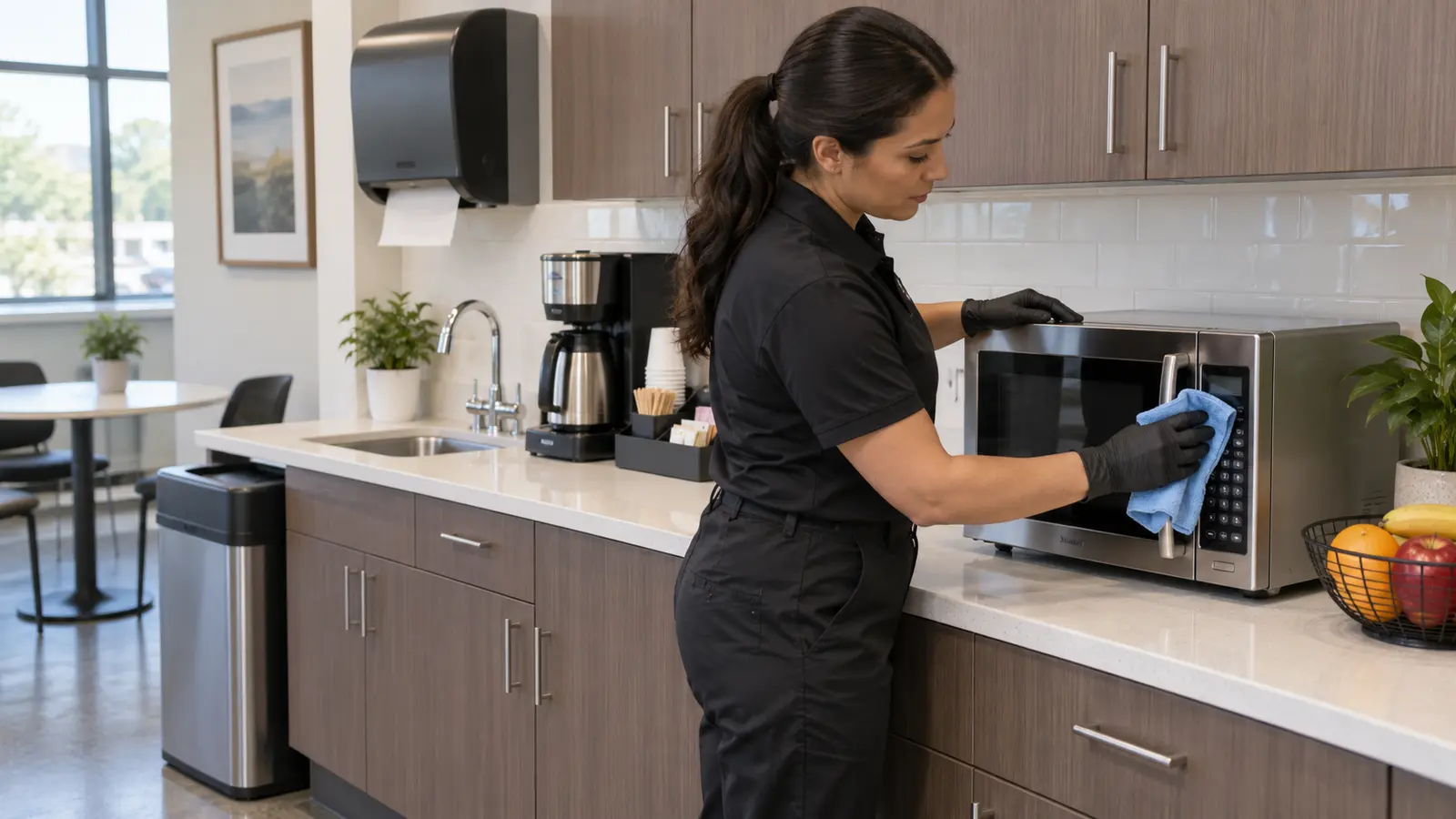
How do you clean the microwave and coffee station?
Microwave
Allow the appliance to cool, unplug it if the manual directs, and remove loose crumbs. Wash the turntable and removable parts only as instructed by the manufacturer. Wipe interior food residue with a soft cloth and an approved cleaner, keeping excess liquid away from vents and controls. Finish with the handle and keypad, then dry the appliance before returning it to use.
Coffee station
Remove disposable cups, used filters, and visible grounds. Wipe the counter, machine exterior, handles, drip area, dispensers, and cabinet pulls. Empty and wash removable trays according to the machine instructions. Descaling, water-filter replacement, and internal maintenance should follow the specific equipment schedule rather than a generic recipe.
Which surfaces and materials need extra care?
- Natural stone: Acidic or abrasive cleaners can damage some stone and sealers. Use a product approved for the installed material.
- Stainless steel: Follow the grain and the appliance instructions; avoid harsh pads that can scratch the finish. The SRS guide to cleaning stainless steel without streaks explains the finish-specific approach.
- Laminate and cabinet edges: Avoid soaking seams, hinges, and exposed substrate.
- Electronics and controls: Apply product to the cloth when permitted instead of spraying directly into buttons, vents, or screens.
- Wood tables and cabinets: Use minimal moisture and follow the finish maker’s instructions.
- Food-contact surfaces: Use only products and procedures appropriate for that use, including any label-required rinse.
What mistakes make office kitchens harder to maintain?
- One vague instruction: “Clean the kitchen” does not define who empties the refrigerator, restocks soap, or handles appliance interiors.
- Cleaning only what is visible: Crumbs beneath appliances and residue inside bins continue creating odor even when the counter looks clean.
- Using one cloth everywhere: Separate cloths by area and replace them when soiled.
- Spraying controls directly: Liquid can enter switches, vents, and electronic panels.
- Skipping dwell time: Wiping a disinfectant away immediately may not follow its label.
- Mixing products: Never combine cleaners or disinfectants.
- Discarding personal food without a policy: Set rules and provide notice so cleaning does not become a workplace dispute.
- Ignoring leaks or pests: Cleaning can remove evidence temporarily, but facilities or pest-control support must address the source.
How can recurring office-kitchen problems be solved?
The room smells clean, but the odor returns
Check bin interiors, refrigerator drip or gasket areas, food hidden behind appliances, sink drains, damp cloth storage, and floor edges. Masking the odor does not remove its source.
Counters feel sticky after wiping
Too much product, an incompatible cleaner, or a dirty cloth may leave residue. Return to the surface manufacturer’s directions, use a fresh cloth, and avoid adding more product until the cause is clear.
The checklist is completed, but standards vary
Define observable results instead of relying only on task names. “Wipe counters” can become “no visible crumbs, spills, or sticky residue; items returned neatly; surface left dry.” A broader office cleaning checklist can connect the kitchen routine with restrooms, work areas, entrances, and floors.
When does professional cleaning make sense?
Professional support can help when the kitchen serves many people, daily responsibilities are inconsistent, grease or floor buildup keeps returning, odors persist after the source is addressed, or the room needs to fit into a larger workplace cleaning scope. It is also useful when facilities teams want one written standard across kitchens, restrooms, work areas, and common spaces.
Before comparing proposals, confirm which tasks are daily, weekly, or periodic; whether refrigerator and microwave interiors are included; who handles dishes and personal food; and how supply restocking is managed. The commercial cleaning checklist offers a practical starting point for reviewing the full workplace scope.
Office kitchen cleaning FAQs
How often should an office kitchen be cleaned?
Reset high-use surfaces, spills, waste, and floors every workday. Schedule detail work weekly and deeper refrigerator, edge, vent, and storage checks periodically. Increase frequency when occupancy, multiple shifts, food preparation, or visible soil requires it.
Should an office kitchen be disinfected every day?
Routine cleaning is the foundation. Disinfection should be based on the workplace’s needs and product directions, not used as a substitute for removing food residue and soil. When disinfecting, clean first, verify surface compatibility, follow the label’s contact time, ventilate as directed, and never mix products.
Who should remove food from the shared refrigerator?
The workplace should define ownership, labeling, notice, and disposal rules. Cleaning staff can follow that policy, but should not be expected to invent it during each cleanout.
Can the same cleaner handle the kitchen and restroom?
Yes, when the cleaning plan uses proper task order, hand hygiene, glove changes, and separate color-coded or clearly assigned tools and cloths. Restroom tools should never be used in food or break areas.
What should an office-kitchen cleaning quote include?
Look for written frequencies, included surfaces, appliance-interior limits, waste handling, supply responsibilities, floor care, refrigerator-cleanout rules, and the process for reporting leaks or damage. Clear scope makes the service easier to evaluate and maintain.
If the shared kitchen keeps falling back into the same cycle, the answer may be a clearer routine rather than more reminders. SRS Cleaning Services can help build the kitchen into a practical Orange County office cleaning scope. Review the service and request a quote when you are ready to discuss the space.