A good office cleaning checklist makes shared spaces easier to manage because it turns a vague goal, “keep the office clean,” into visible tasks that can be repeated, checked, and improved. The best checklist is not complicated. It separates daily touch points from weekly detail work, names the rooms that need attention, and makes room for deeper periodic cleaning when traffic, weather, or special events create extra mess.
This guide lays out a practical office cleaning checklist for desks, restrooms, break rooms, floors, meeting rooms, entry areas, and high-touch surfaces. It also explains the difference between cleaning and disinfecting, with links to current government guidance where safety or product use matters.
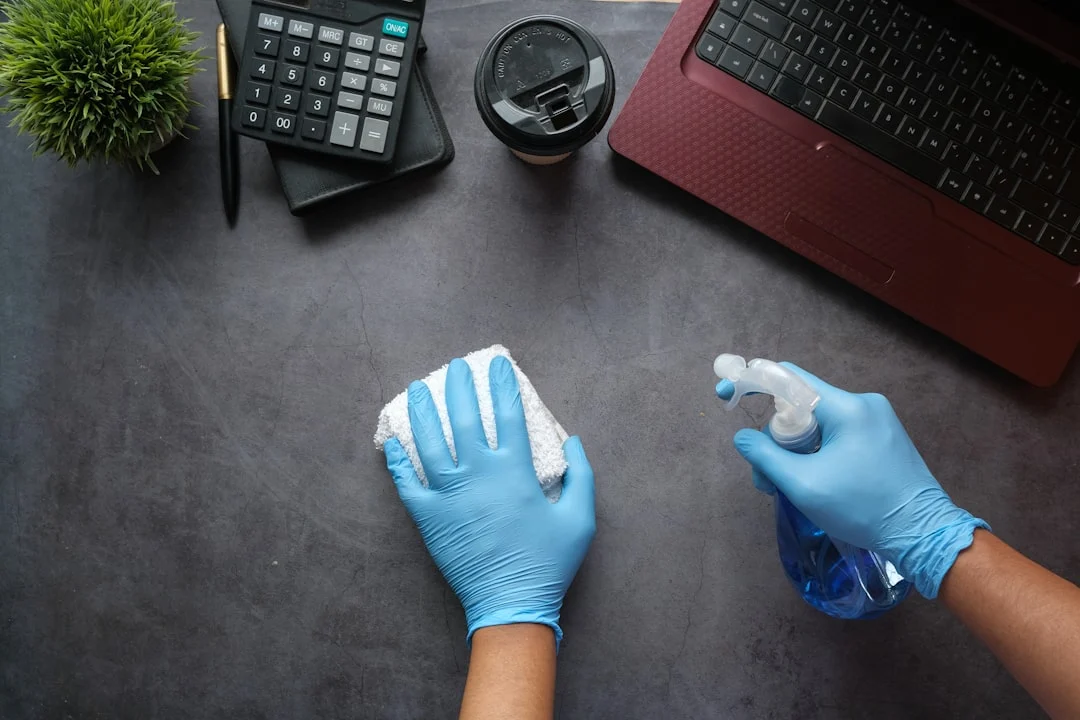
How to Use This Office Cleaning Checklist
Start by matching tasks to how the space is actually used. A quiet administrative suite will not need the same routine as a medical office, sales office, coworking space, or busy reception area. The checklist below is a baseline, then the frequency can be adjusted based on foot traffic, spills, shared kitchens, restrooms, pets, children, deliveries, and the amount of dust or outdoor debris that gets tracked inside.
Office cleaning should also respect basic workplace sanitation expectations. OSHA’s sanitation standard says workplaces must be kept clean to the extent the nature of the work allows, and it addresses sanitary washing facilities, waste disposal, and clean, dry walking surfaces where practical in general workplace settings. The details matter because a checklist is only useful when it supports a safer, more comfortable environment, not just a better-looking one. See OSHA’s workplace sanitation standard for the regulatory language.
Use the daily tasks to keep the office presentable and hygienic, the weekly tasks to prevent buildup, and the monthly tasks to handle details that are easy to miss. When the work becomes too time-consuming to handle consistently, SRS Cleaning’s Office Cleaning service can help keep the routine steady across Orange County. For service-area planning, the locations page is the safest place to check current coverage before relying on a city-specific page.
| Frequency | Main Goal | Best Tasks |
|---|---|---|
| Daily | Keep high-use areas ready | Trash, restrooms, break room counters, entry glass, visible floors, high-touch surfaces |
| Weekly | Prevent buildup | Dusting, detailed floor edges, conference rooms, appliance exteriors, interior glass, supply checks |
| Monthly | Refresh overlooked details | Vents, baseboards, chair rails, blinds, accessible window tracks, appliance interiors if included |
Daily Office Cleaning Checklist
Daily office cleaning focuses on the areas people see, touch, and use the most. These tasks help prevent trash buildup, visible soil, odors, crumbs, and sticky surfaces from carrying into the next workday.
- Empty trash and recycling bins, then replace liners where needed.
- Wipe reception counters, front desks, conference tables, shared counters, and break room surfaces.
- Clean visible fingerprints from glass doors, interior entry glass, and frequently touched panels.
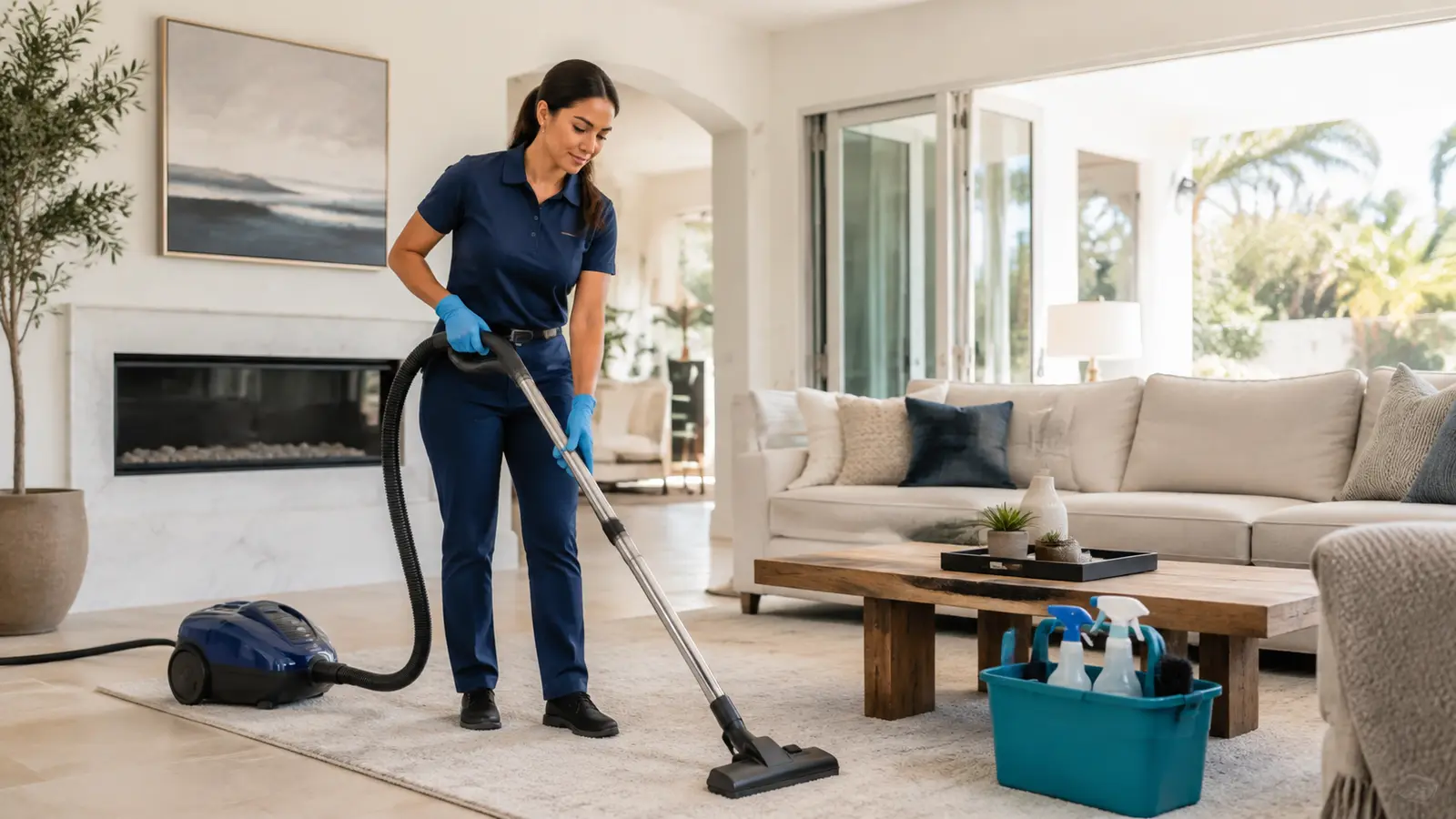
- Vacuum high-traffic carpet paths and spot clean obvious debris.
- Sweep or mop hard floors in entry areas, kitchens, restrooms, and walkways.
- Clean restroom sinks, counters, mirrors, toilets, fixtures, dispensers, and floors.
- Restock soap, paper towels, toilet tissue, and hand sanitizer where supplied.
- Clean break room sinks, counters, appliance handles, tables, and exterior microwave surfaces.
- Remove food waste from common areas to reduce odors.
- Wipe high-touch surfaces such as door handles, light switches, shared controls, railings, and cabinet pulls.
Daily cleaning does not have to mean every detail receives the same amount of time every day. The point is to keep the office from drifting into visible neglect. For a small office, the daily routine may be short. For a larger workplace, separating tasks by room or zone can make the checklist easier to complete without rushing.
Weekly Office Cleaning Checklist
Weekly office cleaning picks up the details that are noticeable over time but not always urgent every day. These tasks help the office feel cared for when someone looks beyond the main walkway or reception desk.
- Dust desks, open shelving, window ledges, file cabinets, baseboards, and low partitions.
- Vacuum upholstered chairs and waiting room seating where fabric allows.
- Detail conference rooms, including chair bases, table edges, presentation remotes, and cabinet fronts.
- Clean appliance exteriors, refrigerator handles, coffee stations, and cabinet faces in break rooms.
- Wipe interior glass partitions and smudged office windows within safe reach.
- Mop hard floors more thoroughly, including corners and edges.
- Spot clean walls, doors, kick plates, and switch plates.
- Check supply closets for low paper products, liners, soap, and approved cleaning products.
- Remove cobwebs and dust from visible ceiling corners where safely reachable.
A weekly checklist is also a good place to note recurring issues. If one restroom always runs out of paper towels, one entrance constantly tracks in grit, or one break room surface keeps getting sticky, the cleaning schedule may need a small adjustment instead of a bigger overhaul.
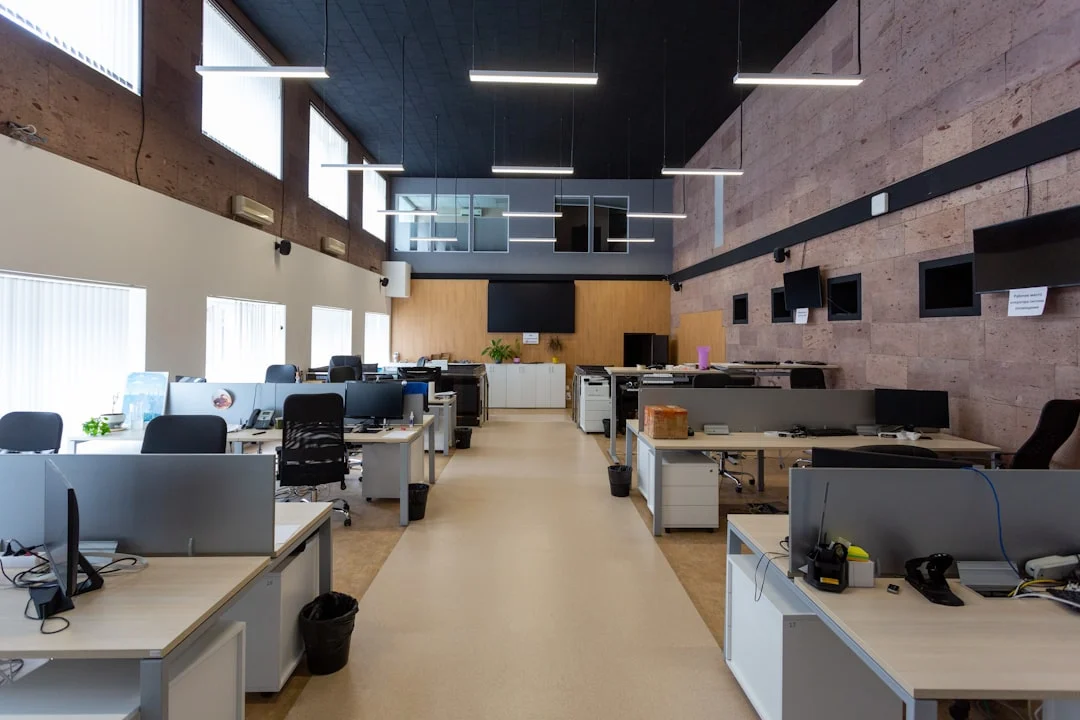
Monthly and Periodic Office Cleaning Checklist
Monthly and periodic tasks protect the details that affect long-term appearance. These tasks are especially helpful before inspections, busy seasons, client visits, staff events, or lease transitions.
- Dust vents, higher ledges, ceiling fan blades, light fixtures, and upper shelves where safely reachable.
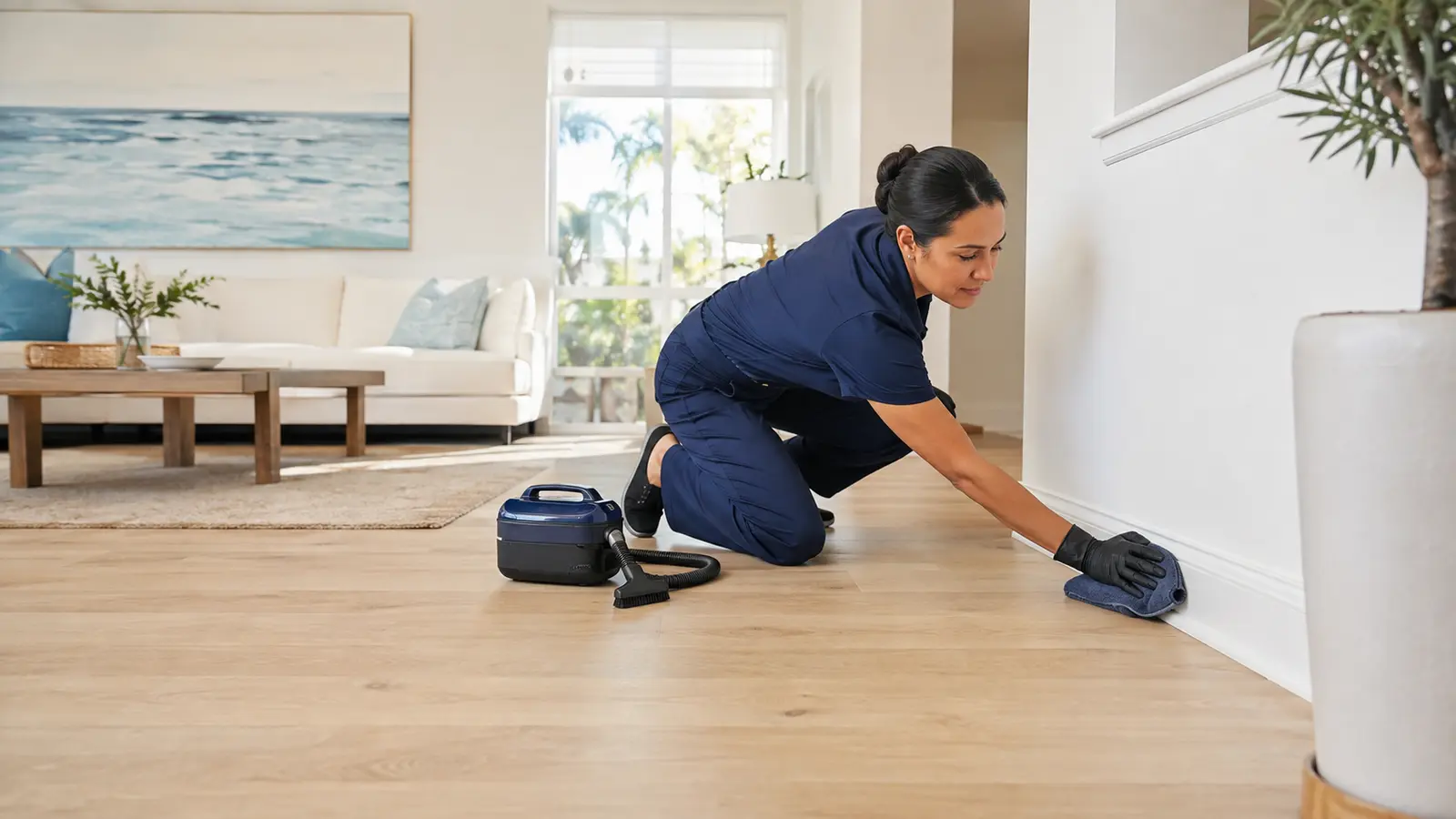
- Detail baseboards, door frames, chair rails, and corners.
- Clean behind movable furniture where access is safe and practical.
- Schedule carpet spot treatment or extraction when traffic lanes look worn or stained.
- Deep clean break room appliances, including refrigerator interiors if that task is part of the agreed scope.
- Clean interior windows, tracks, and blinds where accessible and included.
- Review restroom grout, partition bases, floor edges, and odor sources.
- Refresh the checklist based on complaints, supply use, seasonal dust, and office traffic.
Some periodic work may require special equipment, safe access, or a separate scope. High windows, exterior pressure washing, biohazard conditions, pest issues, water damage, mold, and hazardous materials should not be handled as ordinary office cleaning tasks. Those situations need the right qualified professional and the appropriate safety guidance.
Room-by-Room Office Cleaning Tasks
A room-by-room office cleaning checklist is easier to follow than one long mixed list. It also helps prevent common misses, such as wiping a conference table but forgetting the chair arms, or cleaning a restroom sink but overlooking the dispenser area.
Reception and Entry Areas
Clean doors, handles, front counters, waiting chairs, floors, glass, sign-in surfaces, and visible dust. Entry areas carry the first impression of the office, so they usually deserve daily attention even in smaller workplaces.
Workstations and Private Offices
Dust open surfaces, wipe shared touch points, remove trash, vacuum around desks, and clean visible smudges. Personal papers, electronics, and desk items should be handled according to the office’s preference. Many workplaces ask cleaners to clean around personal items instead of moving them.
Conference Rooms
Clean tables, chair arms, presentation controls, glass boards where appropriate, floor areas, cabinet fronts, and trash. Meeting rooms can look clean from the doorway while still having fingerprints, crumbs, coffee rings, and dust along table edges.
Break Rooms and Kitchens
Clean counters, tables, sinks, faucet handles, appliance handles, microwave exteriors, cabinet pulls, trash areas, and floors. Food residue should be handled promptly because it can cause odors and attract pests.
Restrooms
Clean toilets, urinals where present, sinks, counters, mirrors, dispensers, partitions, handles, and floors. Restrooms need a clear routine because inconsistent cleaning is noticed quickly and can affect comfort for everyone using the space.
Cleaning Versus Disinfecting in an Office
Cleaning, sanitizing, and disinfecting are not the same thing. The CDC explains that cleaning removes most germs, dirt, and impurities from surfaces, while disinfecting uses chemicals to kill germs on surfaces; cleaning normally comes before disinfecting because dirt can make disinfectants less effective. See the CDC’s overview of cleaning and disinfecting basics. For related practical context, SRS also has a guide to office hygiene practices and a post on what to ask about cleaning supplies.
Routine disinfecting is not always necessary for every office surface every day. CDC guidance says cleaning alone is usually enough for many surfaces when no one is sick, while disinfecting can be appropriate for high-touch surfaces after illness or when certain germs are a concern. The CDC’s facility guidance also says to follow the label and use a disinfectant registered for the relevant organism when disinfecting is needed. See CDC guidance on when and how to clean and disinfect a facility and the EPA’s list of selected EPA-registered disinfectants.
Product safety should stay simple: follow the label, use ventilation when directed, wear protective equipment when the product requires it, and never mix products unless the label specifically allows it. The CDC warns that bleach should not be mixed with other cleaners or disinfectants because dangerous gases can form. See the CDC’s bleach cleaning and disinfecting guidance.
How to Build a Cleaning Schedule That Works
A useful office cleaning schedule starts with the space, not the calendar. Walk through the office at the end of a normal day and note what looks used: restrooms, break room counters, floor paths, trash bins, conference rooms, shared desks, and entry glass. Then assign those items to daily, weekly, or monthly frequency.
Next, decide what needs documentation. A simple checklist can include the task, the room, the frequency, the person responsible, and a notes column. For professional service, the notes column is often the most useful part because it captures real-world changes: a new coffee station, an extra trash bin, construction dust nearby, or a restroom supply issue.
Finally, review the schedule after two to four weeks. If the office looks good but the checklist takes too long, reduce unnecessary detail. If certain areas still look missed, add frequency or define the task more clearly. A good checklist is a working tool, not a perfect document.

Step-by-Step Office Cleaning Plan
Use this simple process to turn the office cleaning checklist into a routine that can be followed and inspected.
- Walk the space after a normal workday. Note trash levels, restroom condition, food residue, visible floor debris, dusty surfaces, and the areas people touch most.
- Separate tasks by frequency. Daily tasks should protect presentation and hygiene. Weekly tasks should prevent buildup. Monthly tasks should refresh details that are easy to miss.
- Match supplies to surfaces. Keep products labeled, stored safely, and selected for the material being cleaned. Follow manufacturer directions and product labels for dwell time, ventilation, and protective equipment.
- Document exceptions. Write down locked rooms, personal desks, electronics, delicate finishes, appliance interiors, and tasks that need approval before cleaning.
- Inspect the same way every time. Review restrooms, break rooms, entry glass, floor edges, trash areas, and conference rooms after cleaning so the standard stays consistent.
- Adjust after two to four weeks. Remove tasks that do not matter, add frequency where buildup returns quickly, and update the checklist when furniture, staffing, or traffic changes.
When Professional Office Cleaning Helps
Professional office cleaning is useful when consistency matters and the cleaning routine has outgrown whoever is trying to squeeze it in around regular work. It can also help when a space needs cleaning outside normal business hours, when the office has several restrooms or shared rooms, or when floors and surfaces need a more predictable routine.
SRS Cleaning provides office cleaning across Orange County with practical routines for workspaces, restrooms, break rooms, floors, and shared areas. The service can be paired with a checklist like this so expectations are clear from the start. For broader planning, the office cleaning guide and the comparison of janitorial service versus office cleaning can help clarify what level of service fits the space.
For local availability, review the SRS service areas. When the checklist feels larger than the time available, the simplest next step is to request a quote and describe the rooms, frequency, and priorities.
Printable Office Cleaning Checklist
Use this condensed version when assigning tasks or reviewing an office after cleaning. Keep a copy in a shared operations folder, supply closet, or vendor file so the routine stays visible.
- Entry: clean glass, handles, reception counters, waiting chairs, floors, and visible dust.
- Work areas: empty trash, vacuum traffic paths, dust open surfaces, and wipe shared touch points.
- Conference rooms: clean tables, chair arms, presentation controls, whiteboards if approved, and floor areas.
- Break room: clean counters, sink, faucet handles, appliance handles, tables, cabinet pulls, trash area, and floors.
- Restrooms: clean toilets, sinks, counters, mirrors, partitions, dispensers, fixtures, floors, and restock supplies.
- Weekly detail: dust baseboards, ledges, interior glass, door frames, chair bases, vents within safe reach, and floor edges.
- Monthly review: check appliance interiors, blinds, window tracks, grout lines, carpet spots, supply levels, and recurring trouble areas.
Before using any disinfectant, confirm that the product label matches the surface and the purpose. The EPA notes that disinfectant labels identify directions and the organisms the product is registered to address, so the label should guide product choice and contact time.
Related Office Cleaning Resources
These SRS resources can help refine the checklist around service scope, supplies, and cleaning frequency:
- Office Cleaning service overview
- Office cleaning guide
- Office hygiene practices
- Janitorial service vs office cleaning
- Do cleaners bring their own supplies?
- How to choose insured cleaners
- SRS Cleaning service areas
- Request a cleaning quote
Office Cleaning Checklist FAQs
What should be cleaned every day in an office?
Daily office cleaning usually includes trash removal, restrooms, break room counters, high-touch surfaces, entry glass, visible floor debris, and shared surfaces such as reception counters or conference tables.
How often should an office be deep cleaned?
The right frequency depends on foot traffic, floor type, restroom use, shared kitchens, and how visible the space is to visitors. Many offices benefit from periodic detail cleaning in addition to a daily or weekly routine.
Should every office surface be disinfected daily?
Not necessarily. CDC guidance distinguishes cleaning from disinfecting and explains that cleaning alone is usually enough for many surfaces when no one is sick. Disinfecting should follow the product label and be used where it fits the situation.
What is the easiest way to keep an office cleaning checklist manageable?
Group tasks by room and frequency. Keep daily work focused on visible, high-use areas, then reserve detail work for weekly or monthly cleaning so the routine stays realistic.
Keep the Checklist Practical
The strongest office cleaning checklist is the one people can actually follow. It names the spaces, separates the frequencies, avoids unsafe product shortcuts, and gives high-use areas the attention they need. It also changes when the office changes.
Use this checklist as a starting point, then adjust it around the real rhythm of the workplace. When daily cleaning, weekly detail work, and periodic deeper cleaning are organized clearly, the office feels easier to use, easier to maintain, and more ready for the next workday.