Get a Quote

Tag: Janitorial Service

  • Office Kitchen Cleaning Checklist for Cleaner Shared Spaces

    Office Kitchen Cleaning Checklist for Cleaner Shared Spaces

    An effective office kitchen cleaning checklist separates quick daily resets from weekly detail work and monthly maintenance. Clean visible soil first, give the sink, counters, appliance handles, tables, and floor consistent attention, and assign responsibility so small messes do not become shared frustrations.

    A shared kitchen can look fine at the start of the day and feel neglected by lunchtime. Coffee drips collect under the machine, crumbs settle around the toaster, fingerprints build up on appliance handles, and someone leaves a mystery container in the refrigerator. The problem is rarely one dramatic mess. It is usually a series of small tasks that no one clearly owns.

    This guide turns those tasks into a practical daily, weekly, and monthly routine. Use it to clarify what staff can reset after use, what belongs in a regular office cleaning service, and what requires appliance-specific instructions or facilities support.

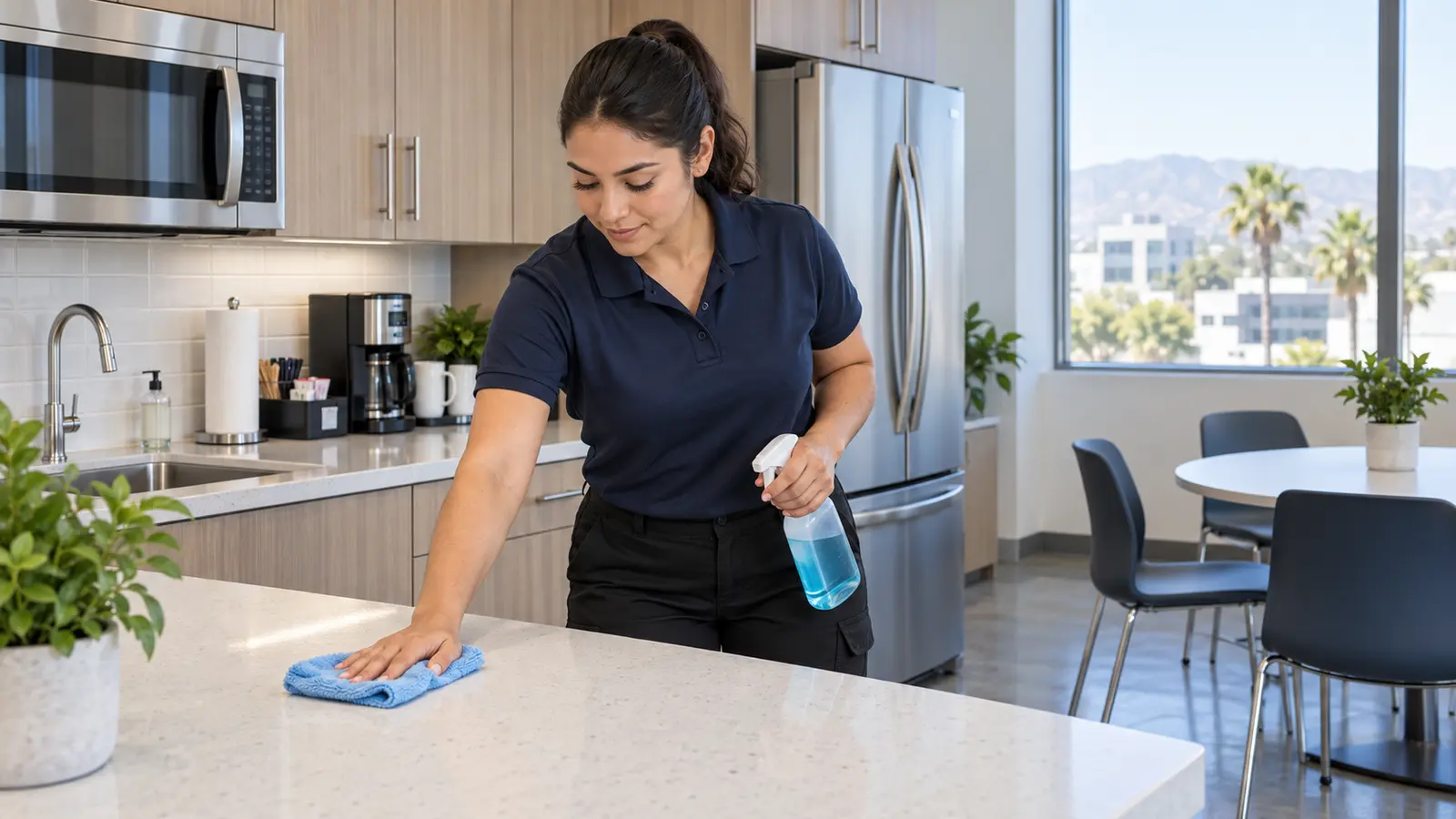
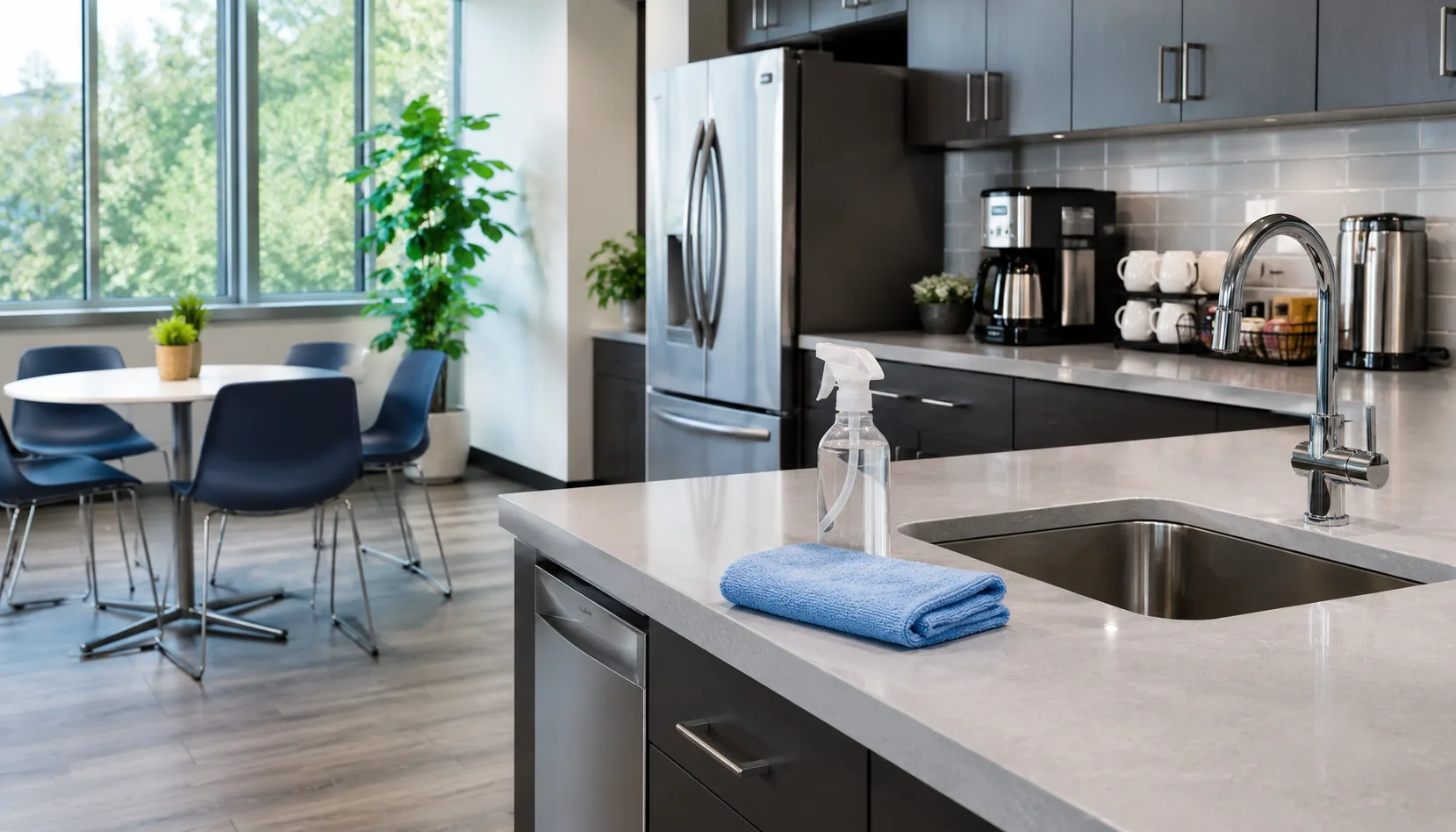
    Professional cleaner wiping a countertop in a bright shared office kitchen

    What supplies belong in an office kitchen cleaning kit?

    Keep the routine simple enough that the right tool is easy to find. A basic shared-kitchen kit may include:

    • Clean microfiber cloths separated by task or area
    • Paper towels for food spills when laundering is not practical
    • A nonabrasive sponge approved for the surface
    • Mild dish detergent
    • Surface cleaners approved by the counter and appliance manufacturers
    • Trash and recycling liners
    • A broom, dustpan, and damp-mopping supplies
    • Gloves or other protective equipment required by product labels
    • A refrigerator thermometer
    • A clearly labeled container for supplies, stored away from food

    Do not transfer chemicals into food or drink containers. Keep every product in its original labeled container, follow its directions, and never mix cleaning products. If a disinfectant is used, the EPA recommends reading the label, checking that the product is appropriate for the surface, observing the listed contact time, and using the required protective equipment.

    How should the shared kitchen be prepared?

    1. Post a short notice when the room needs to close temporarily. This prevents people from walking through a wet floor or placing food on a counter that is being cleaned.
    2. Remove dishes, food, and loose items. Return personal items according to the workplace policy rather than guessing whether something should be discarded.
    3. Check appliance instructions. Turn off or unplug small appliances when the manufacturer requires it, and allow hot surfaces to cool.
    4. Start with dry debris. Pick up crumbs and loose soil before introducing moisture.
    5. Work from cleaner areas toward dirtier areas. Use separate cloths for the sink, food-preparation surfaces, appliance exteriors, and floor-level tasks.
    6. Place a wet-floor sign when needed. Keep walkways clear until the floor is dry.

    What should be cleaned every workday?

    The daily reset should focus on visible mess, food residue, shared touchpoints, and anything that could create odors or attract pests. The CDC distinguishes cleaning from disinfecting: cleaning removes dirt and most germs, while disinfecting is a separate step used when appropriate. Clean a surface before disinfecting it, and use only products suitable for that material.

    • Clear crumbs and spills from counters and tables.
    • Wash or load shared dishes according to office policy.
    • Wipe the sink basin, faucet, and surrounding splash area.
    • Clean the refrigerator, microwave, dishwasher, and cabinet handles.
    • Wipe the coffee station, including drips under the machine and around dispensers.
    • Remove food residue from the microwave interior as soon as practical.
    • Empty trash, recycling, and compost before odors or overflow develop.
    • Replace liners and wipe visibly soiled bin lids or touchpoints.
    • Sweep crumbs from corners, under table edges, and around appliances.
    • Damp-mop visible spills and leave the floor dry and safe.
    • Restock soap, paper products, and shared supplies.
    • Report leaks, pests, broken seals, or appliance problems instead of cleaning around them indefinitely.

    What belongs on the weekly checklist?

    Weekly work catches buildup that a fast daily reset may miss. Adjust the frequency to actual use: a kitchen serving a large team or several shifts may need these tasks more often.

    • Clean the microwave interior, turntable, vents, handle, and exterior.
    • Wipe refrigerator shelves, drawer fronts, handles, and door gaskets where the manufacturer permits.
    • Clean cabinet and drawer fronts, especially around pulls.
    • Move countertop appliances where safe and clean beneath them.
    • Wipe backsplash areas behind the sink and coffee station.
    • Clean chairs, table bases, and the undersides of table edges.
    • Wash waste-bin interiors if residue or odor is present.
    • Detail floor edges, baseboards, and the area beneath movable furniture.
    • Inspect supply dates and remove empty containers from the cleaning kit.
    • Check the refrigerator thermometer and report an unsafe reading.

    What should be checked monthly?

    Monthly attention is less about making the room look shiny and more about preventing hidden buildup and neglected maintenance.

    • Schedule a policy-based refrigerator clear-out with advance notice.
    • Clean removable refrigerator shelves and drawers according to the appliance manual.
    • Inspect under and behind movable appliances for crumbs, leaks, or pest activity.
    • Dust accessible vent covers and the tops of cabinets and appliances.
    • Clean wall spots, doors, and switch plates with material-appropriate methods.
    • Review whether daily and weekly frequencies match current occupancy.
    • Confirm that cleaning chemicals remain labeled, closed, and stored away from food.
    • Document repairs that need facilities or appliance service.
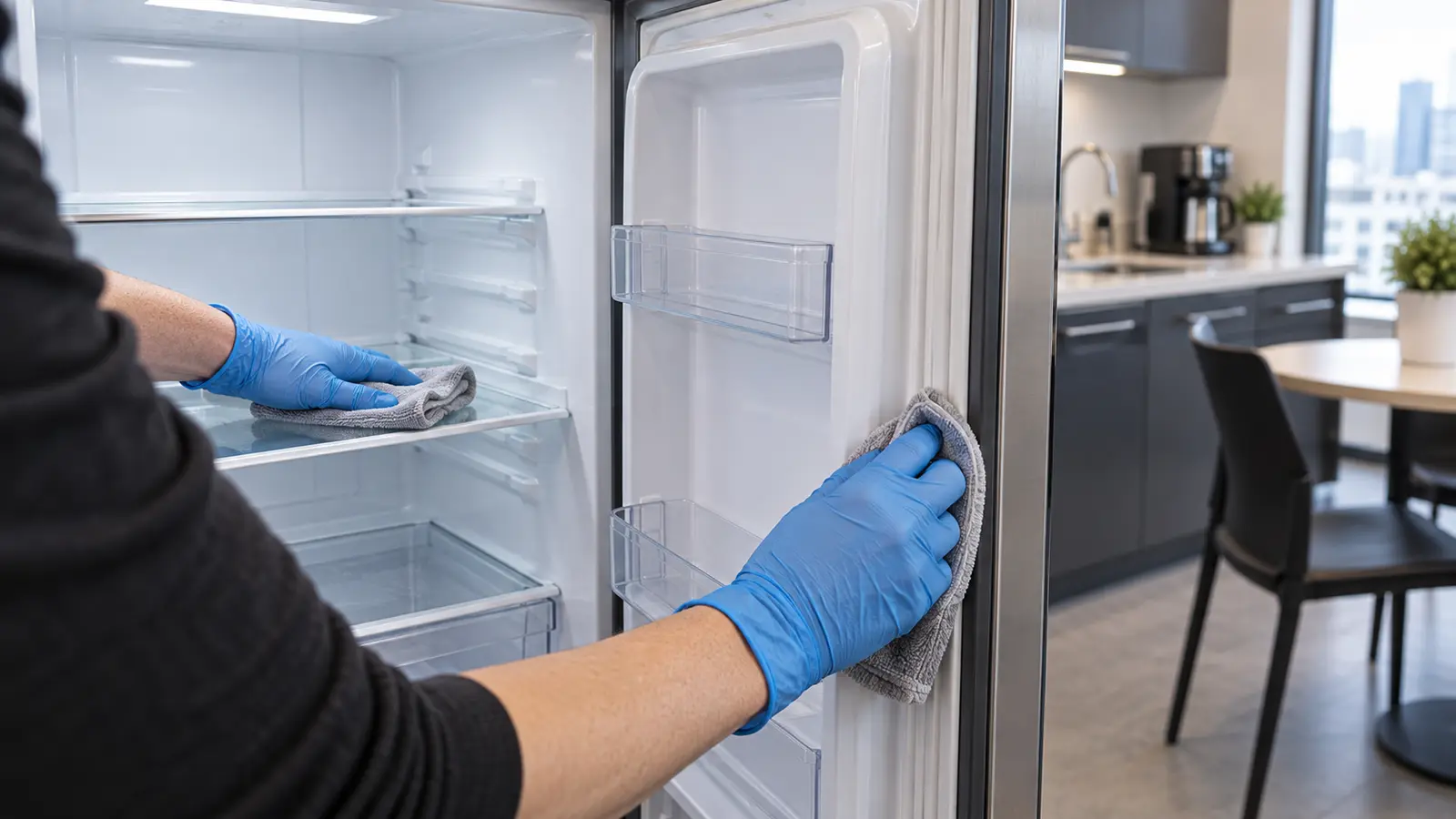
    Gloved hands wiping a shelf and door seal inside an emptied shared office refrigerator

    How should a shared refrigerator be cleaned?

    A shared refrigerator needs both a cleaning procedure and a clear food policy. Cleaning staff should not have to decide who owns an unlabeled lunch or whether it can be discarded.

    1. Announce the cleanout date and labeling rules in advance.
    2. Move food to safe cold storage if the refrigerator must be emptied for more than a brief wipe-down.
    3. Follow the owner’s manual before removing shelves, drawers, or power.
    4. Let cold glass components warm gradually before washing to reduce the chance of thermal shock.
    5. Clean interior walls, shelves, drawers, and gaskets using the appliance maker’s approved method.
    6. Dry components fully before reassembly.
    7. Return only items allowed by the workplace policy.
    8. Confirm the refrigerator returns to a safe temperature.

    The FDA advises keeping refrigerators at or below 40°F, wiping spills promptly, keeping food covered, and storing cleaning products away from food. If food has been held at an unsafe temperature or its safety is uncertain, use the workplace’s food-safety policy rather than relying only on appearance or smell.

    For appliance materials, defer to the exact model manual. For example, Whirlpool’s refrigerator-care guidance recommends checking the manual, washing removable components with appropriate mild methods, drying them completely, and avoiding products that can harm interior materials.
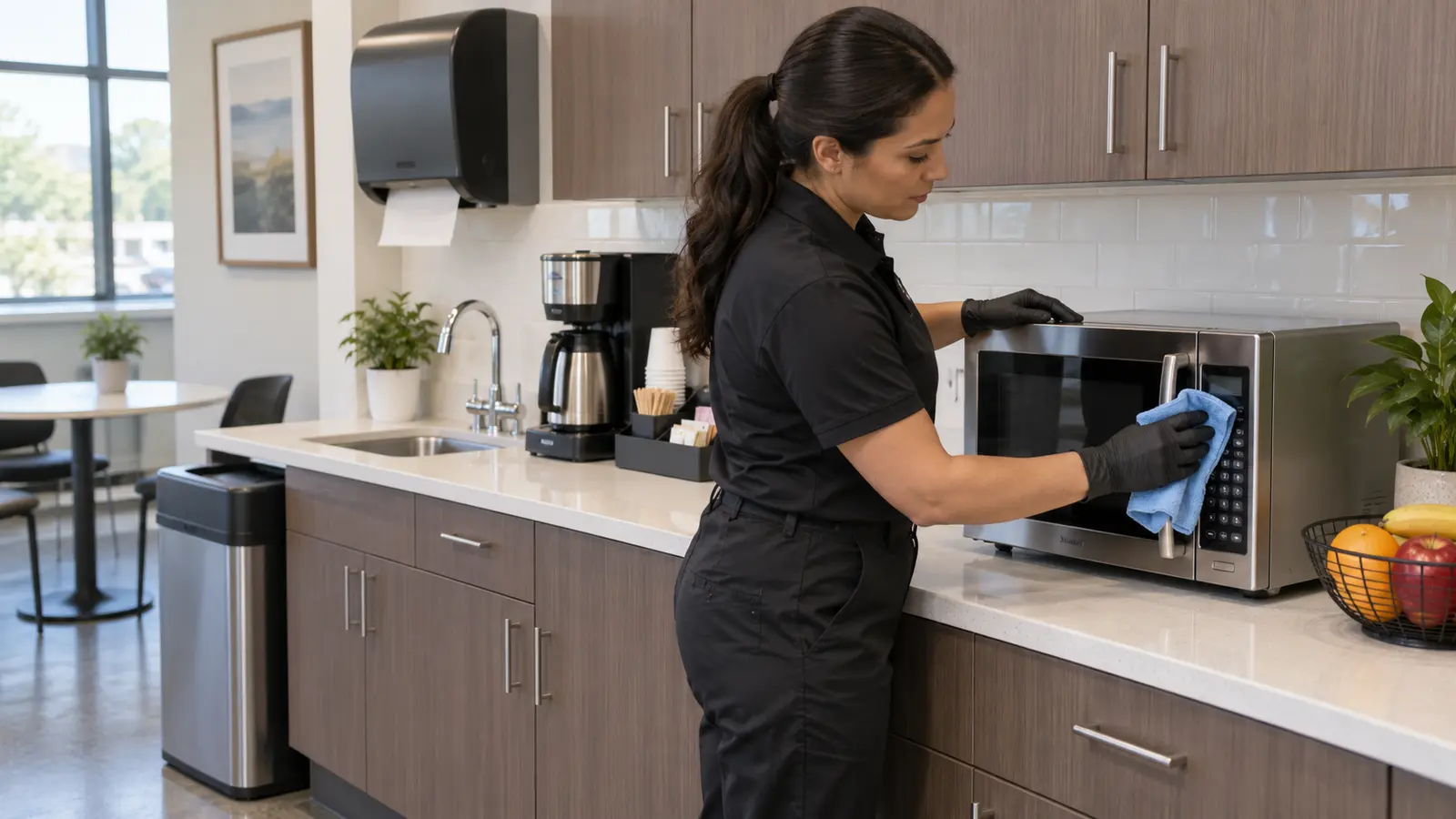
    Professional cleaner wiping the handle and controls of a microwave beside an office coffee station

    How do you clean the microwave and coffee station?

    Microwave

    Allow the appliance to cool, unplug it if the manual directs, and remove loose crumbs. Wash the turntable and removable parts only as instructed by the manufacturer. Wipe interior food residue with a soft cloth and an approved cleaner, keeping excess liquid away from vents and controls. Finish with the handle and keypad, then dry the appliance before returning it to use.

    Coffee station

    Remove disposable cups, used filters, and visible grounds. Wipe the counter, machine exterior, handles, drip area, dispensers, and cabinet pulls. Empty and wash removable trays according to the machine instructions. Descaling, water-filter replacement, and internal maintenance should follow the specific equipment schedule rather than a generic recipe.

    Which surfaces and materials need extra care?

    • Natural stone: Acidic or abrasive cleaners can damage some stone and sealers. Use a product approved for the installed material.
    • Stainless steel: Follow the grain and the appliance instructions; avoid harsh pads that can scratch the finish. The SRS guide to cleaning stainless steel without streaks explains the finish-specific approach.
    • Laminate and cabinet edges: Avoid soaking seams, hinges, and exposed substrate.
    • Electronics and controls: Apply product to the cloth when permitted instead of spraying directly into buttons, vents, or screens.
    • Wood tables and cabinets: Use minimal moisture and follow the finish maker’s instructions.
    • Food-contact surfaces: Use only products and procedures appropriate for that use, including any label-required rinse.

    What mistakes make office kitchens harder to maintain?

    • One vague instruction: “Clean the kitchen” does not define who empties the refrigerator, restocks soap, or handles appliance interiors.
    • Cleaning only what is visible: Crumbs beneath appliances and residue inside bins continue creating odor even when the counter looks clean.
    • Using one cloth everywhere: Separate cloths by area and replace them when soiled.
    • Spraying controls directly: Liquid can enter switches, vents, and electronic panels.
    • Skipping dwell time: Wiping a disinfectant away immediately may not follow its label.
    • Mixing products: Never combine cleaners or disinfectants.
    • Discarding personal food without a policy: Set rules and provide notice so cleaning does not become a workplace dispute.
    • Ignoring leaks or pests: Cleaning can remove evidence temporarily, but facilities or pest-control support must address the source.

    How can recurring office-kitchen problems be solved?

    The room smells clean, but the odor returns

    Check bin interiors, refrigerator drip or gasket areas, food hidden behind appliances, sink drains, damp cloth storage, and floor edges. Masking the odor does not remove its source.

    Counters feel sticky after wiping

    Too much product, an incompatible cleaner, or a dirty cloth may leave residue. Return to the surface manufacturer’s directions, use a fresh cloth, and avoid adding more product until the cause is clear.

    The checklist is completed, but standards vary

    Define observable results instead of relying only on task names. “Wipe counters” can become “no visible crumbs, spills, or sticky residue; items returned neatly; surface left dry.” A broader office cleaning checklist can connect the kitchen routine with restrooms, work areas, entrances, and floors.

    When does professional cleaning make sense?

    Professional support can help when the kitchen serves many people, daily responsibilities are inconsistent, grease or floor buildup keeps returning, odors persist after the source is addressed, or the room needs to fit into a larger workplace cleaning scope. It is also useful when facilities teams want one written standard across kitchens, restrooms, work areas, and common spaces.

    Before comparing proposals, confirm which tasks are daily, weekly, or periodic; whether refrigerator and microwave interiors are included; who handles dishes and personal food; and how supply restocking is managed. The commercial cleaning checklist offers a practical starting point for reviewing the full workplace scope.

    Office kitchen cleaning FAQs

    How often should an office kitchen be cleaned?

    Reset high-use surfaces, spills, waste, and floors every workday. Schedule detail work weekly and deeper refrigerator, edge, vent, and storage checks periodically. Increase frequency when occupancy, multiple shifts, food preparation, or visible soil requires it.

    Should an office kitchen be disinfected every day?

    Routine cleaning is the foundation. Disinfection should be based on the workplace’s needs and product directions, not used as a substitute for removing food residue and soil. When disinfecting, clean first, verify surface compatibility, follow the label’s contact time, ventilate as directed, and never mix products.

    Who should remove food from the shared refrigerator?

    The workplace should define ownership, labeling, notice, and disposal rules. Cleaning staff can follow that policy, but should not be expected to invent it during each cleanout.

    Can the same cleaner handle the kitchen and restroom?

    Yes, when the cleaning plan uses proper task order, hand hygiene, glove changes, and separate color-coded or clearly assigned tools and cloths. Restroom tools should never be used in food or break areas.

    What should an office-kitchen cleaning quote include?

    Look for written frequencies, included surfaces, appliance-interior limits, waste handling, supply responsibilities, floor care, refrigerator-cleanout rules, and the process for reporting leaks or damage. Clear scope makes the service easier to evaluate and maintain.

    If the shared kitchen keeps falling back into the same cycle, the answer may be a clearer routine rather than more reminders. SRS Cleaning Services can help build the kitchen into a practical Orange County office cleaning scope. Review the service and request a quote when you are ready to discuss the space.
  • Apartment Common Area Cleaning Checklist for Cleaner Shared Spaces

    Apartment Common Area Cleaning Checklist for Cleaner Shared Spaces

    An apartment common area cleaning checklist turns a large, easily interrupted job into a clear routine. Instead of relying on memory, it organizes what needs attention in entrances, lobbies, hallways, stairs, elevators, laundry rooms, restrooms, and amenity spaces—and separates frequent tasks from periodic detail work.

    The best schedule is not identical for every building. Foot traffic, weather, floor materials, pets, deliveries, and the number of shared facilities all affect how quickly an area needs attention. Use this guide as a practical starting point, then adjust the frequency when a walkthrough shows that a space becomes dirty sooner.

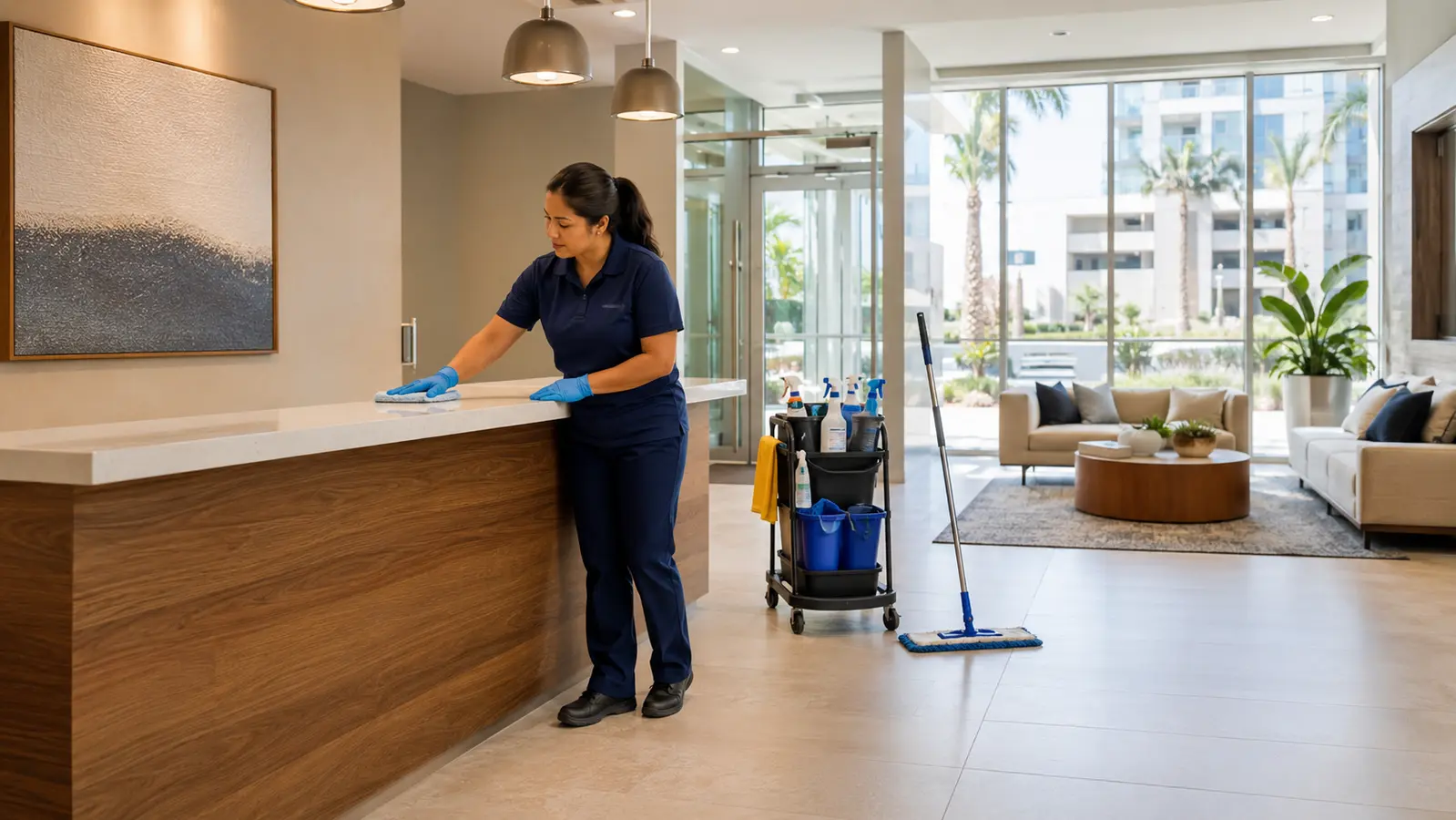
    Professional cleaner wiping the counter in a bright apartment common area lobby
    Daily entry and lobby checks keep visible soil from spreading into the building.

    How to Use This Checklist

    Start by dividing the property into zones. A useful zone map might include the entrance and lobby, interior corridors, stairs, elevator, mail area, laundry room, shared restrooms, fitness room, lounge, outdoor entry, and waste collection points. Give each zone a short task list and a realistic service frequency.

    Then identify the surfaces and equipment in each area. Flooring may require different methods for carpet, tile, resilient flooring, or sealed concrete. Glass, stainless steel, painted walls, electronic panels, upholstery, and natural stone also need compatible products and tools. Product labels and manufacturer care instructions should guide every surface decision.

    Use three simple frequency levels:

    • Daily or as needed: visible soil, litter, spills, trash, entry glass, floors, and frequently touched points.
    • Weekly: edges, ledges, low-touch surfaces, interior glass, spot cleaning, and detailed floor care.
    • Monthly or seasonal: high dusting, vents, wall washing, upholstery care, deep floor work, and weather-related adjustments.

    A checklist should also state who completed each task, when it was completed, and what needs follow-up. That final note matters: a cleaner can report a leaking dispenser, damaged floor transition, loose handrail, or burned-out light, even when repair falls outside ordinary cleaning.

    Daily Cleaning Tasks

    Daily work should focus first on safety, visible cleanliness, and high-traffic areas. Inspect the property before beginning so spills, broken glass, blocked walkways, and other urgent issues can be handled or reported promptly.

    Entrances, lobbies, and mail areas

    • Pick up litter and remove leaves, tracked-in soil, and loose debris.
    • Vacuum walk-off mats and straighten them so edges lie flat.
    • Dust-mop, vacuum, or damp-mop floors with a surface-compatible method.
    • Spot-clean entry glass, door glass, and fingerprints on frames.
    • Wipe door handles, push plates, railings, call buttons, and package-area counters.
    • Empty waste and recycling containers before they overflow; replace liners when needed.
    • Remove cobwebs or visible dust at eye level.

    Hallways, stairs, and elevators

    • Vacuum carpet or remove loose soil from hard floors.
    • Spot-clean spills and marks using the correct product for the surface.
    • Wipe stair handrails, elevator buttons, and door handles.
    • Polish elevator stainless steel only with a product approved for that finish.
    • Clean elevator tracks carefully without forcing liquid into mechanical components.
    • Check corners, baseboards, and stair landings for litter or accumulated grit.

    In wet weather, entrances may need repeated checks rather than one scheduled pass. Moisture and grit can spread beyond the mat quickly, so the checklist should include an “as needed” inspection window during rain.

    Weekly Cleaning Tasks

    Weekly work catches the details that are easy to miss during a fast daily route. It also prevents gradual buildup from becoming a larger restorative cleaning project.

    • Dust ledges, door frames, picture frames, directory signs, and accessible light fixtures.
    • Wipe baseboards and remove scuffs from washable walls where the finish permits.
    • Clean interior glass partitions and mirrors from edge to edge.
    • Vacuum carpet edges, under movable furniture, and around entry matting.
    • Damp-mop hard floors thoroughly, paying attention to corners and transitions.
    • Clean laundry-machine exteriors, folding counters, sinks, and reachable shelving.
    • Wipe amenity-room tables, chair backs, cabinet fronts, and appliance exteriors.
    • Inspect waste areas for residue, odors, and liner leaks.

    Move lightweight items only when it can be done safely, and return them to their original positions. Heavy furniture, mounted equipment, electrical panels, elevator machinery, and specialty fixtures should be left to qualified personnel unless the cleaning scope specifically covers them.

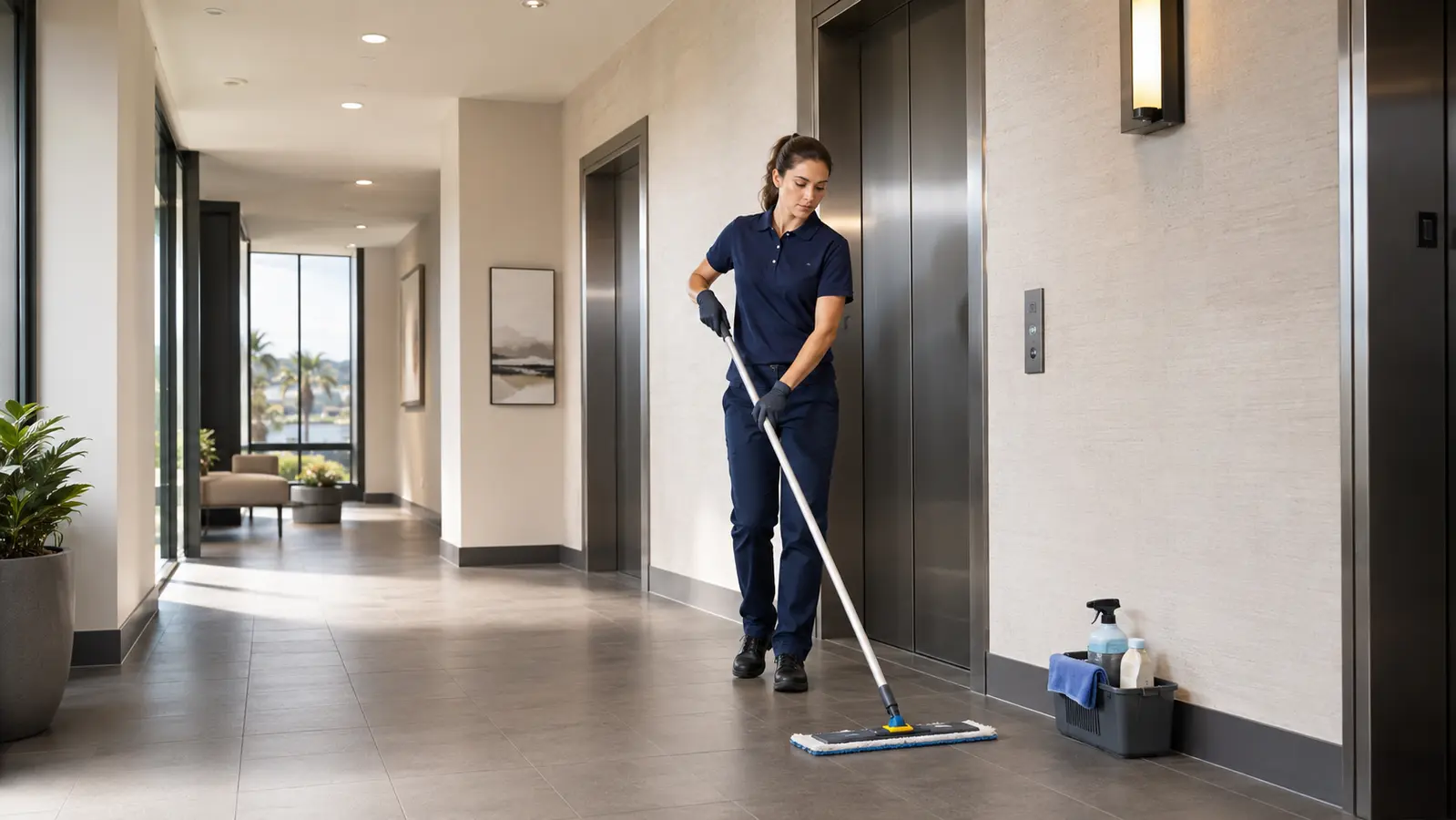
    Professional cleaner mopping an apartment hallway beside the elevators
    Hallways and elevator landings benefit from a daily floor check and weekly detail work.

    Monthly and Seasonal Tasks

    Periodic work should be scheduled before surfaces look neglected. A monthly rotation can spread detail tasks across the calendar instead of trying to complete all of them in one visit.

    • Dust high vents, grille covers, ceiling corners, and other reachable elevated surfaces with suitable equipment.
    • Clean doors, frames, kick plates, and wall areas that collect hand marks.
    • Detail baseboards, corners, and floor edges throughout the route.
    • Vacuum upholstered furniture using the manufacturer-approved attachment and method.
    • Deep-clean carpet or hard floors at a frequency appropriate to traffic and manufacturer guidance.
    • Wash waste and recycling containers when residue remains after liner changes.
    • Review supply storage, remove empty containers, and confirm labels remain readable.
    • Inspect cleaning tools and replace worn mop heads, cloths, pads, or filters.

    Seasonal planning should account for local conditions. Dry periods can increase dust at entrances, while rainy days increase moisture and tracked-in soil. Outdoor pollen, landscaping debris, and holiday deliveries can also change the workload. The practical response is to adjust inspections and floor care—not to assume one fixed schedule will work all year.

    Room-by-Room Common Area Checklist

    This condensed table can be copied into a site-specific worksheet. Frequencies are planning suggestions, not universal rules.

    Area Core tasks Starting frequency
    Entrance and lobby Litter, mats, glass, floors, doors, counters, waste Daily and as needed
    Hallways Floors, spots, ledges, baseboards, wall marks Daily floors; weekly details
    Stairs Treads, landings, corners, rails, door handles Daily or based on traffic
    Elevator Floor, buttons, doors, mirrors, tracks, stainless steel Daily; detail weekly
    Mail and package area Counter, floor, touchpoints, litter, waste Daily
    Laundry room Machine exteriors, counters, sink, floor, lint, waste Daily check; weekly detail
    Shared restroom Fixtures, dispensers, mirrors, partitions, floor, waste Daily or more often by use
    Fitness or lounge area Floors, furniture, touchpoints, mirrors, waste Daily; equipment per maker guidance
    Waste area Loose debris, spills, residue, containers, odors Daily check

    For a broader commercial routine, compare this list with the SRS commercial cleaning checklist. The overlap makes it easier to maintain one consistent standard while adding property-specific details.

    Safe Product and Disinfecting Practices

    Cleaning, sanitizing, and disinfecting are different processes. The CDC advises cleaning surfaces before sanitizing or disinfecting, because dirt can reduce how effectively those later steps work. Routine cleaning may be sufficient in many situations; disinfecting can be added when the risk, setting, or product protocol calls for it.

    When a disinfectant is used, follow the product label exactly. The EPA explains that a disinfectant’s contact time is the period the surface must remain visibly wet for the product to work as directed. Do not guess a contact time, substitute an unapproved surface, or create a homemade dilution.

    Never mix cleaning products. Poison Control warns that mixing cleaners can produce dangerous fumes and recommends following label directions and ventilating the work area. Keep products in their original labeled containers, close them after use, and store them away from food, heat, and unauthorized access.

    For workplace chemical handling, the Safety Data Sheet identifies hazards, protective measures, handling, and storage precautions. Gloves, eye protection, ventilation, or other controls should follow the label and SDS rather than a generic rule. The EPA Safer Choice product search can also help identify cleaners that meet the program’s ingredient and performance criteria; the mark does not replace reading the product directions.

    Use separate, clearly identified cloths or tools where cross-contamination is a concern, especially between restrooms, food-contact areas, and general surfaces. Launder or replace reusable materials according to their instructions, and do not return a soiled cloth to a clean-solution container.

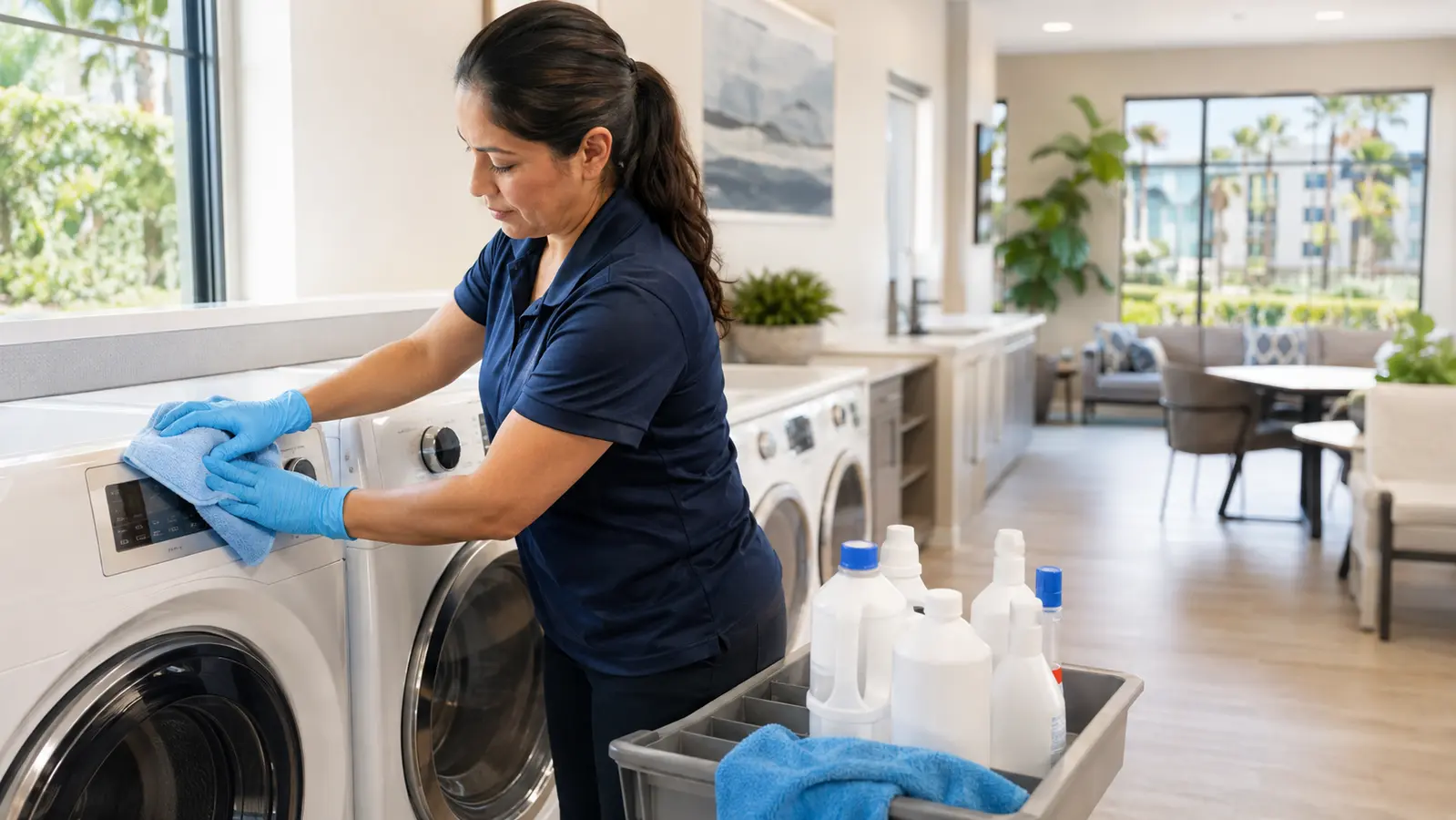
    Gloved professional cleaner wiping a washing machine in a shared apartment laundry room
    Product labels and surface instructions should guide cleaning in shared laundry areas.

    Quality Control and Documentation

    A completed checkbox confirms that a task was attempted; a short inspection confirms the result. End each route with a consistent walkthrough from the main entrance through every zone. View glass from more than one angle, check corners and edges, and look behind doors where debris tends to collect.

    A simple quality-control record can include:

    • Date, time, and name or initials of the person completing the route.
    • Tasks completed and areas that were inaccessible.
    • Spills, damage, supply shortages, or maintenance concerns reported.
    • Follow-up owner and target completion date.
    • Periodic supervisor or second-person inspection.

    Look for patterns over time. If the same hallway needs repeated spot cleaning by midday, increase its check frequency. If a monthly task rarely shows buildup, it may remain monthly while attention shifts to a busier zone. A checklist is most useful when it evolves from actual conditions.

    For additional planning ideas, the SRS guide to office hygiene practices explains how shared touchpoints and consistent routines fit into a wider cleaning plan.

    Common Area Cleaning FAQ

    How often should apartment common areas be cleaned?

    High-traffic floors, entrances, waste points, and frequently touched surfaces usually need daily checks, while detail work can follow weekly or monthly rotations. The right schedule depends on traffic, weather, materials, and how quickly visible soil returns.

    Should every high-touch surface be disinfected every day?

    Not automatically. Clean first, then use a suitable disinfectant when the setting or situation calls for it. Follow the label’s approved surfaces, application method, contact time, ventilation, and safety directions.

    What commonly gets missed?

    Elevator tracks, stair corners, the underside of handrails, door-frame tops, baseboard edges, package counters, laundry-machine controls, and the space around waste containers are frequent omissions. Adding them by name makes them easier to verify.

    Can one checklist cover every building?

    No single checklist captures every material, amenity, and traffic pattern. Start with the core zones, then add manufacturer instructions, access notes, site-specific priorities, and realistic frequencies.

    Keep Shared Spaces Ready

    A dependable apartment common area cleaning checklist combines daily visibility tasks, weekly detail work, periodic floor and surface care, safe product practices, and a final walkthrough. The result is a routine that is easier to perform, inspect, and improve.

    If maintaining those shared spaces requires a consistent professional schedule, review SRS Cleaning’s commercial and office cleaning services and confirmed Orange County service areas. A tailored scope can match the building’s traffic, surfaces, and priorities. When the fit is right, request an office cleaning quote to discuss the details.

  • Commercial Cleaning Checklist for Small Orange County Workplaces

    Commercial Cleaning Checklist for Small Orange County Workplaces

    A practical commercial cleaning checklist keeps shared spaces easier to use, easier to maintain, and more consistent from week to week. The best checklist does not try to disinfect everything every day or turn cleaning into a complicated system. It simply puts the right tasks in the right order: remove debris, clean visible soil, reset high-use areas, handle restrooms and break areas carefully, and schedule deeper work before buildup becomes obvious.

    This guide is written for everyday workplace environments such as offices, reception areas, shared kitchens, restrooms, conference rooms, and light commercial spaces. It also explains when cleaning, sanitizing, and disinfecting are different tasks, because product misuse can create safety problems. For local help with recurring service or a deeper reset, SRS Cleaning Services provides Office Cleaning, cleaning services, and quote support for Orange County workplaces.

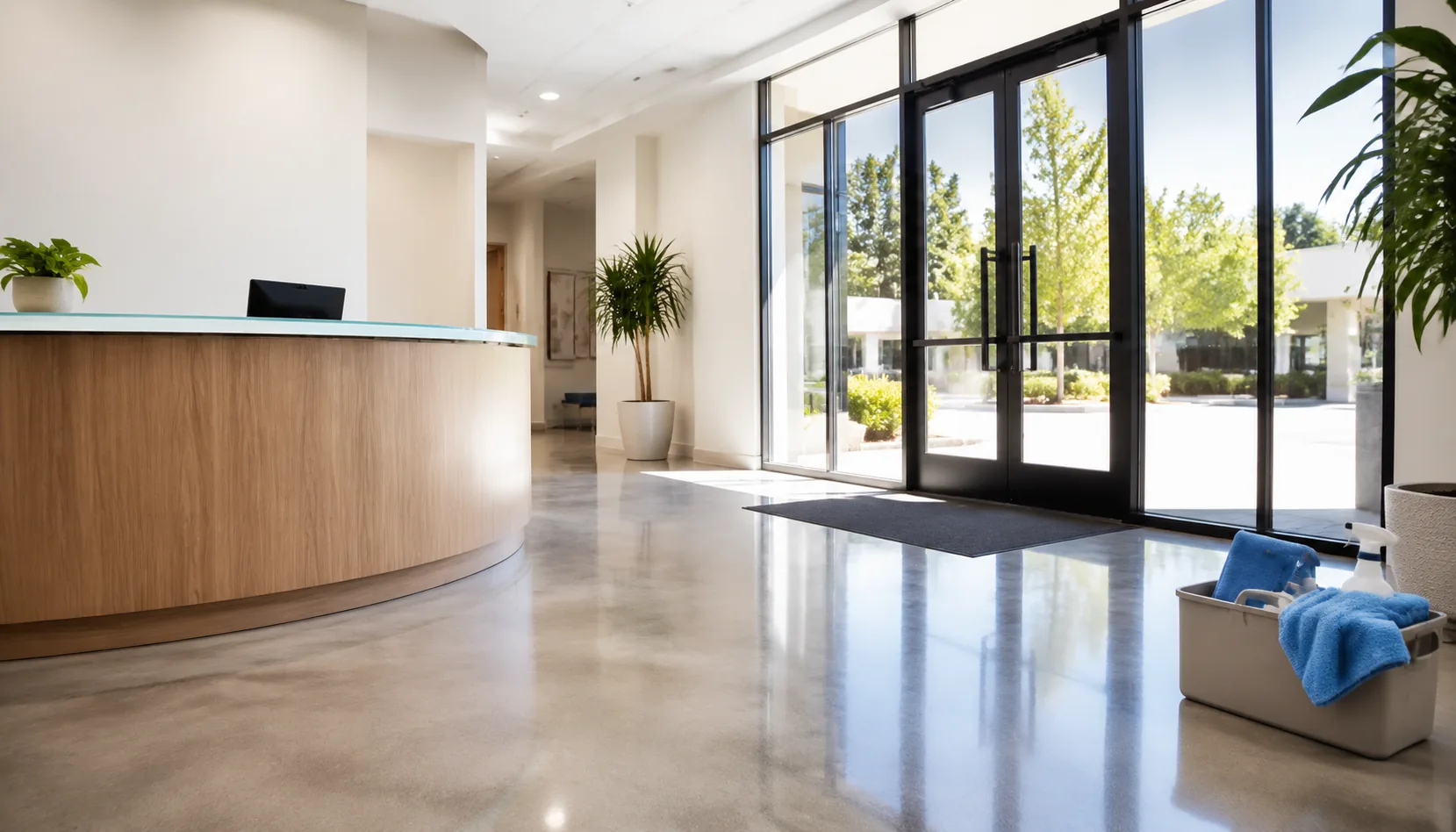
    Commercial lobby cleaning checklist setup with supplies and glass entry doors.

    What a commercial cleaning checklist should cover

    A useful checklist starts with zones, not random tasks. Most workplaces have an entrance or lobby, work areas, meeting rooms, restrooms, a break room or kitchenette, floors, trash areas, and supply storage. Each zone should have a basic reset standard and a frequency. For example, the lobby may need daily floor attention and glass touch-up, while high shelves or vents may only need periodic dusting.

    The checklist should also separate visible presentation from health-related cleaning. Presentation tasks include trash removal, dusting, glass, floors, and clutter control. Health-related tasks include cleaning high-touch surfaces, handling restroom fixtures, and using sanitizers or disinfectants only where they are appropriate and label directions can be followed.

    Cleaning, sanitizing, and disinfecting

    Cleaning removes most dirt, germs, and impurities from surfaces with soap, water, and scrubbing, according to the CDC (CDC cleaning and disinfecting guidance). Sanitizing reduces germs to levels considered safe by public-health codes or regulations, and disinfecting uses chemicals to kill many remaining germs on surfaces; the CDC notes that surfaces should be cleaned before sanitizing or disinfecting (CDC definitions of cleaning, sanitizing, and disinfecting).

    That distinction matters in commercial spaces because disinfecting dirty surfaces is not a shortcut for cleaning. If a surface has dust, food residue, restroom soil, or visible grime, clean first. Then use a sanitizer or disinfectant only when the surface, product label, ventilation, and required wet contact time make sense. The CDC’s facility guidance also recommends regular cleaning of high-touch surfaces and using products appropriate for the surface being cleaned (CDC facility cleaning guidance).

    Daily commercial cleaning tasks

    Daily cleaning should keep the workplace presentable and prevent easy-to-control buildup. Start at the entrance. Remove trash, straighten visible areas, spot-clean glass doors, wipe reception counters, clean door handles, and vacuum or mop high-traffic flooring. Continue into shared work areas by removing debris, wiping accessible horizontal surfaces, emptying trash and recycling, and cleaning touch points such as switches, handles, railings, shared phones, and conference-room tables.

    • Empty trash and replace liners where needed.
    • Clean entry glass, door handles, counters, and waiting-area surfaces.
    • Wipe shared tables, conference surfaces, and exposed high-touch points.
    • Vacuum carpet traffic lanes and mop hard floors with a surface-appropriate method.
    • Reset chairs, visible clutter, and shared supply areas.
    • Check odors, spills, overflowing bins, and restroom supply levels.

    For more workplace-specific planning, compare this broader checklist with the SRS office cleaning checklist and the guide to janitorial service vs. office cleaning. Shared residential-building spaces have their own traffic patterns, so the apartment common area cleaning checklist adds focused tasks for lobbies, hallways, elevators, laundry rooms, and waste areas.

    Copy-this daily reset

    1. Walk the entry and remove anything that does not belong.
    2. Empty trash before wiping surfaces so debris does not spread.
    3. Clean high-touch points before floors.
    4. Check restrooms and break areas for supplies, odors, spills, and visible residue.
    5. Finish with floors, then inspect from the entrance as if arriving for the first time.

    Restroom and break area checklist

    Clean commercial break room prepared as part of a workplace cleaning checklist.

    Restrooms and break areas need more detail because moisture, food, trash, and frequent hand contact can create odors and visible residue quickly. In restrooms, clean sinks, faucets, counters, toilets, partitions, mirrors, dispensers, door handles, light switches, and floors. Refill soap, paper products, and liners. In break rooms, clean counters, sink areas, table surfaces, chair backs, appliance handles, cabinet pulls, and trash areas.

    Use separate tools for restroom and food-area cleaning to avoid cross-contamination. Keep cloths, brushes, and mop heads organized by zone or color when possible. If sanitizing or disinfecting is part of the task, follow the product label rather than guessing the contact time. Labels matter because a product may need the surface to remain wet for a specific period before it can do what the label claims.

    Weekly and monthly deep cleaning

    Weekly tasks prevent the slow buildup that daily cleaning can miss. Dust vents, baseboards, window ledges, door frames, chair bases, cabinet faces, and lower wall edges. Detail conference rooms, clean interior glass, vacuum edges, mop behind movable items, and inspect corners where debris collects. Monthly tasks may include high dusting, machine floor care, detailed wall-spot cleaning, upholstery vacuuming, and deeper restroom detail.

    The exact schedule depends on traffic, flooring, weather, food use, restroom volume, and how visible the space is to visitors. A small low-traffic office may need lighter weekly detail than a busy medical, retail, or customer-facing environment. The useful standard is simple: if a task is repeatedly noticeable by the time it is cleaned, move it to a more frequent schedule.

    Safe product use and supplies

    Workplace cleaning products should be selected and stored with safety in mind. OSHA explains that employers with hazardous chemicals in the workplace must have labels, safety data sheets, and training for exposed workers (OSHA Hazard Communication overview). OSHA’s Safety Data Sheet guidance explains that SDS documents include chemical properties, hazards, protective measures, and safe handling information (OSHA Safety Data Sheet brief).

    Never mix cleaning chemicals. The CDC warns that mixing bleach or disinfectants with other cleaners can release dangerous vapors (CDC bleach safety guidance). For lower-hazard product selection, the EPA Safer Choice product search helps identify products that meet the Safer Choice Standard (EPA Safer Choice product search). Safer Choice does not remove the need to follow labels, but it is a useful filter when comparing cleaning-product options.

    How to build a cleaning frequency plan

    Detailed commercial floor cleaning checklist scene with supplies and baseboards.

    Build the plan around use, not guesswork. List every zone, note what gets touched most, decide what must be clean before each workday, and separate daily, weekly, and monthly tasks. Then review the checklist after two weeks. If restrooms run out of supplies, floors look dull midweek, or kitchen trash creates odors, the frequency is too light. If areas look consistently clean with no rushed catch-up work, the schedule is closer to right.

    Area Typical daily focus Typical periodic focus
    Entry and lobby Trash, glass, handles, floors Baseboards, vents, detailed edges
    Work areas Trash, touch points, visible surfaces Chairs, ledges, detailed dusting
    Restrooms Fixtures, mirrors, supplies, floors Partitions, tile edges, odor sources
    Break room Counters, sink, tables, trash Cabinet faces, appliance exteriors, corners

    When professional commercial cleaning helps

    Professional cleaning helps when the checklist needs to be reliable, documented, and consistent. It is also useful when restrooms, floors, kitchens, glass, and shared areas need regular attention without interrupting the workday. SRS Cleaning Services supports Orange County workplaces with commercial and office cleaning service that can be adjusted around the space, traffic level, and cleaning priorities.

    If the space needs a one-time reset before starting a recurring schedule, ask for the scope to include detailed dusting, restrooms, break areas, high-touch points, floors, and visible buildup. If ongoing service is the goal, start with the zones that affect daily comfort most and adjust after the first few visits. You can also review the SRS Office Cleaning page, the office cleaning quote page, and the main Orange County service area page.

    Commercial cleaning checklist FAQ

    How often should a commercial space be cleaned?

    High-use areas usually need daily attention, while detailed dusting, edge cleaning, vents, and other deeper tasks may be weekly or monthly depending on traffic. The right frequency is the one that prevents visible buildup before it becomes distracting.

    Is commercial cleaning the same as disinfecting?

    No. Cleaning removes dirt, germs, and impurities. Disinfecting uses chemicals to kill many remaining germs after cleaning. Disinfecting can be useful in selected areas, but it should follow the product label and should not replace basic cleaning.

    What should be cleaned first?

    Start by removing trash and obvious debris, then dust or wipe upper surfaces, clean high-touch points, handle restrooms and break areas, and finish with floors. Cleaning floors last prevents extra dust or debris from landing on newly finished surfaces.

    What tags or categories fit this kind of checklist?

    For the SRS blog, this topic belongs under Commercial Cleaning because it focuses on workplace cleaning systems. Useful supporting tags include Office Cleaning, Janitorial Service, Cleaning Checklist, and Orange County.

    A strong commercial cleaning checklist makes the work easier to repeat and easier to inspect. Keep the plan simple, clean before sanitizing or disinfecting, follow product labels, schedule deeper detail before buildup becomes obvious, and adjust the frequency based on how the space is actually used. To plan a commercial cleaning routine in Orange County, review SRS Office Cleaning or start with the office cleaning quote page.

  • Office Cleaning Checklist for a Healthier, Client-Ready Workplace

    Office Cleaning Checklist for a Healthier, Client-Ready Workplace

    A good office cleaning checklist makes shared spaces easier to manage because it turns a vague goal, “keep the office clean,” into visible tasks that can be repeated, checked, and improved. The best checklist is not complicated. It separates daily touch points from weekly detail work, names the rooms that need attention, and makes room for deeper periodic cleaning when traffic, weather, or special events create extra mess.

    This guide lays out a practical office cleaning checklist for desks, restrooms, break rooms, floors, meeting rooms, entry areas, and high-touch surfaces. It also explains the difference between cleaning and disinfecting, with links to current government guidance where safety or product use matters.

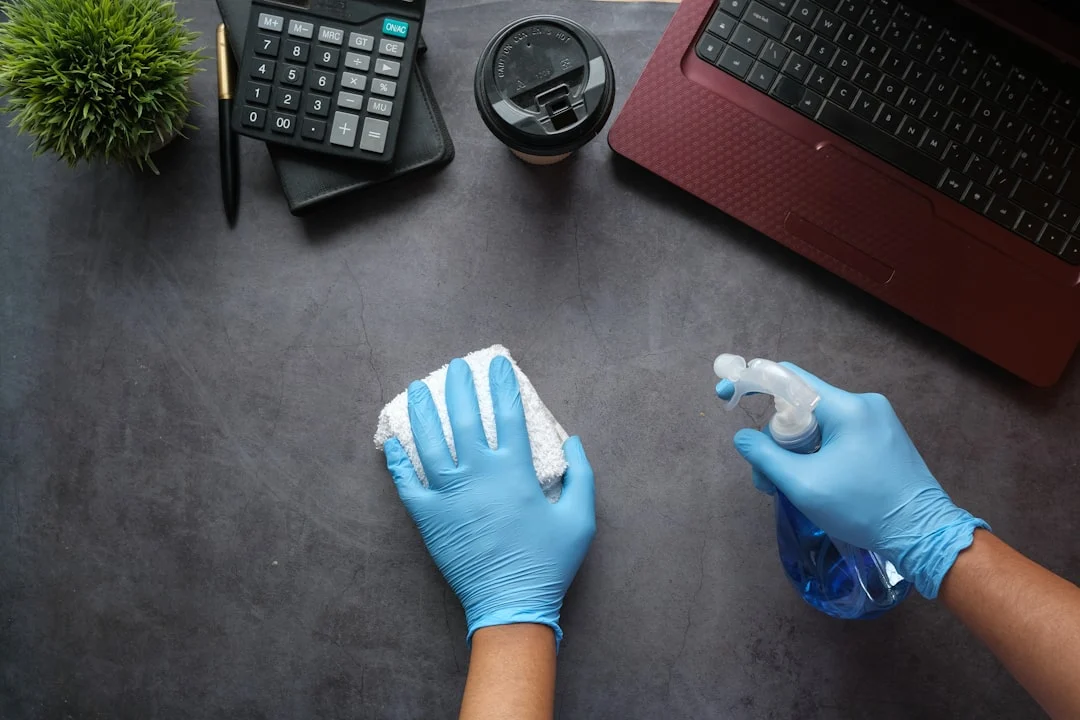
    Gloved hands cleaning an office desk with a spray bottle and cloth
    Photo by Towfiqu barbhuiya on Unsplash

    How to Use This Office Cleaning Checklist

    Start by matching tasks to how the space is actually used. A quiet administrative suite will not need the same routine as a medical office, sales office, coworking space, or busy reception area. The checklist below is a baseline, then the frequency can be adjusted based on foot traffic, spills, shared kitchens, restrooms, pets, children, deliveries, and the amount of dust or outdoor debris that gets tracked inside.

    Office cleaning should also respect basic workplace sanitation expectations. OSHA’s sanitation standard says workplaces must be kept clean to the extent the nature of the work allows, and it addresses sanitary washing facilities, waste disposal, and clean, dry walking surfaces where practical in general workplace settings. The details matter because a checklist is only useful when it supports a safer, more comfortable environment, not just a better-looking one. See OSHA’s workplace sanitation standard for the regulatory language.

    Use the daily tasks to keep the office presentable and hygienic, the weekly tasks to prevent buildup, and the monthly tasks to handle details that are easy to miss. When the work becomes too time-consuming to handle consistently, SRS Cleaning’s Office Cleaning service can help keep the routine steady across Orange County. For service-area planning, the locations page is the safest place to check current coverage before relying on a city-specific page.

    Frequency Main Goal Best Tasks
    Daily Keep high-use areas ready Trash, restrooms, break room counters, entry glass, visible floors, high-touch surfaces
    Weekly Prevent buildup Dusting, detailed floor edges, conference rooms, appliance exteriors, interior glass, supply checks
    Monthly Refresh overlooked details Vents, baseboards, chair rails, blinds, accessible window tracks, appliance interiors if included

    Daily Office Cleaning Checklist

    Daily office cleaning focuses on the areas people see, touch, and use the most. These tasks help prevent trash buildup, visible soil, odors, crumbs, and sticky surfaces from carrying into the next workday.

    • Empty trash and recycling bins, then replace liners where needed.
    • Wipe reception counters, front desks, conference tables, shared counters, and break room surfaces.
    • Clean visible fingerprints from glass doors, interior entry glass, and frequently touched panels.
    • Vacuum high-traffic carpet paths and spot clean obvious debris.
    • Sweep or mop hard floors in entry areas, kitchens, restrooms, and walkways.
    • Clean restroom sinks, counters, mirrors, toilets, fixtures, dispensers, and floors.
    • Restock soap, paper towels, toilet tissue, and hand sanitizer where supplied.
    • Clean break room sinks, counters, appliance handles, tables, and exterior microwave surfaces.
    • Remove food waste from common areas to reduce odors.
    • Wipe high-touch surfaces such as door handles, light switches, shared controls, railings, and cabinet pulls.

    Daily cleaning does not have to mean every detail receives the same amount of time every day. The point is to keep the office from drifting into visible neglect. For a small office, the daily routine may be short. For a larger workplace, separating tasks by room or zone can make the checklist easier to complete without rushing.

    Weekly Office Cleaning Checklist

    Weekly office cleaning picks up the details that are noticeable over time but not always urgent every day. These tasks help the office feel cared for when someone looks beyond the main walkway or reception desk.

    • Dust desks, open shelving, window ledges, file cabinets, baseboards, and low partitions.
    • Vacuum upholstered chairs and waiting room seating where fabric allows.
    • Detail conference rooms, including chair bases, table edges, presentation remotes, and cabinet fronts.
    • Clean appliance exteriors, refrigerator handles, coffee stations, and cabinet faces in break rooms.
    • Wipe interior glass partitions and smudged office windows within safe reach.
    • Mop hard floors more thoroughly, including corners and edges.
    • Spot clean walls, doors, kick plates, and switch plates.
    • Check supply closets for low paper products, liners, soap, and approved cleaning products.
    • Remove cobwebs and dust from visible ceiling corners where safely reachable.

    A weekly checklist is also a good place to note recurring issues. If one restroom always runs out of paper towels, one entrance constantly tracks in grit, or one break room surface keeps getting sticky, the cleaning schedule may need a small adjustment instead of a bigger overhaul.

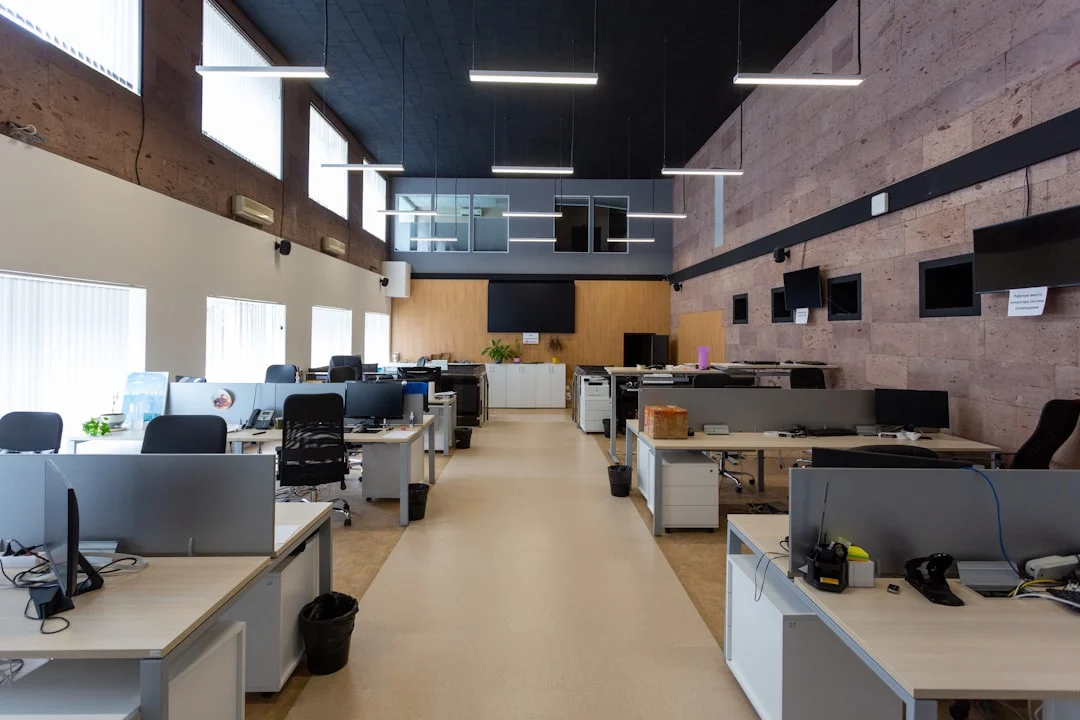
    Clean open plan office with rows of desks and computers
    Photo by Petr on Unsplash

    Monthly and Periodic Office Cleaning Checklist

    Monthly and periodic tasks protect the details that affect long-term appearance. These tasks are especially helpful before inspections, busy seasons, client visits, staff events, or lease transitions.

    • Dust vents, higher ledges, ceiling fan blades, light fixtures, and upper shelves where safely reachable.
    • Detail baseboards, door frames, chair rails, and corners.
    • Clean behind movable furniture where access is safe and practical.
    • Schedule carpet spot treatment or extraction when traffic lanes look worn or stained.
    • Deep clean break room appliances, including refrigerator interiors if that task is part of the agreed scope.
    • Clean interior windows, tracks, and blinds where accessible and included.
    • Review restroom grout, partition bases, floor edges, and odor sources.
    • Refresh the checklist based on complaints, supply use, seasonal dust, and office traffic.

    Some periodic work may require special equipment, safe access, or a separate scope. High windows, exterior pressure washing, biohazard conditions, pest issues, water damage, mold, and hazardous materials should not be handled as ordinary office cleaning tasks. Those situations need the right qualified professional and the appropriate safety guidance.

    Room-by-Room Office Cleaning Tasks

    A room-by-room office cleaning checklist is easier to follow than one long mixed list. It also helps prevent common misses, such as wiping a conference table but forgetting the chair arms, or cleaning a restroom sink but overlooking the dispenser area.

    Reception and Entry Areas

    Clean doors, handles, front counters, waiting chairs, floors, glass, sign-in surfaces, and visible dust. Entry areas carry the first impression of the office, so they usually deserve daily attention even in smaller workplaces.

    Workstations and Private Offices

    Dust open surfaces, wipe shared touch points, remove trash, vacuum around desks, and clean visible smudges. Personal papers, electronics, and desk items should be handled according to the office’s preference. Many workplaces ask cleaners to clean around personal items instead of moving them.

    Conference Rooms

    Clean tables, chair arms, presentation controls, glass boards where appropriate, floor areas, cabinet fronts, and trash. Meeting rooms can look clean from the doorway while still having fingerprints, crumbs, coffee rings, and dust along table edges.

    Break Rooms and Kitchens

    Clean counters, tables, sinks, faucet handles, appliance handles, microwave exteriors, cabinet pulls, trash areas, and floors. Food residue should be handled promptly because it can cause odors and attract pests. Use the dedicated office kitchen cleaning checklist to separate daily resets from weekly appliance and refrigerator detail work.

    Restrooms

    Clean toilets, urinals where present, sinks, counters, mirrors, dispensers, partitions, handles, and floors. Restrooms need a clear routine because inconsistent cleaning is noticed quickly and can affect comfort for everyone using the space.

    Cleaning Versus Disinfecting in an Office

    Cleaning, sanitizing, and disinfecting are not the same thing. The CDC explains that cleaning removes most germs, dirt, and impurities from surfaces, while disinfecting uses chemicals to kill germs on surfaces; cleaning normally comes before disinfecting because dirt can make disinfectants less effective. See the CDC’s overview of cleaning and disinfecting basics. For related practical context, SRS also has a guide to office hygiene practices and a post on what to ask about cleaning supplies.

    Routine disinfecting is not always necessary for every office surface every day. CDC guidance says cleaning alone is usually enough for many surfaces when no one is sick, while disinfecting can be appropriate for high-touch surfaces after illness or when certain germs are a concern. The CDC’s facility guidance also says to follow the label and use a disinfectant registered for the relevant organism when disinfecting is needed. See CDC guidance on when and how to clean and disinfect a facility and the EPA’s list of selected EPA-registered disinfectants.

    Product safety should stay simple: follow the label, use ventilation when directed, wear protective equipment when the product requires it, and never mix products unless the label specifically allows it. The CDC warns that bleach should not be mixed with other cleaners or disinfectants because dangerous gases can form. See the CDC’s bleach cleaning and disinfecting guidance.

    How to Build a Cleaning Schedule That Works

    A useful office cleaning schedule starts with the space, not the calendar. Walk through the office at the end of a normal day and note what looks used: restrooms, break room counters, floor paths, trash bins, conference rooms, shared desks, and entry glass. Then assign those items to daily, weekly, or monthly frequency.

    Next, decide what needs documentation. A simple checklist can include the task, the room, the frequency, the person responsible, and a notes column. For professional service, the notes column is often the most useful part because it captures real-world changes: a new coffee station, an extra trash bin, construction dust nearby, or a restroom supply issue.

    Finally, review the schedule after two to four weeks. If the office looks good but the checklist takes too long, reduce unnecessary detail. If certain areas still look missed, add frequency or define the task more clearly. A good checklist is a working tool, not a perfect document.

    Clean office desk with computer and organized workspace
    Photo by Alesia Kazantceva on Unsplash

    Step-by-Step Office Cleaning Plan

    Use this simple process to turn the office cleaning checklist into a routine that can be followed and inspected.

    1. Walk the space after a normal workday. Note trash levels, restroom condition, food residue, visible floor debris, dusty surfaces, and the areas people touch most.
    2. Separate tasks by frequency. Daily tasks should protect presentation and hygiene. Weekly tasks should prevent buildup. Monthly tasks should refresh details that are easy to miss.
    3. Match supplies to surfaces. Keep products labeled, stored safely, and selected for the material being cleaned. Follow manufacturer directions and product labels for dwell time, ventilation, and protective equipment.
    4. Document exceptions. Write down locked rooms, personal desks, electronics, delicate finishes, appliance interiors, and tasks that need approval before cleaning.
    5. Inspect the same way every time. Review restrooms, break rooms, entry glass, floor edges, trash areas, and conference rooms after cleaning so the standard stays consistent.
    6. Adjust after two to four weeks. Remove tasks that do not matter, add frequency where buildup returns quickly, and update the checklist when furniture, staffing, or traffic changes.

    When Professional Office Cleaning Helps

    Professional office cleaning is useful when consistency matters and the cleaning routine has outgrown whoever is trying to squeeze it in around regular work. It can also help when a space needs cleaning outside normal business hours, when the office has several restrooms or shared rooms, or when floors and surfaces need a more predictable routine.

    SRS Cleaning provides office cleaning across Orange County with practical routines for workspaces, restrooms, break rooms, floors, and shared areas. The service can be paired with a checklist like this so expectations are clear from the start. For broader planning, the office cleaning guide and the comparison of janitorial service versus office cleaning can help clarify what level of service fits the space.

    For local availability, review the SRS service areas. When the checklist feels larger than the time available, the simplest next step is to request a quote and describe the rooms, frequency, and priorities.

    Printable Office Cleaning Checklist

    Use this condensed version when assigning tasks or reviewing an office after cleaning. Keep a copy in a shared operations folder, supply closet, or vendor file so the routine stays visible.

    • Entry: clean glass, handles, reception counters, waiting chairs, floors, and visible dust.
    • Work areas: empty trash, vacuum traffic paths, dust open surfaces, and wipe shared touch points.
    • Conference rooms: clean tables, chair arms, presentation controls, whiteboards if approved, and floor areas.
    • Break room: clean counters, sink, faucet handles, appliance handles, tables, cabinet pulls, trash area, and floors.
    • Restrooms: clean toilets, sinks, counters, mirrors, partitions, dispensers, fixtures, floors, and restock supplies.
    • Weekly detail: dust baseboards, ledges, interior glass, door frames, chair bases, vents within safe reach, and floor edges.
    • Monthly review: check appliance interiors, blinds, window tracks, grout lines, carpet spots, supply levels, and recurring trouble areas.

    Before using any disinfectant, confirm that the product label matches the surface and the purpose. The EPA notes that disinfectant labels identify directions and the organisms the product is registered to address, so the label should guide product choice and contact time.

    These SRS resources can help refine the checklist around service scope, supplies, and cleaning frequency:

    Office Cleaning Checklist FAQs

    What should be cleaned every day in an office?

    Daily office cleaning usually includes trash removal, restrooms, break room counters, high-touch surfaces, entry glass, visible floor debris, and shared surfaces such as reception counters or conference tables.

    How often should an office be deep cleaned?

    The right frequency depends on foot traffic, floor type, restroom use, shared kitchens, and how visible the space is to visitors. Many offices benefit from periodic detail cleaning in addition to a daily or weekly routine.

    Should every office surface be disinfected daily?

    Not necessarily. CDC guidance distinguishes cleaning from disinfecting and explains that cleaning alone is usually enough for many surfaces when no one is sick. Disinfecting should follow the product label and be used where it fits the situation.

    What is the easiest way to keep an office cleaning checklist manageable?

    Group tasks by room and frequency. Keep daily work focused on visible, high-use areas, then reserve detail work for weekly or monthly cleaning so the routine stays realistic.

    Keep the Checklist Practical

    The strongest office cleaning checklist is the one people can actually follow. It names the spaces, separates the frequencies, avoids unsafe product shortcuts, and gives high-use areas the attention they need. It also changes when the office changes.

    Use this checklist as a starting point, then adjust it around the real rhythm of the workplace. When daily cleaning, weekly detail work, and periodic deeper cleaning are organized clearly, the office feels easier to use, easier to maintain, and more ready for the next workday.

  • Janitorial Service vs Office Cleaning Compared

    Janitorial Service vs Office Cleaning Compared

    A workplace can look fine at 9 a.m. and feel neglected by 3 p.m. Restrooms need attention, trash builds up, fingerprints appear on glass, and shared break areas quickly become a source of frustration. When comparing janitorial service vs office cleaning, the right choice usually comes down to how often your space needs care, what needs to be handled, and how much day-to-day support your team expects.

    The terms are often used interchangeably, but they can describe very different service plans. Understanding the difference helps office managers, business owners, and property managers choose a cleaning schedule that supports a professional, healthy, and comfortable workplace without paying for services they do not need.

    Janitorial Service vs Office Cleaning: The Main Difference

    Janitorial service usually refers to ongoing, routine maintenance. It is designed to keep a facility clean and usable from one day to the next. Depending on the agreement, a janitorial team may work every weekday, several times a week, or even during business hours in larger facilities.

    Office cleaning more often refers to scheduled cleaning visits focused on the office itself. These visits may happen weekly, biweekly, or on another recurring schedule based on occupancy and the condition of the space. The work is still detailed and professional, but it may not include the daily monitoring and replenishment associated with a broader janitorial program.

    There is no universal rule for how every company uses these terms. One provider may call a nightly office-cleaning plan janitorial service, while another may use “office cleaning” for the same work. The service checklist, visit frequency, and communication process matter far more than the label.

    What Janitorial Service Usually Covers

    Janitorial service is built around consistency. Its purpose is to prevent small messes from becoming visible problems and to keep essential areas ready for employees, visitors, and clients.

    A typical program may include emptying trash and replacing liners, cleaning and restocking restrooms, vacuuming or mopping floors, wiping high-touch surfaces, and maintaining break rooms. In a busy workplace, it may also include spot-cleaning glass doors, responding to spills, collecting recycling, and checking supplies such as paper towels, soap, and toilet paper.

    The biggest advantage is reliability at a higher frequency. If your office has a steady flow of employees, patients, customers, or guests, daily or near-daily attention helps the space stay presentable throughout the workweek. It also reduces the burden on employees who might otherwise feel responsible for taking out trash or cleaning common areas.

    Janitorial service can be especially practical for larger offices, medical-adjacent administrative spaces, schools, retail locations, multi-tenant buildings, and workplaces with active break rooms and public-facing restrooms. These environments generate enough daily use that a weekly clean may leave too much time between visits.

    What Office Cleaning Usually Covers

    Office cleaning is often the better fit for smaller or lower-traffic workplaces that need professional care but do not require daily maintenance. A recurring office cleaning visit can address the areas employees and visitors notice most: floors, desks, reception areas, conference rooms, kitchens, and restrooms.

    The exact scope should be customized. For example, an office of six people with mostly remote staff may need weekly restroom cleaning, trash removal, vacuuming, and dusting. A larger office that hosts client meetings may want more frequent service for reception, conference rooms, and kitchens, with less frequent detail work in private offices.

    Office cleaning can also include periodic deeper tasks, such as wiping baseboards, cleaning interior glass, dusting vents, polishing fixtures, or addressing buildup in kitchen areas. These tasks may be included on a rotating schedule or added when needed.

    The benefit is a more focused plan. You receive a polished office without committing to a full daily maintenance program. For many businesses, particularly professional offices in Orange County with predictable traffic, that balance is both practical and cost-conscious.

    Frequency Changes the Cost and the Experience

    Cleaning frequency has a direct effect on price, but it also changes what your workplace feels like between visits. A lower-frequency plan may cost less per month, yet it may leave overflowing trash, marked-up glass, or untidy restrooms during busy periods. A daily plan provides more consistent upkeep, but it may be unnecessary for a small office that is only occupied a few days each week.

    Consider how your space is actually used rather than choosing a schedule based on square footage alone. A compact office with 25 employees, a shared kitchen, and regular visitors may need more service than a much larger space with eight hybrid employees. Restroom use, food preparation, foot traffic, public access, and the number of workdays all affect the right frequency.

    A professional cleaning provider should be able to recommend a schedule after discussing your operations. If the scope feels too broad, start with the areas that matter most and adjust after a few visits. A good plan should feel easy to maintain, not like another item for your staff to manage.

    How to Choose the Right Service for Your Office

    Start with the condition you want employees and visitors to experience on an ordinary Tuesday afternoon, not just after a cleaning visit. If you need restrooms checked, trash removed, and shared spaces refreshed almost every day, janitorial service is likely the stronger option.

    If your office stays relatively orderly between visits and mainly needs dependable recurring cleaning, office cleaning may be all you need. This is common for small businesses, administrative offices, real estate teams, and hybrid workplaces where the space is not fully occupied every day.

    It also helps to separate routine cleaning from occasional projects. Carpet cleaning, interior window cleaning, post-construction cleanup, and major deep cleans are usually handled as separate services or scheduled additions. Including them in your expectations from the start prevents confusion later.

    Before booking, ask for clarity on a few practical details: which rooms are included, how often each task is completed, whether supplies are provided, how access is handled, and who to contact if your needs change. Licensed, insured, background-checked cleaning professionals and clear communication are especially valuable when a team will have regular access to your workplace.

    When a Hybrid Plan Makes More Sense

    The choice does not have to be strictly janitorial or office cleaning. Many workplaces benefit from a hybrid arrangement. For instance, a company may schedule standard office cleaning twice a week while adding a quick midweek restroom and trash service. Another office may use nightly cleaning during its busiest season, then move to three visits a week when occupancy drops.

    This approach works well when only certain areas need frequent attention. A customer-facing lobby and restroom may require daily service, while private offices can be cleaned less often. Tailoring the plan avoids both extremes: paying for unnecessary labor or asking staff to compensate for an insufficient cleaning schedule.

    For property managers, a hybrid plan can also make turnovers and common-area maintenance easier to coordinate. Routine service keeps shared areas presentable, while one-time deep cleaning can prepare an office suite, rental, or commercial property for its next occupant.

    Signs Your Current Cleaning Plan Is Not Enough

    A cleaning plan may need an adjustment when employees regularly mention odors, full trash bins, sticky break-room surfaces, or restroom supplies running out. Client-facing businesses should also watch for subtle signs, such as smudged entry glass, dusty reception furniture, and floors that look worn before the week ends.

    These are not always signs that your cleaning team is doing poor work. More often, they indicate a mismatch between the scope of service and the amount of activity in the building. Increasing visit frequency, adding a targeted midweek service, or revising the checklist can make a noticeable difference without requiring a complete change in providers.

    The best cleaning arrangement is one your team barely has to think about. Whether that means recurring office cleaning or a more comprehensive janitorial program, the goal is the same: a workplace that feels cared for, supports productivity, and gives employees and visitors confidence from the moment they walk in. With a clear scope and a dependable local provider such as SRS Cleaning, keeping your office clean can become one less thing competing for your attention.