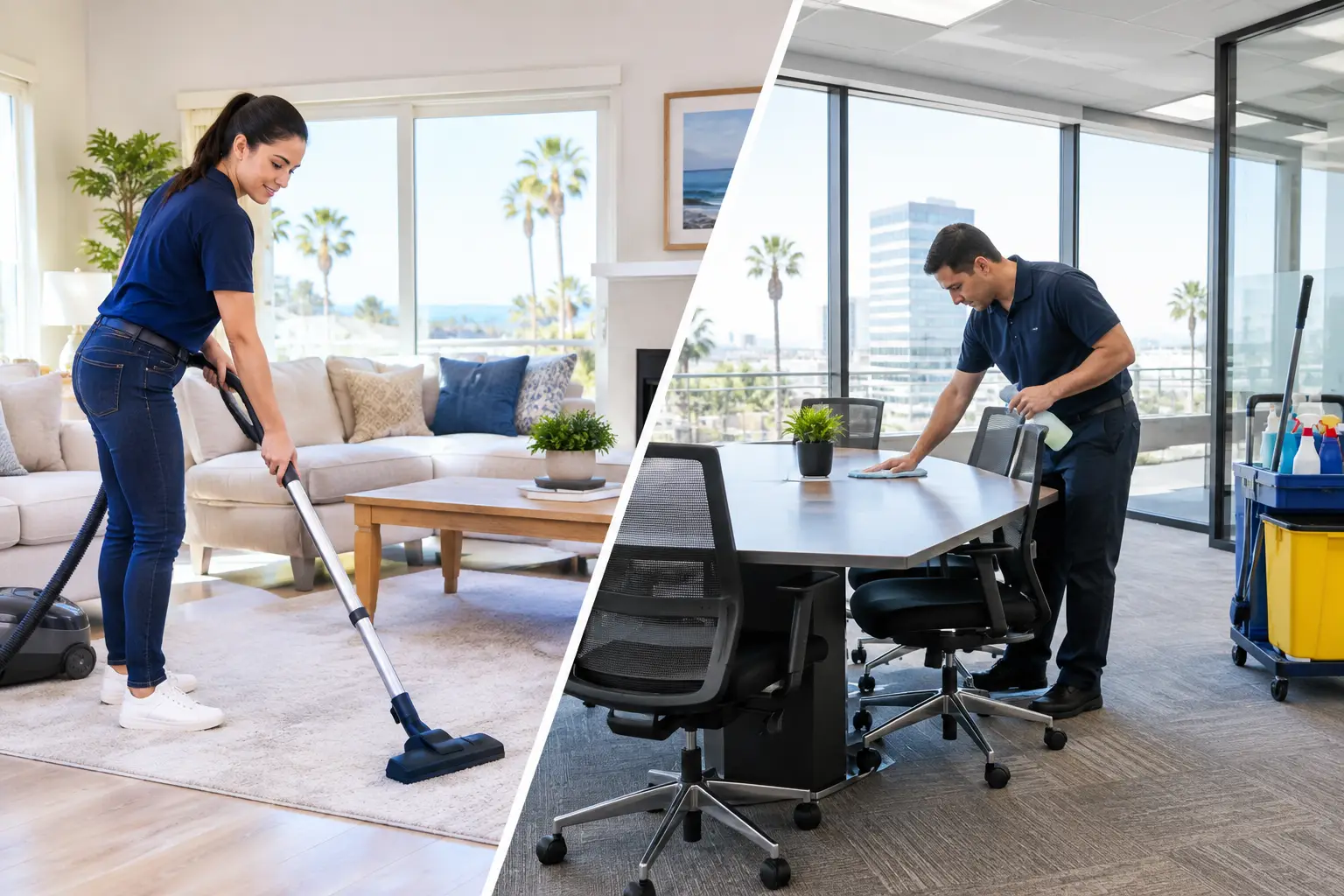
Residential versus commercial cleaning may use some of the same basics, but they are not interchangeable services. The difference is less about whether a space has dust or dirty floors and more about how the space is used, who depends on it, how often it needs attention, and what needs to happen before the cleaner arrives.
For a home, cleaning is usually about comfort, routine, and getting your personal time back. For an office or commercial property, it is about maintaining a presentable, functional shared environment without disrupting employees, customers, tenants, or daily operations. Knowing the difference helps you request the right scope and avoid surprises on cleaning day.
The Core Difference Between Residential and Commercial Cleaning
Residential cleaning focuses on private living spaces. A typical appointment may include kitchens, bathrooms, bedrooms, living areas, floors, dusting, and general surface care. The goal is a home that feels reset and easier to live in.
Commercial cleaning serves workplaces and shared business environments, such as offices, common areas, restrooms, break rooms, and entryways. The work often has a more defined schedule and a more specific scope because traffic patterns, building access, business hours, and workplace expectations all matter.
Neither type is automatically more difficult. A small office with light traffic may need less detailed work than a busy family home. On the other hand, a high-use restroom, lobby, or carpeted hallway can require more frequent attention than many residential rooms. The right service depends on the condition of the space and the result you need.
| Area of comparison | Residential cleaning | Commercial cleaning | | — | — | — | | Main priority | Comfort, upkeep, and personal time | Shared-space appearance and daily function | | Typical schedule | Weekly, biweekly, monthly, or one-time | Often recurring around operating hours | | Scope | Personal rooms and household surfaces | Common areas, workstations, restrooms, and traffic areas | | Access | Usually coordinated with the homeowner or resident | May require building rules, keys, codes, or after-hours planning | | Foot traffic | Varies by household | Often higher and more predictable |
What Residential Cleaning Usually Involves
A recurring home cleaning visit is designed to handle the cleaning tasks that build up during normal life. That often means wiping kitchen counters, cleaning sinks and bathroom fixtures, dusting accessible surfaces, vacuuming or mopping floors, and tidying the areas included in the agreed scope.
A one-time deep cleaning goes further when a home has fallen behind, is being prepared for guests, or needs a fresh start before recurring service begins. Move-in and move-out cleaning can also call for more attention to empty cabinets, appliances, baseboards, and the details that are easier to reach when rooms are cleared.
Personal belongings change the approach
Homes contain personal items, family routines, delicate finishes, and rooms that may not be used in the same way from week to week. Clear communication matters. If a room is off limits, a specific product should not be used, or there are surfaces that need special care, that should be discussed before the appointment.
You can make a residential visit more efficient by putting away clothing, paperwork, and small items from the surfaces you want cleaned. Cleaning teams can work around everyday life, but a clear path to counters, sinks, and floors allows more time for the actual cleaning.
When a professional home cleaning is most useful
Many homeowners handle routine tasks themselves and bring in help when the workload becomes hard to keep up with. Professional cleaning can be especially practical before listing photos or showings, after a busy stretch of travel or hosting, during a move, or when you want a consistent reset without giving up your weekend.
For renters, professional help can also make move-out preparation less stressful. It does not guarantee a security-deposit outcome, since lease requirements and property conditions vary, but it can help you leave the space cleaner and more organized for the final walkthrough.
What Commercial Cleaning Usually Involves
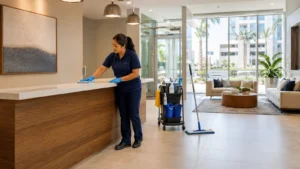
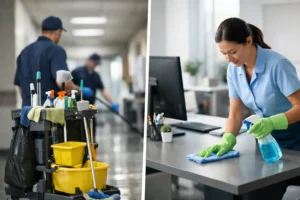
Commercial cleaning is built around the way people move through a property. An office manager may need restrooms refreshed, break room surfaces maintained, floors cared for, and shared touchpoints cleaned according to the agreed plan. A property manager may be focused on common areas, turnover readiness, or keeping a building presentable for tenants and visitors.
The work often needs to happen before opening, after closing, or at another time that causes minimal interruption. That means access instructions, parking, alarm procedures, building rules, and areas of priority should be confirmed in advance.
Consistency matters more than a one-time reset
A commercial space can look clean on Monday and feel neglected by Thursday if traffic is high. Regular service helps prevent that cycle. The best frequency depends on employee count, visitor volume, restroom use, food and drink in the space, flooring type, and how polished the property needs to look each day.
Carpet is a good example. Vacuuming helps manage everyday debris, but it does not solve every traffic lane, spot, or buildup issue. Commercial carpet cleaning may be appropriate when carpets need more focused attention, especially in entrances, hallways, and other high-use areas. Timing matters because cleaned carpet needs appropriate drying time and the work should be scheduled around business activity.
A defined scope prevents missed expectations
Commercial cleaning can involve multiple rooms, access limitations, and different expectations from different stakeholders. Rather than assuming every task is included, confirm the scope before the appointment. Identify which areas need service, how often they should be cleaned, and whether there are special concerns such as conference rooms, employee kitchens, client-facing areas, or shared restrooms.
This is also useful for short-term rental turnovers and managed properties. A turnover cleaning may prioritize a guest-ready kitchen and bathroom, fresh linens if included in the scope, visible dust, floors, and a final visual check. It is not the same as a standard office clean or a routine house cleaning, even if the square footage is similar.
How to Choose the Right Cleaning Service
Start with the purpose of the appointment. If you want your household routine to feel lighter, a residential cleaning plan is likely the better fit. If you need a workplace or managed space maintained around regular traffic and operating hours, commercial cleaning is the clearer choice.
Then consider the condition of the space. Routine maintenance, a detailed reset, a move, a rental turnover, and carpet care are different needs. Being specific about the outcome you want is more helpful than simply asking for a “deep clean.” For example, a seller preparing for photos may care most about kitchens, bathrooms, floors, and visible surfaces, while an office manager may need restroom and break room service prioritized.
Finally, think about timing and access. If cleaning must happen after hours, between tenants, or before guests arrive, say so when requesting a quote. A cleaning company can provide a more useful plan when the schedule, access details, and priorities are clear from the start.
What You Can Handle Yourself and When to Ask for Help
Everyday maintenance is often manageable with a simple routine: wipe spills promptly, empty trash before it overflows, vacuum high-traffic areas, and clean kitchen and bathroom surfaces regularly. Always follow manufacturer guidance for stone, wood, specialty flooring, and appliance finishes. Avoid experimenting with chemical combinations, and never mix bleach with vinegar, ammonia, or other cleaners.
Professional cleaning is worth considering when the work is taking time away from your household, when a space needs to be ready for an important transition, or when multiple areas need focused attention at once. It can also help when you need a dependable recurring plan rather than a last-minute scramble before visitors, tenants, or employees arrive.
At SRS Cleaning Services, we believe a cleaner space should make the rest of your week feel easier. If you are comparing residential and commercial cleaning for a home, office, rental, or managed property in Orange County, request a quote with the details that matter most to you. A clear scope before the appointment is the best starting point for a space that feels cared for and ready for what comes next.