A cleaning plan should not depend on whoever notices the full trash can first. For office managers, the answer to how to streamline office cleaning is to make routine work visible, assign ownership clearly, and separate quick daily resets from the cleaning that needs more time and skill.
A well-run system helps your team walk into a workspace that feels cared for without turning employees into part-time cleaners. It also makes it easier to spot when professional office cleaning is the better fit for your schedule, space, and standards.
Build cleaning zones around how your office is used
Cleaning gets missed when an office is treated as one large, vague task. Divide the space into practical zones instead: entry and reception, workstations, conference rooms, break areas, restrooms, and storage or copy rooms. Each zone has different traffic, surfaces, and cleaning needs.
Your reception area may need a fast appearance check every morning because it is the first thing visitors see. The break room may need attention after lunch. Restrooms need a more consistent schedule than a low-traffic storage area. Once the zones are clear, you can set realistic expectations instead of asking someone to “clean the office” without direction.
Walk through the office at the times it is busiest and at the end of the workday. Look for recurring trouble spots: fingerprints on glass doors, crumbs near shared tables, overflowing recycling, coffee drips, or tracked-in dirt near the entrance. These patterns tell you where a small routine will make the biggest difference.
How to streamline office cleaning with a layered schedule
The most efficient office cleaning plan has layers. Daily tasks protect comfort and appearance. Weekly tasks prevent buildup. Periodic tasks handle the details that do not need constant attention but still affect the condition of the workplace.
Keep daily resets short and specific
Daily cleaning should be easy to complete and focused on shared spaces. Emptying trash, replacing liners when needed, wiping break room counters, clearing obvious spills, checking restroom supplies, and straightening common areas can often prevent larger problems later.
Avoid giving employees a long checklist that is unlikely to be completed during a busy day. A short reset at closing, or after the lunch rush in a larger office, is more likely to become a dependable habit. If no one has capacity for even these basics, that is useful information. The task may need to move outside your internal team rather than becoming another unfinished responsibility.
Use weekly cleaning for surfaces people touch and notice
Weekly work is the right time for more complete restroom cleaning, vacuuming or mopping, dusting common surfaces, wiping conference tables, cleaning glass, and addressing kitchen appliances according to their manufacturer instructions. Review the schedule based on traffic. A client-facing office or a busy shared workspace may need floors and restrooms serviced more often than a small office with limited foot traffic.
Keep the list tied to the actual space. For example, a conference room used for client meetings may need chair arms, whiteboards, and presentation surfaces checked weekly. A design studio may need more frequent attention around samples, paper scraps, and shared work tables.
Plan periodic detail work before it becomes urgent
Some tasks are easy to postpone until they become obvious: baseboards, interior glass, vents and ledges that can be safely dusted, buildup around break room fixtures, and carpet spots in traffic lanes. Put these on a monthly or quarterly review rather than waiting for a complaint.
Carpet care deserves its own plan. Promptly blot fresh spills with a clean cloth and follow the carpet manufacturer’s care guidance. Do not saturate the area or use a cleaner that could discolor the fibers. When traffic lanes look dull or spots keep returning, professional commercial carpet cleaning may be more effective than repeated spot treatment.
Assign ownership without making cleaning everyone’s full-time job
A streamlined plan has one point person, even if several people help with daily resets. This person does not need to perform every task. Their job is to keep the schedule current, notice supply gaps, communicate special needs, and confirm that recurring work is being handled.
For internal tasks, assign responsibilities by role or area rather than relying on a general reminder. The person who closes the break room can check counters and trash. The office coordinator can review restroom supplies once or twice a week. Team members can clear their own desks at the end of the day so shared cleaning can happen efficiently.
Keep personal workstations separate from shared cleaning expectations. Employees should secure paperwork, put away food, and protect valuables or sensitive materials. That makes surface cleaning easier while respecting privacy and reducing the risk of important items being moved accidentally.
A simple checklist posted in a supply closet or maintained in your normal operations system can help. It should show what was done, when it was completed, and any issue that needs follow-up. The goal is not paperwork for its own sake. It is a quick way to prevent missed tasks and repeated questions.
Simplify supplies and protect the surfaces you have
Too many partly used products create confusion, clutter, and unsafe choices. Keep a small, labeled set of approved supplies for the materials in your office, along with clean cloths, liners, hand soap, paper products, and basic tools. Store everything where the people responsible for daily resets can reach it without searching.
Read every product label and follow the manufacturer’s directions for dwell time, dilution, ventilation, and surface compatibility. Never mix cleaning products. In particular, bleach should never be mixed with vinegar, ammonia, or other cleaners.
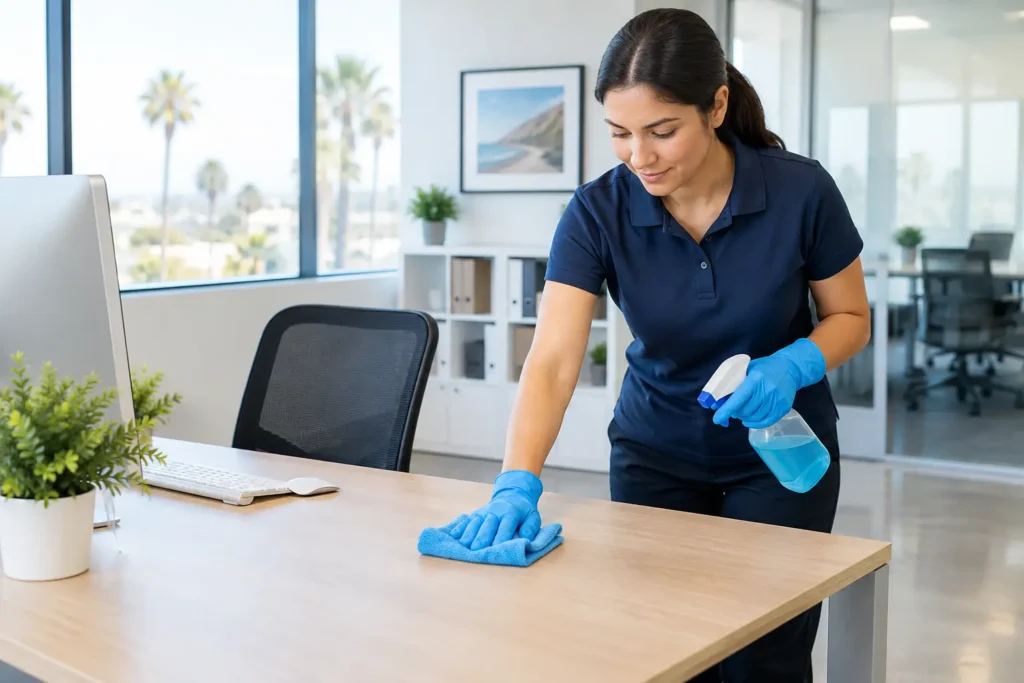
Screens, keyboards, and electronics need special care. Turn off equipment when appropriate, use a lightly dampened microfiber cloth rather than spraying directly onto devices, and follow the manufacturer’s instructions. For natural stone, unfinished wood, specialty flooring, or delicate finishes, use only products approved for that material. A strong cleaner can create more work if it leaves haze, removes a finish, or damages a surface.
Make after-hours cleaning easier to manage
If cleaning happens after your team leaves, clear communication matters as much as the checklist. Establish which rooms are included, which areas are off-limits, where supplies or building access information are kept, and who should receive updates about spills, maintenance concerns, or changes in the office schedule.
Before a recurring service begins, confirm the scope based on your real priorities. Some offices need the break room and restrooms emphasized. Others need a polished reception area and conference rooms before morning appointments. A clear scope helps you avoid paying attention to low-priority tasks while high-traffic areas need more care.
It also helps to prepare the space. Ask employees to remove food from desks, clear conference tables after meetings, and flag any spills promptly. Cleaning teams can work more efficiently when surfaces are accessible and expectations are straightforward.
Know when professional office cleaning makes sense
An internal system works well for light daily resets, but it has limits. Professional support may be appropriate when shared spaces are not staying clean, your office manager is spending too much time coordinating tasks, restrooms need consistent attention, or your team needs after-hours cleaning that does not interrupt work.
It can also be a practical choice before a client event, after a particularly busy period, or when carpet traffic lanes need more than routine vacuuming. The right approach depends on your office size, foot traffic, layout, and whether the space is customer-facing.
At SRS Cleaning Services, we help Orange County offices clarify the cleaning scope before the appointment so the work reflects how the space is actually used. If your current routine has too many gaps or too much last-minute scrambling, request a quote and outline the areas that matter most to your team. A cleaner office can make the workweek feel lighter for everyone who walks through the door.
Want your office cleaned for you?
Tell us about your office and when it’s empty. We’ll send an upfront quote and clean around your working hours.
No contractsFlexible SchedulingTrusted by homeowners, hosts, and property managers