
If you manage an office, you may be asking: are cleaning contracts required before a cleaning company can begin? Usually, no. A written contract is not automatically required for routine office cleaning, but a clear written agreement can prevent missed expectations, surprise charges, and confusion about access, supplies, or scheduling.
For many Orange County offices, the better question is not whether you need a long-term contract. It is whether the cleaning scope is clear enough for everyone to know what will happen, when it will happen, and who to contact if the needs of the space change.
When a Cleaning Agreement Makes Sense
A simple written agreement is especially helpful when your office needs ongoing service. If cleaners visit every week, multiple times per week, or after business hours, details can be forgotten quickly when they only live in an email or verbal conversation.
An agreement gives your team and your cleaning provider one shared reference point. It can describe the areas being cleaned, the expected visit frequency, the tasks included, the building access process, and the way to communicate changes. That level of clarity matters more than the length or formality of the document.
For example, an office may need restrooms, break rooms, floors, trash, and common touchpoints handled during each visit, while conference rooms and interior glass need less frequent attention. Without a defined scope, one side may assume a task is included while the other sees it as an occasional or extra service.
A written scope is also useful if several people manage the workplace. An office manager, facilities contact, building manager, and business owner may all have different priorities. Putting expectations in writing keeps the service consistent when responsibilities shift.
When You May Not Need a Formal Contract
A formal ongoing contract may not be necessary for a one-time service. You might be preparing for a client event, reopening after a renovation project, or catching up on an office that has fallen behind during a busy season. In those cases, a confirmed quote and a written description of the work may be enough.
The same can be true for periodic carpet cleaning. A facility may schedule commercial carpet cleaning once or twice a year, or only when traffic lanes and spots start to affect the appearance of the office. The key is to confirm the areas involved, any furniture-moving expectations, access timing, and how long the carpet may need to dry before normal use.
Even without a long-term agreement, do not rely on a vague request such as “clean the office.” A quick written confirmation protects your time and helps the cleaning team arrive prepared for the actual condition and priorities of the space.
What to Confirm Before Office Cleaning Begins
Whether you choose recurring service or a one-time clean, the scope should be specific. A useful agreement or quote should address the practical questions that affect the visit.
Start with the space itself. Confirm the approximate office size, the number of restrooms, break room or kitchen areas, private offices, conference rooms, entrances, and any high-traffic zones. Let the cleaning company know whether there are stairs, shared building areas, restricted rooms, or parking and loading considerations.
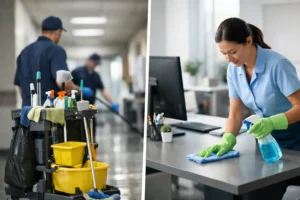
Next, define the tasks. Typical office cleaning may include emptying trash, wiping work surfaces that are accessible and clear, cleaning restrooms, cleaning break room surfaces, vacuuming, mopping hard floors, and addressing visible dust in common areas. Specific needs such as interior windows, detailed baseboards, inside appliances, or carpet spot treatment should be discussed rather than assumed.
Access deserves equal attention. If cleaning happens after hours, decide who provides entry instructions, where keys or access cards are handled, which spaces are off-limits, and how the office should be secured at the end of the visit. Your building may have its own procedures, so share those early.
Finally, establish communication. Name the person who can approve changes, report an issue, or request attention to a particular area before the next visit. Clear communication is often what makes recurring cleaning feel easy instead of becoming another item on an office manager’s list.
Cleaning Contracts Required? Focus on Scope First
When people search for “cleaning contracts required,” they are often trying to avoid being locked into something that does not fit their workplace. That is a reasonable concern. A cleaning arrangement should match your needs, not force your office into a schedule or service level that no longer makes sense.
Before agreeing to recurring service, consider how your office is actually used. A small office with a mostly remote staff may need less frequent visits than a busy workplace with daily guests, shared food areas, and full restrooms. A professional office may prioritize polished entryways and conference rooms, while a creative studio may need more attention to floors and shared worktables.
It also helps to distinguish between routine upkeep and occasional detailed work. Regular cleaning keeps daily mess from accumulating. A deeper service can address neglected corners, buildup in break room areas, detailed floor care, or a reset after a particularly busy period. Both can be valuable, but they solve different problems.
Avoid Assumptions About Supplies and Surfaces
Before service begins, tell the cleaning provider about materials that need special care. Natural stone, unfinished wood, specialty flooring, delicate finishes, and manufacturer-specified surfaces may require particular products or methods. If you do not know what a countertop or floor is made of, check with your building manager or manufacturer information before requesting a treatment.
Do not assume every spill or stain can be removed during a standard visit. Carpet spots may have set, and some stains can worsen if treated with the wrong product. Point out concerns in advance so the appropriate service can be discussed. Follow product labels and manufacturer guidance, and never mix cleaning chemicals.
Your own team can help between visits by clearing desks when possible, labeling areas that should not be touched, and reporting spills promptly. That does not replace professional cleaning, but it allows the cleaning visit to focus on the areas that keep the office comfortable and presentable.
Questions Worth Asking Before You Commit
You do not need to be an expert in cleaning services to make a confident decision. Ask how the scope will be documented, how you should communicate a change in office needs, and what information the team needs before the first visit. If you are considering recurring service, ask how the schedule is confirmed and how special requests are handled.
It is also reasonable to ask what is not included. This is not a negative question. It is one of the clearest ways to avoid frustration later. A provider that can explain the scope plainly is easier to work with than one that relies on broad promises.
At SRS Cleaning Services, we focus on confirming the scope before the appointment so you know what the service is intended to cover. For an office that needs recurring upkeep, a one-time reset, or commercial carpet cleaning, the right starting point is a clear conversation about the space and your priorities.
A cleaning contract is not always required, but clear expectations are. If your office cleaning needs have changed or you are comparing options for the first time, request a quote and share the areas you want addressed. A well-defined plan can give your workplace a cleaner feel and give you one less operational detail to manage.