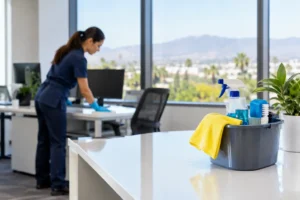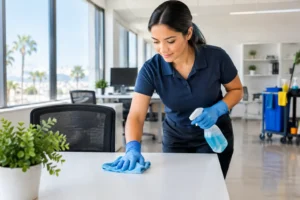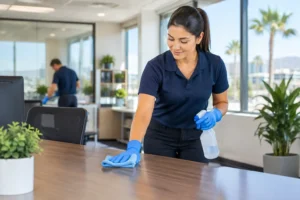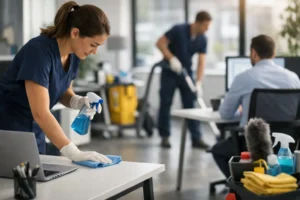
The coffee ring on the conference table, crumbs around the break room microwave, and fingerprints on the front door tend to build up quietly. These Anaheim office cleaning tips can help you create a practical routine that keeps your workplace presentable without expecting employees to spend their workday cleaning.
A clean office supports a better experience for employees, visitors, and clients. The goal is not perfection. It is a workspace that feels cared for, functions well, and does not create extra stress for the person responsible for keeping everything on track.
Start With the Areas Everyone Notices
Not every surface needs the same attention every day. Shared, high-visibility areas deserve the most consistent care because they shape how the office feels within minutes of someone walking in.
Begin with the entry, reception area, restrooms, break room, conference rooms, and main walkways. These spaces collect the most traffic, spills, and touch marks. A quick daily reset is usually more effective than waiting until the mess becomes a larger project.
In a reception area, straighten seating, empty visibly full trash cans, wipe down counters, and remove old flyers or deliveries. In conference rooms, clear cups and food wrappers after meetings, wipe tables as needed, and check the floor before the next group arrives. Small resets prevent a busy day from becoming a cleaning emergency.
Keep desks personal, but set shared expectations
Individual desks can be sensitive territory. Employees may prefer to organize their own papers, equipment, and personal items. Rather than cleaning around confidential documents or moving belongings without permission, set clear expectations about what each person handles.
Employees can remove food, cups, and personal trash at the end of the day. They can also keep desk surfaces reasonably clear before scheduled cleaning. This gives a cleaning team access to the areas that need attention while respecting privacy and reducing the chance that important items are misplaced.
Build a Cleaning Rhythm Your Office Can Maintain
The best office cleaning schedule depends on your team size, visitor traffic, floor type, food service, and how often people work on-site. A small office with a quiet break room may need a different routine than a busy workplace with daily client meetings.
Daily tasks should focus on appearance and basic upkeep. Wipe break room counters, clean up spills, restock supplies your office provides, remove trash, and check restrooms. These short tasks help the space stay comfortable between more detailed cleanings.
Weekly work can go deeper. This may include vacuuming carpets, mopping hard floors, wiping shared tables and door handles, cleaning restroom fixtures, dusting open surfaces, and addressing break room appliances. If your office has a kitchen, do not overlook the refrigerator. Assign someone to remove old food on a regular schedule so spills and odors do not linger.
Monthly or periodic tasks often include cleaning baseboards, dusting vents that are safely accessible, wiping cabinet fronts, treating carpet spots, and cleaning interior glass. The exact timing depends on use. A hallway near the entrance may need more frequent floor care than a closed storage room.
Use the Right Product for the Surface
Fast cleaning can create avoidable damage when the wrong product is used. Before using a cleaner, check the product label and follow the manufacturer instructions for the surface.
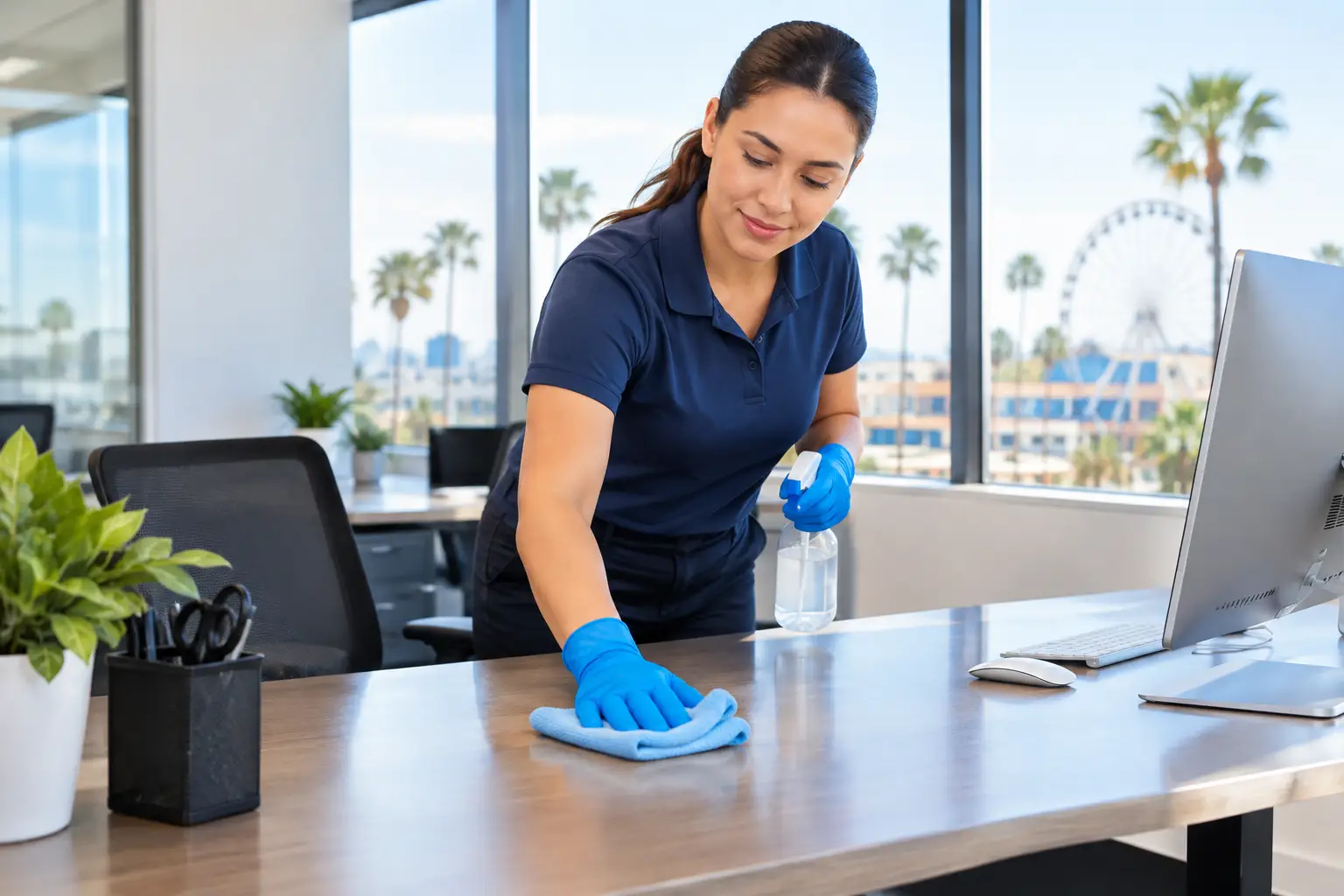
Glass and monitors are not interchangeable. Use a product intended for screens and apply it to a cloth rather than spraying directly onto electronics. For wood or laminate desks, avoid soaking the surface. A lightly damp microfiber cloth is often the safer choice for routine dust and marks, but the desk manufacturer’s care guidance should come first.
Stone counters, specialty flooring, and upholstered furniture need extra care. Acidic cleaners can damage some stone finishes, while overly wet cleaning can leave water marks or affect certain flooring materials. When you are unsure, test an inconspicuous area or ask the manufacturer for recommended cleaning methods.
Never combine cleaning products. In particular, bleach should not be mixed with vinegar, ammonia, or other cleaners. Store products in their original containers, keep labels readable, and make sure staff know which products are intended for which areas.
Give the Break Room a Clear Standard
The break room is often the hardest room to maintain because many people use it throughout the day. It also becomes a source of frustration when no one knows who is responsible for what.
Set a simple standard: clean up food spills right away, rinse dishes before leaving them, label personal food, and remove expired items on the designated day. Provide easy access to paper towels, trash liners, and an appropriate surface cleaner so people do not have to search for supplies when a spill happens.
Pay attention to the microwave handle, refrigerator handle, coffee station, sink, and cabinet pulls. These are small touchpoints that can make an otherwise clean break room feel neglected. For the microwave interior, use a method recommended by its manufacturer and avoid harsh scrubbing that could damage its finish.
If food preparation is frequent, regular professional office cleaning can take pressure off the office manager while giving shared areas more consistent attention. The right scope should reflect how the break room is actually used, not a generic checklist that misses the trouble spots.
Protect Floors Before They Look Worn
Office floors carry in dust, moisture, grit, and parking-lot debris. In Orange County, dry outdoor debris can be especially noticeable near entrances and along hard-floor edges. Left in place, grit can dull finishes and work deeper into carpet fibers.
Place mats at exterior entrances and keep them clean enough to do their job. Vacuum carpeted traffic lanes regularly rather than waiting until dirt is obvious. For hard floors, sweep or dust mop first so loose debris is not dragged across the surface during mopping.
Treat spills promptly, especially on carpet. Blot with a clean cloth instead of rubbing, which can spread the spill and push it farther into the fibers. Avoid using a strong spot treatment without confirming that it is appropriate for the carpet and stain. Some spots need a more careful approach, particularly on commercial carpet or older stains that have already been treated multiple times.
Make Restroom Checks Part of the Day
A restroom does not need a full cleaning every hour, but it does benefit from quick checks. Look for full trash cans, empty soap dispensers, paper supply issues, wet floors, and visible residue around sinks and fixtures.
Use a written checklist that identifies who checks the restroom and when. This helps prevent the common problem of everyone assuming someone else handled it. It also gives your team a way to spot patterns, such as a restroom that needs more frequent attention during visitor-heavy days.
For deeper cleaning, focus on toilets, sinks, faucets, partitions, floors, mirrors, dispensers, and high-touch handles. Use separate cloths and tools for restroom cleaning so they are not used elsewhere in the office.
Know When It Is Time to Bring in Professional Help
A staff-led routine works well for daily tidying and quick spill response. Professional cleaning is often more appropriate when the office needs dependable after-hours care, regular restroom and break room cleaning, detailed floor maintenance, or a reset after a busy stretch.
It can also help when the person managing the office is spending too much time following up on cleaning tasks. That time adds up, especially when the office is preparing for client visits, onboarding employees, or returning to a fuller in-person schedule.
Before requesting service, make a short list of what matters most. Include the rooms to be cleaned, how often the office needs service, access considerations, floor types, areas that need special attention, and whether cleaning needs to happen outside business hours. A clear scope helps avoid assumptions and makes it easier to get the right level of care.
SRS Cleaning Services can discuss office cleaning needs with Orange County businesses and confirm a scope before the appointment. If your current routine is no longer keeping up, request a quote and start with the areas that would make your week feel lighter.