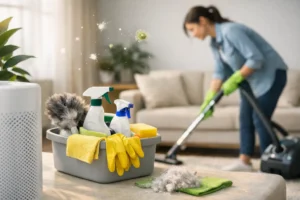

If you are wondering how to get dog smell out of house without simply covering it up, start with the places where odor actually settles. Dog smell can linger even after a room looks clean because odor often sits in soft fabrics, floor edges, pet bedding, entry mats, upholstery, and the places where oils, saliva, dander, and moisture collect. The best approach is not to cover the smell with fragrance. It is to find the source, clean the material holding the odor, improve airflow when conditions allow, and use cleaning products only according to their labels.
This guide explains how to get dog smell out of the house with a practical room-by-room plan. It focuses on source removal, washable items, floors, upholstery, ventilation, and safe product use. When the odor is part of a larger cleaning reset, SRS Cleaning Services can help with House Cleaning, Deep Cleaning, and recurring cleaning routines across Orange County.
Related SRS resources: For cleaning help beyond odor control, compare House Cleaning, Deep Cleaning, Recurring Cleaning, and the house cleaning maintenance schedule.
Why dog smell lingers
Dog odor usually lasts because the source is still present somewhere in the space. Soft materials can hold oils, dander, dried saliva, and moisture. Floors and baseboards can collect dust, hair, and residue along edges. Entry areas can trap outdoor soil, damp paw prints, and odor from frequently used mats. A room may look neat while the odor source remains in textiles or porous surfaces.
Air fresheners, candles, and heavy fragrances may make a room smell different for a short time, but they do not remove the material causing the odor. The EPA describes source control as an important part of improving indoor air quality, and ventilation can help remove or dilute indoor pollutants when outdoor conditions are appropriate (EPA indoor air quality guidance). For dog smell, that means cleaning the source first and using fresh air as support, not as the whole solution.
Find the source before you clean
Start with the areas that carry the most contact: dog beds, blankets, sofa throws, rugs, favorite resting spots, entry mats, baseboards near feeding areas, and carpet or upholstery where accidents may have happened. Work from soft surfaces to hard surfaces. If one room smells stronger than the others, check the textiles and floor edges there before cleaning the whole house.
A simple source check prevents wasted effort. Remove washable items from the room, open them up so they are not folded around odor, and smell the room again after ten or fifteen minutes. If the room improves quickly, laundry is probably the first priority. If the smell remains strongest near one rug, corner, crate area, or upholstered seat, treat that area separately.
- Check pet bedding, removable covers, blankets, and washable throws.
- Inspect rugs, carpet edges, sofa cushions, and furniture seams.
- Look around baseboards, doors, feeding areas, and entry mats.
- Clean dried spills or accident spots before general deodorizing.
- Use a flashlight along floor edges where hair and dust collect.
Wash fabrics that hold odor
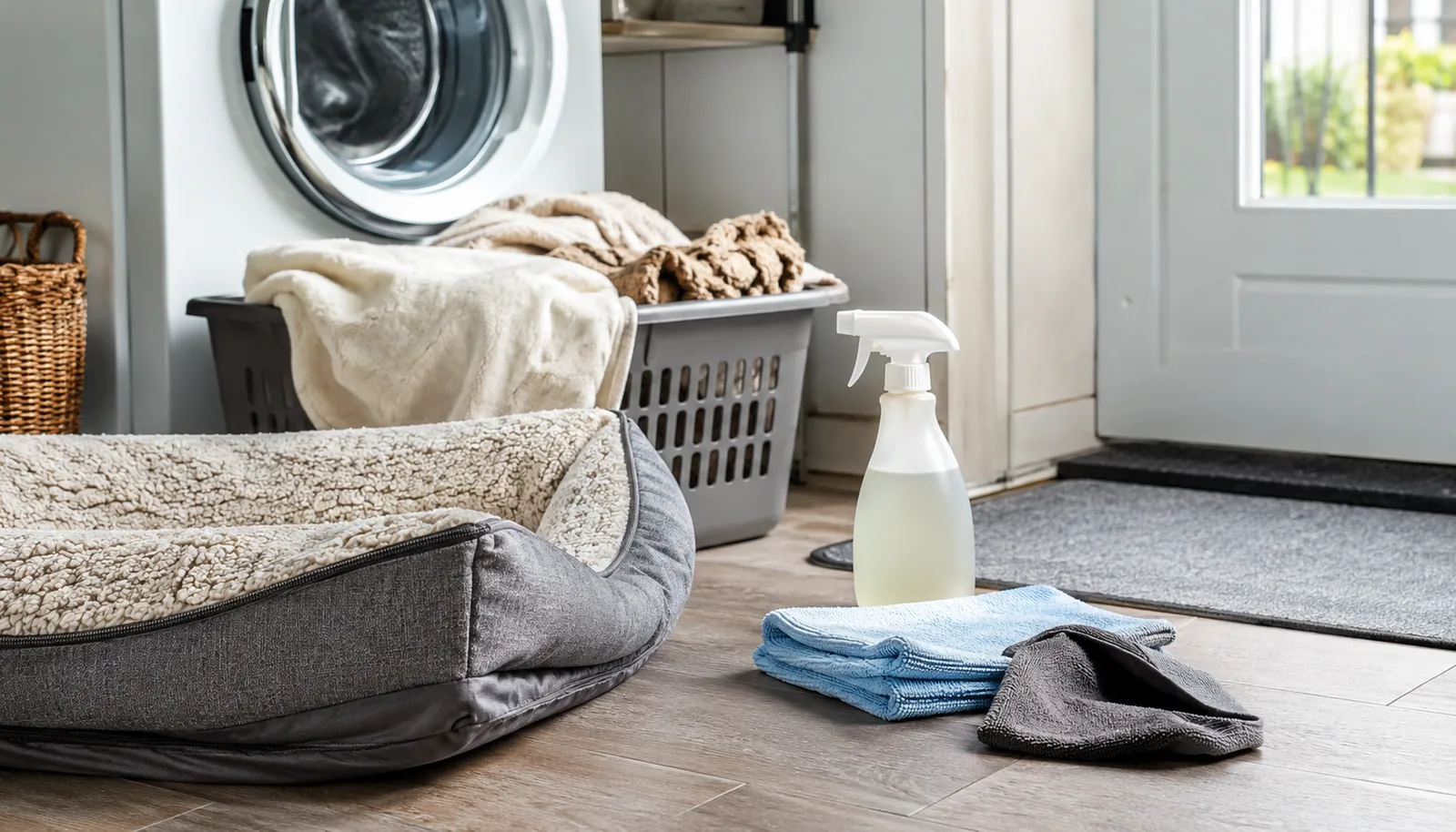
Washable fabrics are often the fastest win. Launder removable bed covers, blankets, washable throws, cushion covers that are safe to wash, and towels used near doors. Follow the fabric-care label, because heat, bleach, or the wrong cycle can damage some materials. For fabrics that cannot be machine washed, vacuum thoroughly and follow the manufacturer’s upholstery-care instructions before applying any cleaner.
Regular grooming also reduces what settles into the home. The American Kennel Club notes that brushing removes dirt, debris, loose hair, and dandruff while helping distribute natural oils through the coat (AKC dog grooming guidance). This does not replace cleaning, but it can reduce the amount of hair and dander that reaches floors, bedding, and furniture.
Clean floors, baseboards, and entry areas
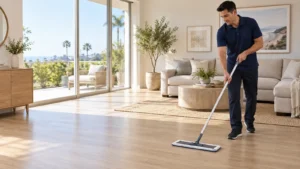
Hard floors are easier to reset than carpet, but they still need detail. Vacuum or sweep first so hair and grit do not turn into a damp film when mopping. Then clean with a product appropriate for the floor type. Avoid soaking laminate, engineered wood, or hardwood. Use a slightly damp mop or cloth, work in small sections, and dry any areas where moisture sits too long.
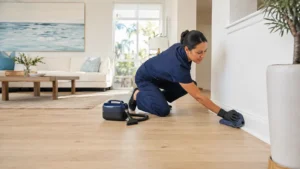
Baseboards matter because hair, dust, and odor residue collect along room edges. Wipe baseboards, corners, lower door frames, and the floor line near feeding areas. Entry mats should be vacuumed, shaken outside when appropriate, and washed or replaced when they hold odor. If outdoor moisture or sand comes in regularly, a washable indoor mat near the door can reduce what spreads across the room.
For a broader maintenance rhythm, the SRS guide to a house cleaning maintenance schedule can help turn these tasks into a repeatable weekly plan.
Treat carpet and upholstery carefully
Carpet and upholstery need more patience because odor can move below the visible surface. For fresh accident spots, blot first instead of scrubbing. Bissell’s pet urine cleaning guidance recommends blotting, testing the cleaner in a hidden spot, and using an enzymatic cleaner according to directions for pet urine odor on carpet (Bissell pet urine carpet guidance). Scrubbing can spread residue deeper into fibers, so slow pressure with clean towels is usually safer than aggressive rubbing.
Product labels matter. OxiClean’s pet stain and odor remover directions say to test a hidden carpet area for colorfastness and note that the product should not be used on wool, leather, or silk (OxiClean product directions). Rocco & Roxie’s stain and odor instructions also call for testing an inconspicuous area before use and giving the product time to sit before drying and vacuuming (Rocco & Roxie instructions). These examples are not endorsements; they show why the label should guide contact time, surface compatibility, and drying.
If a rug, carpet pad, subfloor, or upholstery cushion has absorbed old urine or moisture, surface cleaning may not fully solve the odor. Repeated smell from the same location can mean the source is below the surface. In that case, professional carpet, upholstery, flooring, or restoration guidance may be needed before the room will smell clean again.
Use airflow without hiding the problem
Fresh air helps after odor sources are cleaned. The EPA explains that opening windows and doors, using fans that exhaust outdoors, and increasing outdoor ventilation can help remove or dilute indoor airborne pollutants when weather and outdoor air conditions allow (EPA ventilation guidance). Use ventilation during and after cleaning, especially when cleaning products are in use.
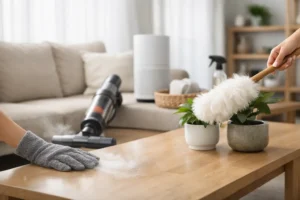
Air cleaners may help with particles such as dust and dander, but they are not a substitute for cleaning the source. EPA guidance notes that the long-term performance of an air cleaner depends on maintaining it according to the manufacturer’s directions (EPA air cleaners and filtration guidance). Replace or clean filters on schedule, and do not expect a small air cleaner to fix odor trapped in bedding, rugs, or carpet padding.
Choose products safely
Use the mildest product that fits the surface and the mess, and always follow the label. CDC guidance for cleaning and disinfecting warns not to mix cleaning or disinfecting products, to use good ventilation indoors, and to keep chemicals out of reach of children and pets (CDC cleaning and disinfecting safety guidance). The same CDC guidance also says not to wipe or bathe pets with disinfection products.
When using products that emit odors or vapors, the EPA advises increasing ventilation, following label precautions, using household products according to manufacturer directions, and never mixing household care products unless directed on the label (EPA VOC and product-use guidance). If a product is meant for carpet, do not assume it belongs on wood, leather, wool, stone, or delicate fabric.
The EPA Safer Choice product search can help identify cleaning products that meet the Safer Choice Standard (EPA Safer Choice product search). That label does not mean a product can be used anywhere or in any amount. It still needs to be used as directed, on compatible surfaces, with proper storage and ventilation.
Build a routine that keeps odor from returning
Once the house smells fresh again, the maintenance plan should be simple enough to repeat. Focus on the places where odor starts: bedding, favorite resting spots, entry areas, floors, baseboards, trash, and washable textiles. A short routine is better than a complicated checklist that gets skipped.
| Area | Helpful routine | Why it helps |
|---|---|---|
| Dog bedding and throws | Wash removable covers and rotate clean extras | Removes odor from the fabric source |
| Floors and baseboards | Vacuum first, then damp-clean with a surface-safe product | Removes hair, dust, and residue along edges |
| Entry mats | Vacuum, shake outside when appropriate, and wash if compatible | Stops outdoor soil and damp odors from spreading |
| Carpet or upholstery spots | Blot, test, apply the correct cleaner, and dry fully | Prevents residue from settling deeper |
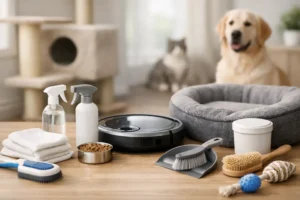
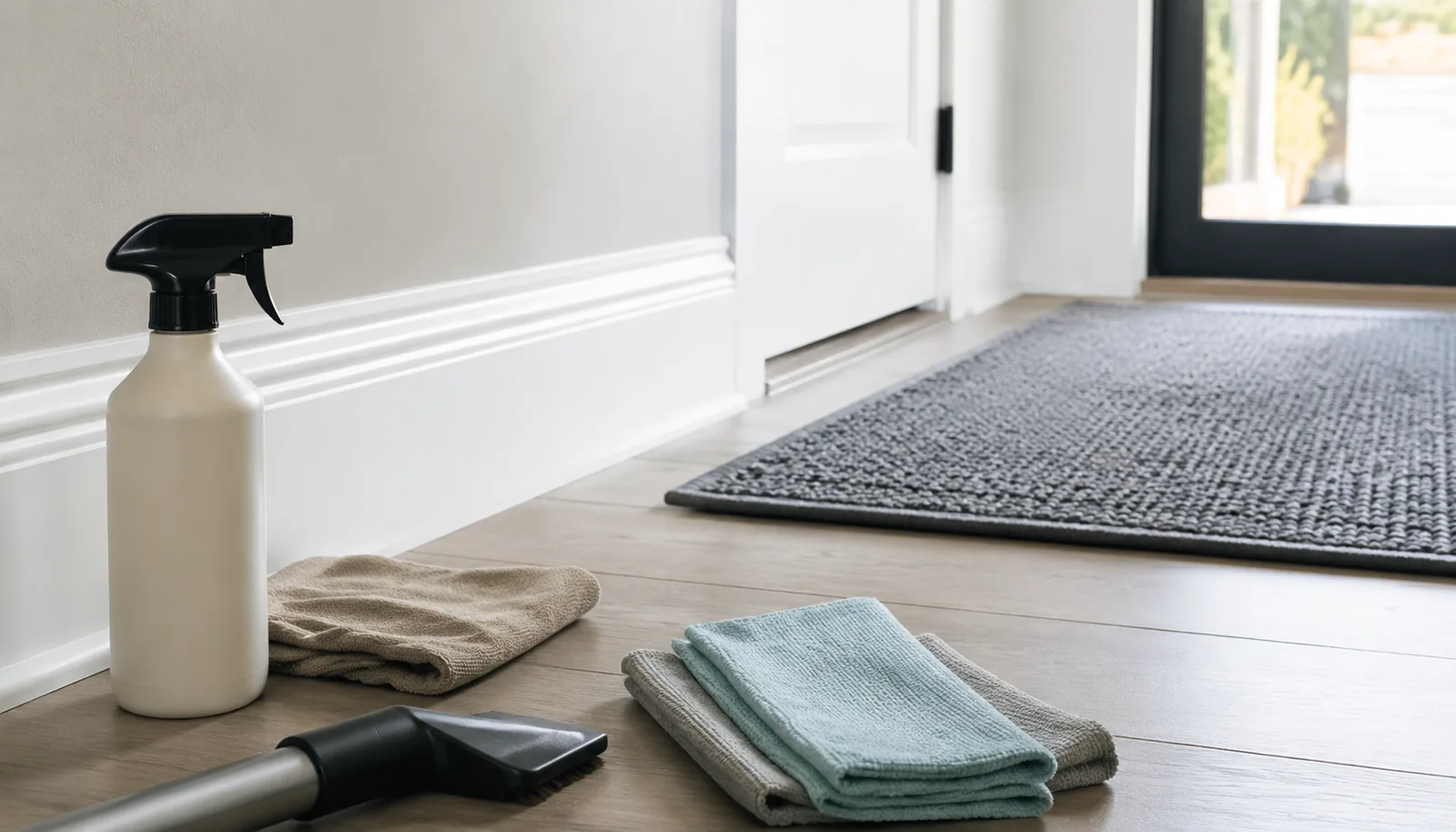
For a practical supply setup, the SRS article on cleaning supplies for pet-friendly spaces explains which everyday tools are useful for fur, floors, washable textiles, and quick resets.
When a deeper cleaning reset helps
A deeper cleaning reset helps when odor is spread across several rooms, when soft surfaces and floor edges have not been detailed in a while, or when regular upkeep is taking more time than expected. The most useful reset usually includes vacuuming edges, cleaning baseboards, wiping lower doors and trim, washing compatible textiles, cleaning entry areas, and giving floors a surface-appropriate clean.
SRS Cleaning Services can help reset the home and then keep the routine easier with Deep Cleaning or Recurring Cleaning. If the odor is tied to carpet padding, subfloor damage, mold, biohazards, or a strong animal-waste issue beyond ordinary cleaning, the safer next step is a qualified specialist for that material or hazard before routine cleaning continues.
Dog smell cleaning FAQ
What removes dog smell from a house fastest?
Remove the main odor sources first: washable bedding, blankets, entry mats, rugs, floor edges, and any accident spots. Then clean surfaces, dry them fully, and ventilate when outdoor conditions are appropriate. Fragrance alone may make the room smell different, but it will not remove the source.
Should disinfectant be used for dog smell?
Usually, dog smell is a cleaning and odor-source problem, not a reason to disinfect every surface. If disinfecting is needed for a specific situation, clean the surface first and follow the product label for contact time, ventilation, and compatible surfaces. Do not use disinfectants on pets.
Do enzyme cleaners work on dog urine smell?
Enzymatic cleaners are commonly used for pet urine odor on compatible carpet and upholstery, but the product directions control how they should be applied, how long they should sit, and which surfaces to avoid. Always test a hidden area first.
Why does the smell come back after cleaning?
The source may still be below the surface, especially in carpet padding, upholstery foam, rug backing, or floor edges. It can also return if items are cleaned but not dried fully. Track the strongest odor point before repeating the same general cleaning routine.
Dog smell is easier to solve when the plan starts with source removal instead of cover-up. Wash what can be washed, clean floors and baseboards carefully, treat carpet and upholstery according to the label, use airflow as support, and keep the routine simple. For help with a deeper reset or recurring cleaning in Orange County, start with the SRS cleaning quote page.