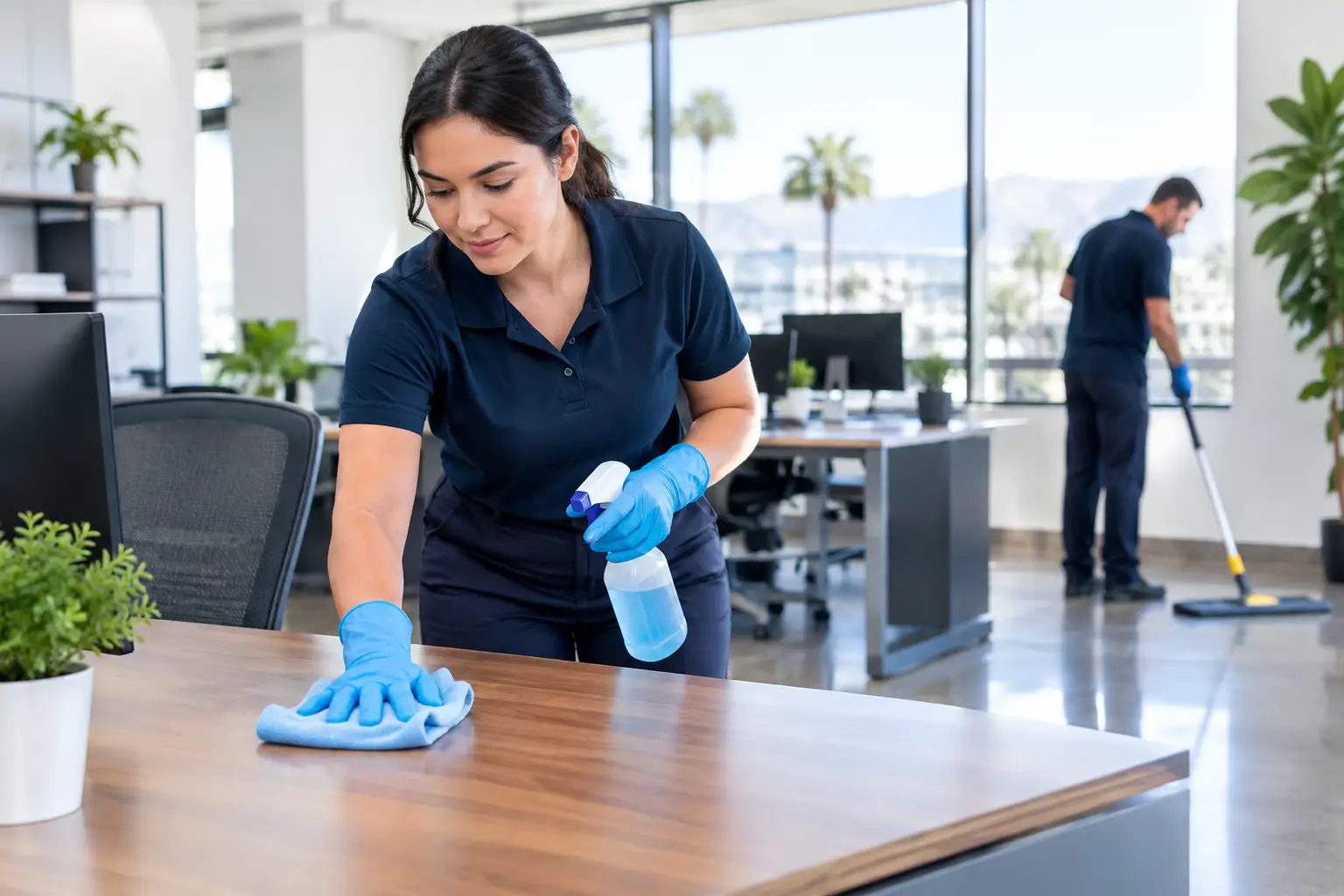
Office cleaning outcomes are not measured only by whether a lobby looks tidy at 8 a.m. The result your team notices is a workplace that feels ready to use: restrooms are cared for, shared kitchen surfaces are clean, trash is handled, floors look presentable, and the small details do not become another task for employees or office managers.
For most offices, the best results come from matching the cleaning plan to how the space is actually used. A quiet professional suite has different needs than a busy office with frequent client visits, shared desks, breakroom lunches, and high daily foot traffic. Clear priorities make cleaning more consistent, practical, and easier to manage.
What Good Office Cleaning Outcomes Look Like
A well-maintained office supports the work happening inside it without drawing attention to itself. Team members should be able to make coffee, use a restroom, meet with a visitor, or settle in at their desk without encountering overflowing trash, sticky counters, smudged glass, or a floor that looks neglected.
That does not mean every surface needs intense cleaning every night. It means the areas that receive the most use get the right level of attention at the right frequency. A reception area may need frequent touch-ups because it shapes a visitor’s first impression. A back storage room may only need periodic cleaning and safe, unobstructed access.
The most useful outcomes are visible and operational. Cleaner shared spaces reduce distractions. Organized cleaning routines prevent minor spills, dust buildup, and restroom issues from becoming larger frustrations. For office managers, a dependable plan also means fewer last-minute messages about supplies, odors, or an area that was missed.
Start With the Spaces People Use Most
Before setting a schedule, walk through the office as an employee and as a visitor. Notice where people enter, wait, eat, meet, print, and take breaks. Those patterns should guide the scope more than square footage alone.
Entryways, reception, and meeting rooms
These spaces set the tone for clients, applicants, delivery drivers, and visiting partners. Floors, glass doors, reception counters, chairs, and visible ledges can collect dust and fingerprints quickly. If your office hosts regular meetings, check conference tables after use and make sure wastebaskets are emptied on a schedule that fits the room’s traffic.
Small details matter here. Straightening furniture, removing obvious debris, and keeping glass free of noticeable marks can make a space feel cared for without turning the office into a showpiece.
Breakrooms and kitchens
Breakrooms are often the hardest shared space to keep clean because several people use them throughout the day. Crumbs collect near appliances, spills dry on counters, and refrigerator handles, microwave doors, and sink areas can show heavy use.
Employees can help by wiping up their own spills and removing old food, but the recurring cleaning plan should cover the routine reset. That usually includes cleaning counters, sinks, exterior appliance surfaces, tables, cabinet fronts as needed, and floors. The specific scope should be confirmed before service, especially if your office has a larger kitchen, catered events, or special appliances.
Avoid asking staff to use a cleaner on natural stone, specialty flooring, or an unfamiliar surface without reviewing the manufacturer instructions. The wrong product can leave dull spots, streaking, or damage that is harder to correct than everyday soil.
Restrooms and high-touch areas
Restrooms affect how people feel about the whole office. Freshly cleaned fixtures, mirrors, floors, dispensers, and wastebaskets communicate attention to the basics. Frequency depends on employee count, visitor traffic, and how many restrooms are available. A small office may need a different routine than a client-facing suite with steady daytime visitors.
Door handles, light switches, shared printer controls, and other high-touch points also deserve attention as part of a sensible cleaning routine. Use cleaning products according to their labels, and never combine cleaning chemicals. In particular, bleach should not be mixed with vinegar, ammonia, or other cleaners.
Set a Frequency That Matches Real Use
More frequent service is not automatically the right answer. The right frequency depends on occupancy, traffic patterns, food service, floor type, and the standard your office needs to maintain between visits.
A lightly used office may benefit from scheduled cleaning focused on restrooms, kitchen areas, trash, dusting, and floors. A busier workspace may need more frequent attention to restrooms, breakrooms, entryways, and high-traffic floors. Carpeted offices also need periodic deep attention beyond routine vacuuming, particularly in walkways and areas near entrances where soil can become noticeable.
Consider timing as well. After-hours cleaning can reduce interruptions, while daytime service may make sense for certain shared areas that need attention during the workday. There is no one-size-fits-all answer. A useful plan reflects when your office is occupied and which spaces need to look their best at specific times.
Make the Scope Clear Before Cleaning Begins
Many disappointing office cleaning outcomes come from assumptions, not effort. One person expects interior glass to be cleaned, another assumes it is occasional work. An office manager may expect every desk to be cleared, while the cleaning team needs personal items and paperwork left undisturbed.
A clear scope prevents those gaps. Identify the rooms included, the priorities for each area, any surfaces that need special care, access instructions, waste disposal expectations, and areas that should not be touched. If desks are included, decide whether the expectation is light dusting around items or a more complete reset after employees clear their workspaces.
It also helps to name occasional needs separately. Interior refrigerator cleaning, detailed baseboards, inside cabinets, high dusting, and carpet spot attention may not belong in every regular visit. By separating recurring tasks from periodic deep cleaning, you can keep expectations realistic and make it easier to plan for busier seasons, office events, or a return-to-office shift.
What Your Team Can Handle Between Visits
Professional service works best when employees have a simple way to maintain shared areas without being asked to become the cleaning crew. Keep the expectations modest: wipe up spills promptly, label personal food, clear desks before scheduled service when needed, and report a maintenance issue or persistent odor rather than trying to cover it up.
Office managers can also make cleaning easier by keeping supplies, paper products, and trash access organized. Remove boxes from hallways, avoid storing items in front of vents or electrical areas, and let the cleaning team know when furniture has been rearranged. These steps improve access and reduce the chance that a task is skipped simply because the area could not be reached safely.
For carpets, address fresh spills promptly using the carpet manufacturer’s guidance. Blot rather than aggressively scrub, which can push a spill deeper into fibers or distort the pile. If a spot remains visible, note what caused it if possible. That context can help determine the appropriate next step during commercial carpet cleaning.
When Professional Cleaning Is the Better Fit
Your staff can handle daily tidiness, but recurring professional cleaning is often the better fit when shared spaces are consistently falling behind, client-facing areas need a reliable standard, or managers are spending too much time checking restrooms and breakrooms.
It is also useful before an office move, a special meeting, a seasonal reset, or after a period of heavier-than-usual use. These situations often call for more detailed work than a quick employee cleanup can provide. The goal is not perfection for its own sake. It is a space that is comfortable, presentable, and easier for everyone to use.
At SRS Cleaning Services, we help Orange County office managers build a cleaning scope around their workplace, priorities, and schedule. If you want clearer expectations and less time spent managing the details, request a quote and tell us how your office is used. A cleaner office can make the workweek feel lighter for everyone who walks through the door.