A workplace can look fine at 9 a.m. and feel neglected by 3 p.m. Restrooms need attention, trash builds up, fingerprints appear on glass, and shared break areas quickly become a source of frustration. When comparing janitorial service vs office cleaning, the right choice usually comes down to how often your space needs care, what needs to be handled, and how much day-to-day support your team expects.
The terms are often used interchangeably, but they can describe very different service plans. Understanding the difference helps office managers, business owners, and property managers choose a cleaning schedule that supports a professional, healthy, and comfortable workplace without paying for services they do not need.
Janitorial Service vs Office Cleaning: The Main Difference
Janitorial service usually refers to ongoing, routine maintenance. It is designed to keep a facility clean and usable from one day to the next. Depending on the agreement, a janitorial team may work every weekday, several times a week, or even during business hours in larger facilities.
Office cleaning more often refers to scheduled cleaning visits focused on the office itself. These visits may happen weekly, biweekly, or on another recurring schedule based on occupancy and the condition of the space. The work is still detailed and professional, but it may not include the daily monitoring and replenishment associated with a broader janitorial program.
There is no universal rule for how every company uses these terms. One provider may call a nightly office-cleaning plan janitorial service, while another may use “office cleaning” for the same work. The service checklist, visit frequency, and communication process matter far more than the label.
What Janitorial Service Usually Covers
Janitorial service is built around consistency. Its purpose is to prevent small messes from becoming visible problems and to keep essential areas ready for employees, visitors, and clients.
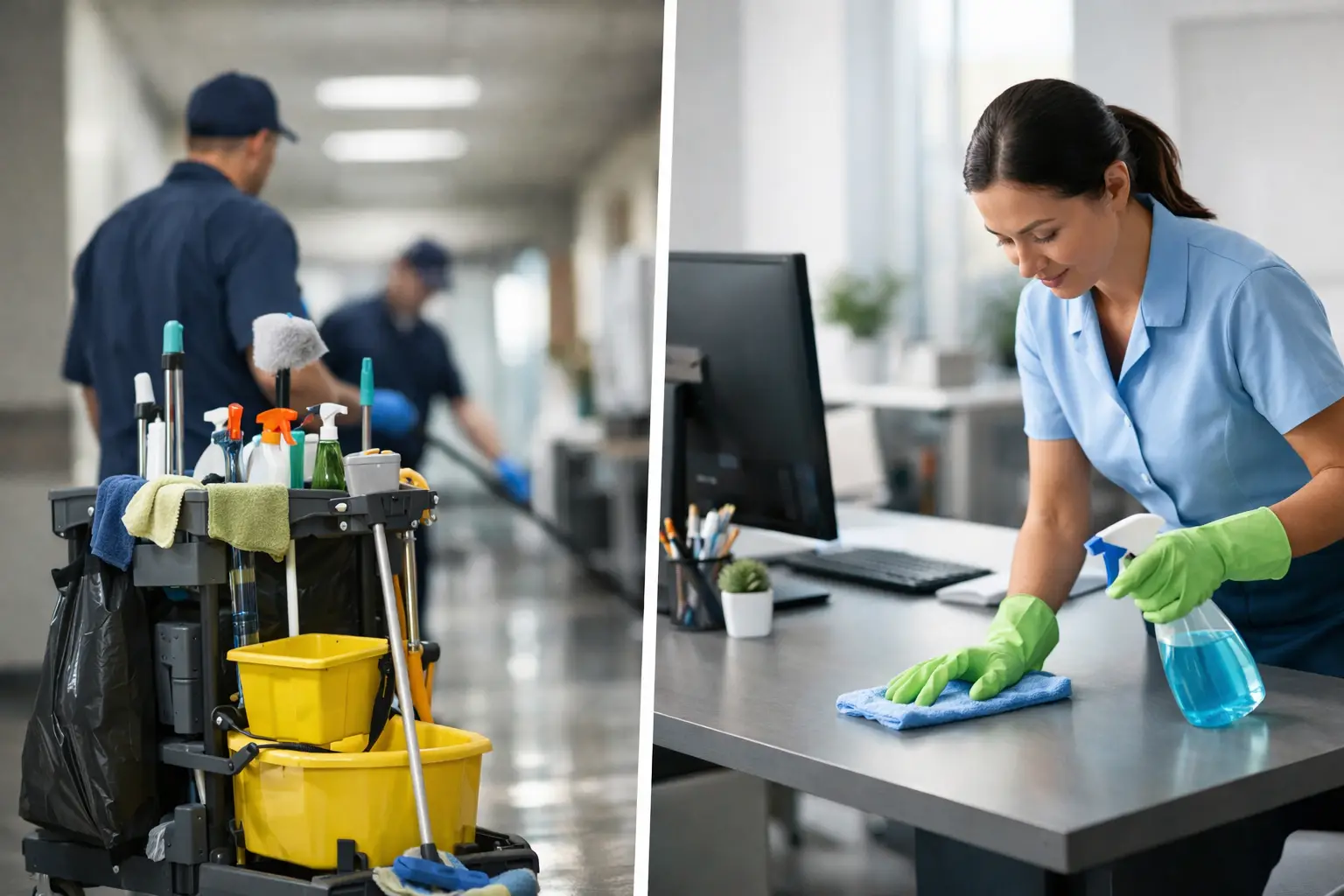
A typical program may include emptying trash and replacing liners, cleaning and restocking restrooms, vacuuming or mopping floors, wiping high-touch surfaces, and maintaining break rooms. In a busy workplace, it may also include spot-cleaning glass doors, responding to spills, collecting recycling, and checking supplies such as paper towels, soap, and toilet paper.
The biggest advantage is reliability at a higher frequency. If your office has a steady flow of employees, patients, customers, or guests, daily or near-daily attention helps the space stay presentable throughout the workweek. It also reduces the burden on employees who might otherwise feel responsible for taking out trash or cleaning common areas.
Janitorial service can be especially practical for larger offices, medical-adjacent administrative spaces, schools, retail locations, multi-tenant buildings, and workplaces with active break rooms and public-facing restrooms. These environments generate enough daily use that a weekly clean may leave too much time between visits.
What Office Cleaning Usually Covers
Office cleaning is often the better fit for smaller or lower-traffic workplaces that need professional care but do not require daily maintenance. A recurring office cleaning visit can address the areas employees and visitors notice most: floors, desks, reception areas, conference rooms, kitchens, and restrooms.
The exact scope should be customized. For example, an office of six people with mostly remote staff may need weekly restroom cleaning, trash removal, vacuuming, and dusting. A larger office that hosts client meetings may want more frequent service for reception, conference rooms, and kitchens, with less frequent detail work in private offices.
Office cleaning can also include periodic deeper tasks, such as wiping baseboards, cleaning interior glass, dusting vents, polishing fixtures, or addressing buildup in kitchen areas. These tasks may be included on a rotating schedule or added when needed.
The benefit is a more focused plan. You receive a polished office without committing to a full daily maintenance program. For many businesses, particularly professional offices in Orange County with predictable traffic, that balance is both practical and cost-conscious.
Frequency Changes the Cost and the Experience
Cleaning frequency has a direct effect on price, but it also changes what your workplace feels like between visits. A lower-frequency plan may cost less per month, yet it may leave overflowing trash, marked-up glass, or untidy restrooms during busy periods. A daily plan provides more consistent upkeep, but it may be unnecessary for a small office that is only occupied a few days each week.
Consider how your space is actually used rather than choosing a schedule based on square footage alone. A compact office with 25 employees, a shared kitchen, and regular visitors may need more service than a much larger space with eight hybrid employees. Restroom use, food preparation, foot traffic, public access, and the number of workdays all affect the right frequency.
A professional cleaning provider should be able to recommend a schedule after discussing your operations. If the scope feels too broad, start with the areas that matter most and adjust after a few visits. A good plan should feel easy to maintain, not like another item for your staff to manage.
How to Choose the Right Service for Your Office
Start with the condition you want employees and visitors to experience on an ordinary Tuesday afternoon, not just after a cleaning visit. If you need restrooms checked, trash removed, and shared spaces refreshed almost every day, janitorial service is likely the stronger option.
If your office stays relatively orderly between visits and mainly needs dependable recurring cleaning, office cleaning may be all you need. This is common for small businesses, administrative offices, real estate teams, and hybrid workplaces where the space is not fully occupied every day.
It also helps to separate routine cleaning from occasional projects. Carpet cleaning, interior window cleaning, post-construction cleanup, and major deep cleans are usually handled as separate services or scheduled additions. Including them in your expectations from the start prevents confusion later.
Before booking, ask for clarity on a few practical details: which rooms are included, how often each task is completed, whether supplies are provided, how access is handled, and who to contact if your needs change. Licensed, insured, background-checked cleaning professionals and clear communication are especially valuable when a team will have regular access to your workplace.
When a Hybrid Plan Makes More Sense
The choice does not have to be strictly janitorial or office cleaning. Many workplaces benefit from a hybrid arrangement. For instance, a company may schedule standard office cleaning twice a week while adding a quick midweek restroom and trash service. Another office may use nightly cleaning during its busiest season, then move to three visits a week when occupancy drops.
This approach works well when only certain areas need frequent attention. A customer-facing lobby and restroom may require daily service, while private offices can be cleaned less often. Tailoring the plan avoids both extremes: paying for unnecessary labor or asking staff to compensate for an insufficient cleaning schedule.
For property managers, a hybrid plan can also make turnovers and common-area maintenance easier to coordinate. Routine service keeps shared areas presentable, while one-time deep cleaning can prepare an office suite, rental, or commercial property for its next occupant.
Signs Your Current Cleaning Plan Is Not Enough
A cleaning plan may need an adjustment when employees regularly mention odors, full trash bins, sticky break-room surfaces, or restroom supplies running out. Client-facing businesses should also watch for subtle signs, such as smudged entry glass, dusty reception furniture, and floors that look worn before the week ends.
These are not always signs that your cleaning team is doing poor work. More often, they indicate a mismatch between the scope of service and the amount of activity in the building. Increasing visit frequency, adding a targeted midweek service, or revising the checklist can make a noticeable difference without requiring a complete change in providers.
The best cleaning arrangement is one your team barely has to think about. Whether that means recurring office cleaning or a more comprehensive janitorial program, the goal is the same: a workplace that feels cared for, supports productivity, and gives employees and visitors confidence from the moment they walk in. With a clear scope and a dependable local provider such as SRS Cleaning, keeping your office clean can become one less thing competing for your attention.