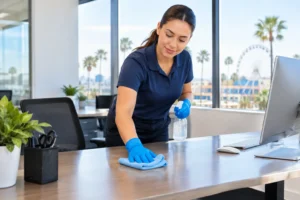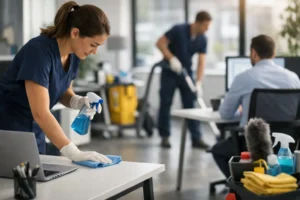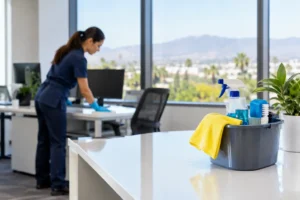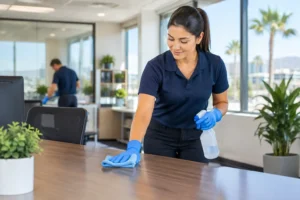
A cleaner office is rarely the result of one big cleaning day. It comes from a few smart changes that reduce tracked-in soil, make daily upkeep easier, and keep high-use areas from looking worn before their time. The best cleaning upgrades for offices are usually practical rather than flashy: better entry protection, easier-to-clean shared spaces, a clear supply plan, and professional care for the surfaces your team cannot maintain alone.
For an office manager, the goal is not to turn the workplace into a cleaning project. It is to create a space that feels orderly for employees, visitors, and clients without adding another long list to your week.
On this page
- Start with the entry and high-traffic paths
- Improve shared kitchens and break rooms
- Make restrooms easier to maintain
- Protect carpet and flooring before stains set in
- Set a realistic cleaning schedule
- Know when professional office cleaning is the better fit
Start With the Entry and High-Traffic Paths
The entry is where much of an office’s cleaning burden begins. Dirt, grit, moisture, leaves, and parking-lot residue can travel from the front door into reception areas, hallways, conference rooms, and carpeted workstations. In Orange County, dry dust can be just as noticeable as wet-weather debris, especially near busy entrances.
A commercial-grade walk-off mat system is one of the most useful upgrades you can make. One mat outside the door and another inside gives shoes more opportunity to release soil before it reaches finished floors. Choose mats that lie flat, stay in place, and are sized for the traffic your office actually gets. A small decorative mat may look tidy, but it will not do much for a busy lobby.
Place waste and recycling bins where people naturally need them, especially near entrances, printers, and break rooms. When bins are inconvenient, cups, shipping materials, and paper tend to collect on counters and desks instead.
High-traffic paths also deserve a simple routine. Vacuum carpeted walkways frequently enough that grit does not get ground into the fibers. For hard flooring, use a cleaner approved for that specific surface and avoid leaving excess water behind. Vinyl, laminate, wood-look flooring, and natural stone can all react differently to moisture and cleaning products. Follow the flooring manufacturer’s care guidance before trying a new product.
Improve Shared Kitchens and Break Rooms
An office kitchen can look messy within an hour of a busy lunch period. The upgrade here is less about adding more products and more about removing friction from everyday cleanup.
Give commonly used areas a clear home for the basics: paper towels, trash liners, a surface cleaner suitable for the counters, and a clean microfiber cloth or disposable wipes intended for that use. Labeling cabinets or creating a small cleaning station can help, provided supplies are stored safely and out of food-preparation areas.
Focus on the surfaces that shape everyone’s impression of the room: refrigerator handles, microwave buttons, sink fixtures, cabinet pulls, tables, and the counter around the coffee maker. These are quick to wipe down, but they are also easy to overlook when no one owns the task.
A few physical upgrades can reduce cleanup as well. Use trays under coffee makers and water dispensers to catch drips. Add a scraper or small brush near the sink for food particles before they enter the drain. Replace cracked or heavily stained break-room chairs when cleaning no longer improves their appearance. These changes make the room easier to reset at the end of the day.
Avoid mixing cleaning products, even if the combination seems common. Bleach should never be combined with ammonia, vinegar, or other cleaners. Use each product only as directed on its label, and confirm it is appropriate for the surface.
Make Restrooms Easier to Maintain
Restrooms need consistent attention, but they do not need complicated routines. A well-stocked restroom is cleaner simply because it is easier for people to use properly. Check dispensers regularly, keep a lined trash can within reach, and make sure hand soap, paper products, and toilet tissue do not run out between scheduled service visits.
Look closely at fixtures and finishes when planning upgrades. Mineral deposits can build up around faucets and toilet bases, while fingerprints and splash marks show easily on dark walls, chrome, and glossy surfaces. A finish that looks attractive in a showroom may require more frequent attention in a high-use office restroom.
For routine cleaning, use products designed for the fixture material and follow dwell-time directions when applicable. Do not use abrasive pads on polished metal, acrylic, or coated surfaces unless the manufacturer specifically permits them. Scratches can make future cleaning harder by giving soil more places to cling.
Protect Carpet and Flooring Before Stains Set In
Carpet is one of the largest visual surfaces in many offices, which is why it can make an otherwise tidy workplace feel neglected when traffic lanes darken or spots linger. A practical upgrade is to treat carpet care as planned maintenance rather than waiting for every area to look soiled.
Vacuuming removes loose debris, but it does not replace periodic professional carpet cleaning. Embedded soil, spills, and oils from shoes can build up over time, especially in hallways, reception areas, and around desks. Address fresh spills promptly by blotting with a clean white cloth rather than scrubbing. Scrubbing can spread the spill and rough up carpet fibers.
Before using a spot cleaner, check the carpet manufacturer’s guidance and test the product in an inconspicuous area. Some fibers, dyes, backing materials, and stain treatments need specific care. If a spot returns after drying, has an odor, or covers a large area, it is often better to have it assessed than to keep adding product.
Hard floors benefit from the same preventive approach. Chair mats can protect flooring beneath rolling chairs, but they should suit the floor type and lie flat to reduce tripping concerns. Felt pads under furniture legs can help prevent scratches when chairs or tables are moved. These are small additions that can preserve the finish and reduce the need for corrective cleaning.
Set a Realistic Cleaning Schedule
The right schedule depends on your headcount, office layout, visitor traffic, food service, pets, and the number of shared restrooms. A small professional office with limited daily traffic may need a different routine than a busy suite with client meetings, a break room, and frequent deliveries.
Start by separating tasks into three levels. Daily attention usually covers trash, restroom touch-ups, kitchen resets, and visible debris. Weekly work may include more detailed dusting, floor care, and cleaning of shared touchpoints. Periodic work can include baseboards, interior glass, detailed upholstery care, and carpet cleaning.
The best schedule is one people can follow. If your staff is expected to handle small resets between cleaning visits, keep those responsibilities reasonable and specific. Asking employees to clear dishes from a conference room is realistic. Expecting them to manage deep restroom cleaning or remove carpet stains may not be.
When Professional Office Cleaning Is the Better Fit
In-house upkeep works well for small daily tasks, but professional service becomes especially helpful when the office needs dependable after-hours cleaning, consistent restroom and break-room care, detailed floor work, or commercial carpet cleaning. It can also help when office managers are spending too much time filling supply gaps and checking whether basic cleaning was completed.
Before requesting service, make a short list of the areas that matter most: entrances, workstations, conference rooms, kitchens, restrooms, carpeted traffic lanes, or interior glass. Note building access requirements, preferred timing, and any surfaces that need special care. A clear scope helps avoid assumptions and makes it easier to plan the right level of service.
At SRS Cleaning Services, we can discuss your office’s priorities and confirm the scope before the appointment. If your Orange County workspace needs more consistent upkeep or a professional reset for carpets and shared areas, request a quote and start with the spaces that would make the biggest difference to your week.