A dusty shelf is not just a cosmetic problem. Every time someone walks across a rug, settles onto the sofa, or opens a window on a breezy Orange County day, small particles can move back into the air. That leads many homeowners and office managers to ask: can cleaning improve indoor air? In many cases, yes. Regular, thorough cleaning can reduce the dust, allergens, and debris that collect on surfaces and floors. But it works best as one part of a larger plan for a healthier indoor environment.
Cleaning is not a substitute for addressing mold, repairing leaks, changing HVAC filters, or improving ventilation. It is, however, one of the most practical ways to reduce the everyday buildup that makes a home or workplace feel stuffy, dusty, and harder to maintain.
Can Cleaning Improve Indoor Air Quality?
Cleaning can improve indoor air quality by removing particles before they are stirred up and recirculated. Household dust is usually a mix of outdoor soil, pollen, pet dander, hair, fabric fibers, skin cells, and other small debris. In offices, it can also include paper fibers, tracked-in dirt, and particles carried in from parking lots and sidewalks.
The goal is not to create a completely particle-free space. That is unrealistic in a lived-in home or busy workplace. The goal is to reduce the amount of material collecting in the places people touch, walk on, and breathe around every day.
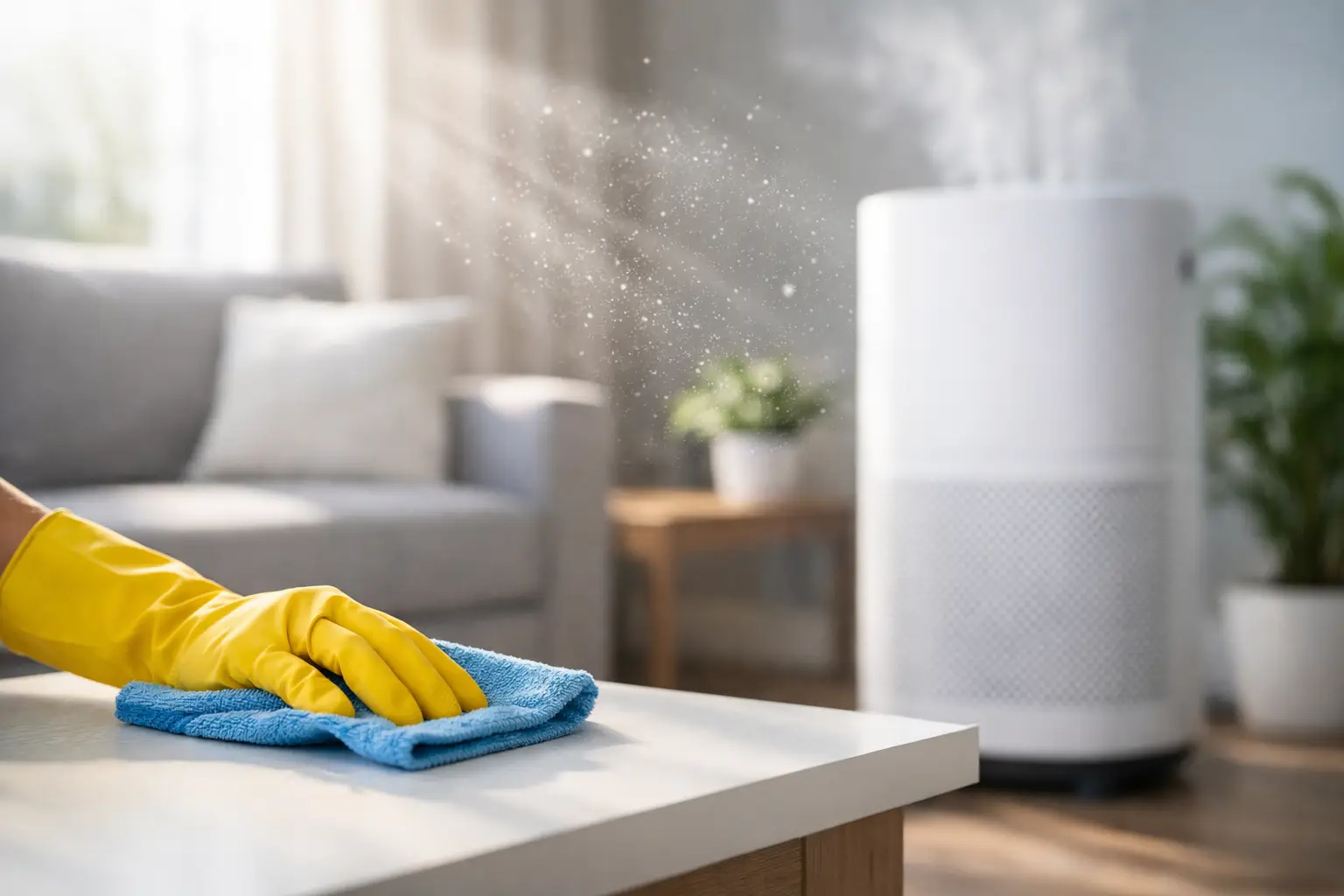
Results depend on how cleaning is done. A quick pass with a dry duster may move dust from one surface to another. Vacuuming with poor filtration can sometimes release fine particles back into the room. On the other hand, vacuuming carpets and upholstery carefully, using damp microfiber cloths on hard surfaces, and cleaning often-overlooked areas can make a meaningful difference in how clean the air and space feel.
Where Indoor Particles Build Up First
Dust rarely stays neatly on a coffee table. It settles into soft furnishings, gathers along baseboards, collects behind electronics, and hides in corners where regular traffic does not reach. These areas matter because particles can become airborne again when the room is used.
Carpet and rugs are especially important. They act like filters, trapping debris between fibers. That can be helpful temporarily, but only if the material is removed through regular vacuuming. If carpet is neglected, every step can disturb what has settled below the surface.
Upholstered furniture, mattresses, curtains, and pet bedding deserve attention for the same reason. They hold onto dust, dander, and fibers more readily than smooth surfaces. Homes with pets, young children, or family members who spend a lot of time indoors may need more frequent attention in these areas.
Hard floors are easier to see, but they still need the right routine. Sweeping can kick fine dust into the air, particularly when done quickly with a dry broom. Vacuuming hard floors when appropriate, followed by damp mopping, is often a better approach for capturing debris instead of simply redistributing it.
Cleaning Methods That Support Better Air
A few thoughtful changes matter more than using a cabinet full of products. Start with methods that capture particles instead of scattering them.
Microfiber cloths lightly dampened with water or a suitable surface cleaner are effective for wiping counters, shelves, blinds, and furniture. The fibers pick up dust rather than pushing it around. For higher surfaces, such as ceiling fans and vents, work from top to bottom so fallen dust can be vacuumed or mopped afterward.
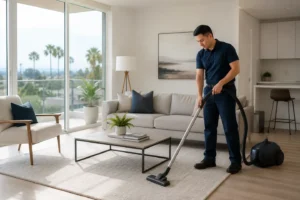
Vacuuming is one of the most useful tasks for air-conscious cleaning, particularly for rugs, carpet, upholstered seating, and edges along walls. A vacuum with a clean filter and strong suction is more helpful than one that has not been maintained. Slow, overlapping passes usually remove more embedded debris than a rushed once-over.
In kitchens and bathrooms, regular cleaning also helps control moisture-related concerns. Wiping up standing water, cleaning around sinks and tubs, and addressing grime around fixtures can help prevent the damp conditions that allow mildew to develop. If there is visible mold, repeated moisture, peeling paint, or a persistent musty odor, cleaning alone is not the answer. The source of the moisture needs professional attention.
The Trade-Off: Strong Fragrances Can Work Against You
A room can smell freshly cleaned without necessarily having cleaner air. Some heavily scented sprays, air fresheners, and cleaning products release volatile organic compounds, often called VOCs. These can bother people who are sensitive to fragrance, have asthma, or simply prefer a lower-odor home.
That does not mean every conventional product is harmful or that all natural products are automatically better. It means product choice matters. Use products as directed, avoid mixing cleaners, and provide fresh air when possible. For everyday dust and surface cleaning, a low-fragrance or fragrance-free option may be more comfortable for sensitive households.
Bleach and disinfectants also have a place, but they are not necessary for every task. Disinfecting is most useful when there is a specific reason, such as illness in the household, a high-touch shared office area, or a bathroom that needs deeper sanitation. Routine cleaning removes dirt and buildup; disinfection targets germs. Using the right level of product for the job helps avoid unnecessary fumes and extra work.
A Practical Cleaning Rhythm for Homes and Offices
Consistency matters more than waiting for a space to look dirty. By the time dust is obvious on a dark table or sunlight reveals it in the air, buildup has likely been collecting for a while.
High-traffic floors, kitchen counters, bathroom surfaces, and frequently touched areas benefit from regular weekly attention. Carpets, upholstered furniture, blinds, baseboards, and areas behind or beneath furniture often need a deeper schedule. The right frequency depends on the number of occupants, pets, allergies, open windows, and how much time people spend in the space.
For a busy family, the most useful rhythm may be a weekly whole-home clean with quick resets in between. For an office, it may mean frequent attention to shared spaces and scheduled detail cleaning that reaches desks, flooring, break rooms, and restrooms. Property managers and real estate professionals may need a more intensive approach between tenants or before showings, when a clean presentation and a fresh-feeling space both matter.
When Cleaning Is Not Enough
If allergies or respiratory symptoms continue despite a clean home, look beyond dusting and vacuuming. An overloaded HVAC filter, pet dander in fabric, poor ventilation, construction dust, smoke from outdoors, or hidden moisture can all affect indoor air.
Consider changing HVAC filters on schedule and using the filter type recommended for your system. During periods of wildfire smoke or poor outdoor air quality, keep windows closed when practical and check that doors and windows seal properly. An air purifier may also help in a bedroom or frequently used room, especially for people with allergies or pets.
Persistent odors deserve attention too. A lingering musty smell, smoke odor, or chemical scent is a signal to investigate rather than cover it with fragrance. The most dependable solution is always to remove the source, not mask it.
Why Professional Cleaning Can Help Maintain the Difference
Most people can handle regular upkeep, but detailed cleaning is easy to postpone when work, family, and everyday responsibilities fill the week. The places that affect how a room feels – under furniture, along baseboards, on blinds, within upholstery, and around high-use bathrooms – are often the first tasks to slip.
A recurring professional cleaning service can provide a reliable reset and help keep dust and buildup from becoming overwhelming. For move-ins, move-outs, and property turnovers, a deep cleaning can also remove the residue left behind by prior occupants so the space feels ready for its next chapter. SRS Cleaning serves Orange County clients who want that consistency without giving up their weekends.
A cleaner space cannot solve every air-quality concern, but it can make the air in your home or office feel less burdened by the everyday particles that accumulate quietly. Choose cleaning habits that capture dust, use products thoughtfully, and give yourself a schedule you can realistically maintain. A cleaner home can be one more way to make room for a calmer you.