A pile of dishes after dinner, a bathroom that needs attention, laundry waiting in a basket, and guests coming this weekend can make cleaning feel less like one task and more like a running list you never finish. To reduce home cleaning stress, the goal is not a picture-perfect home every day. It is creating a realistic approach that keeps mess from taking over your time, attention, and peace of mind.
For busy Orange County households, the best cleaning routine is one that fits real life. Work schedules, kids, pets, commutes, and weekend plans all matter. A calmer home starts with fewer decisions, clearer priorities, and support when the workload is more than you should have to manage alone.
Why Home Cleaning Can Feel So Overwhelming
Cleaning stress is rarely about dust alone. It often comes from the mental load of constantly noticing what needs to be done. You may walk past clutter and think about putting it away later, see fingerprints on a counter and add them to your internal to-do list, or avoid one room because you know it needs more than a quick reset.
That mental list grows when every task feels equally urgent. Deep-cleaning the shower, clearing the kitchen table, vacuuming the living room, and sorting mail do not require the same effort, yet they can blur together when you are short on time. The result is a familiar cycle: put cleaning off, feel guilty about it, then spend an exhausting block of time trying to catch up.
A better approach separates everyday upkeep from occasional bigger jobs. Once you stop treating every cleaning task as an emergency, it becomes easier to make steady progress without giving up your entire weekend.
Reduce Home Cleaning Stress by Defining “Clean Enough”
High standards can be helpful, but perfection is a difficult standard to maintain in an active home. Decide what “clean enough” means for a normal week. For many households, that means clear kitchen counters, dishes under control, reasonably tidy floors, fresh bathrooms, and clean sheets on a regular schedule.
This is different from a deep-clean standard. Baseboards, inside cabinets, detailed grout work, and behind-appliance cleaning have value, but they do not need to happen every Saturday. Save those tasks for a planned deep clean or a professional visit instead of allowing them to compete with the basics.
It also helps to identify the rooms that affect your comfort most. The kitchen, primary bathroom, and living area usually make the biggest difference because they are used often and seen by everyone. If time is limited, start there. A home can feel noticeably calmer when its most visible, high-use spaces are cared for, even if a closet still needs organizing.
Use a three-level priority system
Give yourself three simple categories: daily resets, weekly cleaning, and occasional projects. A daily reset may take 10 to 15 minutes and covers dishes, counters, quick pickup, and putting items back where they belong. Weekly cleaning handles bathrooms, floors, dusting, and changing linens. Occasional projects include the jobs that take more time or require more detailed attention.
This system prevents a missed weekly task from becoming a personal failure. If you do not mop one week, it simply remains on the weekly list for the next available window. The structure is there to guide you, not pressure you.
Build a Routine Around Your Actual Schedule
The most effective routine is not necessarily the most detailed one. It is the one your household can repeat. If weekday evenings are hectic, do not plan a major cleaning session for Tuesday night. Choose a short reset after dinner and reserve a small block of time on a quieter day for bigger tasks.
Try attaching cleaning to routines you already have. Wipe the bathroom counter after brushing your teeth. Start a load of laundry before your first meeting if you work from home. Clear the kitchen while coffee brews. These small habits reduce the need for a large catch-up session later.
Be careful not to over-schedule every minute. A rigid plan can create more stress if it falls apart after one busy week. Leave room for flexibility, especially during school events, travel, illness, or demanding work periods. Consistency matters more than checking every box.
Make cleaning supplies easy to reach
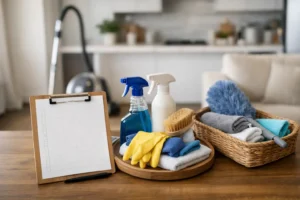
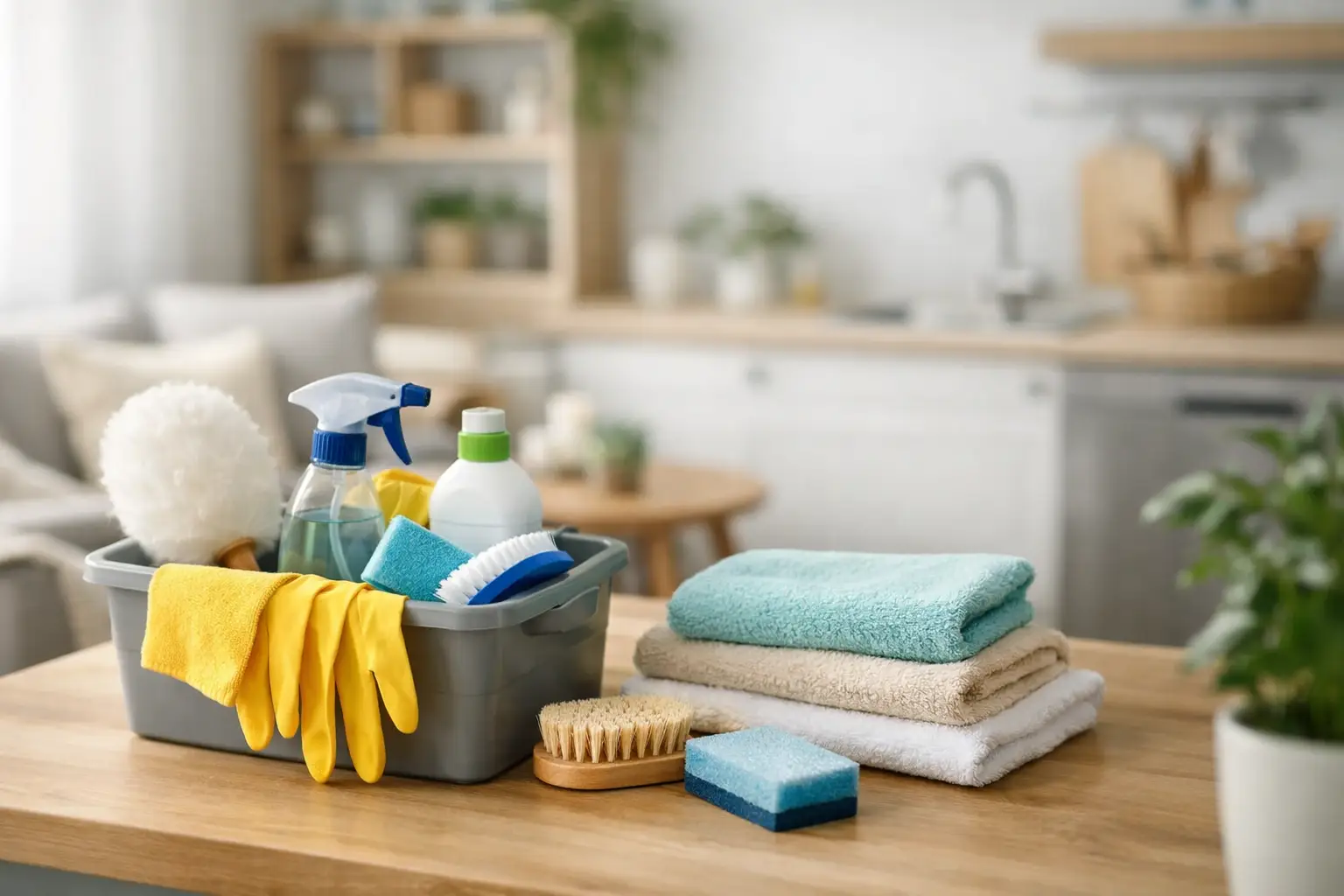
A simple setup can remove a surprising amount of friction. Keep the products you use most often where you use them, as long as they are stored safely away from children and pets. A small bathroom caddy, a kitchen cleaning cloth supply, and a vacuum that is accessible instead of buried in a closet make quick upkeep more likely.
You do not need a cabinet full of specialty products. A few dependable supplies and clean microfiber cloths are usually enough for everyday maintenance. Less searching means less resistance when you notice a small mess.
Reduce the Visual Clutter Before You Clean
Clutter and cleaning are related, but they are not the same task. Trying to organize papers, put away toys, sort clothes, and scrub surfaces all at once can make an ordinary cleaning session feel impossible.
Before you begin, spend a short, defined amount of time collecting items that do not belong in the room. Put away what has a clear home and place the rest in a temporary basket to sort later. Then clean the surfaces and floors. This protects your cleaning time from turning into a full-house organizing project.
If clutter returns quickly, look at the system rather than blaming yourself. A crowded entryway may need a better spot for bags and shoes. A kitchen counter covered in mail may need one designated tray. The right home for everyday items should be convenient enough that people will actually use it.
Share the Work Without Creating More Friction
In a shared household, cleaning becomes stressful when one person is responsible for noticing and assigning every task. Instead of asking for “help,” agree on ownership. One person may manage laundry, another may handle trash and recycling, and everyone can participate in the daily pickup.
Keep expectations clear and reasonable. A teenager may be able to unload the dishwasher and reset their room, while younger children can put toys away or place dirty clothes in a hamper. The objective is not to have every person clean the same way. It is to prevent one person from carrying the entire load.
For couples and roommates, a short weekly check-in can work better than repeated reminders. Talk about what needs attention before frustration builds. If a particular task is consistently avoided, it may be worth simplifying it, rotating it, or outsourcing it.
Know When Professional Cleaning Is the Right Support
Professional cleaning is not only for special occasions or homes that are already spotless. It is a practical option when your time is limited, your schedule is changing, or the home needs a more detailed reset than you can comfortably manage.
Recurring house cleaning can make everyday upkeep easier because the larger work is handled on a dependable schedule. You can focus on daily living instead of wondering when you will find time to scrub bathrooms, dust every room, or mop the floors. For many families and professionals, that consistency lowers the mental load as much as it improves the home itself.
A one-time deep clean can also be useful after a busy season, before hosting visitors, or when cleaning has fallen behind. Move-in and move-out cleaning offers similar relief during a transition that already comes with countless decisions. For property managers and real estate professionals, reliable turnover or pre-sale cleaning helps create a polished first impression without adding another vendor headache.
When choosing a service, trust matters. Look for clear communication, insured and vetted cleaners, a straightforward scope of work, and a satisfaction commitment. SRS Cleaning provides those essentials for clients who want dependable residential and commercial cleaning across Orange County without long-term contracts.
Let Your Home Support Your Life
A clean home should make it easier to rest, work, cook, host, and spend time with the people you care about. It should not become another standard you feel pressured to meet at all costs. Some weeks, a quick reset is enough. Other weeks, a deeper clean or scheduled support is the most sensible choice.
Start with one change that removes friction this week: clear one high-use surface each evening, choose a realistic weekly cleaning window, or hand off a task that has been sitting on your list for too long. A cleaner home is not about doing everything yourself. It is about creating more room to breathe.