A carpet can look worn long before it is actually worn out. In a busy office, the usual culprits are tracked-in grit, neglected spills, and traffic lanes that receive far more use than the rest of the floor. Knowing how to maintain office carpets means building a routine around those realities, so your workspace stays presentable without creating unnecessary disruption for your team.
For office managers and facility teams, the goal is not to make every carpet look brand new every day. It is to keep soil from settling deep into the fibers, address spots before they become stains, and plan deeper cleaning before the carpet begins to affect how the office feels to employees, clients, and visitors.
In this guide
- Set a cleaning schedule that matches your foot traffic
- Handle spills quickly and carefully
- Protect high-traffic areas before they look worn
- Know when routine vacuuming is no longer enough
- Prepare your office for professional carpet cleaning
Start with a schedule that reflects real foot traffic
A once-a-week vacuuming routine may work for a quiet, low-traffic suite, but it is rarely enough for a busy office entrance, reception area, hallway, break room, or shared conference room. Dirt does not stay on the carpet surface. Fine grit works its way down into the pile, where it can make fibers look dull and feel compressed over time.
Walk through the office at the end of a normal workday and note where people enter, gather, eat, or roll chairs back and forth. These areas deserve more attention than private offices that see limited use. In many workplaces, a practical baseline is vacuuming high-traffic paths several times a week and lower-traffic areas weekly. Reception areas and entrances may need daily attention, especially during wet weather or when nearby construction and landscaping create extra dust.
Vacuum slowly enough for the machine to lift embedded debris rather than making a quick pass over the surface. Empty or replace the collection bag as recommended by the manufacturer, and check that the vacuum is set to the right height for the carpet. A setting that is too low can pull aggressively on fibers, while one that is too high may leave dirt behind.
Just as important, keep entry mats clean. Mats capture soil before it reaches the office carpet, but an overloaded mat eventually transfers debris back onto shoes. Vacuum both the mat and the surrounding carpet regularly, and replace worn mats that no longer lie flat or trap dirt effectively.
Treat spills before they become a cleaning project
The best response to a spill is quick, calm, and simple. Blot the area with a clean white cloth or paper towel, working from the outside of the spill toward the center. Press down to absorb liquid rather than scrubbing. Rubbing can spread the spill and push it deeper into the carpet.
Use plain water first when appropriate, particularly for fresh, water-based spills. If you use a carpet spot cleaner, read the label and confirm it is suitable for your carpet type. Test it in an inconspicuous area first, use only the recommended amount, and avoid soaking the carpet backing. Too much moisture can leave a larger ring, attract soil, or extend drying time.
Do not mix cleaning products. Combining products can damage carpet fibers, create lingering odors, or produce unsafe fumes. Bleach is generally a poor choice for office carpet because it can remove color and weaken fibers. If you do not know what caused the spot, or if it is dark, oily, strongly colored, or has already dried, it is often better to document the location and arrange professional spot treatment than to keep adding products.
Keep a small spot-response kit nearby
A simple office kit reduces the chance that someone reaches for the wrong cleaner. Keep clean white cloths or paper towels, a spray bottle of water, disposable gloves, and the manufacturer-approved carpet spot cleaner, if one is available. A brief written instruction card can help staff remember the key rule: blot, do not scrub.
For food and drink spills, remove solids gently with a spoon or dull edge before blotting. Avoid scraping hard enough to pull the carpet pile. After cleaning, allow the area to dry fully before deciding whether the spot remains. Damp fibers can look darker than they will once dry.
Give traffic lanes extra protection
Traffic lanes are the paths that tell the story of your office: the walk from the front door to reception, the route to the break room, the space around shared printers, and the area beneath rolling desk chairs. These sections can become gray, flattened, or matted even when the rest of the carpet still looks fine.
Addressing them early is less expensive and less disruptive than waiting until the whole office looks tired. Increase vacuuming frequency in these zones, and move lightweight furniture periodically where practical so the same narrow paths do not receive all the pressure. In workstations with carpeted floors, use chair mats that are designed for the carpet pile height. An unsuitable mat can crack, shift, or press unevenly into the fibers.
Place durable mats at exterior doors and consider whether the entry setup makes it easy for people to wipe their shoes. During rainy periods, use enough mat coverage to capture moisture without creating a trip hazard. Check mats throughout the day if they become saturated or heavily soiled.
Furniture can also leave dents, particularly under filing cabinets, tables, and chairs that stay in one position for years. Some compression is normal. Moving furniture during periodic deep cleaning can help reveal areas that need attention, though heavy items should be handled safely and according to your office’s procedures.
Watch for the signs that vacuuming is no longer enough
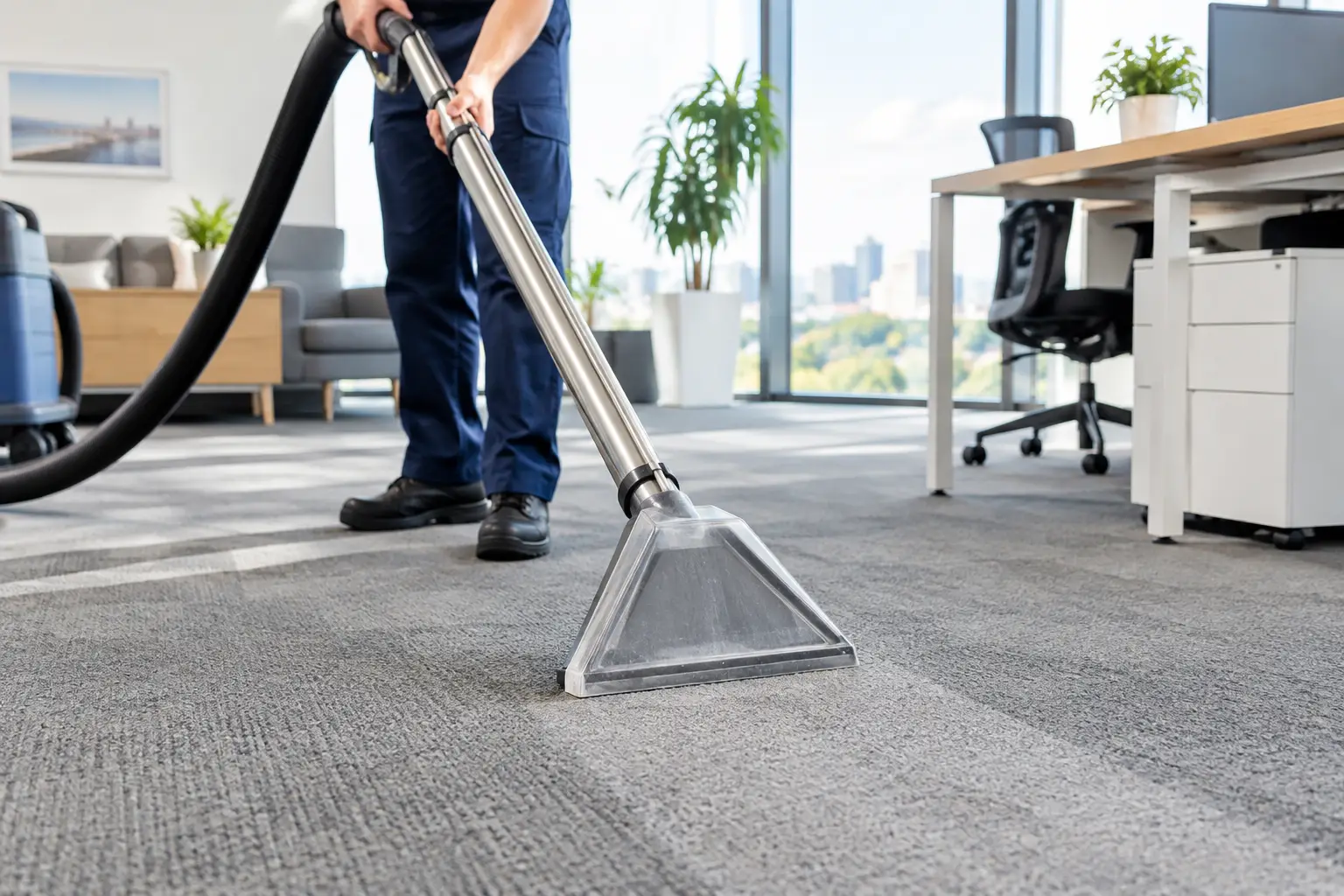
Routine care keeps day-to-day soil under control, but it cannot remove every type of buildup. Office carpet benefits from periodic professional cleaning, especially where foot traffic is high or appearance matters for client-facing spaces.
Look beyond obvious stains. A need for deeper cleaning can show up as traffic lanes that remain dull after vacuuming, a sticky or crunchy feel underfoot, recurring spots that reappear after drying, or carpet that holds onto odors. You may also notice that the office looks uneven because clean areas under furniture contrast sharply with exposed walkways.
The right timing depends on the carpet, the amount of traffic, your building rules, and how much food or drink is used in the space. A small professional office with limited visitors may need less frequent service than a busy shared workspace with a lobby, employees coming and going, and regular client meetings. Waiting until the carpet looks heavily soiled can make restoration more difficult, so it helps to schedule cleaning as preventive maintenance rather than an emergency response.
Professional cleaning is also a sensible choice for widespread staining, large spills, or carpets with manufacturer care requirements. Follow the carpet manufacturer’s instructions, including any approved cleaning methods or products. Cleaning methods are not interchangeable, and the wrong approach can affect color, texture, drying time, or warranty conditions.
Plan cleaning around your office, not against it
Good preparation makes carpet cleaning easier on your staff and helps set clear expectations. Before requesting service, identify the rooms or zones that need attention, point out known stains, and note access considerations such as elevators, security procedures, parking, or after-hours entry. If there are areas that cannot be moved or taken out of service, mention that early.
Ask about expected drying considerations for the selected cleaning method and plan accordingly. Employees should avoid walking on damp carpet when possible, and furniture should not be returned until the area is ready. A little coordination can prevent damp footprints, blocked workstations, or a rushed reopening.
It is also useful to confirm the scope before the appointment. For example, does the work focus on reception and hallways, include individual offices, or cover the full suite? Clear boundaries help you compare the work to the needs of the space and avoid assumptions about what will be cleaned.
Make carpet care part of a calmer office routine
The most effective office carpet plan is consistent rather than complicated: vacuum traffic lanes often, respond to spills promptly, keep entrance mats clean, and arrange deeper cleaning before soil becomes permanent-looking. That routine protects the appearance of the office while reducing last-minute cleaning stress before visitors, meetings, or inspections.
If your Orange County office needs help with ongoing carpet care or a one-time refresh, SRS Cleaning Services can discuss your space, timing, and priorities. Request a quote when you are ready, and start with a scope that fits the way your office actually operates.