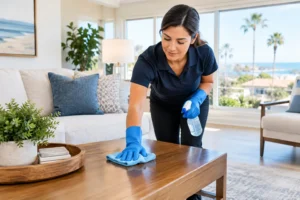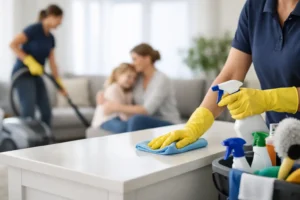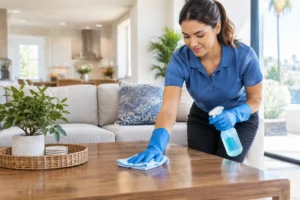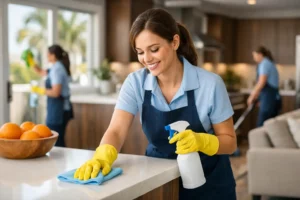
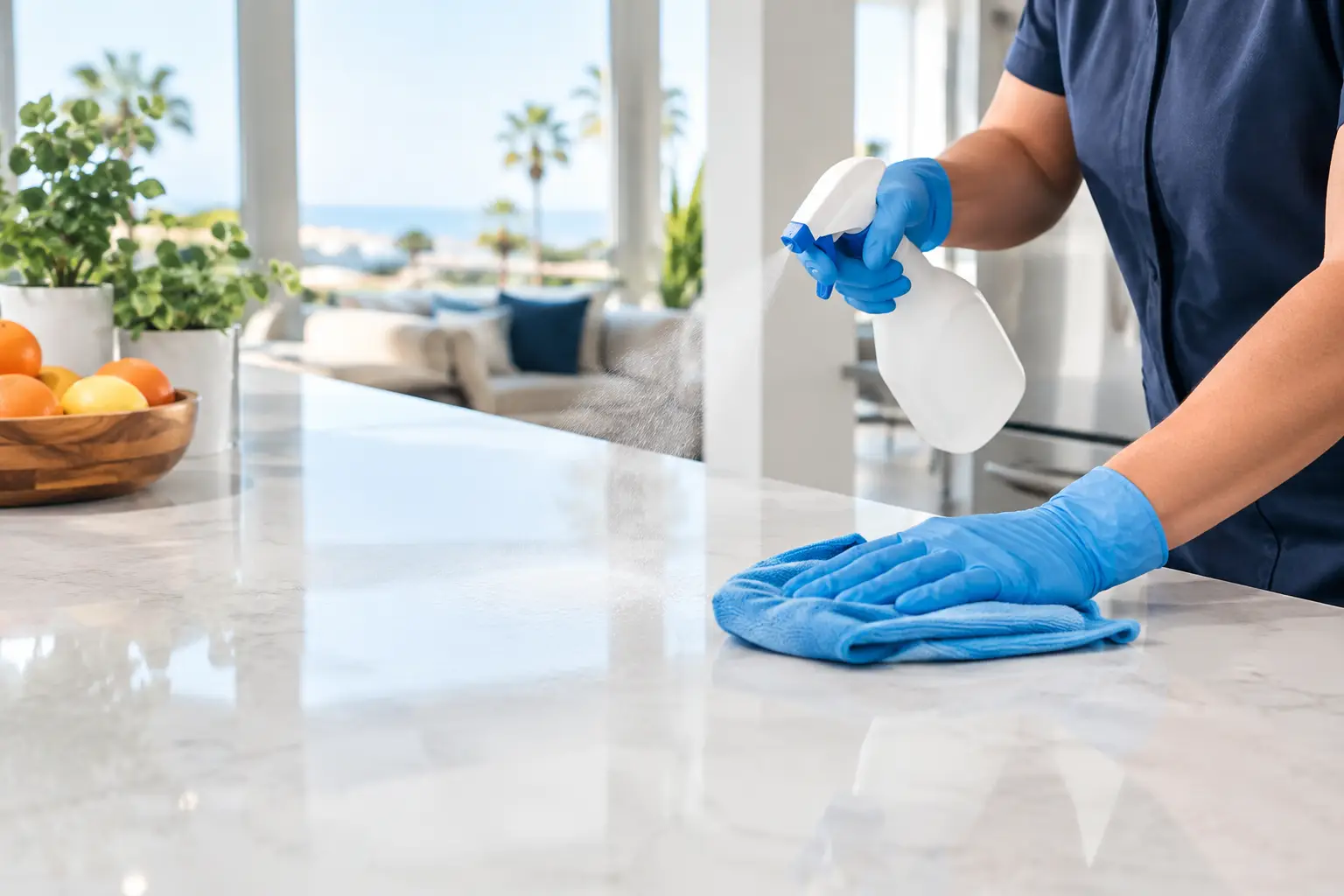
Do cleaners disinfect? Not automatically. Cleaning and disinfecting are related, but they are not the same service or result. A cleaner may remove dust, grease, crumbs, soap buildup, and many germs from a surface. Disinfecting requires using an appropriate disinfectant correctly, including following the product label and allowing the required contact time.
For a busy household, the practical question is usually not whether every surface needs disinfecting every day. It is where it makes sense, what can be handled safely at home, and what to clarify before a professional cleaning appointment. A cleaner home can make the week feel lighter. A clear scope helps make sure the service matches what you actually need.
Cleaning vs. disinfecting: the difference that matters
Cleaning physically removes soil and residue from surfaces. Think of wiping kitchen counters after cooking, removing toothpaste splatter from a bathroom vanity, or vacuuming tracked-in sand from a living room rug. Soap, water, and an all-purpose cleaner can be very effective for routine cleaning when used as directed.
Disinfecting uses a product designed to reduce certain germs on a hard, nonporous surface. The product must be suitable for the surface, applied according to its label, and left wet for the stated amount of time. Quickly spraying and immediately wiping a disinfectant away may not deliver the result the label describes.
That order matters: clean first, then disinfect when needed. Dirt, grease, and food residue can keep a disinfectant from reaching the surface evenly. In a kitchen, for example, wiping up cooking messes before disinfecting a frequently touched handle is more effective than spraying over visible residue.
Sanitizing is another term you may see on product labels. It is not always interchangeable with disinfecting. Follow the product instructions rather than assuming the terms mean the same thing.
When cleaners disinfect and when they may not
Whether a cleaning service includes disinfection depends on the agreed scope, the products used, the surface materials, and the situation. Routine house cleaning commonly focuses on restoring order and cleanliness in kitchens, bathrooms, bedrooms, and shared living areas. That may include cleaning high-touch areas, but you should not assume a particular disinfecting process is included unless it has been specifically discussed.
Before an appointment, ask direct questions. Which areas will be cleaned? Are high-touch surfaces part of the service? Is disinfecting requested for specific hard surfaces? Are there materials or finishes that require special care? A good scope protects your home and avoids surprises.
At SRS Cleaning Services, we believe clear communication matters just as much as the visible result. If you have a particular concern, such as preparing a home after an illness in the household or turning over a rental between occupants, share it when requesting a quote. The requested work can then be discussed before the appointment rather than assumed.
Areas where disinfection may be useful
Most homes do not need wall-to-wall disinfection. Focus on high-touch, hard surfaces and situations where extra attention makes practical sense. In a normal week, this may include bathroom faucet handles, toilet flush levers, light switches, door knobs, refrigerator handles, and frequently used remote controls.
Kitchens deserve a little extra thought because they involve food. Clean food spills, grease, and residue promptly. Use products intended for food-contact surfaces where appropriate, and follow any label instructions about rinsing afterward. Never use a disinfectant around food-preparation areas without checking whether it is safe for that use.
Bathrooms are another common priority. Regular cleaning helps control soap scum, body oils, and visible buildup. Disinfecting may be useful on hard, high-touch surfaces such as handles and fixtures, but it does not replace routine cleaning of the shower, sink, toilet exterior, and floor.
For households with young children, older relatives, frequent guests, or someone recovering from a contagious illness, you may choose to disinfect touchpoints more often for a limited period. That does not mean using stronger products everywhere. The safest approach is targeted use, careful label reading, and good handwashing.
Surfaces that need extra caution
Not every clean-looking surface is a good candidate for disinfectant. Natural stone, unfinished wood, certain painted finishes, leather, and delicate electronics can be damaged or discolored by the wrong product. A product that works well on a glazed tile surface may not be appropriate for a marble vanity or wood dining table.
Use the manufacturer’s care instructions whenever possible. Test a new product in a small, inconspicuous area if the instructions allow it. For electronics, follow the device maker’s guidance and avoid spraying liquid directly onto screens, outlets, keyboards, or controls.
Also, more product is not necessarily better. Overusing chemicals can leave residue, create strong odors, and add unnecessary wear to finishes. Keep products in their original containers, provide ventilation as directed, and store them away from children and pets.
Most importantly, never mix cleaning products. Bleach should never be combined with vinegar, ammonia, or other cleaners. If you are unsure which product is appropriate, stop and check the label rather than experimenting.
A realistic routine for busy households
A manageable home routine usually combines regular cleaning with occasional targeted disinfection. You do not need a complicated checklist to keep up. Wipe kitchen counters after meal preparation, clean bathroom surfaces regularly, and address obvious spills before they dry or spread.
Once or twice a week, depending on your household, give frequently touched hard surfaces more attention. If someone in the home is sick, increase cleaning and disinfection of the areas they use most, while following product directions and avoiding unnecessary exposure to harsh chemicals.
For deeper resets, focus on the jobs that tend to fall behind: baseboards, shower buildup, floors under furniture, dusty blinds, neglected corners, and kitchen grease. These tasks may not require disinfecting, but they have a major effect on how comfortable and cared for a home feels.
When professional cleaning is a good fit
Professional cleaning is especially helpful when your schedule leaves routine upkeep unfinished, when guests are coming, or when you need a reset after a busy season. It can also make a move-out, move-in, rental turnover, or listing preparation feel more manageable.
The key is to be specific about your priorities. If you want help with a deep clean and also have concerns about certain high-touch surfaces, say so early. If you have delicate stone, special flooring, newly refinished cabinets, or a surface with manufacturer restrictions, point that out before work begins.
For a standard recurring service, your main goal may be consistent cleaning that keeps dust, crumbs, bathroom buildup, and everyday mess from taking over your free time. For a one-time deep cleaning, you may want attention on accumulated grime and overlooked areas. Each situation calls for a different scope, and disinfecting should be treated as a specific request rather than a blanket assumption.
What to ask before you schedule
A few clear questions can help you choose the right level of service. Ask whether the work is routine cleaning, deep cleaning, or targeted disinfection of identified hard surfaces. Confirm which rooms and touchpoints matter most to you, and mention any material-specific concerns.
It also helps to prepare the space. Put away personal items, clear crowded counters where possible, and let the cleaning team know about access instructions, pets, or areas that should not be entered. This allows more of the appointment time to go toward the cleaning tasks you value.
A home does not have to be perfect before you ask for help. It just helps to be clear about the outcome you want: a refreshed kitchen, a more comfortable bathroom, a cleaner home before guests arrive, or a reliable routine that gives you back part of your week.
If you are looking for cleaning support in Orange County and want to discuss your priorities before scheduling, request a quote from SRS Cleaning Services. Share the areas you want cleaned and any disinfection-related questions, and we can help you clarify a scope that feels practical for your home.