Locally owned · Serving Orange County homes and businesses

Call (714) 439-8500

Tag: Deep Cleaning

  • How to Get Dog Smell Out of House Without Masking It

    How to Get Dog Smell Out of House Without Masking It

    If you are wondering how to get dog smell out of house without simply covering it up, start with the places where odor actually settles. Dog smell can linger even after a room looks clean because odor often sits in soft fabrics, floor edges, pet bedding, entry mats, upholstery, and the places where oils, saliva, dander, and moisture collect. The best approach is not to cover the smell with fragrance. It is to find the source, clean the material holding the odor, improve airflow when conditions allow, and use cleaning products only according to their labels.

    This guide explains how to get dog smell out of the house with a practical room-by-room plan. It focuses on source removal, washable items, floors, upholstery, ventilation, and safe product use. When the odor is part of a larger cleaning reset, SRS Cleaning Services can help with House Cleaning, Deep Cleaning, and recurring cleaning routines across Orange County.

    Related SRS resources: For cleaning help beyond odor control, compare House Cleaning, Deep Cleaning, Recurring Cleaning, and the house cleaning maintenance schedule.

    Fresh clean living room with washable textiles and hard floors after dog odor cleaning.

    Why dog smell lingers

    Dog odor usually lasts because the source is still present somewhere in the space. Soft materials can hold oils, dander, dried saliva, and moisture. Floors and baseboards can collect dust, hair, and residue along edges. Entry areas can trap outdoor soil, damp paw prints, and odor from frequently used mats. A room may look neat while the odor source remains in textiles or porous surfaces.

    Air fresheners, candles, and heavy fragrances may make a room smell different for a short time, but they do not remove the material causing the odor. The EPA describes source control as an important part of improving indoor air quality, and ventilation can help remove or dilute indoor pollutants when outdoor conditions are appropriate (EPA indoor air quality guidance). For dog smell, that means cleaning the source first and using fresh air as support, not as the whole solution.

    Find the source before you clean

    Start with the areas that carry the most contact: dog beds, blankets, sofa throws, rugs, favorite resting spots, entry mats, baseboards near feeding areas, and carpet or upholstery where accidents may have happened. Work from soft surfaces to hard surfaces. If one room smells stronger than the others, check the textiles and floor edges there before cleaning the whole house.

    A simple source check prevents wasted effort. Remove washable items from the room, open them up so they are not folded around odor, and smell the room again after ten or fifteen minutes. If the room improves quickly, laundry is probably the first priority. If the smell remains strongest near one rug, corner, crate area, or upholstered seat, treat that area separately.

    • Check pet bedding, removable covers, blankets, and washable throws.
    • Inspect rugs, carpet edges, sofa cushions, and furniture seams.
    • Look around baseboards, doors, feeding areas, and entry mats.
    • Clean dried spills or accident spots before general deodorizing.
    • Use a flashlight along floor edges where hair and dust collect.

    Wash fabrics that hold odor

    Washable fabrics are often the fastest win. Launder removable bed covers, blankets, washable throws, cushion covers that are safe to wash, and towels used near doors. Follow the fabric-care label, because heat, bleach, or the wrong cycle can damage some materials. For fabrics that cannot be machine washed, vacuum thoroughly and follow the manufacturer’s upholstery-care instructions before applying any cleaner.

    Regular grooming also reduces what settles into the home. The American Kennel Club notes that brushing removes dirt, debris, loose hair, and dandruff while helping distribute natural oils through the coat (AKC dog grooming guidance). This does not replace cleaning, but it can reduce the amount of hair and dander that reaches floors, bedding, and furniture.

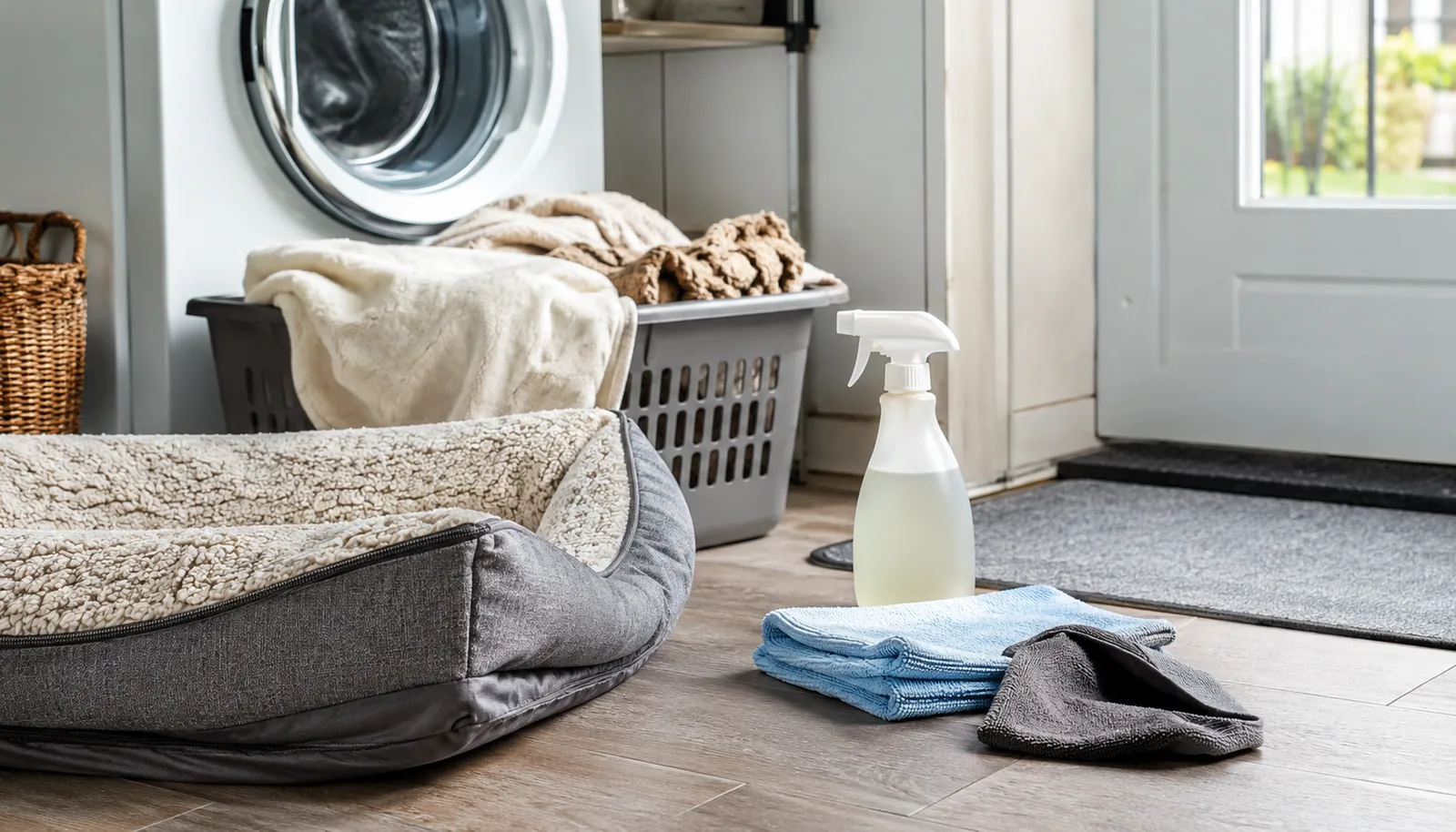
    Dog odor cleaning setup with washable pet bed cover, microfiber cloths, and entry mat.

    Clean floors, baseboards, and entry areas

    Hard floors are easier to reset than carpet, but they still need detail. Vacuum or sweep first so hair and grit do not turn into a damp film when mopping. Then clean with a product appropriate for the floor type. Avoid soaking laminate, engineered wood, or hardwood. Use a slightly damp mop or cloth, work in small sections, and dry any areas where moisture sits too long.

    Baseboards matter because hair, dust, and odor residue collect along room edges. Wipe baseboards, corners, lower door frames, and the floor line near feeding areas. Entry mats should be vacuumed, shaken outside when appropriate, and washed or replaced when they hold odor. If outdoor moisture or sand comes in regularly, a washable indoor mat near the door can reduce what spreads across the room.

    For a broader maintenance rhythm, the SRS guide to a house cleaning maintenance schedule can help turn these tasks into a repeatable weekly plan.

    Treat carpet and upholstery carefully

    Carpet and upholstery need more patience because odor can move below the visible surface. For fresh accident spots, blot first instead of scrubbing. Bissell’s pet urine cleaning guidance recommends blotting, testing the cleaner in a hidden spot, and using an enzymatic cleaner according to directions for pet urine odor on carpet (Bissell pet urine carpet guidance). Scrubbing can spread residue deeper into fibers, so slow pressure with clean towels is usually safer than aggressive rubbing.

    Product labels matter. OxiClean’s pet stain and odor remover directions say to test a hidden carpet area for colorfastness and note that the product should not be used on wool, leather, or silk (OxiClean product directions). Rocco & Roxie’s stain and odor instructions also call for testing an inconspicuous area before use and giving the product time to sit before drying and vacuuming (Rocco & Roxie instructions). These examples are not endorsements; they show why the label should guide contact time, surface compatibility, and drying.

    If a rug, carpet pad, subfloor, or upholstery cushion has absorbed old urine or moisture, surface cleaning may not fully solve the odor. Repeated smell from the same location can mean the source is below the surface. In that case, professional carpet, upholstery, flooring, or restoration guidance may be needed before the room will smell clean again.

    Use airflow without hiding the problem

    Fresh air helps after odor sources are cleaned. The EPA explains that opening windows and doors, using fans that exhaust outdoors, and increasing outdoor ventilation can help remove or dilute indoor airborne pollutants when weather and outdoor air conditions allow (EPA ventilation guidance). Use ventilation during and after cleaning, especially when cleaning products are in use.

    Air cleaners may help with particles such as dust and dander, but they are not a substitute for cleaning the source. EPA guidance notes that the long-term performance of an air cleaner depends on maintaining it according to the manufacturer’s directions (EPA air cleaners and filtration guidance). Replace or clean filters on schedule, and do not expect a small air cleaner to fix odor trapped in bedding, rugs, or carpet padding.

    Choose products safely

    Use the mildest product that fits the surface and the mess, and always follow the label. CDC guidance for cleaning and disinfecting warns not to mix cleaning or disinfecting products, to use good ventilation indoors, and to keep chemicals out of reach of children and pets (CDC cleaning and disinfecting safety guidance). The same CDC guidance also says not to wipe or bathe pets with disinfection products.

    When using products that emit odors or vapors, the EPA advises increasing ventilation, following label precautions, using household products according to manufacturer directions, and never mixing household care products unless directed on the label (EPA VOC and product-use guidance). If a product is meant for carpet, do not assume it belongs on wood, leather, wool, stone, or delicate fabric.

    The EPA Safer Choice product search can help identify cleaning products that meet the Safer Choice Standard (EPA Safer Choice product search). That label does not mean a product can be used anywhere or in any amount. It still needs to be used as directed, on compatible surfaces, with proper storage and ventilation.

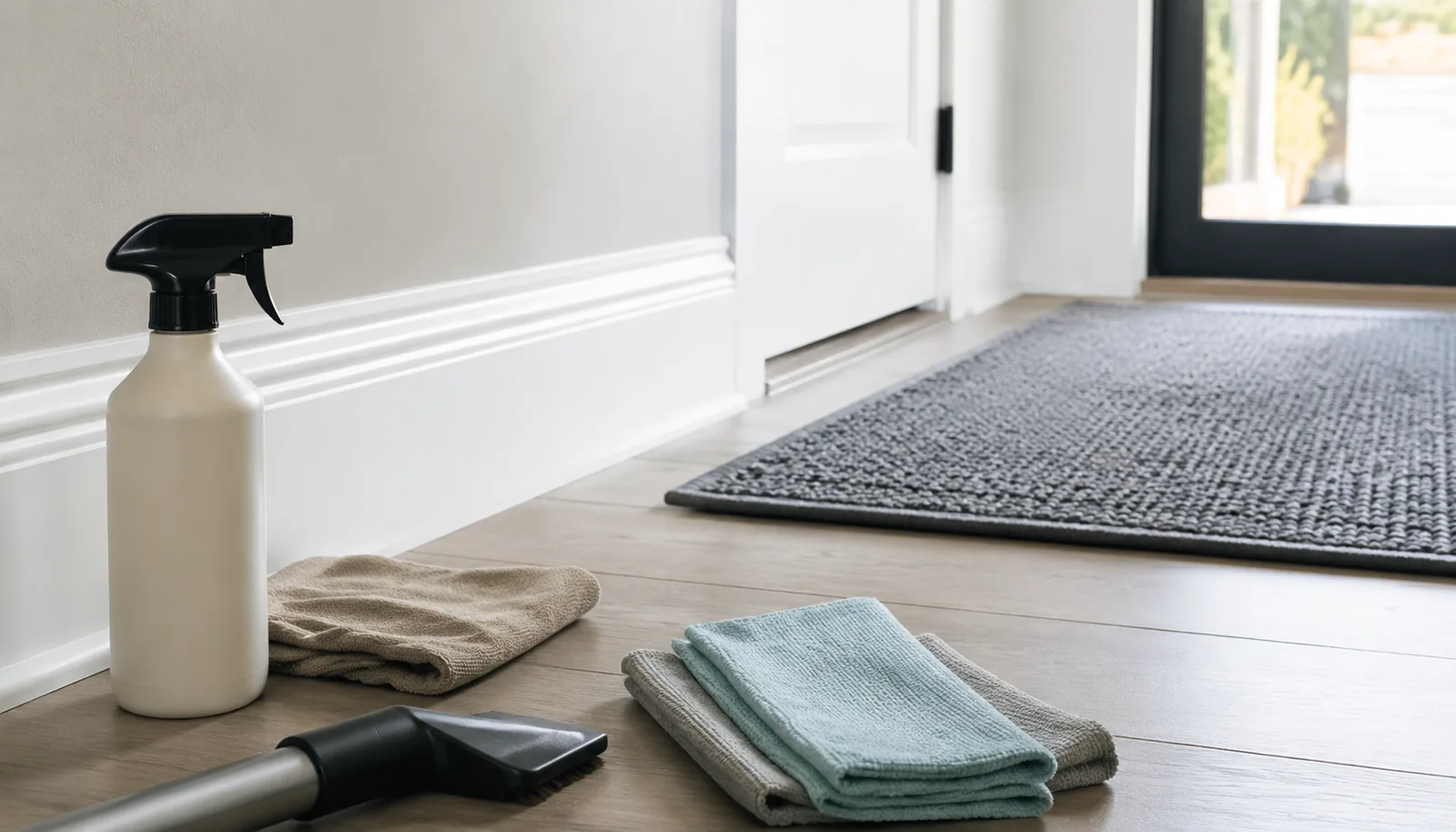
    Floor and baseboard cleaning supplies for removing dog smell from entry areas.

    Build a routine that keeps odor from returning

    Once the house smells fresh again, the maintenance plan should be simple enough to repeat. Focus on the places where odor starts: bedding, favorite resting spots, entry areas, floors, baseboards, trash, and washable textiles. A short routine is better than a complicated checklist that gets skipped.

    Area Helpful routine Why it helps
    Dog bedding and throws Wash removable covers and rotate clean extras Removes odor from the fabric source
    Floors and baseboards Vacuum first, then damp-clean with a surface-safe product Removes hair, dust, and residue along edges
    Entry mats Vacuum, shake outside when appropriate, and wash if compatible Stops outdoor soil and damp odors from spreading
    Carpet or upholstery spots Blot, test, apply the correct cleaner, and dry fully Prevents residue from settling deeper

    For a practical supply setup, the SRS article on cleaning supplies for pet-friendly spaces explains which everyday tools are useful for fur, floors, washable textiles, and quick resets.

    When a deeper cleaning reset helps

    A deeper cleaning reset helps when odor is spread across several rooms, when soft surfaces and floor edges have not been detailed in a while, or when regular upkeep is taking more time than expected. The most useful reset usually includes vacuuming edges, cleaning baseboards, wiping lower doors and trim, washing compatible textiles, cleaning entry areas, and giving floors a surface-appropriate clean.

    SRS Cleaning Services can help reset the home and then keep the routine easier with Deep Cleaning or Recurring Cleaning. If the odor is tied to carpet padding, subfloor damage, mold, biohazards, or a strong animal-waste issue beyond ordinary cleaning, the safer next step is a qualified specialist for that material or hazard before routine cleaning continues.

    Dog smell cleaning FAQ

    What removes dog smell from a house fastest?

    Remove the main odor sources first: washable bedding, blankets, entry mats, rugs, floor edges, and any accident spots. Then clean surfaces, dry them fully, and ventilate when outdoor conditions are appropriate. Fragrance alone may make the room smell different, but it will not remove the source.

    Should disinfectant be used for dog smell?

    Usually, dog smell is a cleaning and odor-source problem, not a reason to disinfect every surface. If disinfecting is needed for a specific situation, clean the surface first and follow the product label for contact time, ventilation, and compatible surfaces. Do not use disinfectants on pets.

    Do enzyme cleaners work on dog urine smell?

    Enzymatic cleaners are commonly used for pet urine odor on compatible carpet and upholstery, but the product directions control how they should be applied, how long they should sit, and which surfaces to avoid. Always test a hidden area first.

    Why does the smell come back after cleaning?

    The source may still be below the surface, especially in carpet padding, upholstery foam, rug backing, or floor edges. It can also return if items are cleaned but not dried fully. Track the strongest odor point before repeating the same general cleaning routine.

    Dog smell is easier to solve when the plan starts with source removal instead of cover-up. Wash what can be washed, clean floors and baseboards carefully, treat carpet and upholstery according to the label, use airflow as support, and keep the routine simple. For help with a deeper reset or recurring cleaning in Orange County, start with the SRS cleaning quote page.

  • Pre-Listing Cleaning Checklist to Prepare a Home for Showings

    Pre-Listing Cleaning Checklist to Prepare a Home for Showings

    A good pre-listing cleaning checklist helps a space look brighter, calmer, and easier to evaluate before photos, showings, walkthroughs, or an open house. The goal is not to make a property look unrealistic. The goal is to remove the small distractions that pull attention away from the room itself: dusty baseboards, cloudy mirrors, greasy appliance fronts, fingerprints on doors, window-track buildup, dull sinks, and cluttered surfaces.

    This guide keeps the work practical. It separates cleaning from staging, explains where disinfecting is useful, and gives a room-by-room checklist you can follow before a listing goes live. For Orange County properties that need a deeper reset before photos or appointments, SRS Cleaning Services can help with Deep Cleaning, Move Out Cleaning, and general House Cleaning Services.

    Bright clean living room prepared for listing photos.
    Photo by Lotus Design N Print on Unsplash

    Why pre-listing cleaning matters

    Pre-listing cleaning matters because a clean room lets the eye focus on layout, light, storage, finishes, and condition. The National Association of Realtors describes staging as a process that can include cleaning, decluttering, repairing, depersonalizing, and updating a home so people can better picture the space for themselves (NAR staging overview). NAR also reports that many agents see staging influence how buyers visualize a property, while seller-side agents often connect staging with shorter market time or stronger presentation outcomes (2025 Profile of Home Staging).

    Cleaning is the foundation underneath all of that. Fresh pillows and attractive furniture cannot hide dusty vents, fingerprints around switches, sticky cabinet pulls, or a cloudy shower door. A pre-listing clean should make the property feel cared for without making exaggerated claims about condition. It is especially useful before professional photos because cameras often catch streaks, floor debris, hard-water spots, and reflective-surface smudges that are easy to miss in person.

    Cleaning vs. staging vs. disinfecting

    Cleaning, staging, and disinfecting are related, but they are not the same job. The CDC defines cleaning as using water, soap, and scrubbing to remove germs, dirt, and impurities from surfaces; disinfecting uses chemical products to kill remaining germs on surfaces after cleaning (CDC cleaning and disinfecting definitions). For most pre-listing prep, routine cleaning is the main priority. Disinfecting is most useful for bathrooms, kitchen touch points, trash areas, and other high-touch surfaces when there is a reason to do so.

    Always follow the product label. The CDC warns never to mix bleach or disinfectants with other cleaners because dangerous vapors can be released (CDC bleach safety guidance). The CDC also recommends cleaning surfaces with soap and water before disinfecting when disinfecting is needed (CDC home cleaning and disinfecting guidance). For product selection, the EPA Safer Choice program helps identify products whose ingredients have been reviewed for safer chemistry while still being designed to perform (EPA Safer Choice).

    Pre-listing cleaning supplies

    Use a simple kit instead of collecting too many products. A practical pre-listing kit may include microfiber cloths, a vacuum with attachments, a mop appropriate for the floor type, glass cleaner, mild all-purpose cleaner, bathroom cleaner, non-scratch pads, trash bags, gloves, and fresh towels for finishing. For any cleaner, check the label for intended surfaces, ventilation, dwell time if disinfecting, storage, and safety precautions.

    Avoid applying harsh products to natural stone, unsealed wood, specialty tile, stainless steel, or delicate fixtures unless the label confirms compatibility. When in doubt, test a hidden area or use the manufacturer’s care instructions. The purpose is to improve presentation, not risk etching, discoloration, residue, or finish damage right before photos.

    Whole-home first pass

    Start with a fast whole-home reset before detailed cleaning. Remove trash, donation bags, extra packaging, old mail, loose cords, excess countertop items, and visible personal clutter. Put away laundry, shoes, toiletries, pet bowls, toys, and small appliances that are not needed for the showing. Open window coverings to see where dust, smudges, and floor debris show in natural light.

    Then work top to bottom. Dust ceiling fans, high corners, vents, light fixtures, picture frames, window sills, doors, and trim before cleaning floors. Wipe switch plates, door frames, doorknobs, stair rails, cabinet pulls, and appliance handles. These touch points are small, but they quietly shape the impression of care.

    Kitchen checklist

    Clean staged room with furniture arranged for listing presentation.
    Photo by Spacejoy on Unsplash

    The kitchen usually needs the most detail because counters, sinks, appliances, and cabinet fronts are heavily used and highly visible. Clear counters first. Leave only a few intentional items, then wipe the full counter surface, backsplash, outlet covers, and edges. Polish the sink and faucet, remove water spots, wipe the disposal rim where accessible, and clean the window or ledge above the sink.

    • Wipe cabinet and drawer fronts, especially near handles.
    • Clean the stovetop, control panel, range hood exterior, and microwave exterior.
    • Wipe refrigerator handles, dishwasher front, and oven door glass.
    • Remove crumbs from drawers and visible cabinet shelves if they will be opened.
    • Clean trash area, pantry floor, baseboards, and toe-kicks.
    • Finish with swept and mopped floors, paying attention to corners.

    If a property is vacant or needs a deeper presentation reset, appliance interiors, cabinet interiors, blinds, tracks, and baseboards can be folded into Move Out Cleaning or deep cleaning scope rather than rushed at the last minute.

    Bathroom checklist

    Bathrooms should look fresh, dry, and residue-free. Start by removing excess bottles, razors, cleaning products, bath mats, and personal items. Clean mirrors, counters, faucet bases, sinks, vanity fronts, towel bars, and switch plates. Scrub toilets, tubs, showers, glass doors, tile edges, and visible grout lines. Pay close attention to hard-water spotting on glass and chrome because it shows strongly under bathroom lighting.

    Use ventilation when cleaning bathrooms, follow product labels, and avoid mixing products. If there is mold-like growth, water damage, sewage backup, or a biohazard concern, ordinary cleaning is not the right solution. Those situations should be evaluated by qualified professionals or handled according to appropriate public-health and remediation guidance.

    Living areas, bedrooms, and hallways

    Living areas, bedrooms, and hallways should feel calm and easy to walk through. Dust horizontal surfaces, shelves, lamps, fans, vent covers, baseboards, window ledges, closet tracks, and door panels. Vacuum upholstery if needed, straighten cushions, and remove stray cords or crowded decor. In bedrooms, simplify nightstands, clear floors, and clean closet floors if storage areas may be opened.

    Hallways deserve more attention than they usually get. Fingerprints on walls, dusty baseboards, scuffed doors, and dirty return vents can make a clean property feel less maintained. Wipe what is visible at eye level and what is visible in photos: railings, light switches, trim, door handles, and the first few inches along baseboards where dust collects.

    Floors, windows, and light

    Floors and windows control much of the first impression. Vacuum carpets slowly, using edge tools along walls and thresholds. Mop hard floors with a product that matches the floor type and does not leave a sticky or cloudy residue. Avoid over-wetting wood or laminate. Clean interior glass, mirrors, and accessible window tracks, then check the room from several angles for streaks.

    Light is part of cleanliness. Open blinds, dust slats, wipe window sills, and replace obviously burned-out bulbs. Clean light switch plates and visible fixture covers. A room with clean glass, clean floors, and simple surfaces often feels larger and more inviting without needing heavy staging.

    Final showing-day reset

    Neutral clean living area ready for a listing walkthrough.
    Photo by Francesca Tosolini on Unsplash

    On showing day, do a short reset rather than a full cleaning session. Empty trash, wipe kitchen counters, dry sinks, close toilet lids, replace used towels, remove floor debris, straighten pillows, and check entry areas. Walk through with lights on and blinds open. Look at mirrors, appliance fronts, floors near doors, and the main photo angles. If something stands out immediately, handle that first.

    A final reset should be quick because the deep work has already been done. If the property is still occupied, a small daily routine helps keep the space ready between appointments: dishes away, counters cleared, bathroom surfaces dry, floors touched up, and clutter returned to storage.

    When to use professional cleaning

    Professional cleaning is useful when the property needs more than a light reset, when timing is tight, or when photos and showings are already scheduled. It can also help when kitchens, bathrooms, baseboards, blinds, window tracks, and floors need consistent detail across the whole property. SRS Cleaning Services serves Orange County with cleaning services that can support pre-listing prep, move-related cleaning, recurring maintenance, and deeper room-by-room cleaning.

    For related planning, compare this checklist with the SRS guide to cleaning a new house before move-in, the Move In Cleaning vs. Move Out Cleaning explainer, the deep cleaning checklist, and the deep cleaning service scope guide. Those articles cover different timing scenarios, while this page focuses specifically on the pre-listing presentation pass.

    If you need help deciding the right scope, the simplest next step is to request a quote and describe the property condition, square footage, timing, and priority rooms. You can start through the Get a Quote page or review the SRS service area for Orange County coverage.

    Pre-listing cleaning FAQ

    How early should pre-listing cleaning be done?

    For a property that is mostly ready, one to three days before photos is usually practical. If the property needs deep cleaning, repairs, decluttering, or hauling, start earlier so cleaning happens after the messy work is complete.

    Should cleaning happen before or after staging?

    Do the main cleaning before staging whenever possible. After furniture, decor, and photo prep are in place, do a final light reset for dust, floors, counters, mirrors, and touch points.

    Does everything need to be disinfected?

    No. Routine cleaning is the main job for most pre-listing preparation. Disinfecting may be useful for selected high-touch surfaces, bathrooms, and kitchen areas, but products should be used according to label directions and after cleaning when needed.

    What areas are most often missed?

    Common misses include baseboards, door frames, light switches, cabinet pulls, vent covers, window tracks, appliance handles, closet floors, trash areas, and the corners behind doors.

    Preparing a property for listing is easier when the cleaning plan is specific. Start with clutter, work from top to bottom, focus on kitchens and bathrooms, finish floors and glass last, and leave time for a final showing-day reset. For deeper help across an Orange County property, SRS Cleaning Services can help you choose the right cleaning scope and schedule it before photos or showings.

  • New House Cleaning Checklist Before You Move In

    New House Cleaning Checklist Before You Move In

    Moving into a new home should feel exciting, but opening the door to dusty shelves, sticky cabinets, or a bathroom that still feels like someone else’s can quickly add stress. A practical cleaning a new house checklist helps you use the short window before furniture and boxes block the areas that are easiest to reach while the home is empty.

    The goal is not to scrub randomly until you run out of time. It is to clean in the right order, protect each surface, and make the rooms you need first ready before moving day. Use this Orange County guide to decide what to clean, when to do it, and when professional move-in cleaning can take a major task off your schedule. If the property is being prepared before photos or showings instead, use this pre-listing cleaning checklist for presentation-focused details.

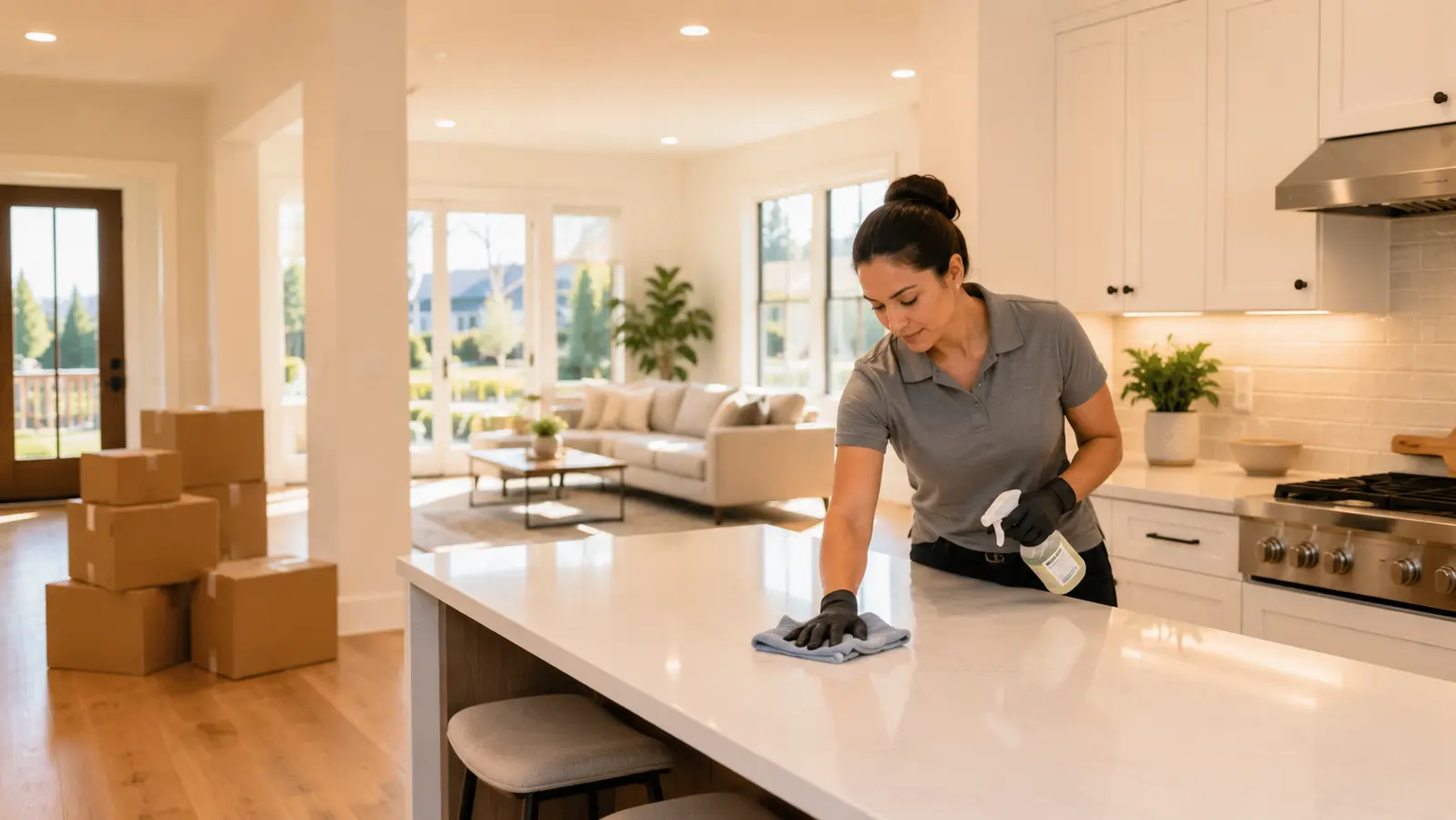
    Professional cleaner wiping a kitchen island in a bright Orange County home before move-in
    A professional move-in cleaning helps prepare an empty home before boxes are unpacked.

    Why Clean a New House Before Moving In?

    An empty home gives you access you may not have again for years. You can reach closet corners, cabinet interiors, baseboards, wall edges, and the floor beneath future furniture without shifting heavy belongings. Cleaning before unpacking also prevents you from placing dishes, linens, and clothing onto shelves that still hold dust or residue.

    Even a recently renovated or newly built home can contain fine construction dust. A previously occupied home may look presentable while still having grease around kitchen handles, buildup in bathroom edges, debris inside drawers, or dust on vents and ceiling fans. Completing the work before the moving truck arrives creates a cleaner starting point and reduces the number of chores competing for your attention during the first week.

    Before You Start: Inspect, Plan, and Gather Supplies

    Walk through the home before bringing in cleaning equipment. Photograph damage or maintenance concerns, especially if the property is a rental. Look for active leaks, damaged flooring, loose outlets, pest evidence, mold-like growth, or other issues that should be handled by the appropriate professional. Cleaning should not hide a condition that needs repair.

    Confirm that electricity and water are available. Open blinds for better visibility and provide ventilation when product labels recommend it. Read the care instructions for stone counters, wood flooring, stainless steel, specialty tile, and painted surfaces. Always test an unfamiliar product in a small, inconspicuous area, and never mix cleaning chemicals.

    Basic move-in cleaning supplies

    • Microfiber cloths in separate colors for kitchens, bathrooms, and general surfaces
    • A vacuum with crevice and brush attachments
    • A broom, dustpan, and floor-appropriate mop
    • Non-scratch sponges and a small detail brush
    • Gloves, trash bags, a bucket, and paper towels
    • Glass cleaner and surface-specific cleaning products
    • A step stool used according to its safety instructions
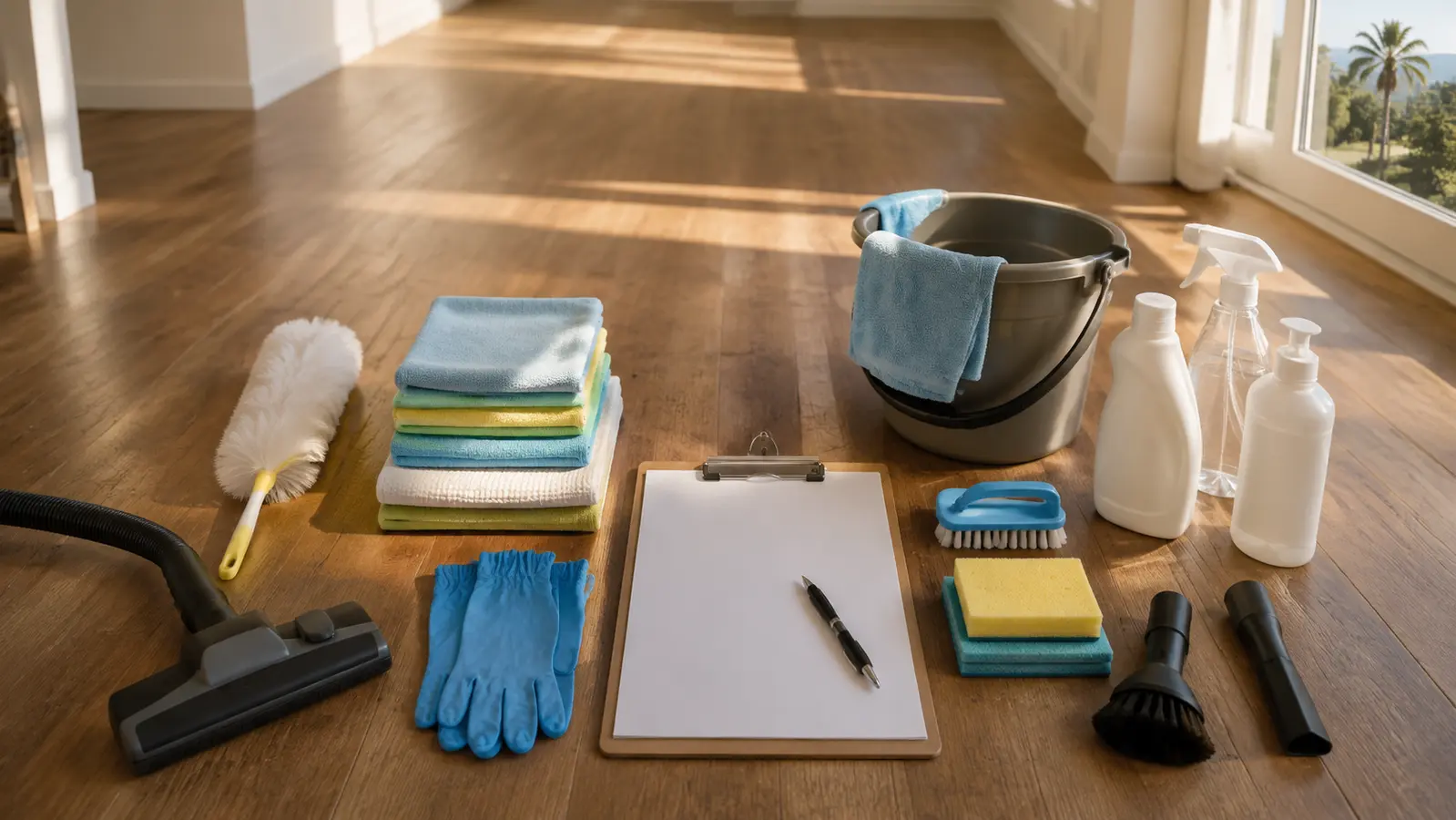
    Move-in cleaning supplies arranged on the floor of an empty home
    Gather surface-safe products and basic tools before starting your move-in cleaning checklist.

    The Best Order for Cleaning a New House

    Work from high to low and from dry tasks to wet tasks. Dusting ceiling fans after mopping only sends debris back onto a finished floor. Likewise, cleaning floors before contractors or movers finish walking through the property usually means doing the job twice.

    1. Remove trash and leftover materials. Clear packing scraps, shelf liner, abandoned items, and obvious debris.
    2. Dry dust from the top down. Start with ceiling corners, fixtures, fan blades, vents, shelves, door frames, and baseboards.
    3. Clean storage areas. Wipe closets, cabinets, drawers, and pantry shelves before belongings go inside.
    4. Deep clean kitchens and bathrooms. Give cleaning products the dwell time stated on their labels rather than wiping immediately.
    5. Clean glass and detail high-touch areas. Include mirrors, interior window glass where accessible, switches, handles, and knobs.
    6. Vacuum and mop last. Begin at the farthest point and work toward the exit so you do not walk across finished floors.

    Room-by-Room Cleaning a New House Checklist

    Kitchen

    Complete the kitchen before unpacking food, cookware, and dishes. Remove crumbs and dust from cabinet corners with a vacuum attachment, then wipe the interiors and allow them to dry. Clean cabinet fronts, pulls, pantry shelves, countertops, backsplash, sink, faucet, and the exterior of installed appliances.

    If appliances were included with the home, inspect the refrigerator shelves and seals, oven, stovetop, range hood, microwave, and dishwasher filter. Follow each manufacturer’s instructions. Avoid assuming one all-purpose product is safe for natural stone, unfinished wood, or specialty finishes. Finish by cleaning the floor after the upper surfaces are complete.

    Bathrooms

    Bathrooms are often the first rooms needed on moving day, so make at least one bathroom fully usable early. Dust the exhaust grille and light fixtures, wipe cabinet interiors, and clean mirrors. Then address the vanity, sink, faucet, tub, shower walls, tracks, fixtures, toilet, baseboards, and floor.

    Pay attention to corners, the area behind the toilet, cabinet handles, and buildup around fixtures. Use products designed for the surface and follow label directions for ventilation, contact time, and rinsing. Replace worn toilet seats or shower liners if that is part of your move-in plan, but leave plumbing repairs to a qualified professional.

    Bedrooms and closets

    Dust ceiling fans, vents, window sills, blinds, closet shelving, rods, door frames, and baseboards. Vacuum closet corners before placing shoes or storage bins inside. Clean hard floors with the appropriate method, or vacuum carpet slowly in overlapping passes. If carpet needs specialized treatment, arrange it before beds and dressers arrive.

    Living areas, hallways, and stairs

    Work around the room from top to bottom. Dust fixtures, fan blades, vents, ledges, doors, trim, and baseboards. Wipe high-touch areas such as switches, railings, handles, and thermostat covers without saturating electrical components. Clean interior glass and accessible tracks, then finish floors after all other work is complete.

    Laundry room and utility areas

    Wipe shelves, cabinet interiors, appliance exteriors, and the area around hookups. Check that the dryer vent connection appears intact before use and arrange professional service if anything looks damaged or obstructed. Clean the utility sink, remove lint and dust, and mop the floor. Do not move heavy appliances without the right equipment and assistance.

    Entry, garage, patio, and overlooked details

    Clean the inside of the entry door, handles, thresholds, and nearby glass. Sweep the garage and remove loose debris, but avoid disturbing unknown powders, chemicals, pest material, or construction waste. Wipe accessible patio-door tracks and make sure entrances are clear for movers.

    Before calling the checklist complete, look at the tops of doors, closet corners, return-air grilles, cabinet toe kicks, the space beside appliances, and the edges where floors meet baseboards. These are common places for dust to remain in an otherwise clean-looking home.

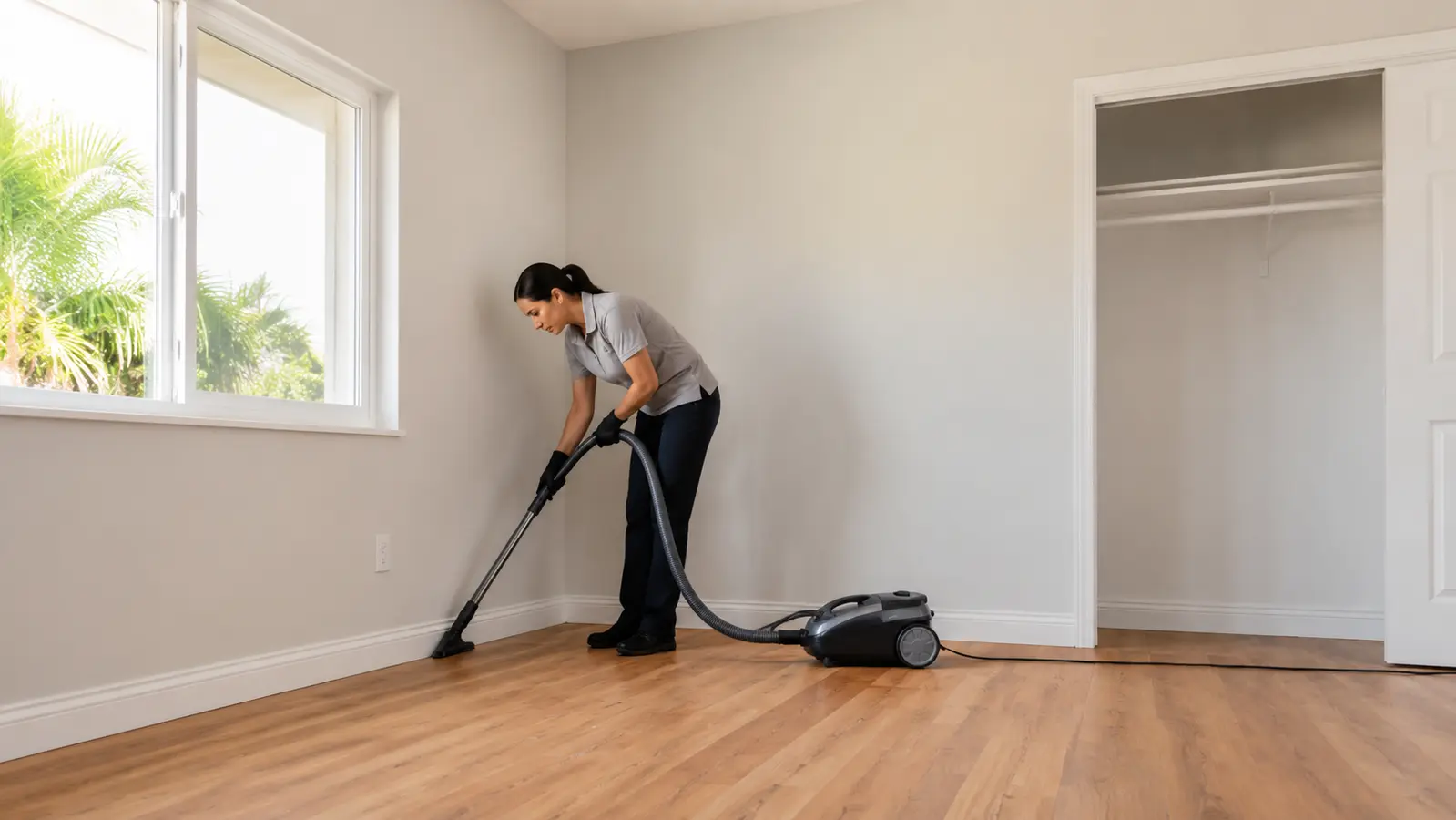
    Professional cleaner vacuuming baseboards in an empty room before move-in
    An empty home makes baseboards, corners, and floor edges easier to clean thoroughly.

    What to Clean Again After the Movers Leave

    A strong pre-move clean does most of the work, but moving traffic can bring in dirt and cardboard dust. After the last delivery, remove packing debris, wipe newly handled switches and door handles, vacuum traffic paths, and spot-mop hard floors. Clean the counters used for drinks or takeout and make one bathroom fresh again.

    This second pass should be quick because cabinets, appliances, bathrooms, and hard-to-reach areas were already detailed. Keep a small cleaning kit separate from the moving truck so it is easy to find.

    DIY or Professional Move-In Cleaning?

    DIY cleaning can work well when the home is small, already in good condition, and you have access several days before the move. Divide the property into zones, estimate the time honestly, and finish one room before starting another. If friends or family help, assign specific rooms to avoid duplicated effort.

    Professional help may make more sense when the timeline is tight, the home is large, buildup is significant, or your attention is already split among closing, utilities, packing, children, pets, and movers. A cleaning team can focus on the property while you handle the logistics only you can manage. Review the scope in advance so expectations are clear. For more detail, see what may be covered by a deep cleaning service and learn how to prepare for house cleaners.

    Final Walkthrough Before You Unpack

    • Cabinets, drawers, closets, and pantry shelves are clean and dry.
    • The kitchen and at least one bathroom are ready to use.
    • Ceiling fans, vents, trim, baseboards, and high-touch areas have been addressed.
    • Floors are vacuumed or mopped with the correct method.
    • No cleaning products, damp cloths, or trash were left behind.
    • Maintenance concerns discovered during cleaning were documented.
    • Cleaning supplies needed after moving are easy to locate.

    Frequently Asked Questions

    How long does it take to clean a new house before moving in?

    The time depends on the home’s size, condition, number of bathrooms, appliances, flooring, and whether cabinets and closets need interior cleaning. An empty home is easier to access, but detailed kitchen and bathroom work can still take several hours. Inspect first and avoid building your plan around an unrealistically short window.

    Should you clean before or after moving furniture in?

    Complete the detailed cleaning before furniture arrives whenever possible. Then do a shorter floor and high-touch-surface pass after the movers finish. This combination provides access to hidden areas without expecting floors to remain untouched during the move.

    What should be cleaned first in a new house?

    After removing debris, start with high dry-dusting tasks and storage interiors. Clean kitchens and bathrooms next, then glass and high-touch areas. Vacuum and mop floors last.

    Do you need a deep clean if the home looks clean?

    Not every property needs the same scope. Inspect cabinet interiors, appliances, bathroom edges, vents, baseboards, closets, and floors. A targeted clean may be enough when those areas are already in good condition; more detailed work is useful when dust, residue, or buildup remains.

    Start Your Orange County Move With a Cleaner Home

    A thoughtful cleaning a new house checklist gives you a simple advantage: you can unpack into rooms that already feel comfortable and ready for your belongings. If you would rather spend your pre-move time coordinating the move, SRS Cleaning provides professional move-in cleaning for homeowners across Orange County service areas.

    Request a house cleaning quote or call (714) 439-8500 to discuss your home, timeline, and cleaning priorities.

  • How Long Does Deep Cleaning Take in Your Home?

    How Long Does Deep Cleaning Take in Your Home?

    A deep clean is not the same as a quick reset before company arrives. It means addressing the dust behind furniture, the buildup in the shower, the crumbs in cabinet tracks, and the surfaces that regular weekly cleaning does not always reach. So, how long does deep cleaning take? For most homes, plan on several hours rather than a single hour – but the right estimate depends on the space and what it needs.

    The good news is that a professional deep cleaning is designed to give you time back, not create another project to manage. Knowing what affects the timeline makes it easier to schedule your service with confidence and enjoy the fresh, calm feeling afterward.

    How Long Does Deep Cleaning Take? Typical Timelines

    For a regularly maintained one-bedroom apartment or small condo, a deep cleaning often takes about two to four hours with a professional cleaning team. A two- or three-bedroom home commonly takes four to six hours. Larger homes, homes with multiple bathrooms, or spaces that have gone a long time without detailed cleaning can take six to eight hours or more.

    Those ranges are useful starting points, not promises. A 1,500-square-foot home with one resident who cleans regularly may take less time than a smaller home with pets, young children, heavy kitchen use, or hard-water buildup in several bathrooms.

    The number of cleaners also matters. A two-person team may complete the work in fewer clock hours than one cleaner working alone, while still putting the same careful attention into the home. When you request a quote, sharing the home size, number of rooms and bathrooms, and current condition helps set a realistic expectation.

    A practical estimate by home size

    Small apartments and condos generally fall in the two-to-four-hour range. Average family homes with two to three bedrooms are often in the four-to-six-hour range. Four-bedroom homes and larger properties may need six to eight hours, especially when there are several bathrooms, living areas, or detailed kitchen surfaces.

    For a move-in, move-out, or turnover clean, the timeline can be longer. Empty spaces make certain tasks easier, but they also reveal every baseboard, shelf, cabinet interior, and corner. A property that needs preparation for new tenants or listing photos deserves enough time for a detailed result.

    What Makes a Deep Clean Take Longer?

    Deep cleaning is thorough by design. The goal is to reset the home, not simply make it look tidy from the doorway. A professional team typically spends more time in the kitchen and bathrooms, where grease, soap residue, water spots, and daily use create the most buildup.

    Condition is usually the biggest variable. If a home has received recurring cleaning and just needs a more detailed refresh, the work moves more efficiently. If surfaces have accumulated months of dust, pet hair, stains, or grime, cleaners need additional time to treat those areas carefully rather than rushing through them.

    The following factors can affect the schedule:

    • Bathrooms: Extra bathrooms, glass shower doors, tile grout, soap scum, and hard-water deposits all add detail work.
    • Kitchen condition: Grease around the range, food residue in the microwave, cabinet fronts, and neglected sink areas can require more attention.
    • Pets and children: Pet hair, paw prints, toys, fingerprints, and the normal wear of a busy household add time, especially on floors and upholstered surfaces.
    • Clutter: Cleaners can work most effectively when counters, floors, and major surfaces are accessible. Organizing personal belongings is different from cleaning them.
    • Special requests: Inside cabinets, interior windows, blinds, fridge interiors, oven interiors, and heavy-duty spot treatment may be separate services or need extra time.

    These are not reasons to worry about booking. They are simply why clear communication matters. A good cleaning company asks the right questions before arrival, so the scope of work and time estimate fit your home.

    Deep Cleaning vs. Regular Cleaning Time

    A regular cleaning focuses on maintaining a comfortable, healthy space. It usually includes the core tasks that keep a home presentable: wiping surfaces, cleaning bathrooms, vacuuming, mopping, dusting accessible areas, and taking out trash.

    A deep cleaning goes further. It may include detailed baseboards, door frames, light switches, vents, fixtures, shower tracks, cabinet exteriors, and difficult-to-reach dust. It is often the right choice before starting recurring service, after a busy season, before hosting family, or when your home simply no longer feels as fresh as you want it to.

    Because it includes those details, a deep clean can take roughly twice as long as a routine visit. That is also why it creates such a noticeable difference. Once the detailed work is complete, recurring cleanings are usually faster and easier to maintain.

    How to Help Your Cleaning Appointment Stay on Schedule

    You do not need to clean before professional cleaners arrive. That defeats the purpose. A few simple preparations can help the team focus fully on the cleaning you hired them to do.

    Clear clothing, paperwork, toys, and personal items from floors and countertops when possible. Put away delicate or valuable items, and let the team know about rooms or surfaces that need special care. If you work from home, plan for access to rooms that need cleaning or mention any areas where you will need quiet and privacy.

    Pets also deserve a little planning. Many cleaners are comfortable working around friendly animals, but securing pets during the appointment can reduce stress for everyone and allow the team to work efficiently. If your pet has sensitivities, favorite hiding spots, or an area that should remain closed, share that information ahead of time.

    For move-out and move-in services, make sure utilities are on and the property is accessible. If the home is empty, confirm whether any furniture, leftover belongings, or contractor dust remains. These details affect both the work plan and the time needed to finish properly.

    When You Should Schedule a Longer Cleaning Window

    Some homes need more than a standard deep-cleaning block. Consider allowing extra time if you have recently completed renovations, are preparing a home for sale, are moving out after a long tenancy, or have postponed cleaning while managing a demanding season of life.

    A longer appointment is also sensible when there are multiple pets, significant hard-water buildup, smoke residue, or heavy grease in the kitchen. The goal should not be to fit detailed work into the shortest possible visit. It should be to give the cleaners enough time to deliver the clean, comfortable result you expect.

    For Orange County homeowners, renters, and property managers, timing can be especially important around lease deadlines, open houses, family visits, and busy workweeks. Booking before the last possible day leaves room for any scheduling changes and keeps cleaning from becoming another source of pressure.

    A Better Way to Plan Your Day

    Rather than waiting at home and watching the clock, treat a deep-cleaning appointment as protected time for something else. Run errands, work from a nearby café, take the kids to the park, or simply enjoy a quieter part of your day. If you need to be home, a professional team can usually work room by room with clear communication and minimal disruption.

    SRS Cleaning helps clients set clear expectations before the appointment, because a well-planned service feels easier from the first quote to the final walkthrough. The exact timing may vary, but the outcome should be consistent: a home that feels lighter, more comfortable, and easier to keep up with.

    Give your home the time a real reset requires. A few hours of focused, professional cleaning can make the rest of the week feel far more manageable.

  • Deep Cleaning Irvine Homes: What to Expect

    Deep Cleaning Irvine Homes: What to Expect

    A home can look reasonably tidy while still carrying the signs of a busy month: fingerprints around light switches, dust behind furniture, soap residue in the shower, and crumbs that have settled into places no quick clean reaches. Deep cleaning Irvine homes is designed for that moment. It gives your space a more complete reset, so it feels comfortable, cared for, and easier to maintain.

    For homeowners, renters, families, and professionals with full schedules, the biggest benefit is not simply a shinier kitchen or cleaner bathroom. It is the relief of knowing the details have been handled. You get back time, reduce the mental load of an ever-growing chore list, and return to a home that feels calmer.

    What Deep Cleaning in Irvine Usually Includes

    Deep cleaning goes beyond the regular upkeep that keeps a home presentable week to week. A recurring cleaning visit may focus on surfaces, floors, bathrooms, kitchen counters, and general tidying. A deep clean gives added attention to buildup, overlooked areas, and the places that need more than a quick wipe.

    In the kitchen, that often means cleaning cabinet fronts, wiping down appliances, addressing grease around the stovetop, sanitizing frequently touched surfaces, and reaching into edges where crumbs collect. In bathrooms, a deep service typically focuses on soap scum, mineral residue, grout areas, toilet exteriors, fixtures, baseboards, and the areas around sinks and tubs.

    Living areas and bedrooms also benefit from more detailed care. Dust can settle on blinds, ceiling fans, vents, window sills, doors, trim, and baseboards long before it becomes obvious. A professional deep clean brings these surfaces back into the routine, along with thorough vacuuming and mopping where appropriate.

    The exact scope depends on the home, its condition, and the service you book. A recently maintained condo will need a different level of attention than a large family home that has gone months without a detailed cleaning. Clear communication before the appointment matters because it helps set the right expectations for both the cleaner and the client.

    When a Deep Clean Makes the Most Sense

    There is no wrong time to want a cleaner home, but certain situations make a deep cleaning especially useful. Many Irvine residents schedule one before beginning recurring service. Starting with a detailed reset allows future visits to focus on maintenance rather than trying to catch up on long-standing buildup.

    It is also a practical choice before hosting guests, returning from extended travel, welcoming a new baby, or getting ready for a holiday gathering. When life gets busy, cleaning often becomes something people manage in small pieces. A deep clean handles the accumulated work at once, without taking up an entire weekend.

    Moving is another common reason. Move-in cleaning gives you a fresh start before furniture and boxes fill the rooms. Move-out cleaning can help renters leave their apartment or home in good condition and gives owners, property managers, and real estate professionals a cleaner space for the next step. For a pre-sale property, a well-cleaned interior supports better photos, more comfortable showings, and a more polished first impression.

    The Difference Between Deep Cleaning and Move-Out Cleaning

    These services can overlap, but they are not always identical. Deep cleaning is generally intended to refresh an occupied home and address the details that regular cleanings may not cover. The goal is a thoroughly clean, comfortable environment that is ready for daily life.

    Move-out cleaning is usually tailored to an empty or mostly empty property. With furniture removed, cleaners can access floors, cabinets, closets, drawers, and other areas that are not available during an occupied-home service. Property requirements also vary. A landlord, lease agreement, or property manager may have specific expectations, so it is worth sharing those details when requesting a quote.

    If you are unsure which service fits, think about the condition of the space and what happens next. Are you staying and looking for a reset? Deep cleaning is likely the right choice. Are you handing over keys, preparing for new tenants, or setting up a vacant property for sale? A move-out or turnover-focused service may be the better match.

    How to Prepare for Your Appointment

    You do not need to clean before professional cleaners arrive. That defeats the purpose of hiring help. Still, a little preparation can help the appointment run smoothly and allow more time for actual cleaning.

    Put away highly personal items, important documents, and fragile belongings that you would prefer cleaners not move. If countertops, floors, or desks are covered with loose items, clearing them makes those surfaces easier to clean thoroughly. Let the cleaning team know about pets, access instructions, parking considerations, alarm systems, and any rooms or items that need special attention.

    It also helps to be realistic about clutter. Cleaning and organizing are related, but they are different tasks. A cleaner can make a home feel refreshed, but heavy sorting, packing, or decluttering can limit how much detailed cleaning is possible within the scheduled visit. If a room has become a storage area, consider clearing a path and deciding what should stay before the appointment.

    What to Look for in a Cleaning Company

    Letting someone into your home requires trust. Price matters, but the lowest quote is not always the best value if communication is unclear, the scope is vague, or the provider is not properly insured. Look for a company that explains what is included, confirms appointment details, and makes it easy to ask questions before service begins.

    Professional standards matter too. Background-checked cleaners, insurance, reliable scheduling, and a satisfaction-focused process give clients more peace of mind. You should feel comfortable sharing your priorities, whether that means a shower that needs extra attention, a pet-friendly home, a nursery, or a home office that must be ready for work the next morning.

    Local experience can also be helpful. A company serving Orange County understands the needs of households, rentals, offices, and property turnovers throughout the area. SRS Cleaning provides deep cleaning alongside recurring, move-in, move-out, and office cleaning services, making it easier to choose support that fits the stage your home or property is in.

    Keeping the Results Longer

    A deep clean creates a strong baseline, but daily life will naturally bring dust, dishes, laundry, and bathroom buildup back into the picture. The goal is not perfection. It is making maintenance manageable enough that your home continues to feel good between professional visits.

    A few small habits can make a noticeable difference: wipe kitchen counters after cooking, use a shower squeegee or quick rinse after bathing, take a few minutes to reset high-traffic areas in the evening, and handle spills before they have time to set. If your schedule is demanding, recurring cleaning can take care of the routine work while you focus on the parts of home life that matter more.

    The best frequency depends on how many people live in the home, whether there are pets or children, how often you cook, and your personal standards for cleanliness. Some households benefit from a deep clean once or twice a year. Others prefer one before starting a recurring schedule or whenever a major transition makes the home feel overdue for attention.

    A Clean Home Should Feel Easier

    The value of a deep cleaning is often felt after the cleaners leave. You notice it when you walk into a fresh bathroom, make dinner on a clean counter, sit down in a dust-free living room, or open a cabinet without seeing old spills and crumbs. Those small moments change how a space feels.

    If your home has reached the point where cleaning feels like another unfinished responsibility, a professional deep clean can be a simple way to reset. Choose a service with clear communication, a scope that matches your needs, and a team you can trust. Then let a cleaner home make room for a calmer week.

  • Deep Cleaning vs Standard Cleaning Explained

    Deep Cleaning vs Standard Cleaning Explained

    A home can look tidy at a glance and still need more attention than a quick weekly reset can provide. That is where the choice between deep cleaning vs standard cleaning becomes useful. Both services create a cleaner, more comfortable space, but they serve different purposes. Choosing the right one helps you spend wisely, set clear expectations, and enjoy the kind of clean your home actually needs.

    For busy Orange County households, the best option often depends on what has been happening behind the scenes. Maybe your kitchen is maintained but the cabinet fronts need attention. Maybe life has been hectic, guests are coming, or you are settling into a new place. A professional cleaning plan should meet you where you are, not ask you to fit your home into a one-size-fits-all checklist.

    What Standard Cleaning Is Designed to Do

    Standard cleaning is the practical, recurring service that keeps your home feeling under control. It focuses on the areas that collect everyday dust, crumbs, fingerprints, and bathroom residue. Think of it as the regular maintenance that protects your baseline of comfort between deeper appointments.

    A standard visit typically includes dusting accessible surfaces, vacuuming and mopping floors, cleaning kitchen counters and the exterior of appliances, wiping sinks, and cleaning toilets, showers, and tubs. Bedrooms and living areas are straightened and refreshed, while high-use surfaces receive the attention they need to look presentable and feel clean.

    Best for homes that are already maintained

    Recurring standard cleaning is a strong fit when your home is in reasonably good shape and you want to keep it that way. Families with packed schedules, professionals who would rather spend weekends elsewhere, and office managers who need a consistently polished workplace often benefit most from this approach.

    It is not intended to remove months of buildup or restore neglected areas in one visit. If grease has hardened inside the oven, soap scum has built up around shower fixtures, or baseboards have not been cleaned in a long time, those tasks usually fall outside a routine maintenance appointment. That is not a limitation of quality. It is simply a difference in the time and detail required.

    What Deep Cleaning Adds

    Deep cleaning goes beyond visible, day-to-day upkeep. It targets the detailed areas that are easy to postpone when life is full: buildup around faucets, grime on baseboards, dust on blinds, fingerprints on doors, and residue inside appliances or cabinets when included in the service scope.

    This is a more thorough appointment, often with extra time devoted to kitchens and bathrooms. Those rooms work hard, and they tend to show it. A deep clean can address the places where moisture, cooking residue, dust, and regular use slowly accumulate, even in a generally tidy home.

    More time, more detail, different expectations

    Because deep cleaning covers more ground, it generally takes longer and costs more than standard cleaning. The condition, size, layout, and occupancy of the home all affect the appointment. A one-bedroom apartment that has been regularly maintained will require a different level of effort than a large family home with pets, children, and several months of deferred cleaning.

    A deep clean is also a smart starting point before recurring service. Once the home has been brought back to a detailed baseline, standard appointments can focus on maintaining that result. This combination can be especially helpful for clients who want consistency without making cleaning another item on their weekly to-do list.

    Deep Cleaning vs Standard Cleaning: Key Differences

    The simplest distinction is purpose. Standard cleaning maintains a clean home. Deep cleaning resets one that needs more detailed attention.

    | Area | Standard Cleaning | Deep Cleaning | | — | — | — | | Main goal | Maintain everyday cleanliness | Address buildup and detailed neglected areas | | Frequency | Often weekly, biweekly, or monthly | Usually occasional or before recurring service | | Time required | More predictable and efficient | Longer because the scope is more detailed | | Best timing | Ongoing household or office upkeep | Seasonal resets, transitions, or homes needing a fresh start |

    The exact task list can vary from one provider to another, so always review what is included before booking. For example, inside refrigerators, ovens, cabinets, interior windows, laundry rooms, and heavily soiled areas may require an add-on or a specific move-in or move-out service. Clear communication upfront prevents surprises later.

    When Standard Cleaning Is the Better Choice

    Choose standard cleaning when you are looking for reliable upkeep rather than a major reset. If counters are generally clear, bathrooms are regularly used but not heavily built up, and floors simply need consistent care, a routine visit offers excellent value.

    This service is often ideal after a deep clean, too. A biweekly or monthly schedule can reduce the pressure of keeping up with dust, bathrooms, and kitchen messes on your own. Instead of spending Saturday catching up, you can come home to an environment that feels calmer and easier to enjoy.

    Standard cleaning also makes sense for offices that need a professional appearance without disrupting daily operations. Regular attention to shared surfaces, restrooms, break rooms, and floors supports a more comfortable experience for employees and visitors alike.

    When a Deep Clean Is Worth It

    A deep clean is the right call when routine cleaning no longer feels like enough. You may notice dull floors, bathroom buildup, dust along edges and vents, sticky cabinet handles, or a kitchen that never quite feels fresh despite your efforts. These are common signs that the home needs a more detailed appointment.

    It is also useful after a busy season. Hosting relatives, school breaks, home projects, illness, or an especially demanding work stretch can push cleaning down the priority list. A deep cleaning appointment can remove the stress of catching up all at once.

    Moving, selling, and property turnovers

    Transitions deserve their own level of care. A move-in cleaning helps make a new home feel like yours before boxes fill the rooms. A move-out cleaning supports a smoother handoff and can help renters, landlords, and property managers prepare for the next step.

    For real estate professionals and homeowners preparing to sell, a detailed clean can make rooms feel brighter, more cared for, and more inviting during showings. It will not replace repairs, decluttering, or staging, but it creates a clean foundation for each of those efforts.

    How Often Should You Schedule Each Service?

    There is no single schedule that works for every household. A home with two adults and no pets may be comfortable with monthly standard cleaning. A busy family with a dog, young children, or frequent visitors may prefer weekly or biweekly service. Allergy concerns, beach sand, work-from-home routines, and cooking habits can all change the answer.

    Many homes benefit from a deep cleaning once or twice a year, with standard service in between. Others only need a deep clean before starting recurring appointments, moving, hosting a major event, or recovering from a period when housekeeping fell behind.

    The key is to choose a cadence that prevents stress from building. Cleaning should support your life, not become another standard you feel pressured to meet.

    What to Confirm Before You Book

    Before scheduling, share an honest picture of your space. Mention pets, stairs, parking limitations, delicate surfaces, areas of heavy buildup, and any rooms you would like prioritized. This helps a professional cleaning team plan appropriate time and bring the right expectations to the appointment.

    Ask for a clear description of the service scope, especially if you need inside-appliance cleaning, interior cabinets, or turnover-specific work. You should also know whether the company is licensed and insured, how communication works, and what happens if you are not satisfied with the service.

    SRS Cleaning approaches these details with straightforward communication, background-checked cleaners, and service options built around real homes, real schedules, and real transitions. The goal is simple: less time managing chores and more time enjoying your space.

    A clean home does not have to mean giving up your free time or waiting until the mess feels overwhelming. Whether you need regular support or a detailed reset, choose the service that gives you room to breathe, then let that clean feeling carry into the rest of your week.

  • What a Deep Cleaning Service Includes at Home

    What a Deep Cleaning Service Includes at Home

    A home can look reasonably tidy and still need more attention than a quick weekly reset can provide. Knowing what a deep cleaning service includes helps you book with confidence, set clear expectations, and enjoy the real benefit of professional cleaning: less stress in the spaces you use every day.

    Deep cleaning is designed to address the buildup that develops gradually, often in the places people do not have time to clean regularly. Think cabinet fronts marked by busy mornings, soap residue around shower fixtures, dust along baseboards, and crumbs hiding beneath furniture. It is a detailed, room-by-room service that restores a fresher starting point for your home.

    What a Deep Cleaning Service Includes

    The exact checklist can vary by home, service provider, and appointment type. Square footage, the number of bathrooms, pets, how long it has been since the home was professionally cleaned, and the condition of high-use areas all affect the work involved. Still, a quality deep clean generally goes well beyond routine surface cleaning.

    Kitchen cleaning that reaches past the counters

    Kitchens collect grease, food splatters, fingerprints, and everyday messes faster than almost any other room. During a deep cleaning, cleaners typically wipe and sanitize countertops, clean the sink and faucet, wipe the exterior of major appliances, and clean the stovetop.

    The service commonly includes wiping cabinet and drawer fronts, cleaning the microwave inside and out, dusting accessible surfaces, and removing crumbs or debris from reachable areas. Floors are vacuumed or swept and mopped with attention to edges and corners.

    The inside of an oven, refrigerator, cabinets, or drawers is often considered an add-on rather than a standard inclusion. That is not a shortcut. These tasks require extra time and may require the homeowner to remove food, dishes, or personal items first. Ask about them when requesting a quote so there are no surprises on cleaning day.

    Bathroom cleaning focused on buildup

    A deep-cleaned bathroom should feel noticeably different. The work usually includes scrubbing and sanitizing toilets, tubs, showers, sinks, countertops, faucets, mirrors, and surrounding surfaces. Cleaners pay particular attention to soap scum, water spots, toothpaste residue, and grime around fixture bases.

    Shower doors, tile, and grout receive more focused attention than they would during a standard maintenance visit. However, there is a practical distinction between cleaning and restoration. Permanent hard-water staining, damaged grout, rust, mold that has penetrated caulk, or etched glass may not fully come out with routine professional products and methods. A reliable cleaning company will be honest about what can reasonably be improved.

    Bathroom floors are also cleaned carefully, including reachable corners and areas around the toilet. For busy households, this detailed work can make the room feel cleaner, brighter, and easier to maintain between appointments.

    Bedrooms and living areas with detail work

    In bedrooms, living rooms, hallways, and other common areas, deep cleaning typically includes dusting accessible furniture and décor, wiping reachable surfaces, cleaning mirrors and glass, vacuuming upholstery when applicable, and vacuuming or mopping floors.

    Detail work is what separates a deep clean from a basic tidy-up. That may include dusting ceiling fans, vents, blinds, window sills, door frames, switch plates, baseboards, and reachable light fixtures. Cobwebs are removed, and doors and door handles are wiped down.

    Cleaners generally move light furniture when it is safe and practical to do so. Heavy sectionals, large beds, entertainment centers, and fragile pieces are usually not moved because of safety, flooring protection, and liability considerations. If there is a particular area under furniture that matters to you, mention it before the appointment. Clear communication makes it easier to plan the visit well.

    Floors, edges, and high-touch surfaces

    Floors often show the clearest difference after a deep clean. Carpeted areas are thoroughly vacuumed, while hard flooring is swept and mopped using methods appropriate to the material. The focus includes visible traffic patterns, corners, and edges that can be missed during everyday cleaning.

    High-touch surfaces also receive attention. Door handles, light switches, railings, and commonly used surfaces can collect fingerprints and residue throughout the week. Cleaning these areas supports a fresher, more comfortable home, especially for families balancing work, school, guests, and busy schedules.

    What Deep Cleaning Usually Does Not Include

    A deep clean is comprehensive, but it is not every cleaning task imaginable. Setting the right scope protects your time and helps the cleaning team deliver excellent results in the areas covered.

    Services that may be excluded or available as separate options include interior oven and refrigerator cleaning, interior windows, exterior windows, garage cleaning, wall washing, laundry, organizing, pest removal, heavy lifting, hazardous waste removal, and post-construction debris. Carpet shampooing and specialized stain treatment also may require a separate service.

    It is also helpful to distinguish deep cleaning from move-out cleaning. A move-out service is tailored to an empty or mostly empty property and may include inside cabinets, drawers, closets, and appliances because the home needs to be ready for a landlord, buyer, or new resident. Deep cleaning is usually designed for a furnished, lived-in home that needs a serious reset.

    When a Deep Clean Makes the Most Sense

    Many Orange County homeowners schedule a deep clean before beginning recurring service. Starting with detailed cleaning allows future visits to focus on maintaining the results rather than catching up on accumulated buildup.

    It is also a smart choice after a busy season, before hosting guests, following a renovation with light dust, or when your home simply no longer feels as fresh as you want it to feel. Renters may choose it before or after a lease transition, while real estate professionals and property managers may use deep or turnover cleaning to help a property show its best.

    For some households, a deep clean once or twice a year is enough. Homes with young children, pets, frequent entertaining, or allergy concerns may benefit from it more often. There is no single schedule that fits everyone. The best timing is the one that keeps cleaning from becoming another source of pressure.

    How to Prepare for a Better Cleaning Visit

    You do not need to clean before professional cleaners arrive. That defeats the purpose. A little preparation, though, gives the team more time to focus on actual cleaning rather than working around clutter.

    Put away loose clothing, paperwork, toys, and personal items from floors and countertops when possible. Let the team know about delicate items, areas to avoid, pets, alarm instructions, parking details, and any surfaces that need special care. If you have a product preference or sensitivity, share that before the visit.

    Be specific about your priorities, too. Perhaps the kitchen has been bothering you most, the guest bathroom needs extra attention, or pet hair is collecting beneath the sofa. A dependable provider welcomes those details and uses them to make the service feel personal rather than generic.

    Choosing a Service You Can Trust

    A deep clean means inviting people into your home, so trust matters as much as the checklist. Look for a licensed and insured company with background-checked cleaners, clear communication, straightforward pricing, and a satisfaction policy. A quote should reflect the size and condition of the home rather than relying on vague promises.

    At SRS Cleaning Services, the goal is simple: provide Orange County clients with detail-oriented cleaning and an easy, professionally managed experience from booking through completion. You should know what is being cleaned, who is coming to your home, and how to get questions answered.

    A well-planned deep clean is more than a polished sink or freshly vacuumed floor. It gives you back a home that feels easier to live in, easier to maintain, and more peaceful to come back to.

  • What Are Deep Cleaning Services? A Clear Guide

    What Are Deep Cleaning Services? A Clear Guide

    A home can look tidy while still carrying the signs of a very busy life: fingerprints on light switches, soap buildup around the sink, crumbs beneath the toaster, and dust collecting where the vacuum rarely reaches. If you have wondered, “what is deep cleaning services?” the simple answer is that it is a detailed, top-to-bottom cleaning designed to reset your space beyond everyday upkeep.

    Deep cleaning focuses on the areas that are easy to miss during a regular weekly clean but make a real difference in how fresh, comfortable, and cared for a home or workplace feels. It is a practical way to catch up after a hectic season, prepare for a move, or establish a clean starting point before recurring service begins.

    What Are Deep Cleaning Services?

    Deep cleaning services are more thorough than standard maintenance cleaning. Rather than concentrating mainly on visible surfaces and routine tasks, a professional team spends additional time addressing accumulated dust, grime, residue, and neglected details throughout the property.

    The goal is not simply to make a room look presentable for the day. It is to clean the places that affect the overall feel of the space: baseboards, cabinet fronts, door frames, fixtures, corners, and high-touch areas. A well-executed deep clean can make a home feel lighter and easier to maintain afterward.

    The exact checklist varies by company, the condition of the property, and the service selected. That matters because “deep cleaning” is not a single universal package. Before booking, ask for clear details about what is included and whether there are add-on options for inside appliances, interior windows, blinds, or other specific needs.

    What a deep clean typically covers

    In kitchens, deep cleaning often includes cleaning and sanitizing counters, sinks, appliance exteriors, cabinet fronts, backsplashes, and the areas around handles and switches. Professionals may also remove grease buildup from the stovetop area and clean visible crumbs and debris from hard-to-reach edges.

    Bathrooms receive close attention because moisture and daily use can create buildup quickly. A deep clean typically addresses tubs, showers, toilets, sinks, mirrors, faucets, tile surfaces, and the exterior of cabinets. Soap scum and mineral deposits may need extra time, especially in frequently used bathrooms.

    Across bedrooms, living areas, and common spaces, the work generally includes detailed dusting, vacuuming, mopping, wiping accessible surfaces, and cleaning baseboards, doors, and light switches. Teams may also focus on cobwebs, ceiling fan blades, window sills, and the edges where floors meet walls.

    For offices and light commercial spaces, a deep cleaning service can help restore shared work areas, reception spaces, break rooms, and restrooms after heavy use. The scope should be tailored to the building’s needs, operating hours, and the surfaces that receive the most traffic.

    Deep Cleaning vs. Regular House Cleaning

    Regular cleaning is about consistency. It keeps your home in good working order by handling the tasks that need frequent attention, such as vacuuming, mopping, wiping kitchen and bathroom surfaces, taking out trash, and tidying dust from accessible areas.

    A deep clean is about detail and reset. It takes longer because it includes more intensive work in places that do not need attention every week. Think of it as the foundation for a cleaner routine rather than a replacement for one.

    For many Orange County households, the most effective approach is to schedule a deep clean first and then move into recurring house cleaning. This gives the cleaning team a strong baseline and helps prevent the return of the buildup that makes a home feel harder to manage.

    That said, recurring service is not the right answer for everyone. A one-time deep cleaning may be all you need before hosting family, returning from a long trip, listing a property, or getting settled after a demanding period at work. The right schedule depends on household size, pets, children, allergies, how often you cook, and how much time you want to spend cleaning on weekends.

    When Is a Deep Cleaning Service Worth It?

    Deep cleaning is especially helpful when routine cleaning has fallen behind. This is common, not a failure. Work schedules change, families get busy, and household tasks can pile up quietly until they become a source of stress.

    It is also a smart choice before or after a move. A move-in deep clean gives you the confidence of starting fresh in a new home. A move-out cleaning helps renters, homeowners, and property managers present a space in its best condition for the next occupant. For real estate professionals, a detailed clean before photos, showings, or an open house can help rooms feel brighter and more inviting without changing the property itself.

    Consider a deep cleaning service when you notice these signs:

    • Your usual cleaning routine no longer feels like it is catching up.
    • Bathrooms have visible soap scum, hard-water marks, or grime around fixtures.
    • Kitchen surfaces, cabinet fronts, and appliance areas feel sticky or greasy.
    • Dust is collecting on baseboards, vents, ceiling fans, or window sills.
    • You want a clean baseline before beginning recurring service or welcoming guests.

    A deep clean can also be valuable after renovations or home projects, although post-construction cleaning may require a separate scope. Fine construction dust, paint residue, and debris can call for specialized equipment or more time than a typical residential deep clean. Being clear about the condition of the home helps a cleaning company provide an accurate quote and bring the right supplies.

    What Deep Cleaning May Not Include

    A professional deep clean is detailed, but it has reasonable limits. Most standard deep-cleaning appointments do not include hazardous waste, mold remediation, pest removal, exterior window washing, heavy lifting, or cleaning areas that are unsafe or inaccessible. Inside ovens, refrigerators, cabinets, and windows are often available by request rather than automatically included.

    This is where communication matters. Share your priorities before the appointment. If the inside of the refrigerator matters more than window sills, say so. If a guest room will not need attention but the kitchen needs extra help, a good service provider can explain the options and help direct time where it matters most.

    It also helps to do a small amount of preparation. Putting away personal items, clearing heavily cluttered counters, and securing pets allow cleaners to spend more time on actual cleaning. You do not need to clean before the cleaners arrive, but giving them safe, reasonable access to surfaces creates better results.

    How to Choose a Deep Cleaning Company

    The lowest quote is not always the best value. Deep cleaning involves time, access to your home or office, and close attention to details. Choose a company that communicates clearly about scope, pricing, arrival windows, and what happens if you have a concern after service.

    Trust should be part of the decision. Look for a licensed and insured provider with background-checked cleaners, a straightforward satisfaction policy, and an easy way to book or ask questions. For busy homeowners, renters, office managers, and property managers, reliability is often just as valuable as the cleaning itself.

    Before your appointment, confirm the number of bathrooms, bedrooms, pets, parking details, and any special requests. These details help prevent surprises and allow the team to plan appropriately. A reputable company will be honest if a heavily soiled space needs extra time or if a requested task falls outside the standard service.

    SRS Cleaning Services helps Orange County clients create a clean starting point with detail-oriented deep cleaning, clear communication, and service built around your schedule. Whether you are preparing for a move, resetting after a busy month, or simply ready to enjoy your home more, a thoughtfully planned deep clean can take a persistent task off your mind and put calmer time back into your week.

  • When Deep Cleaning Services for Homes Make Sense

    When Deep Cleaning Services for Homes Make Sense

    A home can look reasonably tidy and still feel like it needs attention everywhere. The dishes may be put away and the floors may be clear, but soap buildup around the faucet, crumbs beneath the toaster, dusty baseboards, and fingerprints on doors quietly add up. That is where deep cleaning services for homes make a meaningful difference. They address the work that is easy to postpone, helping your space feel genuinely refreshed rather than simply picked up.

    For busy Orange County households, a deep clean is often less about perfection and more about relief. It creates a clean starting point, gives you back a weekend, and makes everyday upkeep feel far more manageable.

    What Deep Cleaning Services for Homes Usually Include

    Deep cleaning goes beyond the routine tasks that keep a home presentable from week to week. A standard recurring visit may focus on visible surfaces, floors, bathrooms, kitchen counters, and general tidying. A deep clean gives extra time and attention to areas where grime, dust, and buildup tend to settle.

    In the kitchen, that can mean detailed cleaning of cabinet fronts, backsplash areas, appliance exteriors, the microwave interior, sink fixtures, and the spaces around commonly used appliances. In bathrooms, a deep clean often focuses on soap residue, hard-water marks, shower doors, tile, grout, toilet bases, vents, and the corners that do not get much attention during a quick weekly clean.

    Throughout the home, cleaners may also wipe baseboards, doors, light switches, window sills, ceiling fans, blinds, and reachable trim. Floors receive more detailed care around edges and under accessible furniture. The goal is not just to make a room look good at a glance. It is to remove the layer of everyday buildup that makes a home feel less comfortable.

    Every home and service provider is different, so it helps to confirm the checklist before booking. Interior oven cleaning, interior refrigerator cleaning, laundry, exterior windows, heavy wall washing, or cleaning behind large appliances may be available as add-ons or may require special arrangements. Clear expectations protect your time and help the cleaning team arrive prepared.

    Signs Your Home Is Ready for a Deep Clean

    You do not need to wait for a special occasion to schedule detailed cleaning. Often, the best time is when keeping up has started to feel harder than it should.

    A deep clean can be especially helpful after a busy season at work, a stretch of travel, a holiday gathering, a renovation project, or months of relying on quick resets between obligations. Families with young children or pets may also benefit from occasional deeper service because floors, upholstered areas, bathrooms, and high-touch surfaces get more use.

    It is also a practical first appointment before starting recurring cleaning. Beginning with a thorough reset allows routine visits to focus on maintaining the result instead of spending every appointment catching up. For many households, this is the simplest path to a cleaner home with less ongoing effort.

    There are times when a different service may be the better fit. A move-out cleaning, for example, is designed around an empty or mostly empty property and may include details that matter for a landlord, property manager, or final walkthrough. A post-construction cleanup involves fine dust and debris that should be handled differently. Explaining your situation when requesting a quote helps ensure the service matches the condition of the home.

    Why the Difference Matters Day to Day

    The benefit of a deep clean is not limited to what guests see. It changes how a home feels when you are making coffee before work, getting children out the door, or settling in at the end of a long day. Clean bathroom fixtures, a clear kitchen, and dust-free surfaces reduce the number of small chores competing for your attention.

    It can also make regular cleaning faster. Once grease, mineral deposits, dust, and residue have been removed, weekly wiping and vacuuming become less demanding. Instead of trying to recover from several months of buildup, you are maintaining a cleaner baseline.

    For households with allergies or sensitivities, detailed dusting and cleaning of high-touch and overlooked areas can support a more comfortable indoor environment. A cleaning service is not a substitute for medical treatment or specialized remediation, but removing common household dust and buildup can still improve how a space feels and functions.

    The emotional side matters, too. Many people carry a running mental list of tasks they have not had time to finish. Outsourcing a deep clean can remove several items from that list at once. You are not just paying for cleaned tile or polished fixtures. You are making room for rest, family time, work, or plans that do not involve spending Saturday scrubbing the shower.

    How to Prepare Without Making More Work for Yourself

    You do not need to pre-clean before a professional deep cleaning appointment. In fact, doing so defeats much of the purpose. A few simple preparations can help the team focus on detailed cleaning from the moment they arrive.

    Try to put away clothing, paperwork, toys, and personal items from the main surfaces and floors. This is not about making the house look perfect. It simply gives cleaners better access to the areas you want cleaned. If there are rooms you would prefer not to have serviced, or surfaces that need special care, let the company know in advance.

    Pets deserve a little planning as well. Some pets are comfortable around cleaning activity, while others are stressed by vacuums, unfamiliar people, or open doors. Decide whether your pet will stay in a quiet room, be crated, or be out of the home during the appointment. Sharing that information ahead of time helps everyone have a smoother visit.

    If you have priorities, say so clearly. Maybe the kitchen needs the most help, the primary bathroom has hard-water buildup, or you are preparing for family to visit. A dependable cleaning company should welcome those details and communicate what can reasonably be completed within the scheduled service.

    Choosing a Cleaning Team You Can Trust

    A deep clean is personal. You are inviting people into the spaces where your family lives, relaxes, and keeps important belongings. Price matters, but it should not be the only factor in your decision.

    Look for a company that communicates clearly about pricing, scope, arrival windows, and what happens if something needs attention after the visit. Licensed and insured service, background-checked cleaners, and a satisfaction-focused process provide added confidence, especially when you are trusting a team in your home for the first time.

    Consistency is valuable, too. A professional team should have a defined cleaning process while still listening to the needs of your household. That balance matters when a home has delicate finishes, pets, children, access instructions, or a busy schedule that leaves little room for back-and-forth.

    For residents across Orange County, SRS Cleaning Services approaches deep cleaning with that same practical goal: clear communication, careful service, and a home that feels easier to enjoy. The right appointment should not create another task to manage. It should take one off your plate.

    How Often Should You Schedule a Deep Clean?

    There is no single schedule that works for every household. A busy family with pets may want a deep clean two or three times a year, while a smaller household with regular recurring service may only need one annually. If you have recently moved in, hosted a major event, or fallen behind during a demanding season, a one-time reset may be exactly what you need.

    The condition of the home matters more than a calendar rule. When bathrooms require more than a quick wipe, kitchen surfaces feel sticky even after routine cleaning, or dust seems to return immediately, it may be time to schedule a detailed service. Starting before the buildup becomes overwhelming is usually the easier, less stressful choice.

    A deeply cleaned home does not have to stay perfect to be worth it. It simply gives you a calmer place to begin – and more freedom to spend your time on the parts of home life that matter most.

  • House Cleaning Deep Cleaning Checklist for Every Room

    House Cleaning Deep Cleaning Checklist for Every Room

    A home can look tidy while still carrying the buildup that makes it feel less comfortable: soap film on shower doors, grease above the range, dust along baseboards, and fingerprints on the places everyone touches. This house cleaning deep cleaning checklist helps you work through those details without turning a free weekend into an exhausting all-day project.

    Deep cleaning is not about making a home look perfect. It is a periodic reset that addresses the work regular cleaning does not always cover. For busy Orange County households, the best approach is to focus on the areas that affect daily comfort first, then decide which remaining tasks are worth handling yourself.

    Start With a Realistic Plan

    A deep clean goes faster when you clean from high to low and dry to wet. Dust ceiling fans, vents, shelves, and blinds before vacuuming floors. Apply bathroom and kitchen cleaners early so they can sit while you handle another task. Then wipe surfaces, scrub where needed, and finish with the floors.

    Before you begin, clear clutter from counters, nightstands, and floors. Cleaning around piles of mail, laundry, and toys adds time without producing the fresh, open result most people want. A basket for misplaced items is useful, but avoid stopping to organize every drawer unless that is part of your goal.

    You do not need a cabinet full of specialty products. A vacuum with attachments, microfiber cloths, a mop, a scrub brush, a sponge, a glass cleaner, an all-purpose cleaner, and a bathroom cleaner cover most needs. Always check product labels, especially on natural stone, stainless steel, wood, and delicate finishes. Stronger products can solve a problem quickly, but the wrong one can leave dull spots or damage a surface.

    House Cleaning Deep Cleaning Checklist: Whole-Home Tasks

    These jobs make the biggest difference across the house and are easy to overlook during a typical weekly clean:

    • Dust ceiling fans, light fixtures, air vents, door frames, blinds, window sills, and baseboards.
    • Wipe doors, doorknobs, cabinet pulls, light switches, outlet covers, and other high-touch surfaces.
    • Vacuum upholstered furniture, under cushions, along furniture edges, and beneath beds where accessible.
    • Clean interior windows and mirrors, paying attention to smudges near handles and pet nose prints.
    • Vacuum rugs thoroughly, including edges and corners, then mop hard floors with the right product for the material.
    • Pull out lightweight furniture and appliances when it is safe to do so, then remove dust, crumbs, and debris underneath.

    This is also a good time to replace or wash reusable cleaning cloths, launder throw blankets, and change bed linens. If you have pets, use the vacuum attachment along upholstery and baseboards before mopping. That extra pass prevents loose hair from spreading around damp floors.

    Kitchen Deep Cleaning Checklist

    The kitchen needs more than a quick counter wipe because grease and food residue build up in places that are not immediately visible. Start at the top, including the tops of cabinets and the outside of the range hood. If the hood filter is greasy, follow the manufacturer’s directions for removal and cleaning.

    Clean the microwave inside and out, including the handle and control panel. Wipe the refrigerator doors, handles, shelves, and drawers, removing expired food as you go. The inside of the refrigerator does not need an aggressive cleaner, and a damp cloth with a mild food-safe product is often enough.

    Give special attention to the sink, faucet base, garbage disposal splash guard, and backsplash. Scrub the cooktop and the area behind the knobs, then wipe cabinet fronts and drawer pulls. Finish by cleaning the dishwasher filter if your model allows it and sweeping or vacuuming beneath movable appliances.

    Grease, baked-on spills, and oven interiors may require more time than a standard deep clean. If the oven has a self-clean feature, use it only according to the manufacturer’s instructions and allow for ventilation. For many households, this is one of the tasks that makes professional deep cleaning especially worthwhile.

    Bathroom Deep Cleaning Checklist

    Bathrooms reward focused effort. Begin by applying cleaner to the shower, tub, toilet bowl, and sink so it can work while you dust the vent cover, light fixture, and upper corners. Then clean mirrors and wipe the vanity, faucets, handles, and cabinet fronts.

    Scrub shower walls, grout lines, the tub, and glass doors. Soap scum often needs a little dwell time and a nonabrasive scrubber. Hard-water deposits are common in Southern California, but harsh or acidic products are not appropriate for every tile, stone, or fixture. When in doubt, test a small hidden area first.

    Do not skip the less visible points: the toilet base, the area behind the toilet, the wastebasket, and the floor edges. Replace towels, wipe product bottles before returning them to the counter, and mop last. A clean bathroom feels noticeably calmer when the surfaces are clear as well as sanitized.

    Bedrooms and Living Areas

    In bedrooms, strip the beds and wash linens while you clean. Dust nightstands, lamps, headboards, picture frames, and window treatments. Vacuum mattresses if desired, then vacuum under the bed and along wall edges before putting on fresh sheets.

    Living rooms and family rooms tend to collect fingerprints, snack crumbs, pet hair, and dust around electronics. Use a dry microfiber cloth on television screens and follow the manufacturer’s guidance for monitors and remotes. Vacuum sofas and chairs carefully, including beneath cushions, and wipe coffee tables, end tables, and frequently handled décor.

    For home offices, clear the desk before wiping it down. Dust around cables, clean the chair base, empty the trash, and sanitize high-touch items such as keyboards, phones, and drawer handles. Avoid spraying cleaner directly onto electronics.

    Laundry Room, Entryway, and Often-Missed Spots

    The small utility spaces matter because they influence how quickly dirt travels through the rest of the home. Wipe the washing machine exterior, clean the detergent drawer if applicable, and remove lint from the dryer filter after every load. Periodically, clean around and behind the machines if they can be moved safely.

    At the entryway, clean the inside of the front door, wipe handles and switch plates, shake out mats, and vacuum the area thoroughly. It is one of the first places guests notice and one of the main routes for outdoor dust and sand.

    A few overlooked tasks can make a deep clean feel complete: wipe trash cans inside and out, dust plant leaves, clean pet bowls and feeding mats, sanitize reusable water bottles, and vacuum closet floors. You may not need to do all of these every time. The right frequency depends on pets, children, allergies, cooking habits, and how often people are home.

    When to Schedule Professional Deep Cleaning

    A DIY deep clean works well when you can spread tasks across several days and the home is generally maintained. Professional help makes more sense before guests arrive, after a busy season, when allergies are acting up, or when the kitchen and bathrooms need more attention than your schedule allows.

    It is also a practical choice for move-ins, move-outs, rental turnovers, and pre-sale preparation. Those situations have a deadline, and details such as appliance interiors, cabinet shelves, baseboards, and floor edges can affect how ready a property feels. A licensed, insured team with background-checked cleaners provides reassurance when you need the work handled consistently and on schedule.

    SRS Cleaning Services helps homeowners, renters, and property professionals create that fresh-start feeling without giving up their weekend. Whether you tackle this checklist one room at a time or schedule help for the full reset, the goal is simple: a cleaner home that gives you more room to relax.