Locally owned · Serving Orange County homes and businesses

Call (714) 439-8500

Author: rafaelventura88@gmail.com

  • Move In Cleaning vs Move Out Cleaning Explained

    Move In Cleaning vs Move Out Cleaning Explained

    A move changes the way you look at a home. The cabinet that seemed fine yesterday suddenly needs wiping, the baseboards stand out, and every empty room reveals what has been missed. Understanding move in cleaning vs move out cleaning helps you choose the right service, protect your time, and begin the next chapter with less stress.

    Both services are detailed, one-time cleanings designed for an empty or mostly empty property. The difference is not simply whether you are arriving or leaving. It is the goal of the cleaning, the condition of the space, and the expectations that come with the handoff.

    What Move-In Cleaning Is Designed to Do

    Move-in cleaning prepares a home for the people about to live there. Even a well-kept property can hold dust in corners, residue in drawers, and grime in areas that are easy to overlook during a standard turnover. A fresh cleaning gives you a clean starting point before furniture, boxes, and daily routines fill the rooms.

    This service is especially helpful when you are moving into a previously occupied home, a newly purchased property, or a rental that appears clean but does not feel ready for your belongings. It is also useful after renovations or repairs, when fine dust can settle on surfaces long after the work is complete.

    A thorough move-in clean typically focuses on the areas that are difficult to reach once you are unpacked. That includes the inside of empty cabinets and drawers, closet shelves, interior windows where included, baseboards, doors, light switches, and detailed bathroom and kitchen surfaces. In the kitchen, the goal is to make food-prep and storage areas feel clean before you stock the pantry or place dishes in the cabinets.

    The practical benefit is simple: you avoid cleaning around boxes and furniture during an already demanding week. You can unpack knowing the spaces behind your belongings have been addressed.

    What Move-Out Cleaning Is Designed to Do

    Move-out cleaning is centered on leaving a property in a clean, presentable condition for the next resident, property manager, buyer, or landlord. It is often more about restoration and presentation than comfort. The home needs to show well and meet the expectations outlined in a lease, sale timeline, or turnover plan.

    For renters, a detailed move-out cleaning can support a smoother final walkthrough and help address one of the most common reasons for deposit deductions: avoidable cleaning issues. Every lease is different, and cleaning alone cannot guarantee a full security deposit return. Still, leaving the property in strong condition gives you a better starting position if questions arise.

    For homeowners preparing to sell, a clean empty home helps potential buyers focus on the layout, natural light, and finishes instead of dust, stains, or leftover residue. Property managers and real estate professionals also rely on move-out cleaning to shorten the time between occupants and present a well-cared-for property.

    Move-out cleaning often gives extra attention to buildup left behind through daily use. Grease around the stovetop, soap residue in showers, fingerprints near doors, dust behind appliances, and marks in cabinets are common examples. The goal is to leave the space looking cared for, not simply emptied.

    Move In Cleaning vs Move Out Cleaning: The Main Differences

    The core tasks may look similar because both services clean the home from top to bottom. Kitchens, bathrooms, floors, fixtures, cabinets, and high-touch surfaces matter in each case. The important difference is the perspective behind the work.

    A move-in clean is for your peace of mind. It prioritizes the areas you will touch, use, and store belongings in from day one. You may request extra attention inside cabinets, closets, refrigerator shelves, and bathroom surfaces because you want to make the home feel like yours.

    A move-out clean is for the next person and the final impression of the property. It prioritizes removing signs of occupancy and addressing visible buildup so the home is ready for inspection, listing photos, new tenants, or a new owner.

    Timing also differs. Move-in cleaning should happen after the previous residents have fully left and after any painting, repairs, flooring work, or pest treatment is complete. Scheduling too early can mean dust or debris returns before you arrive. Move-out cleaning is best completed after furniture and personal belongings are removed, ideally before the final walkthrough or key handoff.

    What Both Services Usually Cover

    The best way to compare services is to review the actual scope rather than rely only on the label. A professional move-related cleaning generally includes detailed dusting, vacuuming, mopping, bathroom sanitizing, kitchen surface cleaning, and attention to empty cabinets, drawers, doors, trim, and floors.

    The condition of the property matters. A lightly used apartment that was cleaned regularly may need a straightforward detailed service. A home with heavy kitchen grease, pet hair, hard-water buildup, or construction dust may need more time and a customized approach.

    Some tasks are commonly available as add-ons or may require special approval, including inside oven cleaning, refrigerator cleaning, interior windows, blinds, wall washing, garage cleaning, and carpet cleaning. Ask what is included before booking so there are no surprises on cleaning day. Clear communication is particularly valuable when a landlord, property manager, buyer, or seller has a specific checklist.

    How to Choose the Right Service for Your Situation

    Choose move-in cleaning if you want your new space cleaned before you settle in. It is the right choice when you are concerned about what prior occupants may have left behind, when the property has been vacant, or when you want to start unpacking without adding another major task to your list.

    Choose move-out cleaning if you are vacating a rental, placing a home on the market, finishing a lease, or preparing a property for the next occupant. It can also be the right fit for landlords and property managers handling an empty turnover between tenants.

    In some cases, you need both. You may be leaving one home and entering another with only a few days between the two. Booking separate cleanings lets you give each property the attention it needs rather than trying to manage two detailed jobs while coordinating movers, utilities, and paperwork.

    For Orange County moves, scheduling matters as much as the cleaning itself. Weekend moves, lease end dates, and closing timelines can create a tight window. Reserve cleaning early, share the date of your walkthrough or move-in, and let the cleaning team know whether the home will be empty. Those details help create a more accurate plan.

    Make Cleaning Day Easier

    A little preparation helps a professional team work efficiently and focus on the details. For a move-out cleaning, remove all personal belongings, empty trash, and take unwanted items with you or arrange disposal beforehand. Cleaners can clean an empty cabinet, but they should not have to decide what stays and what goes.

    For a move-in cleaning, make sure the previous occupants are out and that contractors have completed their work. If utilities are still active, keep water and electricity available for the appointment. Let the team know about access instructions, parking limitations, building elevator reservations, or any areas that need special attention.

    Photos can be useful before and after a rental turnover, especially if you want a record of the condition of the property. If you have a landlord or management checklist, share it in advance. That keeps expectations clear and helps everyone work from the same information.

    A Clean Start Is Worth Planning For

    Moving creates enough decisions without wondering when you will find time to scrub a shower, clean cabinet shelves, or tackle dust along every baseboard. Whether you are arriving, leaving, selling, or managing a turnover, professional cleaning turns one major task into a scheduled, manageable part of the process.

    SRS Cleaning helps Orange County clients prepare homes for the next step with detail-oriented service, clear communication, and cleaners you can trust in the space. Set the cleaning date around your move, then give yourself room to focus on the parts of the transition that only you can handle.

  • New House Cleaning Checklist Before You Move In

    New House Cleaning Checklist Before You Move In

    Moving into a new home should feel exciting, but opening the door to dusty shelves, sticky cabinets, or a bathroom that still feels like someone else’s can quickly add stress. A practical cleaning a new house checklist helps you use the short window before furniture and boxes block the areas that are easiest to reach while the home is empty.

    The goal is not to scrub randomly until you run out of time. It is to clean in the right order, protect each surface, and make the rooms you need first ready before moving day. Use this Orange County guide to decide what to clean, when to do it, and when professional move-in cleaning can take a major task off your schedule. If the property is being prepared before photos or showings instead, use this pre-listing cleaning checklist for presentation-focused details.

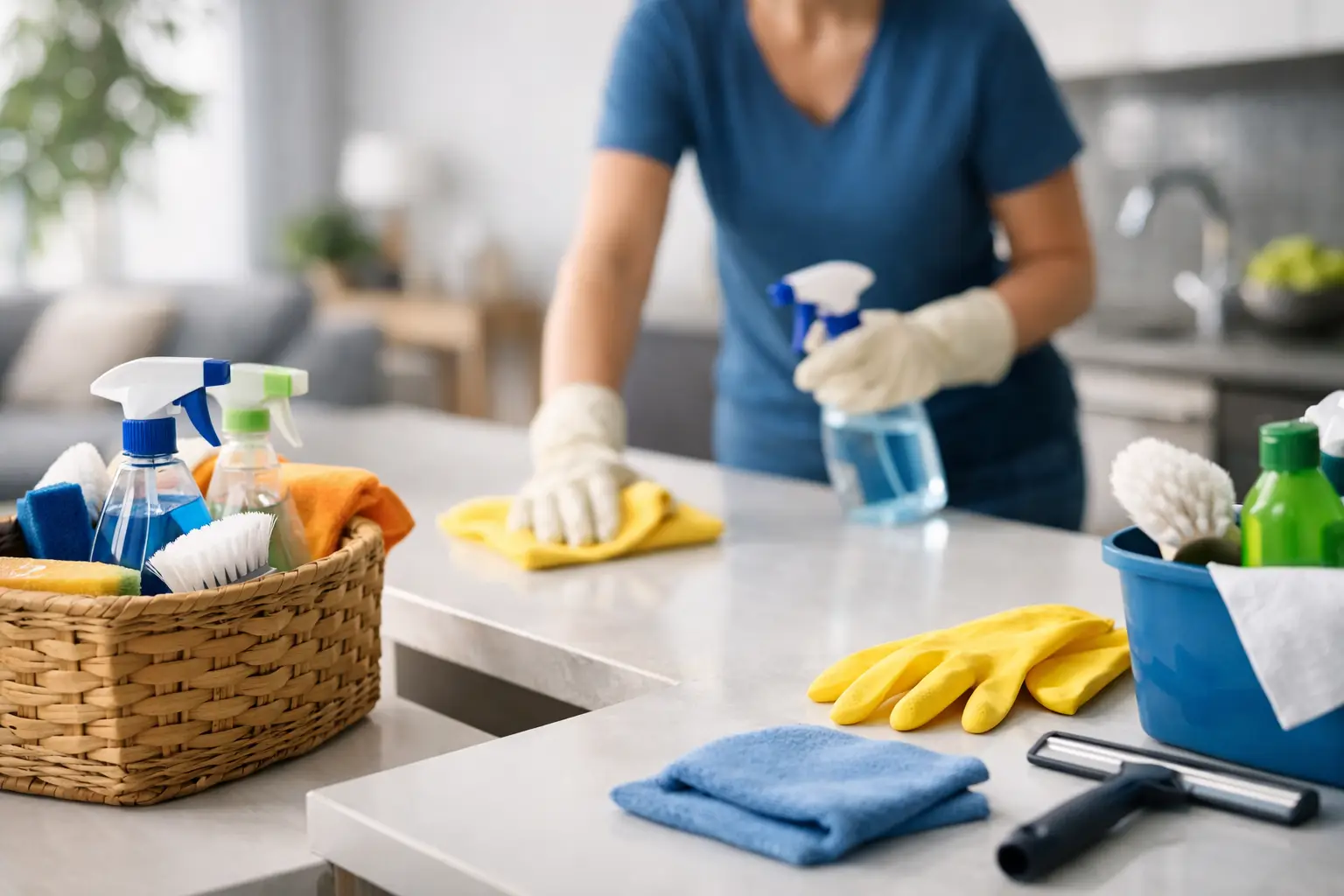
    Professional cleaner wiping a kitchen island in a bright Orange County home before move-in
    A professional move-in cleaning helps prepare an empty home before boxes are unpacked.

    Why Clean a New House Before Moving In?

    An empty home gives you access you may not have again for years. You can reach closet corners, cabinet interiors, baseboards, wall edges, and the floor beneath future furniture without shifting heavy belongings. Cleaning before unpacking also prevents you from placing dishes, linens, and clothing onto shelves that still hold dust or residue.

    Even a recently renovated or newly built home can contain fine construction dust. A previously occupied home may look presentable while still having grease around kitchen handles, buildup in bathroom edges, debris inside drawers, or dust on vents and ceiling fans. Completing the work before the moving truck arrives creates a cleaner starting point and reduces the number of chores competing for your attention during the first week.

    Before You Start: Inspect, Plan, and Gather Supplies

    Walk through the home before bringing in cleaning equipment. Photograph damage or maintenance concerns, especially if the property is a rental. Look for active leaks, damaged flooring, loose outlets, pest evidence, mold-like growth, or other issues that should be handled by the appropriate professional. Cleaning should not hide a condition that needs repair.

    Confirm that electricity and water are available. Open blinds for better visibility and provide ventilation when product labels recommend it. Read the care instructions for stone counters, wood flooring, stainless steel, specialty tile, and painted surfaces. Always test an unfamiliar product in a small, inconspicuous area, and never mix cleaning chemicals.

    Basic move-in cleaning supplies

    • Microfiber cloths in separate colors for kitchens, bathrooms, and general surfaces
    • A vacuum with crevice and brush attachments
    • A broom, dustpan, and floor-appropriate mop
    • Non-scratch sponges and a small detail brush
    • Gloves, trash bags, a bucket, and paper towels
    • Glass cleaner and surface-specific cleaning products
    • A step stool used according to its safety instructions
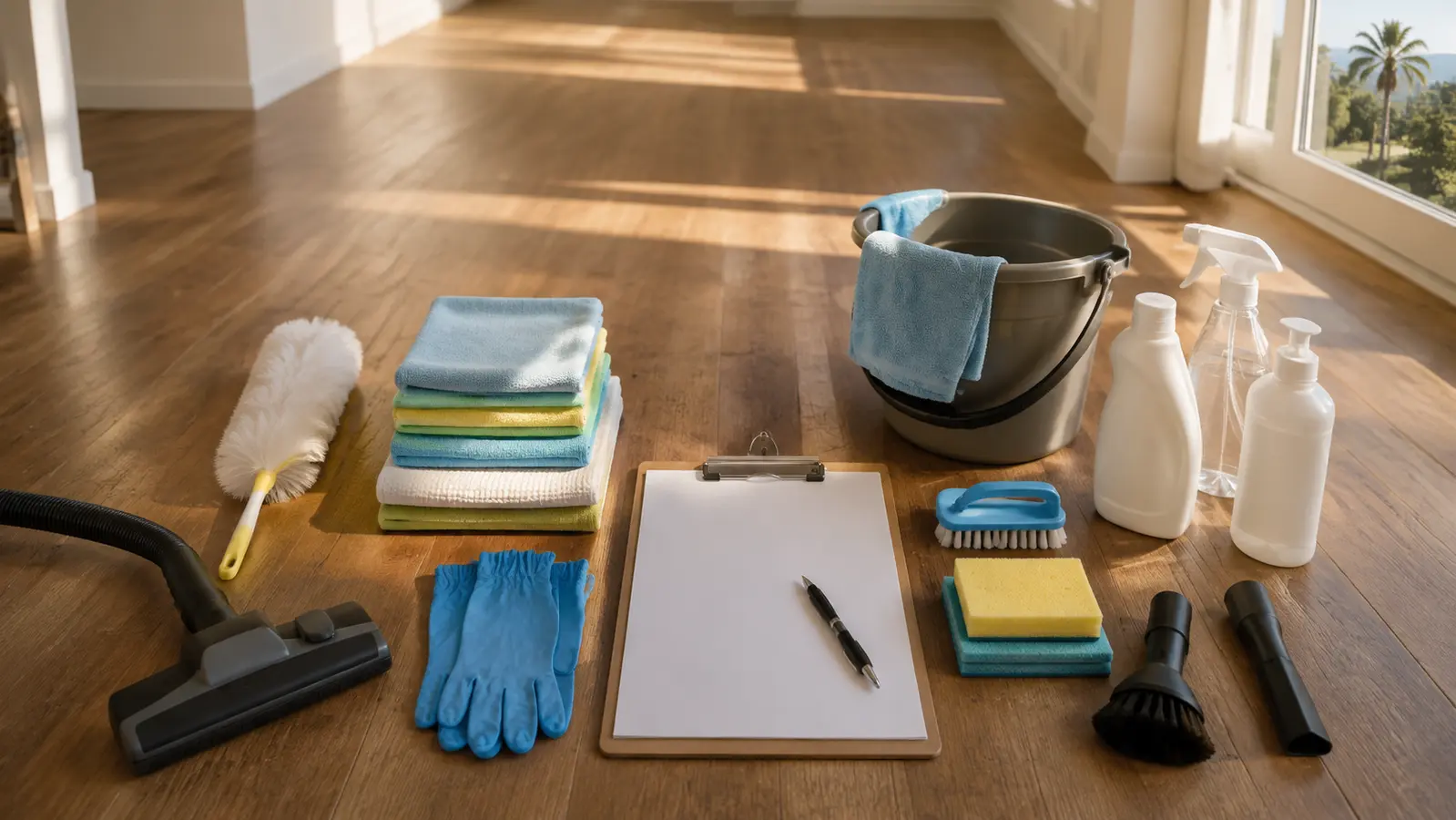
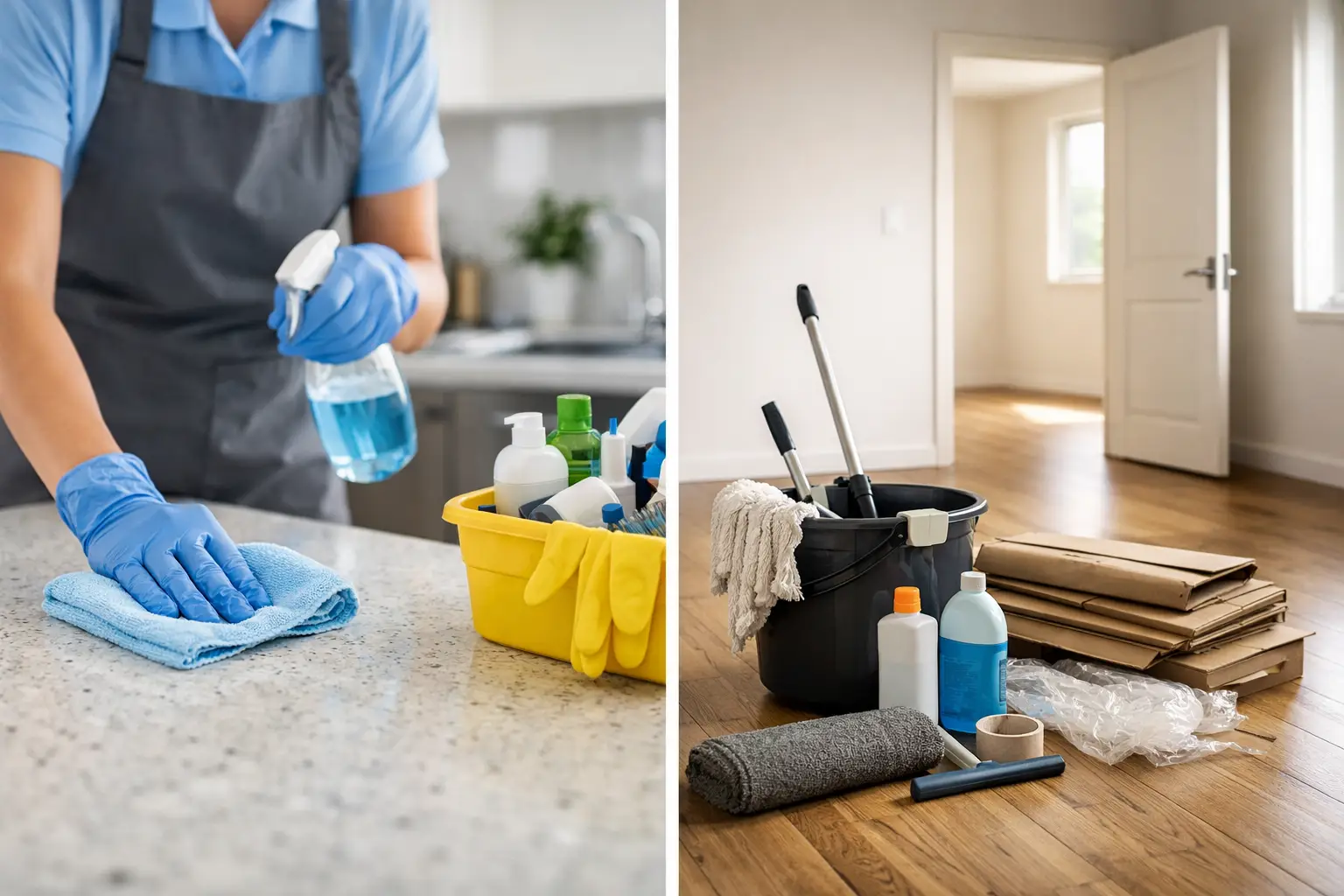
    Move-in cleaning supplies arranged on the floor of an empty home
    Gather surface-safe products and basic tools before starting your move-in cleaning checklist.

    The Best Order for Cleaning a New House

    Work from high to low and from dry tasks to wet tasks. Dusting ceiling fans after mopping only sends debris back onto a finished floor. Likewise, cleaning floors before contractors or movers finish walking through the property usually means doing the job twice.

    1. Remove trash and leftover materials. Clear packing scraps, shelf liner, abandoned items, and obvious debris.
    2. Dry dust from the top down. Start with ceiling corners, fixtures, fan blades, vents, shelves, door frames, and baseboards.
    3. Clean storage areas. Wipe closets, cabinets, drawers, and pantry shelves before belongings go inside.
    4. Deep clean kitchens and bathrooms. Give cleaning products the dwell time stated on their labels rather than wiping immediately.
    5. Clean glass and detail high-touch areas. Include mirrors, interior window glass where accessible, switches, handles, and knobs.
    6. Vacuum and mop last. Begin at the farthest point and work toward the exit so you do not walk across finished floors.

    Room-by-Room Cleaning a New House Checklist

    Kitchen

    Complete the kitchen before unpacking food, cookware, and dishes. Remove crumbs and dust from cabinet corners with a vacuum attachment, then wipe the interiors and allow them to dry. Clean cabinet fronts, pulls, pantry shelves, countertops, backsplash, sink, faucet, and the exterior of installed appliances.

    If appliances were included with the home, inspect the refrigerator shelves and seals, oven, stovetop, range hood, microwave, and dishwasher filter. Follow each manufacturer’s instructions. Avoid assuming one all-purpose product is safe for natural stone, unfinished wood, or specialty finishes. Finish by cleaning the floor after the upper surfaces are complete.

    Bathrooms

    Bathrooms are often the first rooms needed on moving day, so make at least one bathroom fully usable early. Dust the exhaust grille and light fixtures, wipe cabinet interiors, and clean mirrors. Then address the vanity, sink, faucet, tub, shower walls, tracks, fixtures, toilet, baseboards, and floor.

    Pay attention to corners, the area behind the toilet, cabinet handles, and buildup around fixtures. Use products designed for the surface and follow label directions for ventilation, contact time, and rinsing. Replace worn toilet seats or shower liners if that is part of your move-in plan, but leave plumbing repairs to a qualified professional.

    Bedrooms and closets

    Dust ceiling fans, vents, window sills, blinds, closet shelving, rods, door frames, and baseboards. Vacuum closet corners before placing shoes or storage bins inside. Clean hard floors with the appropriate method, or vacuum carpet slowly in overlapping passes. If carpet needs specialized treatment, arrange it before beds and dressers arrive.

    Living areas, hallways, and stairs

    Work around the room from top to bottom. Dust fixtures, fan blades, vents, ledges, doors, trim, and baseboards. Wipe high-touch areas such as switches, railings, handles, and thermostat covers without saturating electrical components. Clean interior glass and accessible tracks, then finish floors after all other work is complete.

    Laundry room and utility areas

    Wipe shelves, cabinet interiors, appliance exteriors, and the area around hookups. Check that the dryer vent connection appears intact before use and arrange professional service if anything looks damaged or obstructed. Clean the utility sink, remove lint and dust, and mop the floor. Do not move heavy appliances without the right equipment and assistance.

    Entry, garage, patio, and overlooked details

    Clean the inside of the entry door, handles, thresholds, and nearby glass. Sweep the garage and remove loose debris, but avoid disturbing unknown powders, chemicals, pest material, or construction waste. Wipe accessible patio-door tracks and make sure entrances are clear for movers.

    Before calling the checklist complete, look at the tops of doors, closet corners, return-air grilles, cabinet toe kicks, the space beside appliances, and the edges where floors meet baseboards. These are common places for dust to remain in an otherwise clean-looking home.

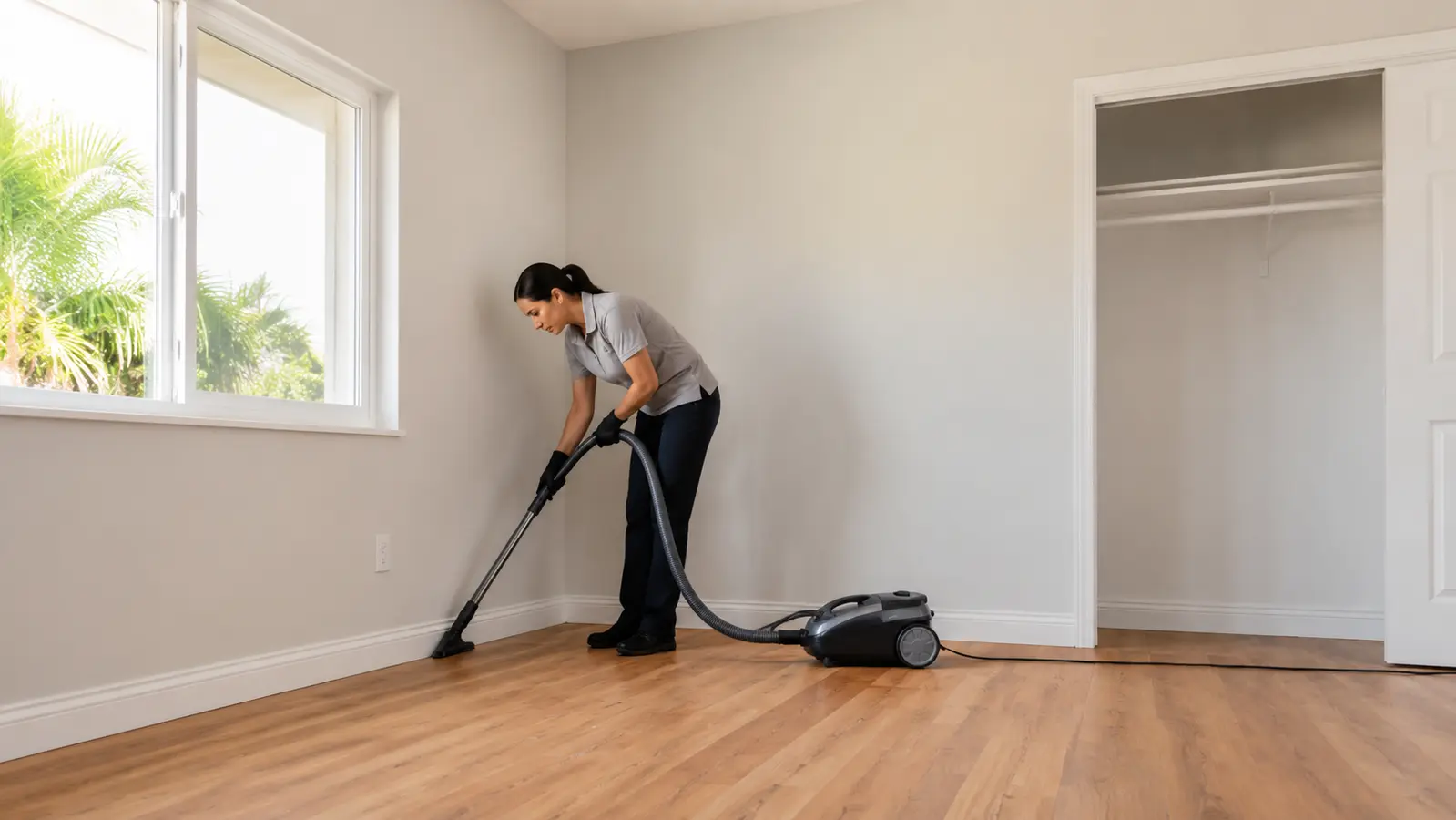
    Professional cleaner vacuuming baseboards in an empty room before move-in
    An empty home makes baseboards, corners, and floor edges easier to clean thoroughly.

    What to Clean Again After the Movers Leave

    A strong pre-move clean does most of the work, but moving traffic can bring in dirt and cardboard dust. After the last delivery, remove packing debris, wipe newly handled switches and door handles, vacuum traffic paths, and spot-mop hard floors. Clean the counters used for drinks or takeout and make one bathroom fresh again.

    This second pass should be quick because cabinets, appliances, bathrooms, and hard-to-reach areas were already detailed. Keep a small cleaning kit separate from the moving truck so it is easy to find.

    DIY or Professional Move-In Cleaning?

    DIY cleaning can work well when the home is small, already in good condition, and you have access several days before the move. Divide the property into zones, estimate the time honestly, and finish one room before starting another. If friends or family help, assign specific rooms to avoid duplicated effort.

    Professional help may make more sense when the timeline is tight, the home is large, buildup is significant, or your attention is already split among closing, utilities, packing, children, pets, and movers. A cleaning team can focus on the property while you handle the logistics only you can manage. Review the scope in advance so expectations are clear. For more detail, see what may be covered by a deep cleaning service and learn how to prepare for house cleaners.

    Final Walkthrough Before You Unpack

    • Cabinets, drawers, closets, and pantry shelves are clean and dry.
    • The kitchen and at least one bathroom are ready to use.
    • Ceiling fans, vents, trim, baseboards, and high-touch areas have been addressed.
    • Floors are vacuumed or mopped with the correct method.
    • No cleaning products, damp cloths, or trash were left behind.
    • Maintenance concerns discovered during cleaning were documented.
    • Cleaning supplies needed after moving are easy to locate.

    Frequently Asked Questions

    How long does it take to clean a new house before moving in?

    The time depends on the home’s size, condition, number of bathrooms, appliances, flooring, and whether cabinets and closets need interior cleaning. An empty home is easier to access, but detailed kitchen and bathroom work can still take several hours. Inspect first and avoid building your plan around an unrealistically short window.

    Should you clean before or after moving furniture in?

    Complete the detailed cleaning before furniture arrives whenever possible. Then do a shorter floor and high-touch-surface pass after the movers finish. This combination provides access to hidden areas without expecting floors to remain untouched during the move.

    What should be cleaned first in a new house?

    After removing debris, start with high dry-dusting tasks and storage interiors. Clean kitchens and bathrooms next, then glass and high-touch areas. Vacuum and mop floors last.

    Do you need a deep clean if the home looks clean?

    Not every property needs the same scope. Inspect cabinet interiors, appliances, bathroom edges, vents, baseboards, closets, and floors. A targeted clean may be enough when those areas are already in good condition; more detailed work is useful when dust, residue, or buildup remains.

    Start Your Orange County Move With a Cleaner Home

    A thoughtful cleaning a new house checklist gives you a simple advantage: you can unpack into rooms that already feel comfortable and ready for your belongings. If you would rather spend your pre-move time coordinating the move, SRS Cleaning provides professional move-in cleaning for homeowners across Orange County service areas.

    Request a house cleaning quote or call (714) 439-8500 to discuss your home, timeline, and cleaning priorities.

  • Top Apartment Cleaning Priorities That Matter Most

    Top Apartment Cleaning Priorities That Matter Most

    A small apartment can get messy faster than a large home. One night of cooking, a busy workweek, and a few items left by the door can make the whole space feel crowded. The right top apartment cleaning priorities help you focus on what changes the feeling of your home most, rather than spending a Saturday trying to clean every corner at once.

    For busy renters, professionals, and families, the goal is not perfection. It is a home that feels comfortable to return to, supports your health, and is ready for everyday life or an unexpected visitor. Start with the areas that collect the most dirt, create the strongest impressions, and affect how calm your space feels.

    Start With the Rooms You Use the Most

    In most apartments, the kitchen, bathroom, entryway, and main living area deserve attention before less-used spaces. These rooms see the most traffic, moisture, food residue, and daily clutter. When they are clean, the entire apartment tends to feel more put together.

    This approach also makes cleaning more manageable. A spotless closet will not make much difference if the kitchen counters are sticky or the bathroom sink has visible buildup. Prioritizing high-use rooms gives you a noticeable result in less time.

    Keep the Kitchen Safe and Easy to Use

    The kitchen is one of the highest-value places to clean because it affects food preparation, odors, and the overall appearance of your apartment. Wipe counters after cooking, clean up spills promptly, and avoid letting dishes sit long enough to create odors or attract pests.

    Each week, clean the sink, stovetop, microwave interior, and cabinet handles. These surfaces collect grease, fingerprints, and food splatter quickly. Emptying the trash regularly is equally important, especially in a smaller apartment where odors can travel through the entire space.

    A deeper kitchen clean can happen less often. The refrigerator shelves, oven, backsplash, and fronts of appliances may not need daily attention, but they should not be ignored for months. If you cook frequently, they will need more frequent care than they would in a home where meals are mostly prepared elsewhere.

    Give the Bathroom Consistent Attention

    Bathrooms are small, but they require regular cleaning because moisture creates ideal conditions for soap scum, mildew, and unpleasant odors. Focus first on the toilet, sink, faucet, shower or tub, and bathroom floor. A quick weekly reset keeps buildup from becoming a time-consuming deep-cleaning project.

    Use a bathroom fan during and after showers when possible. In Orange County apartments, ventilation can vary widely from building to building, and a closed-up bathroom may hold moisture longer than you expect. Drying wet surfaces, hanging towels properly, and replacing damp bath mats can make a meaningful difference.

    Do not overlook touchpoints. Light switches, door handles, toilet flush handles, and cabinet pulls are used constantly but are easy to miss. Wiping them down is a small task that supports a cleaner, fresher bathroom.

    The Top Apartment Cleaning Priorities for Every Week

    A weekly routine works best when it protects the areas that affect comfort and cleanliness every day. The exact schedule depends on your household, pets, cooking habits, and how often you are home. Still, most apartments benefit from regular attention to these core tasks:

    • Vacuum or sweep floors, especially near entry doors, the kitchen, and pet areas.
    • Wipe kitchen and bathroom surfaces, including frequently touched handles and switches.
    • Clean the toilet, sink, and shower or tub to prevent buildup.
    • Take out trash and recycling before odors settle in.
    • Change bed linens and replace used towels.
    • Clear visible clutter from counters, tables, and the floor.

    These are not glamorous tasks, but they prevent the slow buildup that makes an apartment feel harder to manage. If your time is limited, complete the first four before moving on to lower-priority jobs.

    Floors and Entryways Carry More Than You Think

    Apartment floors can collect dust, hair, crumbs, pollen, and debris quickly, particularly near the front door. If you have pets, children, or a roommate household, floors may need spot cleaning more than once a week. In a coastal or high-traffic Orange County community, open windows and frequent trips outdoors can also bring in extra sand and dust.

    Start at the entryway. Shake out or wash the mat, put shoes in their designated place, and sweep around the door. This small routine prevents dirt from spreading into the living room and bedrooms.

    Vacuuming is usually a better choice for carpet and rugs, while sweeping or using a microfiber mop is effective for hard floors. Be careful not to use too much water on laminate, vinyl, or wood-style flooring. A clean floor should not leave behind streaks, residue, or moisture that can damage the surface.

    Clear Clutter Before You Clean Around It

    Clutter is not the same as dirt, but it can make a clean apartment look unfinished. It also makes routine cleaning take longer because every surface requires moving items before it can be wiped down.

    Create simple homes for the things that routinely collect in common areas: mail, chargers, keys, shoes, bags, and laundry. A basket near the door, a tray on a table, or a designated shelf can reduce visual clutter without requiring a major organizing project.

    Be realistic about what belongs out in the open. If you use an item daily, keeping it accessible may make sense. If it has been sitting on the counter for weeks without use, storing it elsewhere can make your apartment easier to clean and easier to enjoy.

    Do Not Skip High-Touch Surfaces

    High-touch surfaces are easy to overlook because they do not always look dirty. Yet they are used throughout the day and can collect oils, smudges, and germs. Regularly wipe door handles, light switches, remotes, drawer pulls, refrigerator handles, faucets, and appliance buttons.

    This task is especially useful during cold and flu season, after guests visit, or when someone in the household has been sick. It takes only a few minutes and helps maintain a cleaner environment between deeper cleaning appointments.

    Use products that are appropriate for the surface and follow label directions. More product is not always better. For many surfaces, a clean microfiber cloth and the right cleaner will leave a better result than a heavily scented spray that leaves residue behind.

    Save Deep Cleaning for the Places That Hide Buildup

    Some apartment cleaning tasks do not need to happen weekly, but they should be scheduled before they become overwhelming. These include cleaning inside the refrigerator, wiping baseboards, dusting ceiling fans, washing blinds, cleaning behind small appliances, and removing buildup from shower grout.

    A good rule is to choose one or two deep-cleaning tasks each month. This spreads the work out and keeps neglected areas from turning into an all-day project. If you are preparing for a move, hosting family, or getting ready for a property inspection, it may make sense to handle several of these tasks at once.

    Move-out cleaning has a different standard than everyday apartment maintenance. Landlords and property managers often look closely at appliances, cabinets, walls, fixtures, floors, and bathrooms. Renters who are short on time or want extra peace of mind may prefer professional help for that detailed final clean. For a room-by-room plan before key return, follow this apartment move out cleaning checklist.

    Build a Routine You Can Actually Maintain

    The best apartment cleaning routine is one you can keep. A detailed plan is not useful if it only works during a quiet week. For many people, a 10-minute evening reset plus a weekly cleaning block is more realistic than waiting for a full free day.

    Try clearing the kitchen after dinner, putting away items before bed, and doing one quick bathroom check during the week. Then reserve a regular time for floors, surfaces, linens, and trash. Consistency keeps the work lighter and prevents your home from becoming another source of stress.

    When work, family responsibilities, or a move leave no room for a full reset, a reliable cleaning service can help restore order without adding more to your list. SRS Cleaning helps Orange County residents keep their apartments clean, comfortable, and ready for the life happening inside them.

    A cleaner apartment does not need to come from doing everything at once. Put your attention where it makes the biggest difference, keep the routine simple, and let your home be a place where you can truly relax.

  • Is Move Out Cleaning Worth It for Your Move?

    Is Move Out Cleaning Worth It for Your Move?

    The last box is sealed, the keys are almost due, and the place somehow looks messier than it did when you started packing. That is the moment many renters and homeowners ask, is move out cleaning worth it? For many moves, the answer is yes – not because cleaning is impossible to do yourself, but because a move-out clean asks for time, energy, and attention to detail when all three are already in short supply.

    A professional service is not necessary for every property or every budget. But when your deposit, sale timeline, landlord inspection, or peace of mind is on the line, it can be one of the more practical costs of moving.

    What Makes Move-Out Cleaning Different?

    Move-out cleaning is more than a quick reset before handing over the keys. It is a detailed cleaning of an empty home, focused on the areas that become visible once furniture, rugs, wall art, and everyday belongings are gone.

    That commonly means cleaning inside cabinets and drawers, wiping baseboards and doors, removing buildup from sinks and showers, degreasing kitchen surfaces, cleaning appliances, vacuuming edges, and mopping floors. A good clean also addresses fingerprints around switches, dust on blinds, residue in the refrigerator, and the crumbs that seem to collect in every cabinet corner.

    Regular cleaning keeps a home comfortable while people are living in it. Move-out cleaning is about returning the space in a clean, presentable condition for the next resident, owner, or tenant. That higher standard is why it often takes longer than people expect.

    Is Move Out Cleaning Worth It for Renters?

    For renters, the biggest question is often the security deposit. While no cleaning company can guarantee a landlord’s decision or prevent deductions for damage, thorough cleaning can remove one of the most common reasons for avoidable charges.

    Lease agreements often require tenants to leave the unit reasonably clean, and some are very specific about appliances, floors, bathrooms, and trash removal. If the property manager finds grease in the oven, soap buildup in the shower, or debris left in cabinets, they may arrange cleaning and deduct the cost from the deposit. Their rate may be higher than what you would pay by booking the service yourself.

    Professional cleaning is especially worthwhile when you have lived in the home for several years, have children or pets, or simply have not had time to stay ahead of deep cleaning. These are normal parts of life, but they can leave behind buildup that is difficult to remove in one rushed afternoon.

    Before booking, read your lease and take clear photos of the empty property after cleaning. Photos create a useful record of the condition you left behind. They also help you spot details you may have missed during your own final walkthrough.

    When Doing It Yourself Makes Sense

    A professional clean is a convenience, not a requirement. If you have a small, well-maintained apartment, several free hours, and access to basic supplies, doing it yourself may be the right call. It can also make sense if your landlord has confirmed that a lighter clean is sufficient and you are comfortable with the work.

    The key is to be realistic about the time involved. Cleaning an empty studio may be manageable in an afternoon. Cleaning a three-bedroom home with bathrooms, appliances, blinds, baseboards, and years of use is a different project. Packing, coordinating movers, changing addresses, returning equipment, and managing children or pets can quickly turn that project into an exhausting late-night task.

    DIY cleaning works best when you can start before move-out day rather than leaving everything until the final few hours. Clean empty cabinets as you pack, wipe down closets as they clear, and handle the refrigerator after the food is gone. Breaking up the work prevents the final day from becoming overwhelming.

    The Real Value: Time, Energy, and Fewer Loose Ends

    The price of Move Out Cleaning is easy to see. The cost of doing it yourself is less obvious. Consider what your time is worth during a move, especially if you are taking time off work, coordinating a new home, or traveling across Orange County on a tight schedule.

    A professional team can usually complete a detailed clean more efficiently because they arrive with a process, appropriate supplies, and a clear division of work. You are not making an extra store run for degreaser, trying to remove old shower buildup with the wrong product, or deciding at 10 p.m. whether the oven is clean enough.

    There is also a mental benefit. Moving creates a long list of small decisions. Handing off one major task to a vetted, insured cleaning team can create room to focus on the move itself. For busy professionals, families, property managers, and real estate agents, that relief is often the strongest reason to book.

    Situations Where Professional Cleaning Has the Most Payoff

    Move-out cleaning tends to offer the best value when the property must meet a higher standard quickly. This includes rental turnovers, homes being prepared for sale, and properties where a new tenant or buyer is scheduled to arrive soon after you leave.

    For sellers, a clean empty home photographs better and gives buyers a more confident first impression. Dusty window tracks, dirty appliances, and marked-up baseboards can make an otherwise well-kept property feel neglected. Cleaning will not replace repairs, painting, or staging, but it helps the home’s condition come through clearly.

    For property managers and landlords, a reliable cleaning appointment can reduce vacancy downtime and keep turnovers organized. Rather than relying on a rushed, inconsistent clean, they can prepare the property for maintenance, photos, showings, or the next resident.

    For homeowners moving out of a long-term residence, professional help can be valuable even when no deposit is involved. Leaving a home in good condition is a considerate handoff, and it prevents one more demanding job from following you into your new place.

    What a Cleaning Service Does Not Cover

    It helps to book with clear expectations. Standard move-out cleaning is intended to address cleaning, not restoration. It does not usually repair holes in walls, replace damaged blinds, remove heavy stains that have permanently set, haul away unwanted furniture, or fix broken appliances.

    If there are unusual conditions, mention them before the appointment. Examples include severe pet hair, smoke residue, heavy grease, mold concerns, construction dust, or a home that has been vacant for an extended period. Clear communication helps the cleaning provider prepare properly and gives you a more accurate quote.

    You should also confirm what is included. Ask whether the refrigerator and oven interior are covered, whether cabinets are cleaned inside, and whether the service includes window interiors or blinds. Every provider’s scope can vary, so a written checklist is more useful than assumptions.

    How to Decide Before You Book

    Start with four practical questions: How much cleaning is truly needed? How much time do you have before key handoff? Could a deposit deduction or delayed turnover cost more than the service? And do you have the energy to do detailed work after packing and moving?

    If your answers point to a large job, a short timeline, or high stakes, professional cleaning is usually a smart investment. If the home is already in excellent condition and you have time to clean it thoroughly, DIY may save money without creating much stress.

    For Orange County renters, homeowners, and property professionals, scheduling also matters. Aim to arrange cleaning after the home is fully empty and before the final inspection, photos, or key transfer. Leave enough time for a walkthrough afterward so you can remove remaining trash, check closets, and make sure personal items have not been left behind.

    SRS Cleaning provides move-in and move-out cleaning with the dependable communication and detail-oriented care that a transition deserves. Whether you choose professional help or take on the work yourself, treat the final clean as part of the move plan, not an afterthought. A calm handoff starts with giving the last day enough time and attention.

  • How to Read Residential Cleaning Reviews Wisely

    How to Read Residential Cleaning Reviews Wisely

    A five-star rating can catch your eye, but it cannot tell you everything about who will be in your home, how they communicate, or whether the service matches your needs. Residential cleaning reviews are most useful when you read beyond the score and look for evidence of a consistently respectful, dependable experience.

    For busy households, hiring help is not only about cleaner countertops. It is about getting time back, reducing the constant mental list of chores, and feeling comfortable with the people you invite into your space. Reviews can help you make that decision with more confidence, as long as you know what matters.

    What Residential Cleaning Reviews Should Tell You

    The strongest reviews describe a specific experience rather than offering a vague compliment. “Great service” is encouraging, but a review that explains what was cleaned, how the team handled a request, and whether the customer felt communication was clear gives you much more to work with.

    Look for patterns across multiple reviews. One client may have had an unusually difficult scheduling situation, while another may have a home that needed a very detailed deep cleaning. When several people independently mention the same strengths, such as punctuality, careful work, friendly cleaners, or dependable recurring visits, that is a more meaningful signal than a single glowing comment.

    Pay attention to reviews that sound like your situation. A family with two dogs and a busy work schedule may value different things than someone preparing a vacant condo for sale. If you need a move-out cleaning, look for comments from renters, landlords, or property managers. If you want ongoing help, reviews that mention consistency over several visits matter more than a one-time deep cleaning review.

    Details also reveal whether a company understands the practical side of service. Useful comments often mention easy booking, reminder messages, clear arrival windows, responsiveness when plans change, or a willingness to address an overlooked area. These moments are where a cleaning company either makes life easier or creates another task for you to manage.

    Read for Consistency, Not Perfection

    No service business can reasonably promise that every appointment will be flawless. Homes are lived in, requests can be misunderstood, and even a careful cleaning team can occasionally miss a detail. A review profile with nothing but short, identical praise is not necessarily more reassuring than one that includes a few honest concerns.

    What matters is the overall pattern and how the company responds when something goes wrong. A professional response should be calm, specific, and focused on making things right. Defensive replies, blame directed at the customer, or silence around repeated concerns can tell you more than the original complaint.

    Consider the age of reviews, too. A company may have changed its staff, systems, or service approach over time. Recent reviews are generally more relevant, especially if you are looking for recurring care. Still, a history of positive feedback over months or years can show that reliability is part of the company’s operating standard, not a temporary burst of attention.

    Review volume has context as well. A newer local company may have fewer reviews but offer detailed, thoughtful feedback from real customers. A larger company may have hundreds of ratings, which can be helpful if the comments remain recent and specific. Rather than treating one number as decisive, consider the quality, recency, and consistency together.

    Signs of a Review You Can Use

    The most helpful reviews answer questions you would otherwise need to ask directly. They describe whether the cleaners arrived as expected, respected the home, followed instructions, and delivered results that matched the appointment type.

    Watch for comments about kitchens, bathrooms, floors, dusting, pet hair, baseboards, or inside-appliance cleaning when those items matter to you. A standard recurring clean is different from a deep clean, and a move-in or move-out service may have its own scope. Reviews that name the work performed help you understand whether expectations were aligned from the start.

    A review is also more credible when it includes a balanced observation. For example, a customer might mention that the team asked a clarifying question before cleaning a delicate surface, or that a scheduling issue was resolved quickly. Real experiences often have this kind of texture. They are not written like advertisements, and they show how the company handles the normal details of working in someone’s home.

    Questions Reviews Cannot Answer for You

    Even excellent residential cleaning reviews cannot replace a clear conversation about your appointment. Every home has different priorities, and the best service is one that understands yours before the team arrives.

    Before booking, confirm what is included, what requires extra time, and whether you should prepare anything in advance. If you have special products, rooms that should be skipped, fragile items, pets, or security instructions, share those details early. Clear expectations protect your time and help cleaners focus on the areas that will make the biggest difference for you.

    You should also ask about practical trust factors that may not appear in every review. Are cleaners background-checked? Is the company licensed and insured? Is there a satisfaction policy if something needs attention after the appointment? How will the company communicate if a cleaner is delayed or if your requested schedule needs to change?

    These questions are not overcautious. A cleaning service is personal. You are trusting a team with access to your home, your belongings, and often the rhythm of your weekly life. Professional companies should make it easy to get straightforward answers without pressure or confusing terms.

    Match the Review to the Service You Need

    A five-star review for a light maintenance visit does not automatically mean the company is the right fit for a detailed pre-sale clean. Likewise, a strong move-out cleaning review may not tell you how well a team maintains a busy family home every two weeks.

    For recurring cleaning, prioritize comments about reliability, familiar processes, respectful care, and steady quality over time. For a first deep clean, look for attention to buildup, high-touch areas, and clear scope expectations. For a move, turnover, or listing preparation, reviews about deadlines, empty properties, and responsive coordination can be especially valuable.

    Orange County clients often need cleaning service to fit around demanding workdays, school schedules, property showings, and move dates. In those situations, the best review is one that confirms more than cleaning quality. It shows that the company was organized, communicative, and dependable when timing mattered.

    Look Beyond the Star Rating Before You Book

    A simple way to evaluate a company is to read a selection of its newest reviews, then scan older ones for long-term patterns. Read a few of the highest ratings and a few of the lowest. You are not looking for perfection. You are looking for a service provider whose strengths match your priorities and whose response to concerns feels fair and professional.

    Be cautious with reviews that are extremely vague, repetitive, or focused only on a discount. Price matters, but the lowest quote is not always the best value if you are left chasing updates, re-explaining instructions, or questioning whether your home is protected. A reliable cleaning service should save you effort, not create more of it.

    When you are ready to move from research to booking, use what you learned to make your request specific. Say whether you need ongoing cleaning, a one-time deep clean, move-in or move-out help, or support for a rental or real estate turnover. Mention the rooms and priorities that matter most. A good company will use that information to provide a clearer plan from the beginning.

    At SRS Cleaning, the goal is simple: professional care that helps your home feel lighter and your schedule feel more manageable. The right cleaning partner should leave you with more than a polished space. It should leave you with the reassurance that one more important task is handled.

  • Weekly Versus Biweekly Cleaning for Your Home

    Weekly Versus Biweekly Cleaning for Your Home

    A home can look fine on Sunday evening and feel noticeably overdue by Thursday. Crumbs gather under the counter stools, bathroom counters lose their shine, and pet hair seems to appear faster than anyone expects. Choosing weekly versus biweekly cleaning is less about picking the “right” schedule and more about choosing the level of support that makes daily life feel easier.

    For many Orange County households, the decision comes down to the pace of the home. A busy family in Irvine, a couple working from home in Costa Mesa, and a household with pets in Mission Viejo may all need a different rhythm. The best cleaning schedule is the one that keeps your space comfortable without adding another task to your already full calendar.

    Weekly Versus Biweekly Cleaning: The Main Difference

    Weekly cleaning means your home receives a professional visit every seven days. A biweekly schedule means every other week, or about twice per month. In both cases, recurring service typically focuses on the areas that affect everyday comfort most: kitchens, bathrooms, floors, dusting, and general tidying of accessible surfaces.

    The difference is what happens between appointments. With weekly service, mess and buildup have less time to settle in. With biweekly service, your home still gets dependable professional care, but you may handle a few touch-ups in between visits, especially in high-use rooms.

    Neither option is automatically better. Weekly service offers more consistency and less day-to-day upkeep. Biweekly cleaning usually provides a more budget-conscious way to maintain a clean home while still taking a major recurring responsibility off your plate.

    When Weekly Cleaning Makes Sense

    Weekly cleaning is often the best fit when the home gets busy quickly. If your kitchen is used constantly, bathrooms see regular traffic, or floors collect visible debris within a few days, a weekly visit can prevent that familiar feeling of always being behind.

    Families with young children often prefer weekly appointments because small messes are part of the routine. The same is true for pet owners. Fur, paw prints, litter tracking, and pet-related odors are easier to manage when floors and frequently touched areas are cleaned on a regular schedule.

    Working from home can also change what a home needs. When you spend every weekday at your kitchen table, home office, or living room, you notice dust, clutter, and smudged surfaces more than you might if you were away all day. A weekly cleaning schedule helps the space continue to feel pleasant and professional, especially if you host virtual meetings or welcome clients at home.

    Weekly service is also a practical choice for people who simply do not want cleaning to occupy their weekends. If Saturday is your only chance to rest, see family, get outside, or catch up on errands, having a reliable cleaner arrive each week can give you back valuable time. You relax. The cleaning gets handled.

    Signs Your Home May Need Weekly Visits

    Your household may benefit from weekly cleaning if bathrooms look used again within a few days, kitchen floors need frequent attention, or you regularly host family and friends. It can also be the right choice when allergies are a concern, since frequent dusting and floor care can help reduce the dust and debris that collect in active homes.

    There is a peace-of-mind benefit, too. Weekly service keeps cleaning from becoming a large, looming job. Instead of waiting for grime to build up and then spending hours catching up, your home receives steady, detail-oriented care on a predictable schedule.

    When Biweekly Cleaning Is the Better Fit

    Biweekly cleaning works well for households that stay reasonably tidy between visits. A smaller household, a couple without pets, or professionals who are away from home much of the week may find that every other week provides the right balance of cleanliness, convenience, and cost.

    This schedule is especially appealing if you do not mind light maintenance in between. You might wipe the kitchen counters after cooking, run a quick vacuum through a high-traffic area, or clean the bathroom sink as needed. The professional appointment then takes care of the more thorough work that is easy to postpone: floors, bathrooms, dusting, kitchen surfaces, and the overall reset that makes the home feel fresh again.

    Biweekly service can also be a smart starting point if you are trying recurring cleaning for the first time. It creates a dependable routine without committing to more visits than your household may need. After a month or two, you will have a clearer sense of whether the schedule is keeping up with your life.

    For renters and homeowners who maintain a generally low-mess space, biweekly cleaning often prevents the need for repeated deep cleaning. The home stays in good condition, and cleaning tasks do not pile up until they become a stressful weekend project.

    Biweekly Does Not Mean Less Care

    A biweekly schedule should still feel thorough and reliable. The key difference is the condition of the home when the team arrives. In a low-traffic home, two weeks may pass with minimal visible buildup. In a busy household, those same two weeks can leave more work in bathrooms, kitchens, and on floors.

    Be honest about how your household operates, not how you wish it operated. If the reality is that laundry, cooking, pets, children, and work calls leave little room for upkeep, weekly cleaning may be a better value because it reduces the stress of managing the gap between appointments.

    Consider Your Home’s Traffic, Not Just Its Size

    Square footage matters, but it is not the whole story. A compact apartment with two dogs and two people working remotely can require more frequent cleaning than a larger home occupied by one person who travels often.

    Think about the rooms that carry the most activity. Kitchens typically need the most attention when meals are cooked at home regularly. Bathrooms need more frequent care when several people share them. Entryways and living areas can collect outdoor dust, sand, and debris quickly, particularly in homes near the coast or with active children and pets.

    Your schedule matters just as much. If you have time and energy to maintain the home between visits, biweekly service may feel ideal. If you are already stretched thin, weekly service can be the calmer choice. A cleaning plan should remove pressure from your life, not create a list of chores you need to finish before the cleaner arrives.

    Budget, Value, and the Cost of Falling Behind

    Biweekly cleaning generally has a lower monthly cost because there are fewer appointments. For households with moderate cleaning needs, that can make it an excellent value. It provides routine professional support while leaving room in the budget for other priorities.

    Weekly cleaning costs more over the course of a month, but it may save effort in ways that are harder to put on a spreadsheet. More frequent visits can mean less emergency cleaning before guests arrive, fewer weekends spent scrubbing bathrooms, and less frustration when the home starts to feel out of control.

    It is also worth considering the condition of the home at the beginning. If it has been a while since your last thorough clean, starting with a deep cleaning can make recurring appointments more effective. Once the home is reset, a weekly or biweekly plan is designed to maintain that cleaner baseline.

    A Simple Way to Choose Your Schedule

    Start with the past two weeks. How often did you vacuum? Did the bathrooms need cleaning before you had time to address them? Were you comfortable inviting someone over without rushing through a cleanup first? Those answers tell you more than a general rule ever could.

    Choose weekly cleaning when you want a consistently polished home, have children or pets, work from home, entertain often, or do not want to spend your personal time on routine chores. Choose biweekly cleaning when your household is smaller or lower traffic, you can manage small tasks between visits, and you want reliable maintenance at a more moderate monthly cost.

    The good news is that recurring service does not need to be permanent or rigid. Your needs can change with a new baby, a new pet, a work schedule, a move, or a season of frequent guests. A dependable local cleaning company should make it easy to adjust.

    SRS Cleaning helps Orange County clients build cleaning routines around real homes and real schedules, with clear communication and trusted, insured professionals. Whether weekly visits give you the breathing room you need or biweekly service keeps your home comfortably on track, the right schedule should leave you with a cleaner space and more room to enjoy it.

  • How to Reduce Cleaning Allergens at Home

    How to Reduce Cleaning Allergens at Home

    A room can look freshly cleaned and still leave someone sneezing, congested, or uncomfortable. Dust can become airborne during vacuuming, strong fragrances can irritate sensitive noses, and damp cloths or mops can spread rather than remove particles when they are not changed often enough. Learning how to reduce cleaning allergens is less about using more products and more about using the right routine, in the right order, with a little more care.

    For busy households, the goal is practical: a home that feels clean without turning cleaning day into a source of irritation. The same principles can help offices, rental turnovers, and move-in or move-out cleaning projects, where dust and odors have often had time to build up.

    Start by Controlling Dust Before It Spreads

    Dust is not just dirt. It can contain pollen, pet dander, fabric fibers, dust mite debris, and particles brought in from outside. In Orange County, open windows and frequent indoor-outdoor living can be enjoyable, but they can also bring pollen and fine debris into the home.

    The order of your cleaning matters. Work from high to low so settled dust does not land on surfaces you have already cleaned. Start with ceiling fans, vents, shelves, blinds, and high furniture. Then clean counters, tables, and lower surfaces before finishing with floors.

    Use a slightly damp microfiber cloth rather than a dry duster whenever possible. Dry dusting can push particles into the air, while microfiber is designed to capture them. Rinse or replace the cloth when it becomes visibly dirty. A single dusty cloth moved from room to room can redistribute allergens instead of removing them.

    Pay special attention to overlooked places: baseboards, window sills, lampshades, behind televisions, under beds, and the tops of cabinets. These areas do not need daily attention, but adding them to a regular deep-cleaning rotation prevents a larger buildup later.

    Vacuum in a Way That Supports Better Air Quality

    Vacuuming is one of the most useful ways to reduce allergen buildup in carpets, rugs, upholstery, and crevices. It can also temporarily stir up particles, especially if the vacuum has poor filtration or an overfilled bag or canister.

    A vacuum with a sealed system and HEPA filtration is often a better choice for homes with allergy concerns. HEPA filters are designed to capture very small particles rather than sending them back into the room through the exhaust. The benefit depends on the vacuum being well maintained, so follow the manufacturer’s instructions for replacing filters and emptying the bin.

    Move slowly enough for the vacuum to lift embedded dust from carpet fibers. High-traffic paths, entryways, bedrooms, and areas where pets rest deserve extra passes. If someone in the home is very sensitive to dust, it may help for them to spend time in another room or outside while vacuuming is underway, then allow airborne particles time to settle.

    Hard floors need attention too. Sweeping with a dry broom can send fine dust into the air. A microfiber dust mop or vacuum setting made for hard surfaces is usually a calmer option before wet mopping.

    Do not forget upholstery and soft surfaces

    Sofas, chairs, curtains, and mattresses quietly collect dust and dander. Vacuum upholstered furniture with the appropriate attachment, including under cushions and along seams. Wash removable covers according to their care labels.

    For bedding, wash sheets and pillowcases weekly. If tolerated by the material, washing bedding in hot water can help reduce dust mite allergens. Blankets, comforters, and mattress covers should be cleaned on a regular schedule as well. The exact frequency depends on pets, household allergies, and how often the room is used.

    Choose Cleaning Products With Fewer Irritants

    “Clean” scents can feel reassuring, but fragrance is not always a friend to people with allergies, asthma, migraines, or chemical sensitivities. Scented sprays, air fresheners, fragranced laundry products, and heavily perfumed cleaners can leave behind compounds that trigger irritation for some people.

    When possible, choose fragrance-free or low-fragrance products and use only the amount needed for the job. More cleaner does not necessarily mean a cleaner surface. In fact, excess product can leave residue that attracts grime or creates stronger odors in a closed room.

    Read labels carefully, especially for disinfectants. Disinfecting has a place after illness, around high-touch areas, or when a specific sanitation need exists. It is not required for every routine cleaning task. For everyday maintenance, a mild cleaner and proper physical removal of dirt may be enough. This approach can reduce unnecessary exposure to stronger chemicals while still keeping the home well maintained.

    Always provide ventilation when using any cleaning product. Open a window if outdoor conditions allow, run an exhaust fan in bathrooms, or use your home’s ventilation system. Never mix products, particularly bleach with ammonia or acids, since dangerous fumes can result.

    Keep Moisture From Becoming a Mold Problem

    Allergen control is not only about dust. Moisture can create conditions where mold grows, particularly in bathrooms, kitchens, laundry areas, and around windows or plumbing leaks. Mold concerns should be addressed at the source, not covered with fragrance.

    After showering, run the bathroom fan and leave the door open when practical to help humidity clear. Hang towels to dry fully instead of leaving them bunched up in a hamper. Wipe moisture from shower walls, sinks, and window tracks as part of your routine.

    Check under sinks, behind toilets, around washing machines, and near the refrigerator water line for signs of leaks. A musty odor, recurring discoloration, peeling paint, or damp drywall may indicate a problem beyond normal cleaning. If you suspect significant mold or water damage, professional assessment and repair may be needed before routine cleaning can make a lasting difference.

    Mops and sponges also need attention. Rinse them thoroughly, allow them to dry completely, and replace them when they smell musty or no longer clean effectively. Reusable microfiber mop pads should be laundered after use rather than left damp in a pile.

    Build an Entryway Routine That Keeps Allergens Outside

    A surprising amount of dust, pollen, and outdoor debris enters through shoes, pets, bags, and open doors. You do not need a perfect system to reduce what comes in. A sturdy doormat outside and a washable mat inside can make a meaningful difference.

    Adopting a shoes-off policy is helpful for many households, particularly homes with crawling children, carpets, or residents who are sensitive to allergens. If shoes stay on indoors, clean entry floors more often than the rest of the home. Wipe pets’ paws after walks during high-pollen periods, and wash pet bedding regularly.

    During days when outdoor pollen or smoke levels are high, keep windows closed and use air conditioning or properly maintained filtration instead. On mild days with lower pollen, opening windows may still be worthwhile for ventilation. The right choice depends on local conditions and the sensitivities of the people in the space.

    Create a Routine You Can Actually Maintain

    The best allergen-reducing plan is one that fits real life. Trying to deep clean every room every week often leads to burnout. A better approach is to divide tasks by frequency: quick dust control and floor care each week, bedding and bathroom maintenance on a consistent schedule, and deeper attention to blinds, upholstery, vents, and under-furniture areas each month or seasonally.

    If time is limited, focus first on bedrooms, living areas, and entryways. Those spaces typically have the greatest impact because people spend the most time there and because soft surfaces tend to hold onto dust. For a move-in, move-out, or post-renovation situation, a thorough deep clean can provide a useful reset before regular maintenance begins.

    A professional cleaning team can also help maintain consistency, especially for families, working professionals, and property managers balancing full schedules. At SRS Cleaning, detail-oriented recurring and deep cleaning services are designed to take the mental load off your plate while supporting a calmer, more comfortable space.

    Allergen reduction is not about creating a sterile home. It is about removing the buildup that makes a home feel heavy, dusty, or irritating, then keeping up with it in manageable steps. A cleaner routine gives you more than polished surfaces. It gives you room to relax and enjoy being home.

  • Same Week House Cleaning When Time Is Tight

    Same Week House Cleaning When Time Is Tight

    A last-minute cleaning need rarely arrives at a convenient time. Maybe guests are coming Friday, a landlord walkthrough is scheduled, your move-in date changed, or work and family life simply left the house further behind than expected. Same week house cleaning gives you a practical way to reset your space without sacrificing the little free time you have left.

    The key is knowing what to ask for, what a cleaning team can reasonably accomplish in one visit, and how to prepare your home so the appointment delivers the greatest relief. A well-planned cleaning can make a home feel calmer, more comfortable, and ready for whatever is next.

    When Same Week House Cleaning Makes Sense

    Same-week service is a good fit when the need is real but not necessarily an emergency. It can help before a family gathering, after a busy season at work, ahead of listing photos, or when a tenant turnover leaves a narrow window between occupants. It is also useful for renters preparing for a move-out inspection or homeowners who want their space in good shape before returning to a recurring cleaning routine.

    For many Orange County households, the value is not only the clean floors or polished counters. It is the ability to stop spending evenings catching up on chores. A professional visit can handle the time-consuming work while you focus on packing, hosting, work deadlines, or simply getting a breather.

    Availability can depend on the day, the size of the home, the requested service, and the level of buildup. A flexible time window usually improves the chance of securing an appointment. If you need a specific day or an early-morning arrival, it is still worth asking, but having a backup time in mind can make scheduling easier.

    Choose the Right Scope for a Same-Week Visit

    A clear service request helps a cleaning company match your home with the right appointment length and team. Rather than saying the house needs “everything,” describe the outcome you need most. Is the priority a guest-ready main floor? A thorough bathroom and kitchen reset? A move-out clean for an empty apartment? The answer affects the right level of service.

    Standard cleaning for a quick reset

    A standard house cleaning is often the best choice when your home is generally maintained but needs attention before company arrives or after a hectic week. This typically focuses on the visible, high-use areas that affect how the home feels day to day: kitchens, bathrooms, dusting, floors, and tidying the overall appearance of living spaces.

    It works especially well when there is no significant buildup and you want a reliable reset. If your primary goal is to walk into a clean bathroom, a fresh kitchen, and floors that no longer demand your attention, this may be the most efficient option.

    Deep cleaning when the details have accumulated

    A deep cleaning is better when routine chores have been postponed for a while or when the home has not received professional attention recently. It allows more time for detail work, including areas that are often missed during weekly upkeep. Think soap buildup, accumulated dust, kitchen grime, baseboards, and the corners that slowly become noticeable all at once.

    Deep cleaning can be the right call before guests, after a renovation project has wrapped up, or when you want a true reset before starting recurring service. It may take longer than a standard clean, so sharing the home’s condition honestly during the quote process matters. Clear information makes it easier to set realistic expectations and schedule enough time.

    Move-related and property turnover cleaning

    Move-in and move-out cleaning has a different purpose. The goal is usually to prepare an empty or mostly empty home for the next stage, whether that means handing over keys, settling into a new place, welcoming tenants, or preparing a property for sale. Appliances, cabinets, closets, and vacant rooms often need more attention because there is less furniture in the way and more of the home’s condition is visible.

    Real estate professionals and property managers may need a fast turnaround, but speed should not mean guesswork. Provide the square footage, number of bathrooms, whether the property is vacant, and any deadline tied to photos, showings, or a tenant arrival. Those details help determine whether same-week scheduling is realistic.

    What to Tell a Cleaning Company Before Booking

    The fastest way to get an accurate quote and appropriate appointment is to be specific from the first conversation. Start with the property type, number of bedrooms and bathrooms, approximate size, and whether anyone will be home. Then explain what changed: a party, a move, a long period without cleaning, pets, construction dust, or a short-notice inspection.

    Mention priority areas directly. If the kitchen and two bathrooms matter more than bedrooms that will stay closed, say so. If you are preparing a condo in Irvine for listing photos or a rental in Huntington Beach for new tenants, say what date the property needs to be ready and what condition it is in now. A dependable cleaning company will use that information to recommend the service that fits instead of promising more than the time allows.

    It also helps to ask practical questions before confirming. You may want to know the arrival window, whether cleaning supplies are provided, how access will be handled, and what happens if additional time is needed. Licensed and insured service, background-checked cleaners, and clear communication are especially meaningful when you are arranging quick service in your home.

    How to Prepare Your Home for Better Results

    You do not need to clean before professional cleaners arrive. That would defeat the point. A small amount of preparation, however, gives the team more time to clean rather than sort through personal items.

    Put away important papers, medications, jewelry, and fragile belongings. Clear heavy clutter from counters, floors, and bathroom surfaces when possible. If there are rooms you do not want cleaned, close the door or mention them ahead of time. For homes with pets, let the team know about their routines and arrange a comfortable, secure place for them during the visit if needed.

    Make access simple. Confirm parking instructions, gate codes, building entry details, and who will be available for questions. If you will not be home, provide the agreed-upon access method in advance. These small steps reduce delays and allow the appointment to stay focused on the work you hired the team to do.

    Set Realistic Expectations Without Settling

    A same-week appointment can produce a dramatic improvement, but the result depends on the condition of the home and the time reserved. A cleaner can remove dust, sanitize bathrooms, refresh surfaces, and bring order back to a space. Some issues, such as permanent stains, damaged finishes, heavy mineral deposits, or extensive post-construction residue, may require extra time or specialized treatment.

    This is not a reason to put off booking. It is a reason to be transparent. Photos and a clear description can help a company plan appropriately. If the home needs more than can be completed in one visit, prioritize the rooms that will make the biggest difference now and schedule follow-up service for the rest.

    The same thinking applies to organizing. Cleaning and organizing overlap, but they are not identical services. If countertops are covered with mail, toys, or personal belongings, deciding where those items belong may take more time than expected. Clear the essentials if you can, then let the cleaners focus on delivering the fresh, detailed result you are looking for.

    After the Clean, Keep the Calm Going

    A one-time visit can solve an immediate problem, but it can also be a useful reset point. Once the home is clean, maintaining it takes less effort. A simple weekly rhythm of wiping counters, doing a quick bathroom touch-up, and keeping floors clear can preserve the feeling between professional visits.

    For busy families and professionals, recurring cleaning is often less about perfection than prevention. It stops chores from piling up until they become an entire weekend project. A consistent schedule also means the cleaning team becomes familiar with your priorities, whether that is pet hair, high-touch surfaces, or keeping the kitchen ready for a full household.

    SRS Cleaning approaches short-notice appointments with the same care as planned service: clear communication, respectful professionals, and attention to the details that help a home feel cared for. When your calendar is crowded and your space needs a reset, asking for help is not falling behind. It is making room for what matters after the cleaning is done.

  • Office Hygiene Practices That Keep Teams Healthier

    Office Hygiene Practices That Keep Teams Healthier

    The conference table may look clean at 9 a.m., but it can collect coffee drips, fingerprints, food crumbs, and germs before the first meeting ends. Office hygiene practices are not about making a workplace feel sterile. They are about creating a space where employees can focus, clients feel comfortable, and routine mess does not become a bigger problem by Friday afternoon.

    For busy office managers and business owners, the goal is a realistic system. A clean workplace should not depend on one person remembering every task or spending the end of a long day wiping down the break room. With clear expectations, the right supplies, and dependable professional support when needed, office hygiene becomes easier to maintain.

    Why Office Hygiene Practices Matter

    Workspaces are shared environments. Keyboards, door handles, elevator buttons, conference-room remotes, shared printers, refrigerator handles, and restroom fixtures all see frequent use. Even in a small office, these touchpoints can quickly become overlooked sources of grime.

    Good hygiene also affects how people experience the workplace. Employees are more likely to feel cared for when restrooms are stocked, trash is removed on schedule, and common areas are pleasant to use. Clients and visitors notice the details, too. A streaked glass door or overflowing trash can may seem minor, but it can make an otherwise professional office feel unmanaged.

    There is also a practical business benefit. Regular cleaning protects surfaces from buildup, helps control odors, and keeps small maintenance issues visible before they become expensive distractions. The right standard is not perfection at every moment. It is consistency that gives your team a clean, calm place to work.

    Focus on the Areas That Get Used Most

    A practical office hygiene plan starts with traffic patterns, not a long list of chores. The spaces people use all day need the most frequent attention, while private offices and low-traffic storage areas may need less frequent service.

    Shared desks and technology

    Desks can hold more than paperwork. Food wrappers, drink rings, dust, and personal items tend to collect quickly, especially in busy teams or hybrid offices with shared workstations. Employees should be encouraged to clear their desk at the end of the day so surfaces can be wiped without moving piles of documents or equipment.

    For shared keyboards, mice, phones, and headsets, use products that are appropriate for electronics and follow the manufacturer’s instructions. Spraying liquid directly onto equipment can cause damage. A lightly dampened microfiber cloth or electronics-safe wipe is usually the better approach.

    Break rooms and kitchens

    The break room is often the fastest place for an office to feel neglected. A few unwashed mugs, a microwave spill, or forgotten leftovers can affect the whole room. Establish simple expectations: label food, remove personal items weekly, wipe spills right away, and avoid leaving dishes in the sink overnight.

    Daily attention should include counters, tables, sinks, appliance handles, and trash. Refrigerators need a deeper clean on a regular schedule, with expired food removed. This is one area where a shared responsibility policy helps, but it should not replace scheduled professional cleaning. Employees can handle their own messes; a cleaning team can provide the consistent reset that keeps buildup from taking over.

    Restrooms

    Restrooms require the clearest standards because they directly affect comfort, hygiene, and visitor impressions. They should be checked frequently for soap, paper towels, toilet paper, trash capacity, odors, and visible soil. High-traffic offices may need multiple check-ins each day, while a small office may need a lighter schedule.

    Cleaning restrooms properly means more than a quick wipe of the counter. Toilets, sinks, faucets, stall latches, dispensers, floors, mirrors, and door handles all need attention. Supplies should be stored where authorized staff can replenish them easily, without leaving extra products in public areas.

    Entryways, meeting rooms, and high-touch surfaces

    Entryways set the tone for the office. Glass doors, reception counters, seating, and floors should be addressed often enough to stay presentable throughout the day. In Orange County, dry weather can also mean dust and debris are tracked indoors more easily than people expect.

    Meeting rooms deserve attention between appointments when possible. Clear used cups, wipe the table, straighten chairs, and check the whiteboard before the next group arrives. Door handles, light switches, printer controls, and shared remotes should be cleaned regularly, especially during cold and flu season or when an illness has been reported in the office.

    Build a Schedule People Can Actually Follow

    The most effective hygiene plans separate daily upkeep from weekly and periodic cleaning. A practical office cleaning checklist can keep those tasks organized, while the broader commercial cleaning checklist covers entrances, restrooms, break areas, floors, and frequency planning across shared workplace spaces. Asking employees to perform a deep clean is rarely realistic and can lead to uneven results. At the same time, waiting for a weekly cleaning visit to address every spill or overflowing bin is not practical.

    Daily tasks should stay simple: empty visible trash as needed, wipe spills, clean break-room surfaces, tidy reception, and replenish restroom supplies. Weekly service can cover more thorough vacuuming, mopping, dusting, restroom sanitizing, detailed kitchen cleaning, and disinfection of high-touch areas. Periodic tasks may include interior glass, baseboards, upholstery, vents, refrigerator interiors, and deeper floor care.

    The right frequency depends on your office size, visitor traffic, industry, and layout. A medical-adjacent business, a busy real estate office, or a customer-facing showroom may need more frequent attention than a small administrative suite. Hybrid teams can reduce daily wear, but concentrated in-office days may still create heavy use of common areas.

    Give Employees Clear, Reasonable Expectations

    A clean office works best when everyone knows what they are responsible for. The key is to make expectations fair. Employees should not feel as though they have been assigned a second job, but they should understand how their habits affect shared spaces.

    A short workplace hygiene policy can cover basics such as cleaning up food spills, removing personal items from common refrigerators, keeping walkways clear, reporting supply shortages, and avoiding leaving dishes or perishable food behind. Make the policy visible during onboarding and send occasional reminders without making the message punitive.

    It also helps to make clean choices convenient. Put disinfecting wipes near shared equipment, provide hand soap and paper towels consistently, place trash and recycling bins where people need them, and keep a simple spill kit accessible. When supplies are hard to find, even well-intentioned employees tend to postpone cleanup.

    Avoid Common Cleaning Mistakes

    More product does not always mean a cleaner office. Overusing disinfectant can leave residue, damage certain surfaces, and create strong odors that employees dislike. Products need enough contact time to work, so spraying and immediately wiping may not deliver the intended result. Read labels, use products suited to the surface, and avoid mixing cleaning chemicals.

    Another common issue is treating disinfection as a replacement for cleaning. A dirty surface should be cleaned first so dust, grease, and visible soil are removed. Disinfecting is then used where it is appropriate, particularly on frequently touched surfaces.

    Finally, do not overlook indoor air and clutter. Cleaning can reduce dust on surfaces, but crowded desks, stacked boxes, and blocked vents make routine care harder. A simple organization standard supports better hygiene and a safer, more functional work environment.

    When Professional Office Cleaning Makes Sense

    An internal routine can handle small, immediate tasks, but professional office cleaning provides the reliable foundation. This is especially useful when staff are already busy, multiple people share responsibility for the space, or the office receives regular clients and visitors.

    A dependable cleaning team can work around your schedule and deliver consistent attention to the areas that are easy to miss during a busy week. For office managers, that means fewer last-minute cleanup requests and more confidence that the workplace will be ready for the next workday. SRS Cleaning helps Orange County offices maintain that standard with detail-oriented service and clear communication.

    A cleaner office is one less thing your team has to worry about. Set a practical routine, make everyday cleanup easy, and bring in trusted support when the work deserves more than a quick wipe-down.

  • Best Cleaning Plan for Busy Families That Works

    Best Cleaning Plan for Busy Families That Works

    The kitchen counter becomes the family command center by Tuesday: backpacks, mail, water bottles, snack wrappers, and the one permission slip nobody can find. The best cleaning plan for busy families is not a color-coded system that requires an extra hour every day. It is a realistic rhythm that keeps mess from becoming overwhelming while protecting the time your family needs to rest.

    For many households, the problem is not a lack of effort. It is that every task feels equally urgent when the house reaches a certain point. A good plan separates what needs daily attention from what can wait, gives everyone a reasonable role, and brings in help when the workload no longer fits your week.

    Start With a Cleaning Plan You Can Actually Maintain

    A home with kids, pets, work schedules, school activities, and guests will not look perfect every day. That is not the goal. The goal is a home that feels functional, comfortable, and easy to reset.

    Start by deciding what “clean enough” means for your family. For some, it means dishes are handled before bed and floors are clear enough to walk through safely. For others, it also means bathrooms are fresh for guests or kitchen surfaces are sanitized daily because of young children. Your standards can be high, but the routine has to fit real life.

    Think in three levels: a short daily reset, one or two focused weekly tasks, and occasional deeper cleaning. This approach prevents you from sacrificing a whole Saturday to catch up after a demanding week.

    The 15-Minute Daily Reset

    A short reset matters more than an ambitious plan that falls apart after three days. Pick a consistent time, such as right after dinner or before everyone starts winding down. Set a timer, involve the household, and stop when the timer ends. The goal is progress, not punishment.

    Focus on the areas that create the biggest visual and practical difference:

    • Load or empty the dishwasher and clear kitchen counters.
    • Put shoes, bags, toys, and loose items back in their usual places.
    • Wipe the dining table and high-touch kitchen surfaces.
    • Do a quick sweep of the kitchen or eating area when needed.

    If laundry is part of your daily stress, add one small load on selected weekdays rather than trying to wash, dry, fold, and put away everything at once. A family of five may need frequent laundry cycles. A couple with older children may do better with two designated laundry days. The best schedule is the one that prevents clean clothes from living in baskets.

    Assign Tasks by Frequency, Not by Guilt

    Cleaning often lands on one person because that person notices the mess first. Over time, that creates frustration and makes the home feel like another job. A more balanced plan assigns repeatable responsibilities instead of waiting for someone to ask for help.

    Children can participate in ways that match their age. Younger children can put toys in bins, carry laundry to a hamper, or wipe a low table with supervision. Older children can unload the dishwasher, take out trash, vacuum bedrooms, and keep their own bathroom basics in order. Adults should also have clear ownership of recurring tasks, especially those that are easy to overlook, such as changing bedding, cleaning the refrigerator, or managing pet areas.

    Avoid assigning chores as consequences whenever possible. When cleaning is presented only as a punishment, it becomes harder to build lasting habits. Treat it as part of caring for a shared home. A simple checklist on the refrigerator or a shared phone note can make expectations clear without repeated reminders.

    Choose One Weekly Focus Per Day

    You do not need to clean every room every week from top to bottom. Instead, match a single focused task to a day that normally has a little breathing room. For example, bathrooms might be handled on Monday, vacuuming on Wednesday, and changing sheets on Saturday morning.

    Keep weekly tasks limited to what affects comfort, hygiene, and how easily the home functions. Bathrooms need regular attention. Floors collect sand, pet hair, and crumbs. Bedding benefits from routine changes. Dusting and wiping surfaces can be rotated based on use rather than treated as a daily requirement.

    This is also where flexibility matters. If your child has a late practice, skip the planned task. If you have company coming, move the bathroom clean-up earlier. A plan should support your schedule, not make you feel behind when life changes.

    Set Up Your Home to Make Cleaning Faster

    Most busy families do not need more cleaning products. They need fewer steps between noticing a mess and taking care of it.

    Keep basic supplies where they are used. Store bathroom cleaner and microfiber cloths in each bathroom, if it is safe to do so. Keep a small set of kitchen cleaning supplies under the sink. Place a laundry basket where clothes tend to accumulate, and put donation bags in closets so outgrown clothing does not pile up in corners.

    Reduce friction in the most active spaces. A shoe tray near the entry can cut down on dirt tracked through the house. A basket for each child’s school items can prevent backpacks from taking over the kitchen. Washable throws and easy-to-wipe dining chairs can be more practical than delicate materials when life is especially full.

    Decluttering is part of cleaning, but it deserves its own pace. Trying to organize every cabinet while also deep-cleaning the home is a fast route to burnout. Choose one drawer, shelf, or closet section at a time. Keep, donate, recycle, or discard what no longer serves your household, then return to your regular routine.

    Know When Professional Cleaning Makes Sense

    There is a point when better planning cannot create more hours in the week. A recurring cleaning service can take the most time-consuming tasks off your plate, including bathrooms, floors, dusting, kitchen cleaning, and the detailed work that is easy to postpone.

    For busy Orange County families, professional cleaning can be especially helpful during demanding seasons: a new baby, a move, a heavier work period, illness, hosting relatives, or a packed school calendar. It is not about giving up control of your home. It is about choosing where your time has the most value.

    The right service should feel dependable and straightforward. Look for a company with vetted cleaners, clear communication, insurance, and a satisfaction commitment. You should know what is included, how to prepare for the appointment, and how to share any priorities before the team arrives.

    Many families find that a professional clean every two or four weeks works well alongside their daily reset. The service handles the deeper routine work, while the household maintains the spaces in between. If the home has fallen behind, starting with a deep cleaning can make a recurring plan easier to maintain.

    SRS Cleaning helps families throughout Orange County create a schedule that fits their home, whether they need ongoing support or a one-time reset before life gets busy again.

    Protect the Plan From Busy Weeks

    A cleaning plan succeeds when it has a backup version. During a normal week, you might follow the daily reset and complete two focused tasks. During a hectic week, your minimum may be dishes, trash, laundry essentials, and a quick bathroom wipe-down. That is still a successful week.

    Build in a short catch-up window rather than expecting perfection. Twenty minutes on Sunday can be enough to clear surfaces, review the coming week, and decide whether groceries, laundry, or cleaning needs the most attention. If you are exhausted, choose rest. The floor can wait one more day; your family’s well-being should not.

    The most useful plan will evolve as your children grow, work demands shift, or your household changes. Review it every few months and ask one simple question: what is creating the most stress right now? Adjust the routine around that answer.

    A cleaner home is not created by doing everything. It comes from doing the few things that matter consistently, sharing the responsibility, and giving yourself permission to ask for help when your schedule is already full. A calmer home leaves more room for the people and moments that brought you there in the first place.