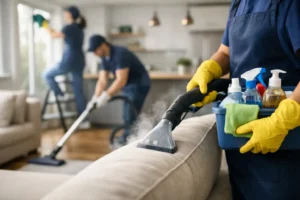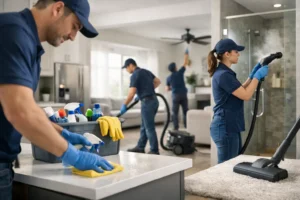
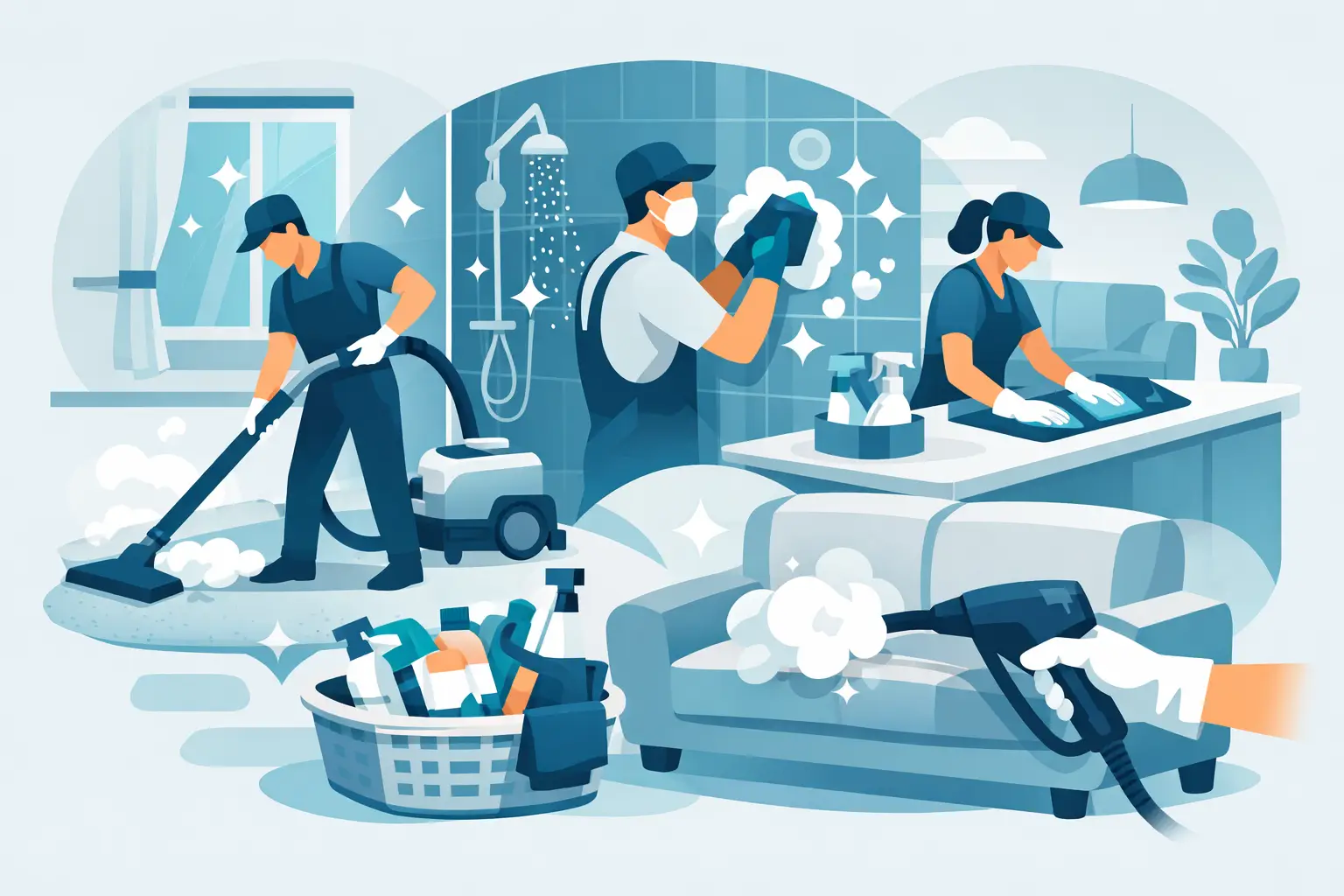
If your home looks mostly fine at a glance but still feels dusty, sticky, or harder to keep up with, that usually points to one thing: it needs more than a standard tidy-up. Homeowners often ask what does a deep cleaning service include when regular cleaning no longer feels like enough, and the short answer is this – a deep clean goes after the buildup, detail work, and neglected areas that don’t usually get handled during routine visits.
That matters because deep cleaning is less about making a space look decent for the day and more about resetting the home. It creates a cleaner baseline, helps reduce stress, and makes ongoing maintenance easier. For busy families, working professionals, renters, and property managers in Orange County, that kind of reset can save a lot of time and mental load.
What does a deep cleaning service include in most homes?
A deep cleaning service usually includes all the tasks you would expect from a standard cleaning, plus extra attention to grime, dust, edges, corners, and high-touch surfaces that collect buildup over time. Think of it as a more detailed, top-to-bottom service designed to restore freshness rather than simply maintain it.
In most homes, that means floors are cleaned more thoroughly, bathrooms are scrubbed more intensively, kitchen surfaces get closer attention, and overlooked spots like baseboards, window sills, ceiling fan blades, vents, door frames, and light switches are cleaned as part of the visit. The exact checklist can vary by company, which is why it helps to ask what is included before booking.
A good professional service will also be clear about what is and is not part of the appointment. Some deep cleans include interior appliance cleaning or inside cabinets by request, while others treat those as add-ons. Clear communication matters because every home has a different starting point.
How deep cleaning is different from regular cleaning
Routine cleaning is meant to maintain a home that is already in fairly good shape. It usually covers the basics like vacuuming, mopping, wiping counters, cleaning bathroom fixtures, and taking care of visible dust and dirt. That works well on a recurring schedule.
Deep cleaning goes further. Instead of focusing only on what is immediately visible, it addresses the places where grime quietly builds up over weeks or months. Soap scum around faucets, grease near the stove, dust along trim, fingerprints on doors, and buildup around tile grout are the kinds of details that deep cleaning is meant to tackle.
This is why many clients schedule a deep clean before starting recurring service. It gives the home a fresh starting point so future cleanings can focus on upkeep instead of catch-up.
What’s usually included room by room
Kitchen
The kitchen is often one of the most time-consuming parts of a deep clean because it collects grease, crumbs, spills, fingerprints, and hidden dust all at once. A deep cleaning service typically includes wiping and sanitizing countertops, backsplashes, sinks, faucets, stovetops, exterior appliance surfaces, cabinet fronts, and tables.
More detailed work often includes cleaning around small buildup areas, spot-cleaning walls where needed, wiping light switches, dusting vents, and addressing grime around handles and edges. Floors are vacuumed and mopped carefully, including corners and areas that may be skipped during quicker cleanings.
Some companies also offer the inside of the microwave, oven, refrigerator, or cabinets as part of a deep clean or as optional extras. That can be especially useful before move-ins, move-outs, or holidays, but it is not always automatic.
Bathrooms
Bathrooms benefit from deep cleaning because moisture creates ongoing buildup. A standard cleaning may keep things presentable, but a deep clean is what helps remove soap scum, water spots, residue around fixtures, and grime along tile edges or behind the toilet.
In most cases, tubs, showers, sinks, counters, mirrors, toilets, and exterior cabinet surfaces are scrubbed with more detail than usual. Attention is also given to faucets, baseboards, floors, and high-touch points like switches and door handles. If the bathroom has visible buildup that has been developing for a while, deep cleaning is usually the better fit.
Bedrooms and living areas
In bedrooms, family rooms, and common areas, deep cleaning typically includes dusting furniture, decor, reachable surfaces, blinds, sills, baseboards, and ceiling fan blades. Floors are vacuumed thoroughly, and hard surfaces are mopped with more attention to corners and edges.
This is also where the difference between routine and deep service becomes obvious. A quick maintenance clean may focus on open surfaces, while a deep clean is more likely to address the trim, the buildup behind furniture that can be safely reached, and the dust that settles in less visible places.
Entryways, hallways, and stairs
These areas take more wear than people realize. Dirt gets tracked in, walls collect scuffs, and corners gather dust fast. Deep cleaning often includes detailed floor care, baseboards, and spot attention to the surfaces people touch every day but rarely think to clean.
What deep cleaning may not include
Not every service uses the same definition, so it is smart to ask questions before assuming a certain task is covered. For example, deep cleaning does not always mean carpet shampooing, exterior window washing, mold remediation, lifting heavy furniture, or cleaning hazardous bio-waste situations.
Laundry, dishwashing, organizing, and removal of excessive clutter may also fall outside the scope unless specifically offered. If a home has not been cleaned in a long time or requires extra labor due to pet issues, heavy buildup, or post-construction debris, the company may recommend a custom quote instead of a standard deep clean.
That is not a negative – it is a sign the company is being honest about the time and labor required.
When a deep cleaning service makes the most sense
A deep clean is a smart choice when your home needs a reset rather than simple upkeep. That often happens after a busy season of life, before hosting guests, after illness, before starting recurring cleanings, or when moving into or out of a property.
It is also common for landlords, property managers, and real estate professionals to schedule deep cleaning before listings, between tenants, or after renovations and repairs. In those settings, the goal is not just cleanliness but presentation. A well-cleaned space feels better, photographs better, and is easier to hand off with confidence.
For households with kids, pets, or packed schedules, deep cleaning can also work as a seasonal service. You may not need it every month, but using it a few times a year can prevent the home from slipping into a cycle where maintenance no longer feels effective.
How long does a deep clean take?
It depends on the size of the home, the condition of the space, how many bathrooms and kitchens are involved, and whether add-on tasks are included. A smaller apartment in good shape may take only a few hours, while a larger home with buildup can take significantly longer.
This is one reason professional cleaners usually ask detailed questions during the quoting process. Accurate expectations help avoid rushed work and make the experience smoother for everyone.
What to ask before you book
If you are comparing cleaning companies, the best question is not just whether they offer deep cleaning, but what they mean by it. Ask for a room-by-room breakdown, whether supplies are included, if cleaners are insured, and whether there is a satisfaction guarantee.
It also helps to ask about booking windows, access instructions, and whether there are any tasks that require special approval. A dependable company will answer clearly and set expectations upfront. That kind of communication is often what makes the service feel easy instead of stressful.
For Orange County homeowners and property clients, working with a local company like SRS Cleaning Services can also mean better scheduling flexibility and a clearer understanding of the pace and needs of homes in the area.
The real value of a deep clean
The biggest benefit of deep cleaning is not just that your home looks better for a day or two. It is that everything feels easier afterward. Counters are simpler to wipe down, bathrooms are less frustrating to maintain, and the whole space feels calmer and more comfortable to live in.
That is why deep cleaning is often worth it even for people who are already fairly tidy. It takes care of the lingering details that sit in the background and quietly add stress. When those are handled well, the home feels lighter, fresher, and easier to enjoy.
If you have been keeping up as best you can but the house still does not feel truly clean, that is usually the sign. A deep clean is less about perfection and more about getting your space back to a place that supports your day instead of adding to it.